




Showcase your capabilities
If you design, build or supply Underwater Acoustics, create a profile to showcase your capabilities and connect with visitors who have an active requirement for your solutions.




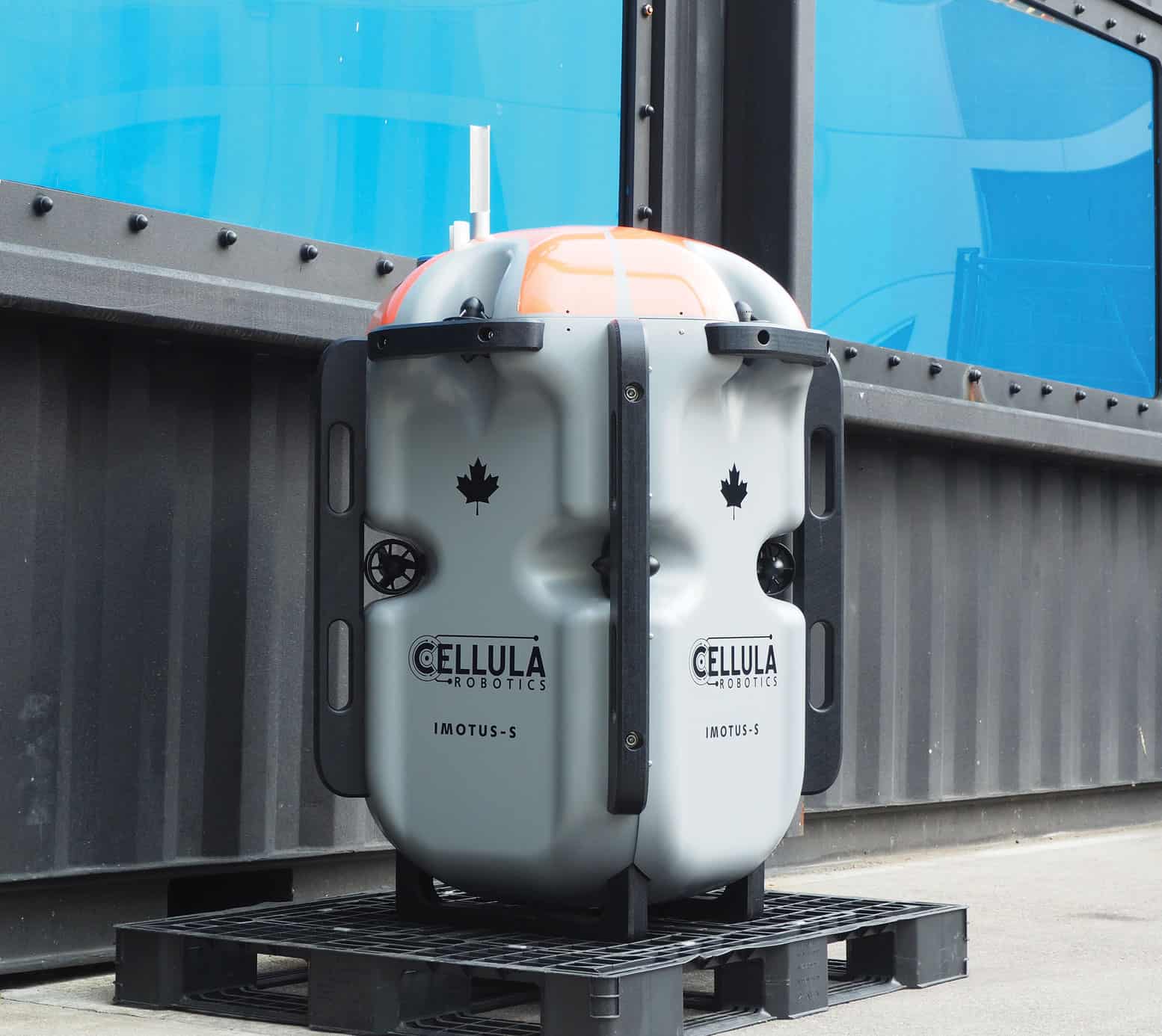
Underwater acoustics encompasses the sensing, communication, positioning, and navigation technologies used by ROVs, AUVs, and USVs where radio-frequency signals attenuate rapidly. These systems enable unmanned platforms to map the seabed, inspect subsea infrastructure, exchange data, detect targets, and maintain accurate navigation underwater.
This page showcases manufacturers and suppliers of underwater acoustic systems, including solutions designed for integration with vehicle sensors, navigation equipment, surface gateways, and rugged subsea platforms.
Read the Technology Overview



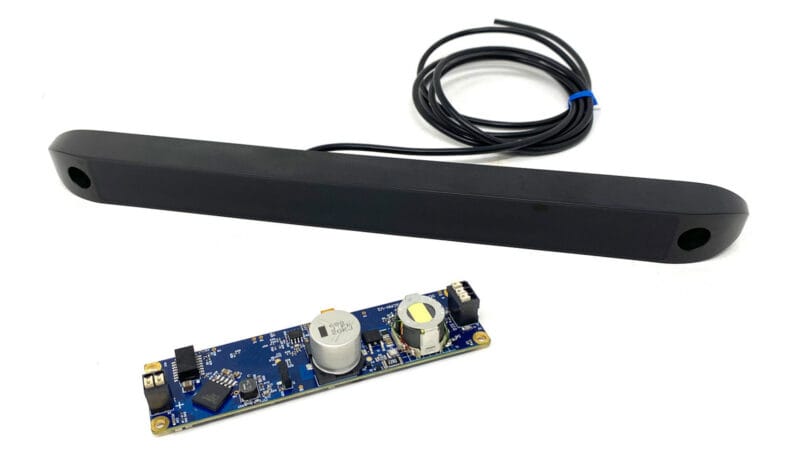
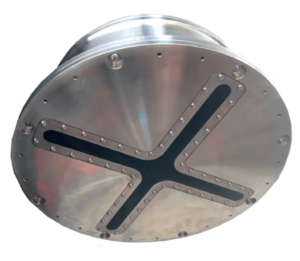
Cutting-Edge Acoustic Positioning & Subsea Imagery Solutions for Unmanned & Robotic Systems

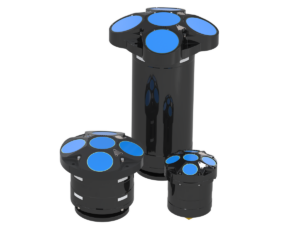
Autonomous and Unmanned Marine Vehicles: USV, AUV, Marine ROV; Profiling Floats & Towed Systems

Advanced Underwater Imaging & Positioning Solutions for Uncrewed & Autonomous Marine Vehicles

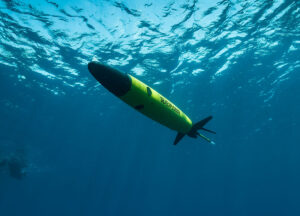
Leading-Edge Solutions & Services for Defense, Ocean & Marine Energies Applications

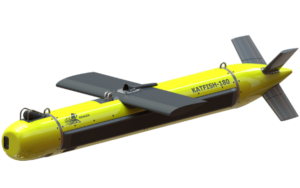
Innovative High-Resolution Subsea Imaging and Power Technologies for Commercial, Scientific & Military Underwater Survey Missions

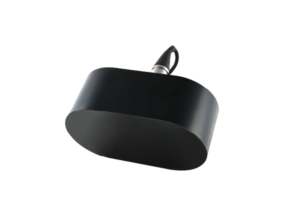
GNSS Positioning Systems, 3D SLAM & Mobile Mapping, Unmanned Surface Vehicles

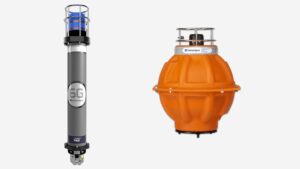
Tracking, Navigation, Positioning and Communication Sensors for AUV, ROV, USV

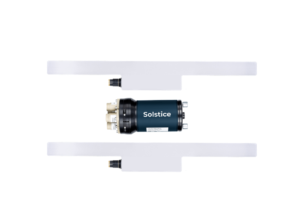
Integrated Systems & Payloads for Unmanned Surface & Underwater Platforms Operating in Complex Maritime Environments


Hydrographic Survey Equipment: Multibeam Echo Sounders, Side Scan Sonars, Sound Velocity Sensors & Profilers

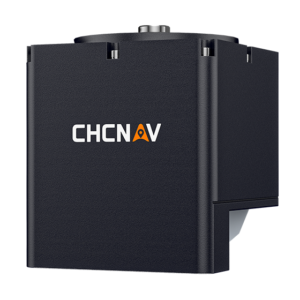
GNSS Positioning & Navigation Systems, Mobile Mapping UAV LiDAR & Unmanned Surface Vehicles

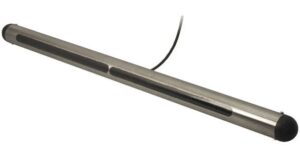
Weather Monitoring Stations, Marine Transducers, Side-Scan Sonar & Underwater Altimeters

If you design, build or supply Underwater Acoustics, create a profile to showcase your capabilities and connect with visitors who have an active requirement for your solutions.

Underwater acoustic systems provide the core mechanism for sensing, communicating, and navigating beneath the surface, where conventional radio-frequency signals, including satellite navigation signals, attenuate rapidly. Remotely Operated Vehicles (ROVs) often rely on sonar and echosounders for piloting and close-range inspection, while Autonomous Underwater Vehicles (AUVs) may carry acoustic payloads for mapping, target detection, and navigation. Unmanned Surface Vessels (USVs) serve as surface nodes and communication gateways between subsea assets and topside operators.
Evaluating underwater acoustics requires looking beyond nominal range figures or operating frequencies. Factors like platform self-noise, sound-speed variations, water depth, seabed composition, and vehicle dynamics directly influence signal quality. Engineers must design underwater acoustic transducers, signal processing electronics, and mechanical mountings as an integrated platform capability, often fusing acoustic data with inertial navigation systems (INS), Doppler velocity logs (DVL), pressure depth sensors, and surface GNSS inputs.
An underwater acoustic transducer converts energy between electrical and acoustic forms, operating as a projector during transmission and an underwater acoustic sensor or hydrophone during reception. Many sonar heads and underwater acoustic modem systems use reversible piezoelectric ceramic elements configured as rings, stacks, or composites to balance beamwidth, sensitivity, bandwidth, and depth rating. Sensor selection depends on factors such as usable bandwidth, transmitting and receiving response, beam pattern, and impedance matching, with hydrophone calibration guided by standards such as IEC 60500 and the IEC 60565 series.
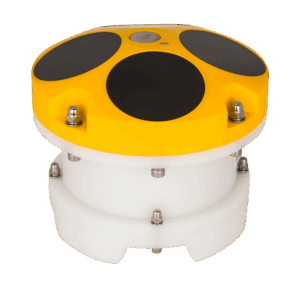
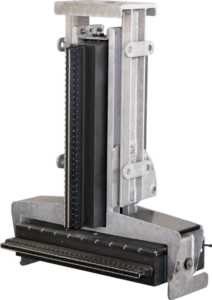
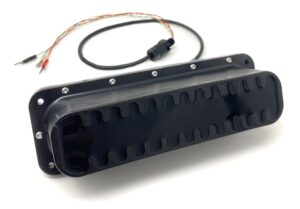
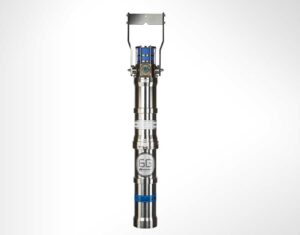
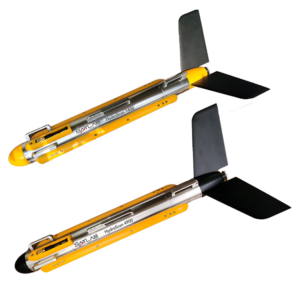
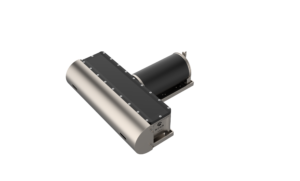
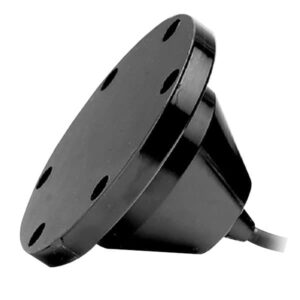
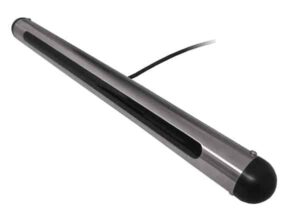
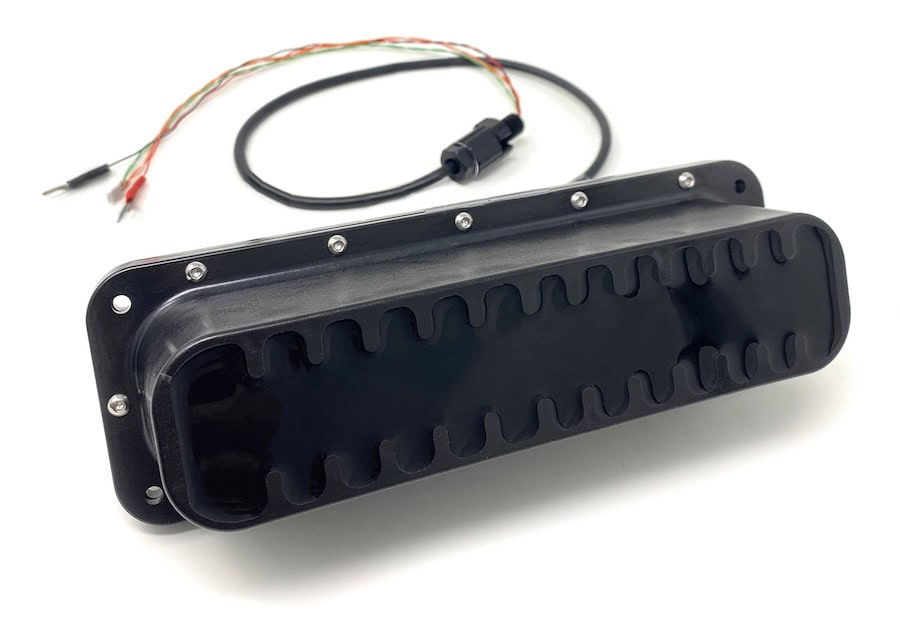
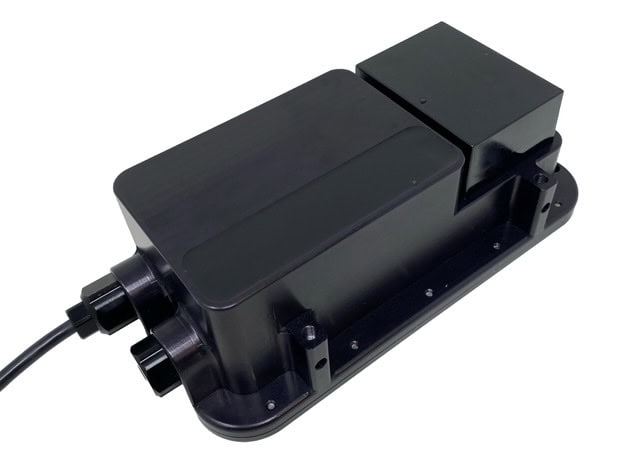
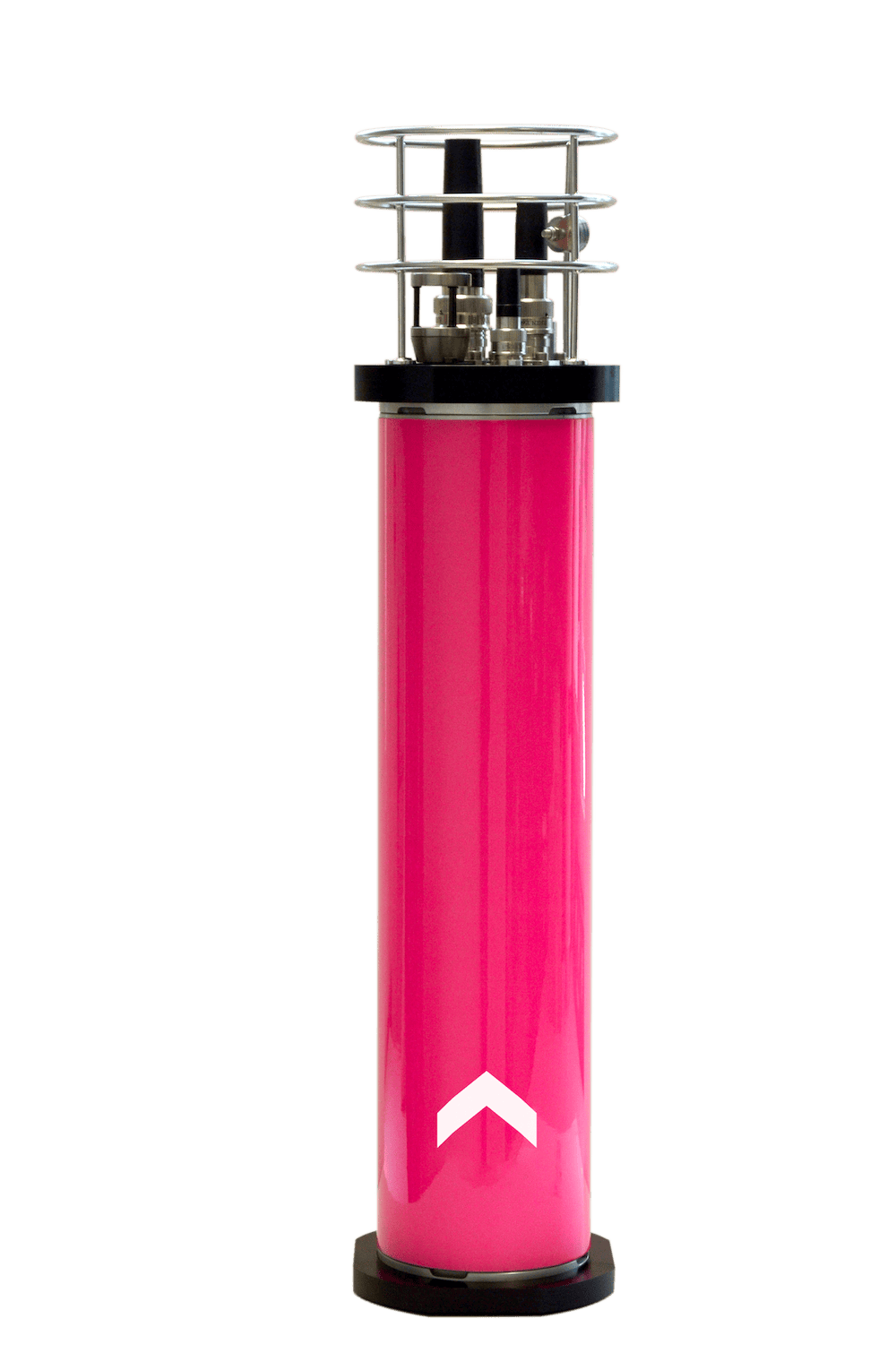
HydroFlow ACDP by SatLab Geosolutions
Arrays combine multiple underwater acoustic sensors in precise geometries to estimate target bearing, form directional beams, and suppress ambient background noise. Configurations range from linear towed arrays and planar grids to hull-conformal arrays. Overall aperture and operating frequency influence angular resolution, while element spacing must be controlled to avoid spatial grating lobes. Onboard underwater acoustic signal processing can execute adaptive beamforming at the edge, while fairings and decoupled mountings help isolate arrays from thruster noise and structural vibration.
Active sonar transmits known acoustic waveforms and processes returning echoes to calculate range and bearing, estimate relative velocity, and characterize physical targets. Systems range from forward-looking sonar for ROV piloting and side-scan or multibeam echosounders for seabed imaging and bathymetry to synthetic aperture sonar and acoustic video systems for high-resolution imaging. System selection balances the longer potential range of lower frequencies against the finer spatial detail generally available at higher frequencies. Many systems use frequency-modulated chirp pulses and pulse-compression processing to improve range resolution and signal-to-noise performance.
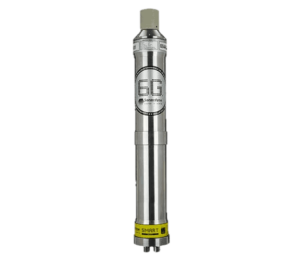
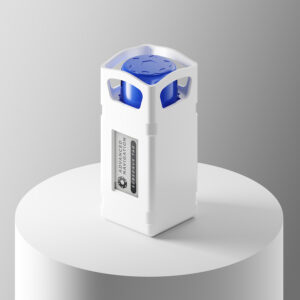
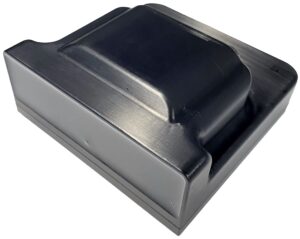
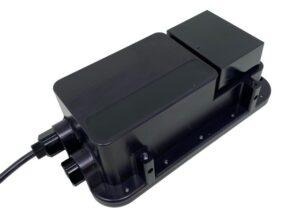
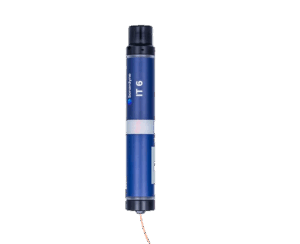
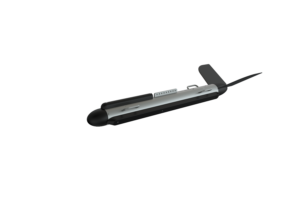
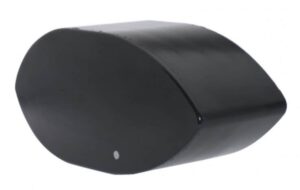
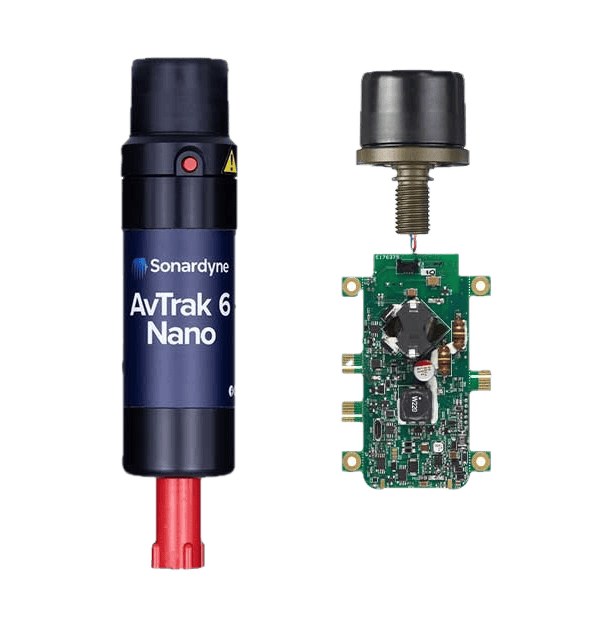
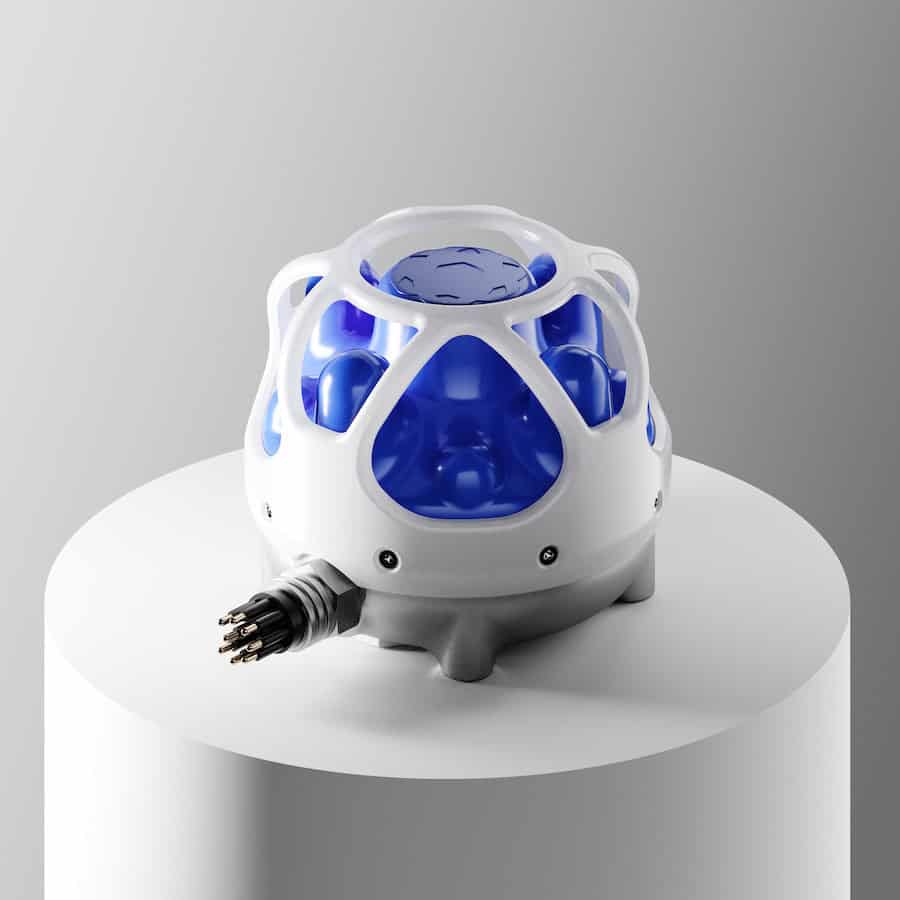
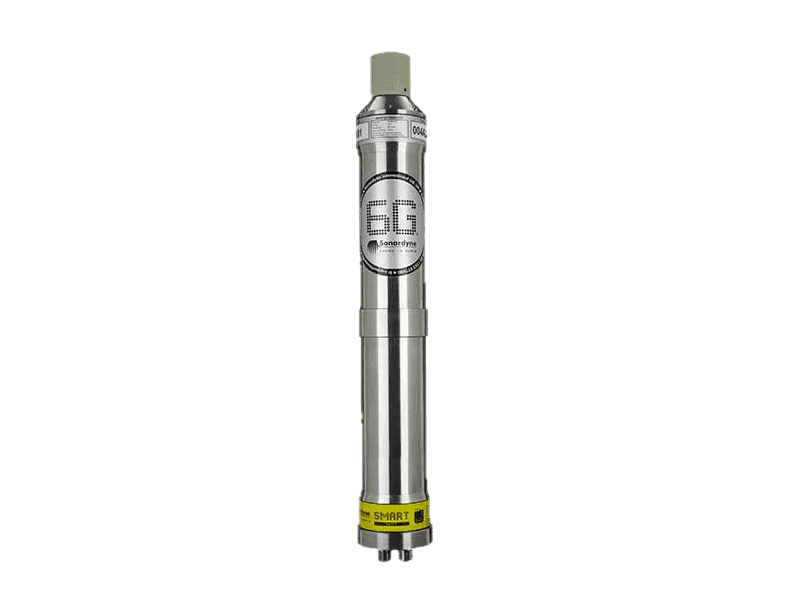
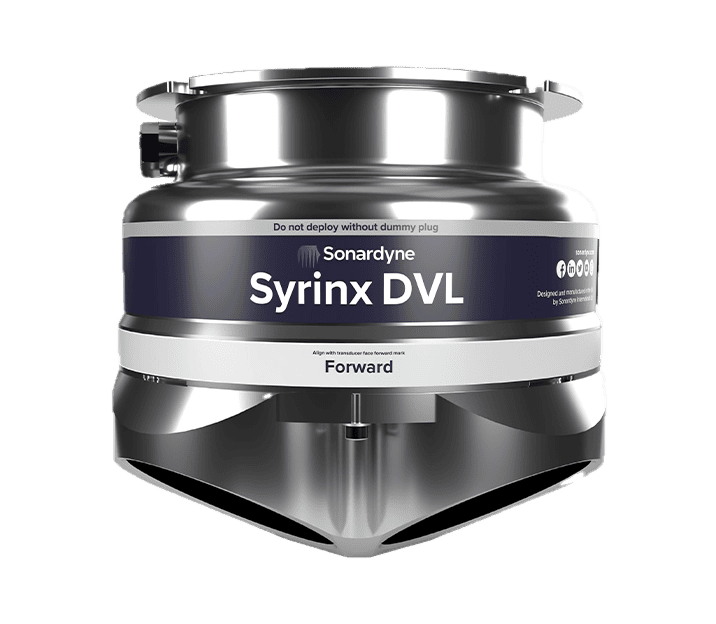
SMART Transponder by Sonardyne International
Passive acoustic systems monitor ambient soundscapes without emitting signals, making them valuable for covert naval operations and long-duration environmental monitoring. Processing pipelines use time-frequency analysis to detect machinery tones, cavitation, and biological vocalizations from hydrophone arrays. Embedded machine learning algorithms can support automated contact detection and classification onboard, providing real-time classification cues while minimizing bandwidth demands for underwater acoustic monitoring.
An underwater acoustic modem enables wireless subsea communication between vehicles, seabed instruments, and surface gateways for command updates and telemetry exchange. Given long propagation delays, multipath reflections, and Doppler shifts, a reliable underwater acoustic communication system employs robust modulation schemes, channel coding, and signal processing adapted to the acoustic channel. Standardization frameworks like JANUS digital underwater acoustic communications (STANAG 4748) provide a common digital signalling method for initial contact and basic interoperability across multi-vendor subsea assets.
An underwater acoustic positioning system calculates subsea coordinates using signal travel times and, depending on the architecture, direction-of-arrival measurements between transducers. These systems operate through Ultra-Short Baseline (USBL), Short Baseline (SBL), or seabed Long Baseline (LBL) configurations. Modern navigation integrates acoustic range or position fixes with an inertial navigation system (INS), Doppler velocity log (DVL), and depth sensors inside an Extended Kalman Filter to bound long-term position drift. Auxiliary hardware, including underwater acoustic beacons and underwater acoustic releases, supports transponder networks and the recovery of deployed instruments or moorings.
Unmanned surface and subsea assets extend naval reach by deploying passive towed arrays, variable-depth sonar, and low-frequency active sensors for submarine detection and tracking. For mine countermeasures, AUVs carry synthetic aperture sonar and multibeam payloads to execute autonomous search patterns and map seabed clutter, using automated target recognition software to flag potential hazards without placing personnel in risk zones.
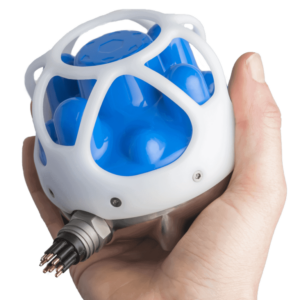
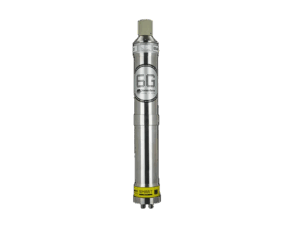
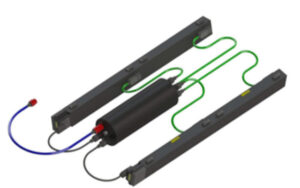
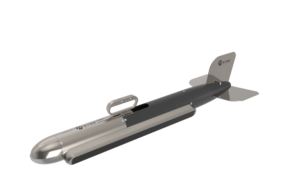
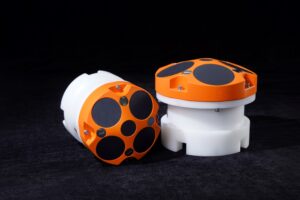
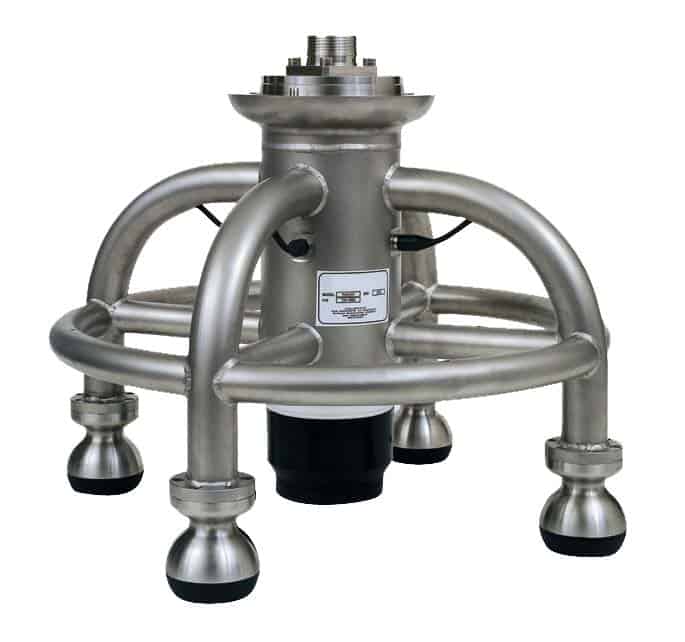
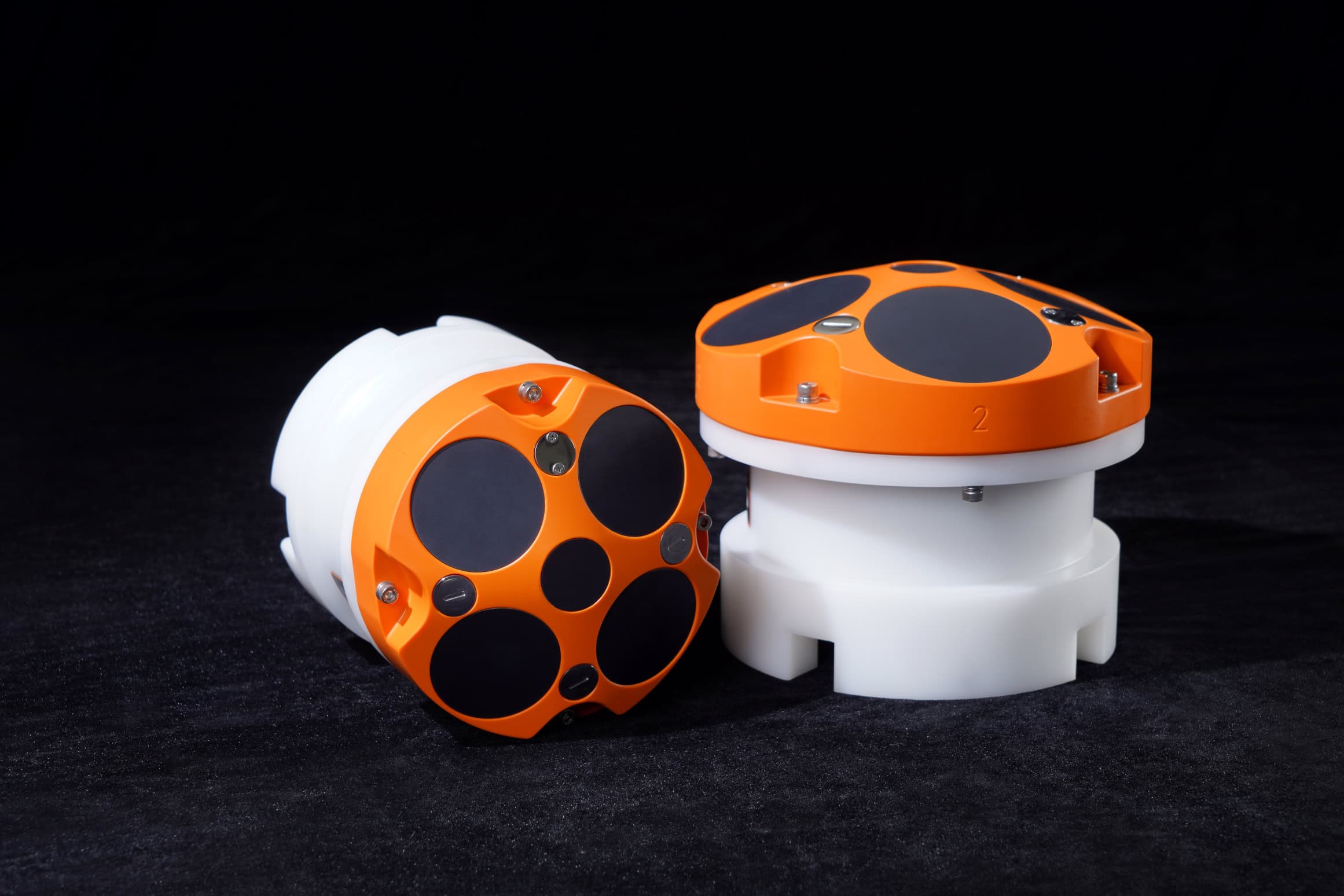
Advanced Navigation’s Subsonus Underwater Acoustic Positioning System
High-frequency active diver detection sonar protects harbors, naval bases, and offshore assets by detecting and tracking small, slow-moving targets such as open-circuit divers and small UUVs. Automated software filters background reverberation and biological noise, fusing acoustic tracks with surface radar, AIS feeds, and electro-optical cameras to create a more complete security picture.
Hydrographic surveys utilize multibeam echosounders mounted on USVs and AUVs to generate high-density bathymetric models, while side-scan sonars produce detailed imagery of seabed texture and objects. Bathymetric or interferometric side-scan systems can also derive depth information. USVs improve survey efficiency and safety in shallow or hazardous surface environments, while AUVs can maintain stable altitudes close to the seafloor for high-resolution data collection.
Offshore energy operators rely on imaging sonars, subsea acoustic products, and acoustic video systems to inspect pipelines, jacket structures, and subsea cables in zero-visibility conditions. Georeferenced positioning supports precise anomaly tracking, enabling comparative change detection over successive inspection cycles.
Bioacoustic monitoring uses passive hydrophones on ocean gliders, moorings, and drifting buoys to track marine mammal vocalizations and ambient noise without introducing artificial sound. Automated processing screens continuous recordings and can deliver near-real-time environmental monitoring or compliance data to topside receivers via surface gateways.
Establishing clear operational frameworks and measurement protocols relies on globally recognized industry standards.
Adhering to these international benchmarks supports cross-platform interoperability, reliable calibration, consistent measurement, and environmental compliance across diverse marine operations.
Recent developments in digital processing and hybrid sensor payloads are reshaping the capabilities of unmanned subsea platforms.
These technological advancements are expanding the operational duration, autonomy, and payload throughput of unmanned subsea fleets.


 Searching Companies & Products



 Subscribe to the Weekly eBrief
The latest engineering and technical developments straight to your inbox - join thousands of engineers who receive it.
Subscribe to the Weekly eBrief
The latest engineering and technical developments straight to your inbox - join thousands of engineers who receive it.