Drone maintenance and repair services support UAV inspection, servicing, fault diagnosis, component replacement, and return-to-service across multirotor, fixed-wing, and VTOL platforms. Professional drone repair and maintenance can cover airframes, propulsion systems, avionics, payloads, communications equipment, and drone battery maintenance.
This page features providers of professional drone maintenance and repair services supporting reliable UAV operation, system availability, and ongoing fleet maintenance.
If you design, build or supply Drone Maintenance & Repairs, create a profile to showcase your capabilities and connect with visitors who have an active requirement for your solutions.
The Comprehensive Guide to Drone Maintenance & Repair Services
Overview by
William Mackenzie
Updated:
Introduction to Drone Maintenance & Repair Services
Drone maintenance and repair services help keep Unmanned Aircraft Vehicles (UAV) operational, reliable, and mission-ready. Requirements vary between multirotor, fixed-wing UAVs, Vertical Takeoff and Landing (VTOL) aircraft, and larger systems, but all require inspection, servicing, fault diagnosis, and component replacement.
Professional drone repair may cover the aircraft, propulsion, avionics, payloads, batteries, communications equipment, ground control stations, and support infrastructure. For commercial and industrial operators, effective drone maintenance also involves record keeping, configuration control, parts traceability, and maintenance planning.
Types of Drone Maintenance & Repair Services
Drone repair and maintenance ranges from preventive servicing to electronic, structural, and propulsion repairs.
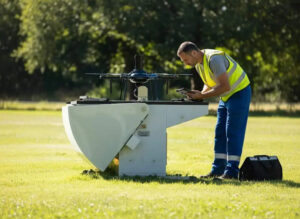
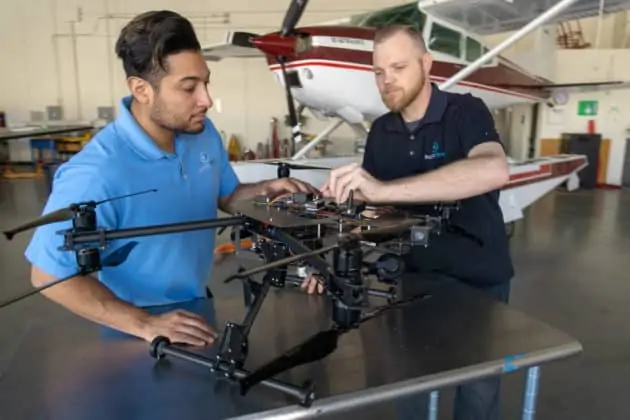
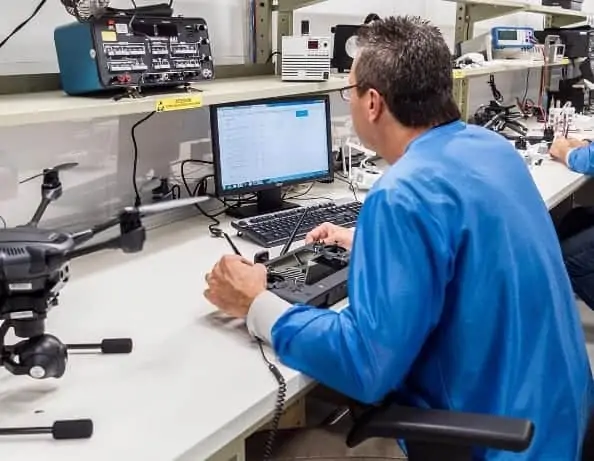
Drone maintenance and repair services by RIBE.
Routine and Preventive Drone Maintenance
Routine drone maintenance identifies wear, contamination, loose connections, damage, corrosion, and deteriorating components before they affect an operation. Typical work can include cleaning, pre-flight and post-flight inspections, propeller and connector checks, lubrication where specified, battery evaluation, and verification of sensor or flight control performance. Additional inspection may be needed after hard landings, collisions, water exposure, or harsh operations.
Scheduled Inspections and Servicing
Scheduled drone servicing is carried out according to manufacturer instructions, maintenance programs, operational procedures, or component life limits. Intervals may be based on calendar time, flight hours, flight cycles, battery cycles, or other usage metrics, helping operators replace components before service limits are reached.
Fault Diagnosis and Corrective Maintenance
Corrective maintenance begins when a UAV develops a known or suspected fault. A drone technician may review logs, telemetry, physical condition, and subsystem performance to distinguish mechanical, electrical, configuration, sensor, software, firmware, and communication faults.
Component-Level Drone Repairs
Component-level drone repairs may be appropriate when assemblies can be safely restored rather than replaced. Depending on the platform, technical data, and maintenance authorization, UAV repair may involve wiring, connectors, motors, electronics, structural parts, actuators, or payload interfaces. Repairs should preserve required configuration, structural integrity, software compatibility, and operating limitations.
Field Maintenance and On-Site Repair
Field maintenance supports operators that cannot easily return aircraft to a workshop. Technicians may inspect aircraft, exchange field-replaceable units, diagnose faults, replace components, update configurations, and conduct functional testing on site. Work should remain within approved field-maintenance limits.
Depot-Level Maintenance and Specialist Repair
Complex failures may require controlled workshops, specialist tooling, test equipment, or subsystem expertise. Depot repair can include electronic diagnostics, airframe restoration, propulsion servicing, payload calibration, structural assessment, and post-repair testing.
Fleet Maintenance and Lifecycle Support
Organizations operating multiple aircraft often require coordinated drone fleet maintenance. Lifecycle support may combine inspections, fault management, spare parts, configuration tracking, battery management, software updates, records, and reliability monitoring.
Drone Maintenance and Repair Workflow
The exact process depends on the UAV and fault, but a structured drone repair workflow commonly includes:
Initial Inspection and Maintenance History Review: Examine the aircraft and review repairs, service records, reported faults, flight hours, incidents, and operating history.
Fault Detection and Diagnostic Testing: Use physical inspections, built-in diagnostics, telemetry, flight logs, and electrical or mechanical testing to identify the affected subsystem.
Component Removal, Repair, and Replacement: Repair or exchange defective components according to applicable procedures, technical data, parts requirements, and configuration controls.
Calibration and System Configuration: Calibrate or configure sensors, controllers, payloads, firmware, parameters, or replacement assemblies where required.
Ground Testing and Functional Checks: Verify propulsion, communications, controls, navigation, payload operation, and other relevant functions without flight.
Post-Maintenance Flight Testing: Where required and permitted, use a controlled flight to validate aircraft behavior and repairs.
Maintenance Records and Return-to-Service Documentation: Record completed work, replaced components, applicable serial numbers, test results, configuration changes, and approvals before operational use resumes.
This workflow improves traceability and helps prevent secondary faults or configuration issues from being missed.
Drone Components Requiring Repair Services
UAV subsystems present distinct inspection, diagnostic, and repair requirements.
Airframe, Landing Gear and Rotor Systems
Drone repairs may address cracked or distorted structures, damaged arms, landing gear, fasteners, hinges, rotor assemblies, and propellers. Drone propeller repair or replacement requires particular attention because damage, imbalance, incorrect installation, or dimensional changes can introduce vibration and affect propulsion efficiency or flight stability. Damaged propellers are normally replaced unless an approved procedure permits repair.
Propulsion, Batteries and Power Systems
Electric propulsion systems contain motors, Electronic Speed Controllers (ESCs), power distribution components, wiring, connectors, and batteries exposed to electrical and thermal loading. Work to repair a drone motor may involve diagnosis or replacement rather than internal rebuilding, depending on its design and manufacturer procedures. Drone battery maintenance can include cycle monitoring, storage management, connector inspection, and checks for swelling, impact damage, overheating, or performance loss. Suspect lithium batteries should be isolated and handled using appropriate safety procedures.
Avionics and Flight Control System Maintenance
Flight controllers, inertial sensors, Global Navigation Satellite System (GNSS) receivers, magnetometers, altimeters, communications modules, and wiring are central to stable flight. UAV maintenance may require fault-code analysis, calibration, antenna and connector checks, firmware management, or avionics replacement followed by configuration and functional checks.
Payload and Sensors
Professional UAVs may carry electro-optical cameras, thermal imagers, Light Detection and Ranging (LiDAR), multispectral sensors, radar, or other mission equipment. Commercial drone repair services can therefore extend to gimbals, stabilization assemblies, payload connectors, data interfaces, and sensor mounts, with calibration or alignment where measurement accuracy is mission critical.
Ground Control and Support Equipment
A complete unmanned aircraft system can include controllers, ground control stations, antennas, chargers, launch and recovery equipment, and other support hardware. System-level diagnosis helps distinguish aircraft faults from problems in communications, power supplies, charging equipment, or ground infrastructure.
Drone Maintenance Standards, Airworthiness, and Documentation
AlarisPro UAS fleet management platform for drone repair and maintenance.
UAV maintenance procedures should reflect the regulatory environment, aircraft category, intended operation, manufacturer instructions, and any applicable organizational maintenance program. ASTM F2909 addresses maintenance and continued airworthiness practices for small UAVs and considers the wider system rather than only the airborne vehicle.
Requirements become more formal in certified or higher-assurance environments. In Europe, certified UAVs can be subject to continuing-airworthiness requirements covering organizations, personnel, records, and approved maintenance data. Maintenance logs, authorized personnel, technical instructions, component traceability, and configuration records support continued operational suitability.
Drone Fleet Maintenance & Software Integration
Digital tools can coordinate fleet maintenance and help identify developing technical problems. Common capabilities include:
Digital Maintenance Records: Document inspections, drone repairs, component changes, and service history.
Fleet Management Platforms: Link maintenance information with aircraft utilization, mission scheduling, and availability.
Automated Service Interval Tracking: Flag maintenance tasks based on dates, flight time, cycles, or component limits.
Flight Log and Telemetry Analysis: Identify recurring errors, abnormal temperatures, vibration, voltage changes, or other trends.
Remote Diagnostics and Health Monitoring: Provide technicians with aircraft status information before the UAV reaches a repair facility.
Integrated maintenance data can simplify fleet servicing while supporting consistent records and configuration control.
Emerging Developments in Drone Maintenance
Onboard monitoring and fleet software are making UAS maintenance increasingly data driven. Developments include:
Predictive maintenance: Flight logs, telemetry, and component health data can identify patterns associated with developing faults.
Automated diagnostics: Built-in testing and analytical tools can accelerate fault isolation and reduce unnecessary component replacement.
Battery health analytics: Monitoring can track cycle history, capacity, internal resistance, temperature behavior, and other battery condition indicators.
Digital maintenance records: Connected platforms can combine inspection histories, configuration data, servicing schedules, and component changes.
These technologies can complement technician expertise by improving maintenance planning, troubleshooting, and lifecycle management.
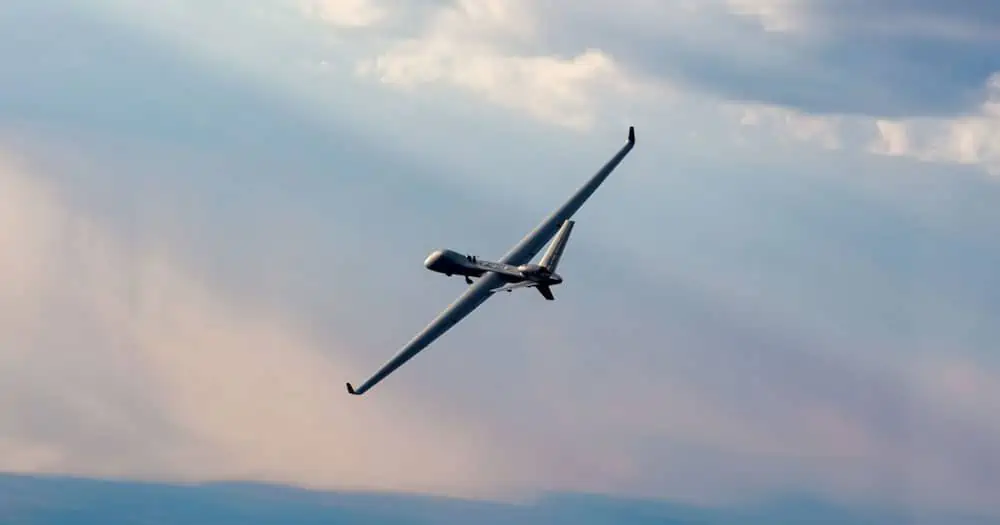
Ramco Systems will provide its Enterprise Resource Planning software to deliver Maintenance Repair & Overhaul services for the MQ-9B SkyGuardian and SeaGuardian Remotely Piloted Aircraft
Robotic Skies, a worldwide network of service centers providing aviation-grade maintenance and repairs for commercial unmanned aerial systems (UAS) and...
The latest unmanned systems news, straight to your inbox.
Get our weekly roundup of technology developments, new products and industry news.
THANK YOU FOR SIGNING UP
Thanks for joining us. Check your inbox.
We've sent you an email. Click the confirmation link to complete your subscription to the weekly eBrief. In the meantime, explore the latest news, suppliers and technologies on UST.
Advancing Unmanned Systems Through Strategic Collaboration
UST works with major OEMs to foster collaboration and increase engagement with SMEs, to accelerate innovation and drive unmanned systems capabilities forward.