Aviation safety management software provides a centralized, digital framework for capturing, processing, and analyzing safety data across unmanned systems operations. These platforms integrate aviation safety reporting software, hazard identification, and risk assessment tools to support consistent oversight of UAS fleets, including fixed-wing, multirotor, and VTOL systems.
This page features leading aviation safety management software providers, offering solutions for occurrence logging, investigation management, safety performance monitoring, and compliance tracking aligned with regulatory standards.
If you design, build or supply Aviation Safety Management Software, create a profile to showcase your capabilities and connect with visitors who have an active requirement for your solutions.
Introduction to Aviation Safety Management Software
Aviation safety management software provides a structured, digital environment for capturing, processing, and analyzing safety-related data across unmanned aviation operations. Unlike traditional manual or fragmented approaches, these platforms centralize safety workflows into a single, traceable system that supports consistent risk oversight across distributed fleets.
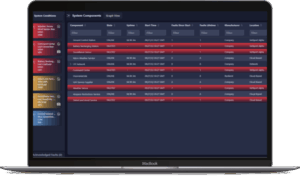
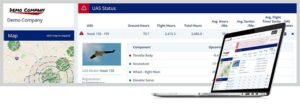
FRAIHMWORK aviation safety management system from ResilienX.
Within the unmanned sector, the scope of safety management software for aviation extends beyond simple reporting. It encompasses the full lifecycle of safety data. This includes initial occurrence logging, risk evaluation, mitigation tracking, and long-term trend analysis. This is particularly critical in UAS operations, where high sortie rates, autonomous behaviors, and geographically dispersed assets generate large volumes of operational data that human oversight alone cannot parse effectively.
The software acts as the authoritative layer for safety governance. It enables operators, integrators, and regulators to maintain visibility over hazards, enforce standardized processes, and ensure that safety decisions are supported by hard evidence. In increasingly automated environments, this digital backbone is the primary tool for maintaining accountability and operational assurance.
Core Functional Modules of Aviation Safety Management Software
Aviation Safety Reporting Software
At the foundation of any professional platform is the reporting module. This capability enables personnel, including remote pilots, maintainers, and observers, to log safety events in a structured format. Modern aviation safety reporting software prioritizes low friction entry, offering web-based and mobile interfaces that allow for data capture at the point of occurrence.
Reports are typically configurable, allowing organizations to define taxonomies aligned with specific operational profiles. This applies whether the fleet uses fixed-wing UAS, multirotors, or VTOL hybrid systems. Metadata tagging, telemetry log attachments, and automated classification ensure that each report enters the system with sufficient context for meaningful downstream analysis.
Hazard Identification and Risk Assessment Tools
Once data is captured, the aviation safety software provides structured tools for identifying hazards and assessing associated risks. These tools typically incorporate configurable risk matrices, enabling organizations to evaluate likelihood and severity in a consistent, auditable manner.
Advanced platforms allow for dynamic risk scoring. Inputs such as the specific operational environment, system type, and mission phase influence the calculated risk level. This ensures that assessments remain relevant across diverse mission sets, from controlled test ranges to complex integrated airspace.
Incident and Accident Investigation Management
Investigation modules support the systematic analysis of safety events. They provide structured workflows for evidence collection, root cause analysis, and corrective action tracking. Rather than relying on disconnected spreadsheets or documents, all investigative artifacts are maintained within a single source of truth.
This ensures total traceability from the initial report through to final resolution. Integrated methodologies, such as the Human Factors Analysis and Classification System or bow tie barrier models, can be embedded directly into the workflow to standardize investigative quality.
Safety Performance Monitoring and Metrics Tracking
Effective safety management system software for aviation continuously aggregates operational data to generate Safety Performance Indicators. These include event rates, risk exposure levels, and compliance metrics tracked over time.
Dashboards provide real-time visibility, allowing directors of safety to identify emerging trends before they escalate into accidents. For unmanned operations, where scale can quickly amplify risk, this continuous monitoring is essential for maintaining control over system-wide performance.
Compliance Tracking and Audit Management
Regulatory compliance is embedded directly into the software through audit modules. These tools often provide drone compliance software capabilities to map operational activities against EASA, FAA, or SORA requirements and internal policies. This ensures that standards are actively managed rather than just documented.
Audit workflows allow organizations to schedule inspections, record findings, and track corrective actions to closure. This creates a continuous compliance loop, significantly reducing the administrative burden during formal regulatory audits.
Applications in Unmanned & Advanced Air Mobility
Safety Data Management for UAS Fleet Operations
Unmanned fleets generate massive data volumes across multiple platforms and global locations. Aviation safety management system software consolidates this data into a unified environment. Operators can monitor trends across different vehicle types and geographic regions to identify systemic risks. This might include component fatigue or localized weather patterns that would remain hidden at an individual platform level.
Integration with Autonomous Flight and Control Software
Modern unmanned systems rely heavily on autonomous control logic. Safety platforms interface with these systems to ingest telemetry, mission logs, and system health data. This integration allows for automated event detection. By identifying deviations from planned flight paths or link loss incidents, the system reduces reliance on manual reporting and improves the fidelity of the safety dataset.
Supporting BVLOS and High Density Airspace
Beyond Visual Line of Sight (BVLOS) operations introduce layers of complexity, including increased reliance on command and control links and airspace deconfliction. Aviation safety management software supports these operations by providing structured oversight of risks associated with extended range. In high-density urban environments, the ability to correlate safety data across multiple concurrent operations is essential for maintaining operational integrity.
Advanced Software Capabilities & Architectures
Workflow Automation and Case Management
Automation is central to modern safety platforms. Configurable engines ensure that reports and corrective actions follow predefined paths without manual intervention. Aviation authoring software can complement these capabilities by providing structured tools for creating, managing, and maintaining the procedures, manuals, and operational content that underpin safety processes. This enforces accountability and ensures no critical safety action is overlooked.
Deployment Models: SaaS vs. On-Premises
Deployment models vary based on security requirements. Software as a Service delivery enables rapid deployment and continuous updates, which is the standard for most commercial operators. However, for defense integrators, on-premises or private cloud deployments provide the necessary control over sensitive mission data.
API-First Design and Interoperability
An API-first approach ensures that aviation safety software can integrate with the wider digital ecosystem. This includes flight operations and dispatch to correlate safety data with mission schedules. It also covers maintenance platforms to link safety events to hardware reliability and component life cycles. Finally, it allows for data exchange with UTM platforms regarding airspace conflicts and operational constraints.
Emerging Trends in Safety Software for Aviation
The industry is moving toward AI-driven insights, where machine learning identifies patterns within large datasets to predict emerging risks. These platforms support in-time aviation safety management system capabilities, enabling continuous monitoring, real-time risk evaluation, and rapid mitigation across distributed UAV operations.
Future platforms will likely feature real-time risk monitoring where data streams are continuously analyzed to initiate automated mitigations. As UAS autonomy increases, safety oversight software is evolving to match. This involves automating routine compliance tasks while preserving human intervention for complex, high-stakes decision making.
ResilienX’s new white paper explains how its FRAIHMWORK™ and AAM OptiX™ systems meet and exceed the intent of the FAA’s proposed BVLOS rules, supporting compliance and operational assurance
ResilienX’s products enable the creation of robust ecosystems and accelerate the safe and seamless integration of drones into national airspaces and everyday life
ResilienX has partnered with NASA to demonstrate preflight planning tools that deliver predictive risk assessments, supporting safer drone and advanced air mobility operations
ResilienX addresses the challenge of scaling Beyond Visual Line of Sight (BVLOS) operations by improving safety, interoperability, cybersecurity, and regulations, advancing uncrewed aircraft systems and advanced air mobility integration
ResilienX have secured an SBIR contract collaborating with NASA's SWS project to further safety assurance of AAM ecosystems with the FRAIHMWORK IASMS platform
The latest unmanned systems news, straight to your inbox.
Get our weekly roundup of technology developments, new products and industry news.
THANK YOU FOR SIGNING UP
Thanks for joining us. Check your inbox.
We've sent you an email. Click the confirmation link to complete your subscription to the weekly eBrief. In the meantime, explore the latest news, suppliers and technologies on UST.
Advancing Unmanned Systems Through Strategic Collaboration
UST works with major OEMs to foster collaboration and increase engagement with SMEs, to accelerate innovation and drive unmanned systems capabilities forward.