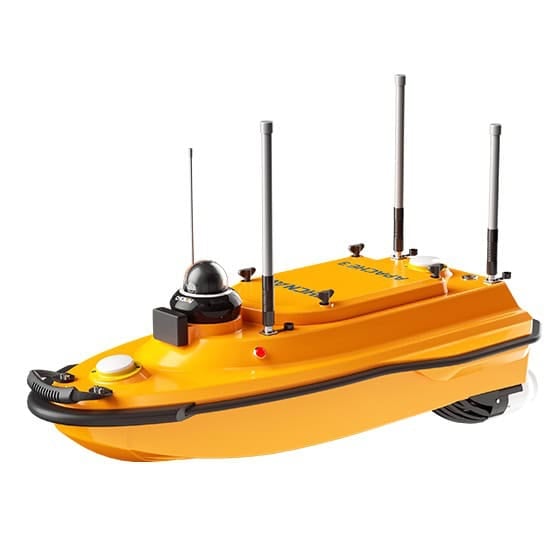
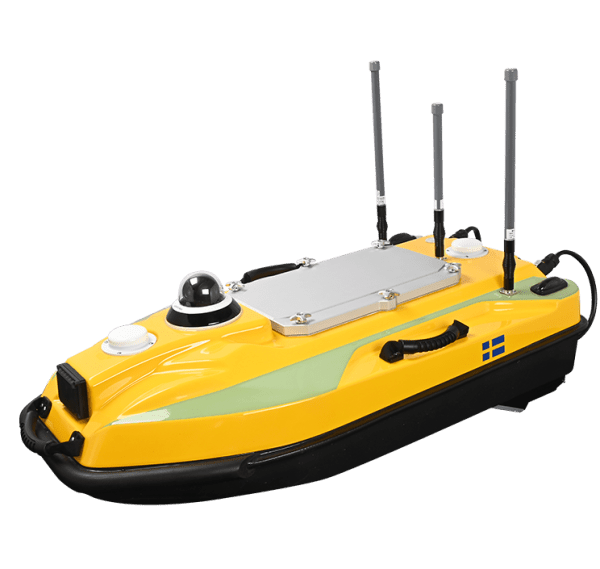
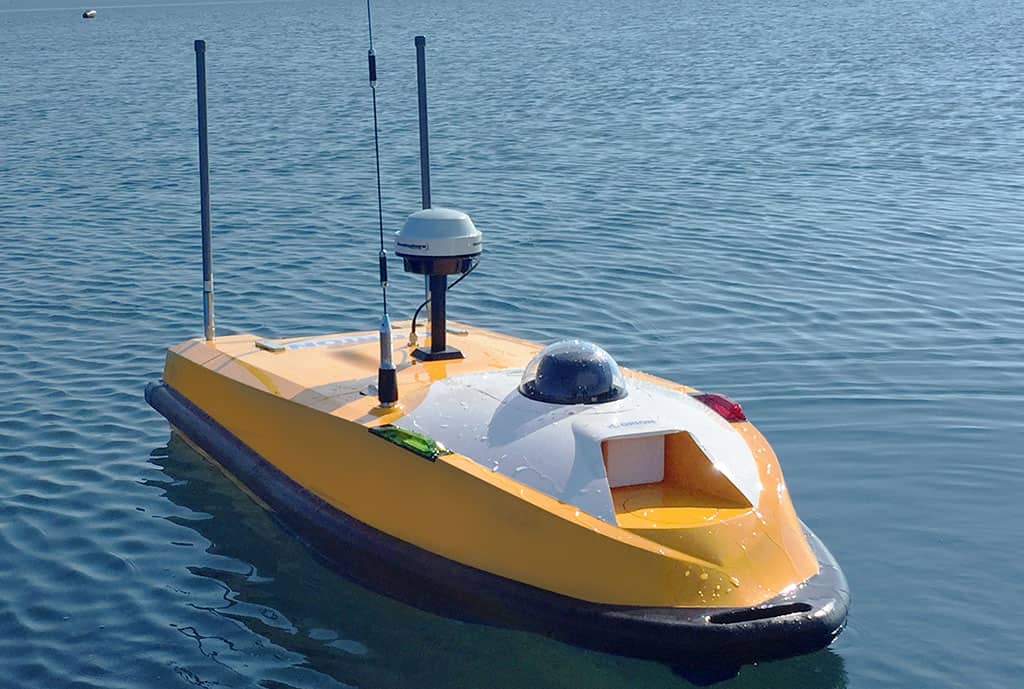
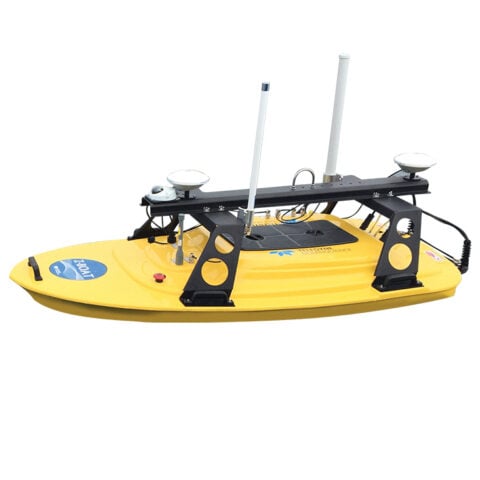
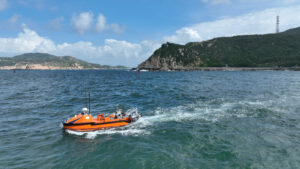
Environmental monitoring USVs are autonomous or remotely operated unmanned vessels designed to collect scientific and environmental data across oceans, coastal waters, rivers, lakes, and reservoirs. These platforms support water quality monitoring, oceanographic research, pollution detection, and aquatic ecosystem assessment through integrated sensors and sampling systems.
This page features suppliers of environmental monitoring USVs equipped with water quality sondes, CTD sensors, fluorometers, acoustic instruments, and automated water samplers.
If you design, build or supply Environmental Monitoring USVs, create a profile to showcase your capabilities and connect with visitors who have an active requirement for your solutions.
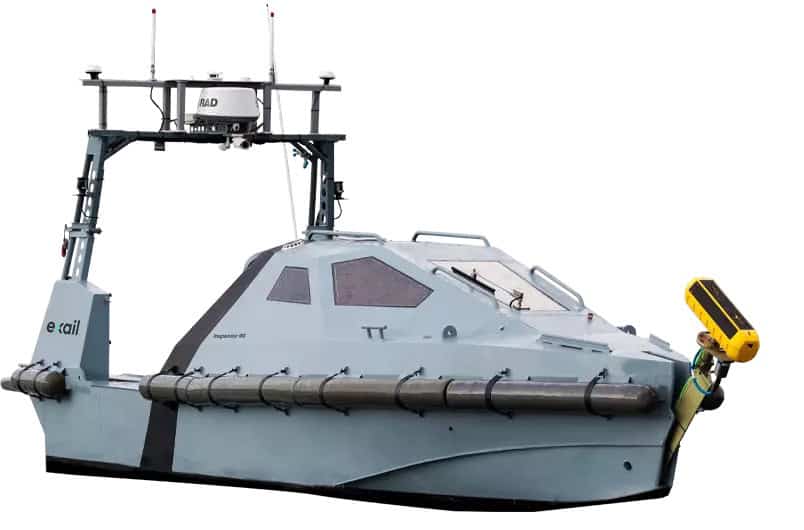
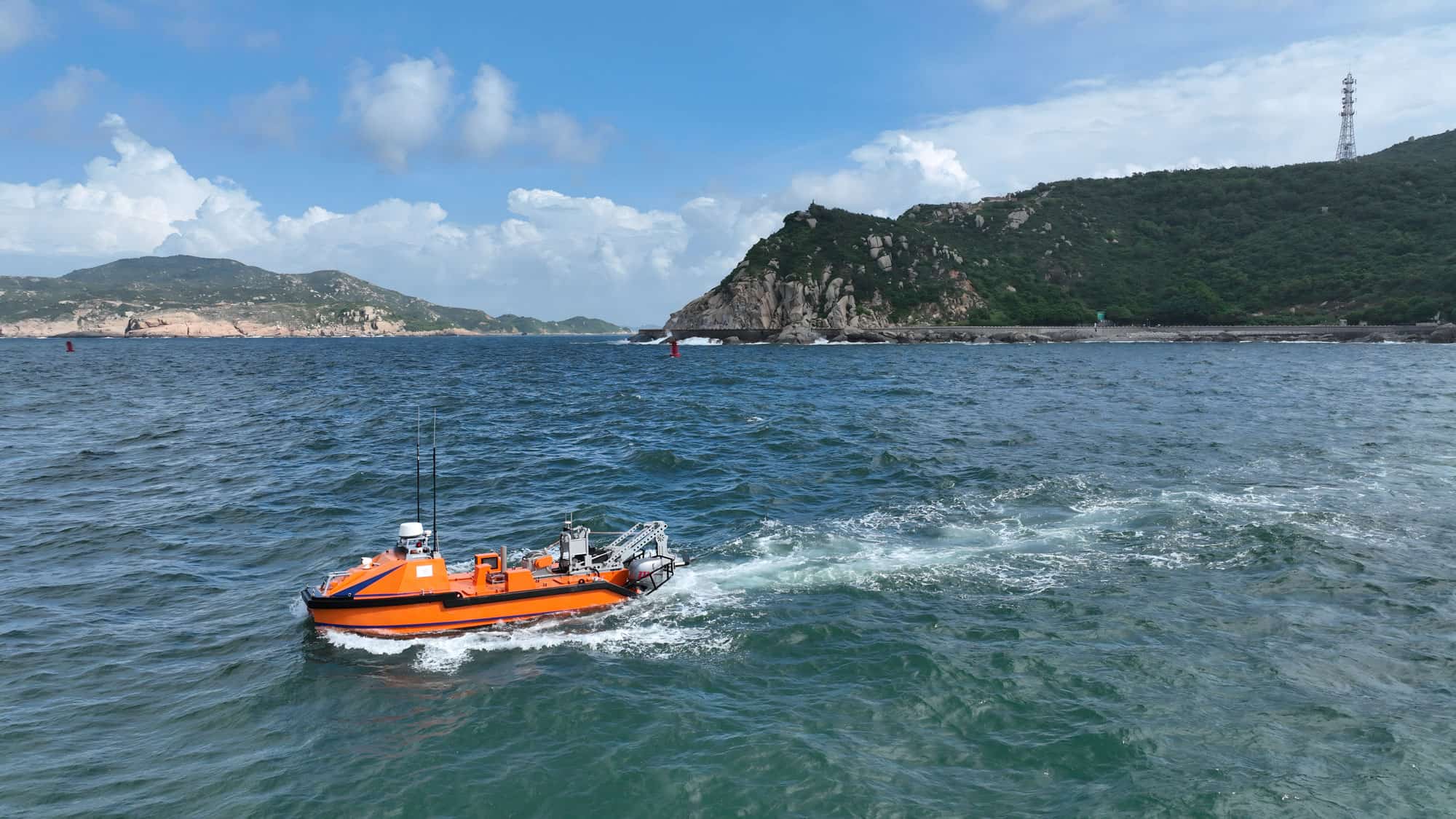
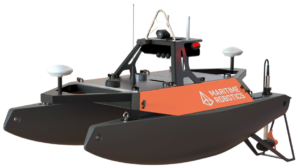
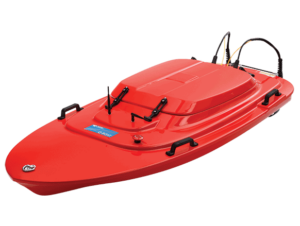
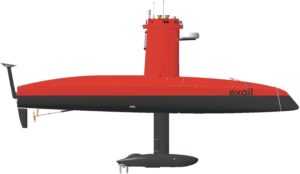
USV for maritime surveillance & mine countermeasure operations
USV for maritime surveillance & mine countermeasure operations
...rface Vehicle (USV) from Exail designed for autonomous maritime operations including mine... ...ecosystem, the USV can coordinate with multiple naval drones from a remote command center outside...
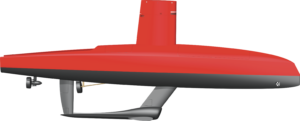
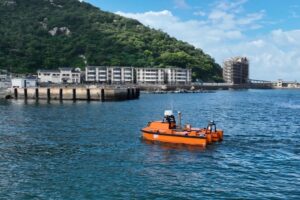
...s with minimal environmental impact. Engineered for autonomous missions under remote supervision,... ...cs, scientific monitoring, and subsea positioning for AUV and ROV operations. Equipped with the...
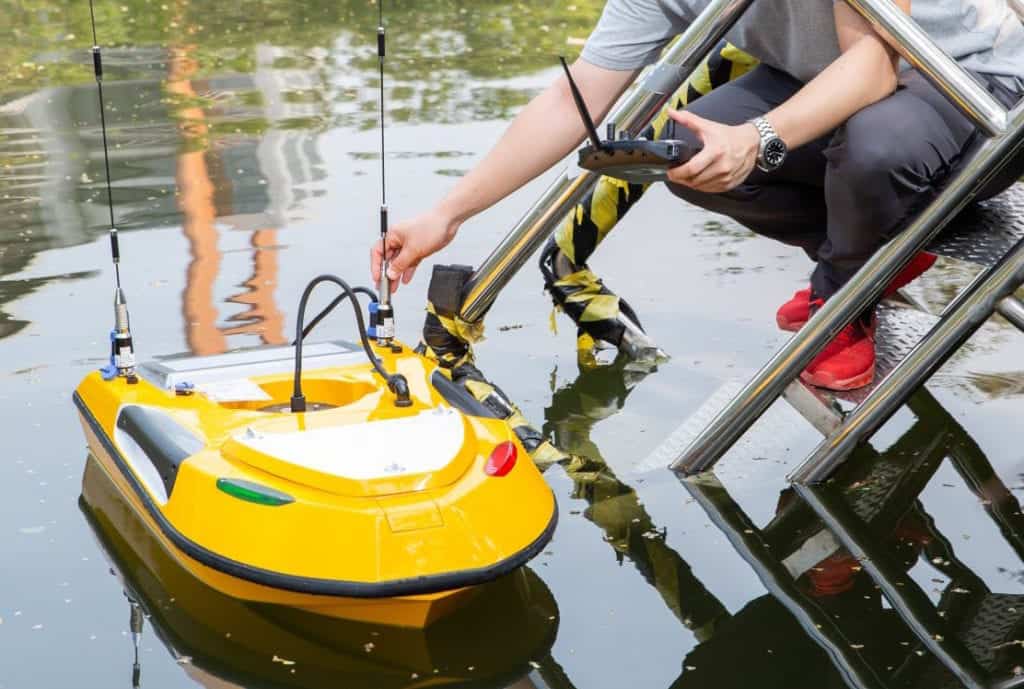
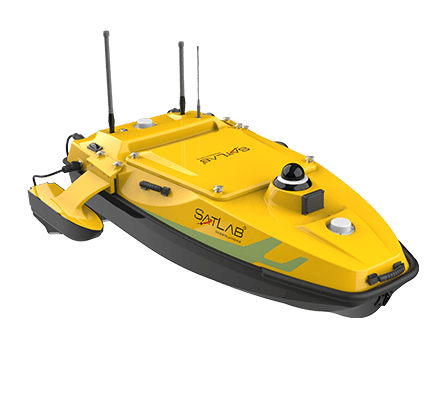
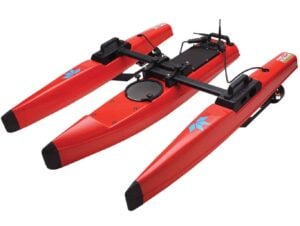
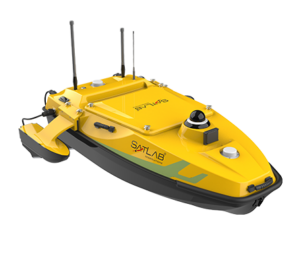
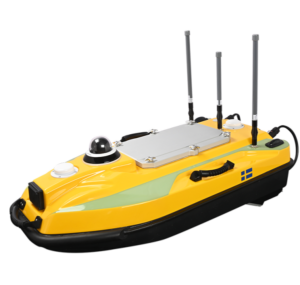
Compact portable USV for hydrographic & bathymetry surveying
Compact portable USV for hydrographic & bathymetry surveying
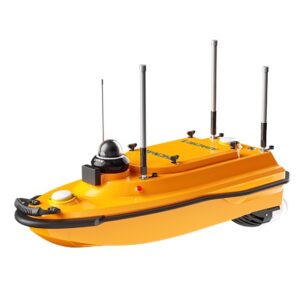
...t and portable USV for hydrographic and bathymetric surveys. Its moon pool supports flexible... The SL20 USV supports both remote control mode and auto-pilot mode, performs great line tracking...
The Technical Guide to Environmental Monitoring USV
Overview by
William Mackenzie
Updated:
Introduction to Environmental Monitoring USVs
Environmental monitoring Unmanned Surface Vehicles (USVs) are autonomous or remotely operated vessels designed to collect environmental data across oceans, coastal waters, rivers, lakes, and reservoirs. Equipped with scientific sensors and sampling instruments, these platforms support water quality assessment, oceanographic research, pollution detection, and aquatic ecosystem monitoring.
Environmental monitoring USVs enable repeatable surveys, continuous measurements, and georeferenced data collection without requiring onboard personnel. Integrated navigation systems, data logging, and communications equipment allow scientific measurements to be associated with survey locations and transmitted to operators. Available configurations range from compact freshwater platforms to long-endurance offshore vessels, with options for multiparameter water quality sensors, acoustic instruments, and automated water samplers.
Types of Environmental Monitoring USVs
Environmental monitoring USVs are available in different configurations to accommodate varying operating environments, mission durations, and scientific payload requirements. Common types include:
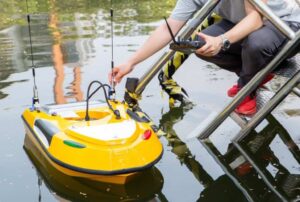
Compact and Portable USVs: Lightweight vessels designed for localized environmental surveys in lakes, rivers, reservoirs, and sheltered coastal waters. Their small dimensions simplify transportation, launch, and recovery while accommodating compact water quality sensors and other lightweight scientific instruments.
Long-Endurance USVs: Platforms designed for sustained environmental data collection over extended periods. Energy-efficient onboard systems, substantial power reserves, and remote communications support repeated surveys, continuous observations, and long-term monitoring with reduced retrieval requirements.
Solar-Powered USVs: Vessels incorporating photovoltaic panels and onboard batteries to extend operational endurance. Solar-assisted power systems can support scientific sensors, navigation equipment, and communications during prolonged deployments, although endurance depends on available sunlight, energy storage capacity, and overall power consumption.
Multi-Payload USVs: Modular platforms capable of carrying several scientific instruments simultaneously, including water quality sondes, fluorometers, acoustic sensors, and automated water samplers. Interchangeable mounting arrangements and compatible power and data interfaces allow operators to configure vessels for different monitoring requirements.
Shallow-Water and Coastal Monitoring USVs: Low-draft vessels designed for operation in estuaries, tidal channels, lagoons, and nearshore environments. Compact hull configurations and maneuverability enable data collection in shallow or restricted waters where larger survey vessels may be unsuitable.
Offshore and Open-Ocean Monitoring USVs: Marine platforms engineered for environmental monitoring in exposed waters, incorporating appropriate seakeeping capabilities, marine-grade equipment, and long-range communications. These vessels support oceanographic research, offshore environmental assessments, and persistent observation programs.
Selection depends on the monitoring environment, required sensor payloads, mission endurance, and practical deployment and recovery constraints.
Core Applications of Environmental Monitoring USVs
Water Quality Monitoring
Environmental monitoring USVs collect measurements of temperature, conductivity, salinity, dissolved oxygen, pH, turbidity, and other water quality parameters. Integrated sensors record measurements along predefined survey routes, generating georeferenced datasets that characterize spatial variations in water conditions. These surveys support environmental assessments, aquatic ecosystem monitoring, and the identification of localized changes in water quality.
Oceanographic Studies
USVs support oceanographic research by measuring sea surface temperature, salinity, water currents, and biological indicators across coastal and offshore environments. Acoustic instruments and deployable sensors can extend observations into the water column, supporting investigations of circulation patterns, water mass characteristics, and marine ecosystem conditions. Autonomous operations also enable repeated measurements across large survey areas while reducing reliance on crewed research vessels.
Inland Waterway and Freshwater Monitoring
Environmental monitoring USVs are used in rivers, lakes, reservoirs, and other freshwater environments to assess water quality and aquatic ecosystem conditions. Their ability to operate in shallow or difficult-to-access locations supports surveys of suspended sediment, nutrient-related conditions, and algal activity. Applications include reservoir management, freshwater resource assessment, and monitoring programs designed to identify seasonal or localized environmental changes.
Pollution Detection and Tracking
USVs equipped with appropriate sensors can investigate industrial discharges, agricultural runoff, sediment plumes, and other sources of aquatic pollution. Water quality instruments detect changes in measurable environmental parameters, while imaging equipment can document visible surface contamination and floating debris. Repeated surveys help characterize affected areas and track changing conditions, with automated water sampling available for subsequent laboratory analysis of specific contaminants.
Sensors & Payloads Used by Environmental Monitoring USVs
Environmental monitoring USVs can integrate a range of scientific instruments for measuring water conditions, collecting physical samples, and documenting environmental features. Payload selection depends on the required measurements, vessel capacity, available power, data interfaces, and operating environment.
Sensor or Payload
Measurements / Capabilities
USV Integration Considerations
Multiparameter Water Quality Sondes
Measure multiple physical and chemical parameters, including temperature, conductivity, pH, dissolved oxygen, and turbidity, depending on the installed sensors.
Require submerged mounting, suitable water flow, regular calibration, and measures to manage biofouling during extended deployments.
Conductivity, Temperature, and Depth (CTD) Sensors
Measure conductivity, temperature, and pressure to calculate salinity and derive depth for water column characterization.
Can be mounted at fixed depths or integrated with winches and profiling mechanisms for vertical measurements.
Fluorometers
Measure fluorescence associated with chlorophyll, dissolved organic matter, and selected tracers to support biological and water quality monitoring.
Require appropriate optical placement, calibration, and protection against biofouling and interference from external light.
Acoustic Doppler Current Profilers (ADCPs)
Measure water current velocity and direction across multiple depth cells using acoustic Doppler measurements.
Require appropriate transducer mounting, acoustic clearance, and suitable heading, motion, and navigation data for current measurement correction.
Water Sampling Systems
Collect physical water samples for laboratory analysis of nutrients, contaminants, microorganisms, and other environmental parameters.
May incorporate pumps, collection containers, sampling mechanisms, and onboard storage, with options for surface or subsurface sampling.
Imaging Systems
Capture visual imagery of floating debris, water surface conditions, shorelines, and environmental features.
Require suitable camera positioning, field of view, lighting, and georeferencing capabilities for environmental documentation and mapping.
Developments in Environmental Monitoring USVs
Advances in autonomous navigation, onboard power management, and scientific instrument integration are extending the capabilities of environmental monitoring USVs. Key developments include:
Long-Endurance Autonomous Monitoring: Improvements in energy-efficient electrical systems, solar-assisted power generation, and autonomous mission management support extended survey operations with fewer vessel retrievals. Continued development focuses on managing sensor power requirements, maintaining data quality, and sustaining operations during lengthy remote deployments.
Adaptive Environmental Sampling: Sensor-driven mission planning and adaptive navigation enable suitably equipped USVs to modify survey routes or sampling locations in response to environmental measurements. These capabilities support more targeted monitoring of pollution events, algal blooms, and localized water quality variations.
Multiparameter Sensor Integration: Modular payload architectures and integrated data acquisition systems enable simultaneous measurements of physical, chemical, and biological water characteristics. Developments in sensor synchronization, calibration management, and data processing support more consistent collection of complementary scientific datasets during individual surveys.
Coordinated Monitoring Networks: Environmental monitoring USVs can operate alongside fixed monitoring stations, oceanographic buoys, and other autonomous platforms. Improvements in communications, data interoperability, and shared monitoring infrastructure allow measurements from multiple sources to contribute to wider environmental observation programs.
These developments support more persistent and adaptable environmental monitoring operations while improving the collection and availability of scientific data from remote aquatic environments.
The latest unmanned systems news, straight to your inbox.
Get our weekly roundup of technology developments, new products and industry news.
THANK YOU FOR SIGNING UP
Thanks for joining us. Check your inbox.
We've sent you an email. Click the confirmation link to complete your subscription to the weekly eBrief. In the meantime, explore the latest news, suppliers and technologies on UST.
Advancing Unmanned Systems Through Strategic Collaboration
UST works with major OEMs to foster collaboration and increase engagement with SMEs, to accelerate innovation and drive unmanned systems capabilities forward.