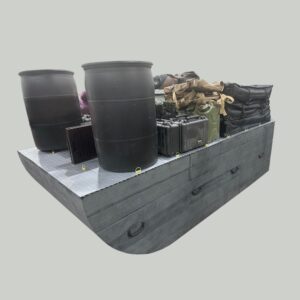
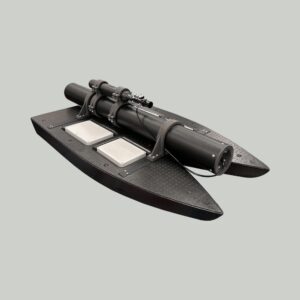
Anti-Submarine Warfare (ASW) Unmanned Surface Vehicles (USVs) are autonomous or remotely operated maritime platforms designed to detect, classify, localize, and track submarines and other underwater contacts. Equipped with passive and active sonar, towed acoustic arrays, onboard processing, and autonomous navigation systems, these vessels support persistent underwater surveillance across coastal and open-ocean environments.
This page showcases suppliers of ASW USVs for applications including submarine detection and tracking, naval fleet screening, harbor protection, and critical undersea infrastructure surveillance.
If you design, build or supply Anti-Submarine Warfare USVs, create a profile to showcase your capabilities and connect with visitors who have an active requirement for your solutions.
The Technical Guide to Unmanned Surface Vehicles for Anti-Submarine Warfare
Overview by
William Mackenzie
Updated:
Introduction to Anti-Submarine Warfare USVs
Anti-Submarine Warfare (ASW) Unmanned Surface Vehicles (USVs) are autonomous or remotely operated maritime platforms designed to detect, classify, localize, and track submarines and other underwater contacts. Equipped with acoustic sensors, navigation equipment, onboard processing, and mission management systems, these vessels support persistent underwater surveillance without requiring onboard crews.
ASW USVs operate independently or alongside crewed naval vessels, aircraft, and underwater platforms, extending surveillance coverage and supporting coordinated anti-submarine warfare operations. Maritime ASW solutions range from compact coastal surveillance craft to long-endurance ocean-going vessels equipped with advanced sonar arrays.
Core Capabilities of USVs for Anti-Submarine Warfare
Submarine Detection
ASW USVs use passive and active sonar to detect underwater contacts across coastal and open-ocean environments. While passive systems listen for acoustic signatures generated by submarines, active sonar transmits sound pulses and analyzes returning echoes. Detection performance depends on sensor configuration, target characteristics, background noise, and underwater sound propagation, which varies with temperature, salinity, and depth.
Acoustic Target Classification
Acoustic processing systems help distinguish potential submarine contacts from merchant vessels, marine life, and environmental noise. By analyzing sound frequencies, spectral patterns, and temporal characteristics, onboard software identifies acoustic features associated with different targets. Automated classification supports operator decision-making, although uncertain detections may require further observation or confirmation from additional sensors.
Submarine Localization and Position Estimation
Anti-submarine warfare systems estimate underwater target positions by combining acoustic bearings, active sonar range measurements, and observations collected over time. Multiple sensors or geographically separated USVs can improve localization by providing measurements from different positions. Reliable target location estimates also depend on accurate navigation, timing, sensor alignment, and information about the underwater acoustic environment.
Continuous Submarine Tracking
Long-endurance unmanned ASW platforms maintain acoustic surveillance over extended periods, updating target tracks as new sensor measurements become available. Autonomous mission management systems can adjust vessel movements and sensor operation to support tracking while remote operators monitor contact information. However, tracking continuity depends on acoustic conditions, target behavior, and the ability to maintain or reacquire sensor contact.
Underwater Surveillance and Acoustic Intelligence Collection
ASW USVs collect acoustic recordings and contact data to support maritime situational awareness and underwater intelligence analysis. Passive monitoring can identify recurring acoustic activity, characterize underwater sound environments, and contribute to acoustic signature libraries. Depending on the system architecture and communications available, recorded data may be processed onboard or transmitted to remote facilities for further evaluation.
Sonar Systems Used on ASW USVs
ASW USVs can integrate different sonar technologies depending on mission requirements, payload capacity, and operating environment. Acoustic sensors collect underwater signals, which onboard processing systems combine with navigation and environmental data to generate detections and target estimates. Common acoustic payload configurations include:
Passive Towed Array Sonar: Receives underwater acoustic signals through hydrophone arrays deployed behind the vessel, supporting acoustic surveillance, target classification, and bearing estimation.
Active Towed Array Sonar: Uses transmitted acoustic pulses and received echoes to detect and localize underwater targets. Some configurations combine active transmitters with passive receiving arrays.
Hull-Mounted Sonar: Integrates acoustic transducers into the vessel structure to support underwater detection without requiring a separately towed array.
Dipping Sonar Systems: Lower acoustic transducers into the water from suitably equipped USVs, supporting active and passive detection at selected depths while the vessel maintains an appropriate operating position.
Variable Depth Sonar (VDS): Uses towed acoustic equipment operated at adjustable depths, allowing sensors to exploit underwater sound propagation conditions and improve detection coverage across different water layers.
Sonobuoy Dispensing Systems: Deploy expendable passive or active acoustic sensors into designated surveillance areas, with compatible receivers and communications equipment supporting data collection and processing.
Sonar selection requires consideration of acoustic performance, vessel self-noise, power requirements, deployment and recovery mechanisms, and the space available for associated equipment. Towed arrays and variable-depth systems also require suitable handling arrangements and stable operation under anticipated towing conditions.
Mission Profiles & Naval Applications of ASW USVs
Open-Ocean Submarine Detection and Tracking
Long-endurance ASW USVs support submarine surveillance across extensive offshore operating areas, conducting sustained patrols with towed acoustic arrays and autonomous mission systems while transmitting contact information to naval command centers. Distributed deployments can extend acoustic monitoring beyond the immediate operating area of crewed warships, supporting broader maritime surveillance coverage.
Strategic Chokepoint Monitoring and Littoral Anti-Submarine Warfare
Narrow waterways, maritime passages, and coastal approaches are important areas for submarine monitoring, where ASW USVs can patrol designated surveillance zones or contribute to distributed acoustic sensor networks. Shallow-water operations present particular challenges, as variable bathymetry, reverberation, vessel traffic, and complex sound propagation require careful selection of acoustic sensors and operating patterns.
Naval Task Group and Fleet Screening
ASW USVs can extend the underwater surveillance perimeter around naval formations by operating at positions separated from crewed vessels. Acoustic information collected by these platforms contributes to the wider tactical picture, helping naval operators assess potential underwater threats. Effective cooperative operations depend on secure communications, coordinated navigation, and compatibility with naval command systems.
Harbor Approaches and Naval Base Perimeter Protection
Compact and medium-sized ASW USVs support underwater monitoring near military ports, naval installations, and harbor entrances. Their acoustic sensors can complement fixed surveillance equipment and crewed patrol assets, particularly where repeated monitoring of designated approaches is required. Operations in these environments must also accommodate confined waterways, commercial traffic, and shallow-water acoustic interference.
Critical Undersea Infrastructure and Seabed Surveillance
Unmanned surface vessels can monitor underwater activity near subsea communications cables, pipelines, offshore energy infrastructure, and other strategically important assets. ASW-configured platforms contribute acoustic surveillance and underwater contact tracking, while additional sensors may support inspection or seabed monitoring. Remote operation also allows surveillance activities to extend beyond conventional crewed patrol schedules.
Integration with Crewed & Unmanned Naval Systems
Autonomous ASW systems can operate as part of wider naval surveillance architectures, exchanging acoustic contacts, tracking information, and mission data with other platforms. The table below outlines key integration options and their roles in coordinated anti-submarine warfare operations.
Platform / System
Integration Role
Key Considerations
Crewed Surface Warships
Exchange acoustic contact information and support coordinated surveillance with frigates, destroyers, and other naval vessels.
Secure communications, coordinated operations, and data exchange.
Maritime Patrol Aircraft and ASW Helicopters
Share target observations and support coordinated searches involving airborne sonar and sonobuoy systems.
Cross-platform data exchange, timing, and coordination.
Autonomous Underwater Vehicles (AUVs)
Coordinate surveillance activities between surface and underwater platforms.
Underwater communication limitations, navigation accuracy, and mission coordination.
Fixed and Deployable Underwater Sensor Networks
Combine mobile acoustic observations with measurements from seabed sensors, moored arrays, and other underwater monitoring equipment.
Sensor data integration, timing, and communication interfaces.
Naval Combat Management Systems (CMS)
Transfer acoustic tracks and associated information into command systems for operator assessment and wider maritime situational awareness.
System compatibility, standardized data exchange, and bandwidth requirements.
Emerging Developments in ASW USV Technology
Advances in autonomous navigation, acoustic sensing, and data processing are expanding the capabilities of unmanned anti-submarine warfare platforms. Key areas of technological development include:
Artificial Intelligence (AI)-Assisted Acoustic Processing: Machine learning techniques are being developed to improve automated contact detection, acoustic classification, and false-alarm reduction, while more advanced systems aim to combine acoustic observations with environmental and tactical information.
Miniaturized Sonar Payloads: Compact, low-drag towed arrays and lightweight handling equipment are extending acoustic surveillance capabilities to smaller USVs with limited payload capacity.
Automated Sonar Deployment and Recovery: Autonomous handling systems are being demonstrated to launch, retrieve, and manage towed acoustic arrays with reduced operator intervention.
Acoustic Quieting and Hybrid Propulsion: Electric operating modes, vibration isolation, and machinery noise reduction can lower acoustic interference during passive sonar operations.
Collaborative Multi-USV and Cross-Domain Networks: Coordinated deployments of surface, subsurface, and aerial platforms are being developed to support distributed acoustic detection, bistatic and multistatic sonar operations, and cooperative submarine tracking.
Together, these developments support more persistent and distributed maritime surveillance, allowing ASW USVs to complement crewed naval assets through extended acoustic coverage and coordinated underwater threat detection.
The latest unmanned systems news, straight to your inbox.
Get our weekly roundup of technology developments, new products and industry news.
THANK YOU FOR SIGNING UP
Thanks for joining us. Check your inbox.
We've sent you an email. Click the confirmation link to complete your subscription to the weekly eBrief. In the meantime, explore the latest news, suppliers and technologies on UST.
Advancing Unmanned Systems Through Strategic Collaboration
UST works with major OEMs to foster collaboration and increase engagement with SMEs, to accelerate innovation and drive unmanned systems capabilities forward.