Showcase your capabilities
If you design, build or supply Underwater Crawlers, create a profile to showcase your capabilities and connect with visitors who have an active requirement for your solutions.




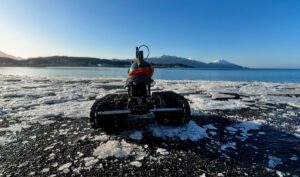
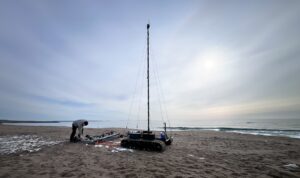
Underwater crawlers are remotely operated or autonomous robotic vehicles designed to traverse the seabed, submerged structures, and confined underwater environments. Using tracked or wheeled locomotion, magnetic adhesion, or suction systems, these subsea crawlers provide stable platforms for inspection, surveying, maintenance, and intervention.
This page features suppliers of underwater crawlers for offshore pipeline inspection, ship hull assessment, cable trenching, marine scientific research, and naval operations.
Read the Technology Overview
Robotics and Subsea Technologies for Defense, Commercial & Science Applications

If you design, build or supply Underwater Crawlers, create a profile to showcase your capabilities and connect with visitors who have an active requirement for your solutions.

Underwater crawlers are remotely operated or autonomous robotic vehicles designed to travel along the seabed, submerged structures, and within confined underwater environments. Unlike free-swimming Remotely Operated Vehicles (ROVs), these systems use tracks, wheels, magnetic adhesion, or suction mechanisms to maintain contact with underwater surfaces, providing a stable platform for inspection, maintenance, surveying, and intervention tasks.
Subsea crawler systems range from heavy-duty seabed excavation vehicles to compact underwater crawler robots used for hull inspection, pipeline assessment, and scientific research. Depending on their configuration, they may carry cameras, sonar, Nondestructive Testing (NDT) sensors, sampling equipment, or robotic manipulators. Specialized crawler ROV platforms combine surface-based mobility with remote control, onboard sensing, and, in some cases, swimming capabilities.
Underwater crawlers can be classified according to their operating environment, locomotion system, and method of maintaining contact with a surface.
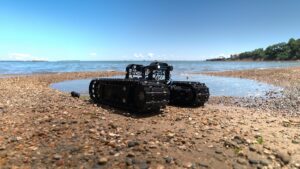
Seafloor crawlers travel horizontally across the seabed using powered tracks or wheels, relying on vehicle weight and ground contact to provide traction. These platforms are designed for sustained bottom-contact operations and may be equipped with scientific instruments or heavy intervention tools.
Seafloor crawler selection depends on sediment conditions, ground pressure, traction requirements, and the payload needed for the intended mission.
Surface-climbing underwater crawlers use active or passive adhesion mechanisms to maintain contact with vertical, inclined, or inverted submerged structures. These systems allow sensors and inspection tools to operate directly against surfaces where gravity-based traction would be insufficient.
Adhesion performance depends on surface material, curvature, coating thickness, roughness, marine growth, and the force required to maintain contact during operation.
Confined-space crawling robots are compact vehicles designed to navigate restricted underwater passages, submerged infrastructure, and internal structures that are difficult to inspect using conventional ROVs.
These vehicles typically prioritize compact dimensions, maneuverability, inspection coverage, and reliable communications within restricted spaces. They often use tethered control and integrated cameras or specialized inspection sensors.
Hybrid underwater crawler vehicles combine surface-based locomotion with thrusters that provide swimming or hovering capabilities. These systems can travel through the water column before establishing contact with the seabed or a submerged structure, using powered tracks, wheels, or adhesion systems for stable inspection and tooling operations.
Hybrid configurations are particularly useful where a crawler must move between separated inspection locations or negotiate obstacles that prevent continuous surface travel. Some platforms combine remotely operated swimming with precise contact-based inspection, reducing the need for separate robotic systems.
Subsea crawlers are used to inspect and maintain offshore energy infrastructure, including pipelines, cables, risers, and subsea installations. Heavy tracked vehicles may perform cable burial, trenching, and seabed preparation, while smaller crawler robots carry cameras, sonar, and contact inspection sensors.
Magnetic and suction-based crawlers can also inspect suitable offshore structures, providing stable positioning for corrosion assessment, ultrasonic thickness measurements, and other structural integrity inspections.
Underwater crawler robots support the inspection and maintenance of ship hulls, harbor structures, dams, submerged pilings, and coastal infrastructure. Adhesion-based vehicles can traverse compatible hull surfaces to collect visual inspection data, measure material thickness, or support cleaning operations.
Compact crawling robots may also operate in flooded tanks, culverts, and restricted structural spaces, reducing the need for direct diver access during certain inspection tasks.
Scientific benthic crawlers provide mobile platforms for studying seabed conditions, sediment characteristics, and marine ecosystems. Equipped with cameras, environmental sensors, and sampling instruments, these systems can collect measurements across defined areas or conduct repeated observations over extended periods.
Long-duration subsea crawler platforms can support benthic habitat surveys, sediment investigations, and monitoring of environmental changes near offshore installations or research sites.
Heavy-duty underwater crawlers are used for seabed preparation, excavation, trenching, and other subsea construction activities. Their tracked locomotion systems provide the traction required to operate excavation equipment, trenching tools, and specialized intervention payloads.
Smaller crawler ROVs may support localized inspection, measurement, and manipulation tasks before, during, or after underwater construction work.
Underwater crawlers support naval inspection, infrastructure assessment, and selected maritime security operations. Magnetic crawler robots can inspect compatible ship hulls and submerged structures, while compact inspection platforms can access restricted underwater spaces.
Specialized amphibious crawlers may also support underwater object investigation, harbor infrastructure monitoring, and Explosive Ordnance Disposal (EOD) assessment when equipped with suitable sensors and intervention equipment.
Underwater crawlers can accommodate a range of inspection, surveying, and intervention payloads. Electric or hydraulic drives power locomotion and tooling, while onboard controllers manage navigation and sensor operations. Tethered systems may receive power and transmit inspection data to surface operators, while autonomous platforms use onboard power and control systems.
Modular payload configurations allow an underwater crawler to be adapted to different missions without requiring a completely separate robotic platform. Collected data may be transmitted for live assessment or recorded for subsequent analysis.
Developments in underwater crawler robotics are focused on improving mobility, autonomy, inspection capabilities, and operational endurance.
These developments are expanding the potential for underwater crawler systems to undertake complex inspection and monitoring tasks with reduced reliance on continuous vessel-based support.


 Searching Companies & Products