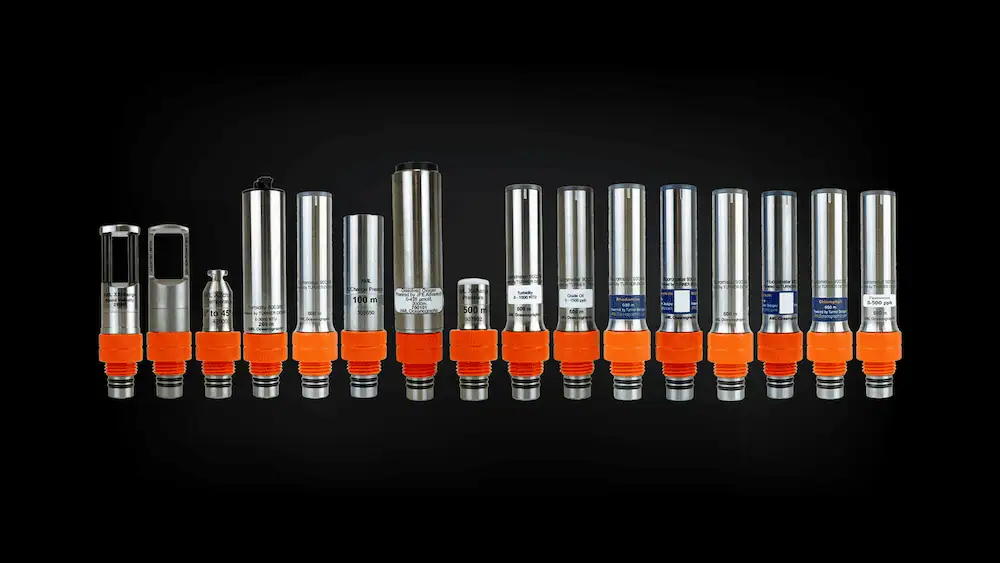
Dissolved oxygen sensors measure molecular oxygen in water, enabling AUVs, ROVs, USVs, gliders, and profiling systems to collect oxygen data across depth, distance, and time.
This page features dissolved oxygen sensor manufacturers, supporting oceanographic research, water quality monitoring, hypoxia detection, aquaculture, and ecosystem assessment.
If you design, build or supply Dissolved Oxygen Sensors, create a profile to showcase your capabilities and connect with visitors who have an active requirement for your solutions.
The Engineering Guide to Dissolved Oxygen Sensors for AUV, ROV & USV
Overview by
William Mackenzie
Updated:
Introduction to Dissolved Oxygen Sensors
Dissolved Oxygen (DO) sensors measure the amount of molecular oxygen present in water, providing important data for oceanography, environmental monitoring, water quality assessment, and aquatic ecosystem research. On unmanned platforms, a dissolved oxygen sensor can turn an autonomous or remotely operated vehicle into a mobile system for mapping oxygen conditions across depth, distance, and time.
Dissolved oxygen measurement can use optical or electrochemical technologies, each with different requirements for power, calibration, water movement, response time, and maintenance. Measurements may also require temperature, salinity, and pressure compensation. Sensor selection depends on mission duration, platform size, operating environment, response time, and required spatial resolution.
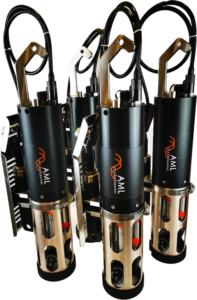
Dissolved Oxygen Sensor by AML Oceanographic
Types of Dissolved Oxygen Sensors
Several sensing principles are used to determine dissolved oxygen in water. The most appropriate depends on the deployment environment, required response time, calibration stability, and maintenance needs.
Optical Dissolved Oxygen Sensors
An optical dissolved oxygen sensor uses an oxygen-sensitive luminophore in a sensing layer or cap. When excited by light, its luminescence changes in response to oxygen, allowing the sensor to calculate oxygen concentration. Because the technique does not consume oxygen, optical dissolved oxygen sensors are well suited to low-flow and long-duration monitoring. They also avoid the electrolyte servicing associated with electrochemical designs, although the sensing element can age or foul and may require calibration or replacement.
Galvanic Dissolved Oxygen Sensors
Galvanic DO sensors use electrodes immersed in an electrolyte and separated from the water by an oxygen-permeable membrane. Oxygen diffusing through the membrane generates a current related to oxygen concentration. A galvanic dissolved oxygen probe does not normally require external polarization before use. However, it consumes oxygen and electrode material, making water movement, membrane condition, electrolyte condition, and maintenance important for consistent measurements.
Polarographic Dissolved Oxygen Sensors
Polarographic sensors also measure oxygen electrochemically but require an external voltage between the electrodes. Once polarized, the resulting current is used to determine dissolved oxygen. These sensors typically need a stabilization period before measurement and, like galvanic probes, can be affected by poor water flow, membrane contamination, electrolyte degradation, and temperature changes.
Microelectrode and Miniature Dissolved Oxygen Sensors
Microelectrode DO sensors use very small sensing areas, allowing fast response and high spatial resolution near sediments, organisms, biofilms, or other localized features. Miniature dissolved O2 sensor designs are also useful where payload space is limited. Their small size can make mechanical protection important during launch, recovery, or operation near the seabed.
Applications of DO Sensors Across Unmanned Systems
Autonomous Underwater Vehicles (AUVs), Remotely Operated Vehicles (ROVs), Unmanned Surface Vessels (USVs), gliders, profiling systems, and instrumented buoys can all carry DO sensors. Combining dissolved oxygen measurements with position, depth, temperature, and salinity allows oxygen conditions to be interpreted in a wider environmental context. Accurate mapping also depends on sensor placement, calibration, and synchronization with vehicle data.
Oceanographic Water Quality Monitoring
Dissolved oxygen sensors can record how oxygen concentration changes with location and depth. Combined with conductivity, temperature, and depth measurements, a dissolved oxygen probe can help characterize water masses and identify relationships between oxygen and physical oceanographic conditions. On fast-moving platforms, sensor response lag should also be considered when interpreting sharp gradients.
Coastal and Estuarine Monitoring
Coastal waters and estuaries can show strong dissolved oxygen variation due to tides, freshwater inflow, biological activity, and stratification. Mobile DO sensors allow unmanned platforms to collect measurements along transects and through different water layers, providing broader spatial coverage than a single fixed DO meter.
Hypoxia and Anoxic Zone Detection
Dissolved oxygen analyzers carried by autonomous platforms can locate low-oxygen regions, determine the depth or extent of hypoxic and anoxic zones, and track how they change over time. High-resolution profiling is particularly useful where oxygen concentrations change over short vertical distances.
Aquaculture and Fisheries Monitoring
Unmanned platforms equipped with DO probes can survey oxygen conditions across cages, ponds, coastal sites, and surrounding waters rather than relying on measurements from one location. When a dissolved oxygen logger is synchronized with depth and navigation data, operators can identify spatial variations in oxygen availability.
Freshwater and Reservoir Surveys
Lakes and reservoirs can develop strong oxygen gradients where temperature-driven stratification limits mixing. DO sensors mounted on autonomous or remotely operated platforms can collect depth profiles and spatial surveys efficiently. Combining dissolved oxygen measurements with temperature and depth data can help identify stratified and low-oxygen areas.
Wastewater and Discharge Monitoring
Dissolved oxygen monitoring can support assessment around wastewater outlets, industrial discharges, and receiving waters. Mobile platforms carrying optical dissolved oxygen sensors can measure multiple locations while recording depth and coordinates, helping characterize the spatial extent of water quality changes.
Ecosystem and Habitat Research
Oxygen availability influences the distribution and activity of aquatic organisms. Autonomous systems can combine optical oxygen sensors or electrochemical DO sensors with chlorophyll, turbidity, temperature, salinity, and other measurements to provide a broader picture of habitat conditions.
Emerging Developments in Dissolved Oxygen Sensing
Development is increasingly focused on reducing payload size, extending deployment duration, and improving measurement reliability. Relevant areas include:
Miniaturized optical sensors: Smaller packages can reduce payload burden on compact AUVs, gliders, and profiling systems.
Improved anti-fouling systems: Protective coatings and cleaning methods can reduce measurement errors during longer deployments.
Distributed water quality sensing: Multiple unmanned platforms can collect dissolved oxygen data across wider areas.
Adaptive sampling: Autonomous systems can alter mission behavior when significant oxygen gradients or low-oxygen regions are detected.
These developments are improving the use of dissolved oxygen sensors within autonomous environmental monitoring systems. Better sensor size, stability, anti-fouling performance, and data integration can support longer missions and more detailed characterization of dissolved oxygen in water.
The latest unmanned systems news, straight to your inbox.
Get our weekly roundup of technology developments, new products and industry news.
THANK YOU FOR SIGNING UP
Thanks for joining us. Check your inbox.
We've sent you an email. Click the confirmation link to complete your subscription to the weekly eBrief. In the meantime, explore the latest news, suppliers and technologies on UST.
Advancing Unmanned Systems Through Strategic Collaboration
UST works with major OEMs to foster collaboration and increase engagement with SMEs, to accelerate innovation and drive unmanned systems capabilities forward.