
Showcase your capabilities
If you design, build or supply Loitering Munitions, create a profile to showcase your capabilities and connect with visitors who have an active requirement for your solutions.




Loitering munitions are weaponized unmanned aircraft that can remain airborne while an operator or onboard system searches for, confirms, and engages a target using an integrated warhead. These systems range from portable fixed-wing and rotary-wing aircraft to VTOL, vehicle-launched, and longer-endurance platforms.
This category showcases loitering munitions manufacturers and suppliers of precision strike drones, supporting counter-UAS, air-defense suppression, tactical strike, and force-protection missions.
Read the Technology Overview
Tactical Hybrid VTOL UAS & Loitering Systems for Multi-Domain Operations

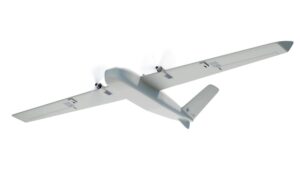
Advanced UAV & Unmanned Systems for Challenging Missions in Government, Defence & Commercial Applications

If you design, build or supply Loitering Munitions, create a profile to showcase your capabilities and connect with visitors who have an active requirement for your solutions.

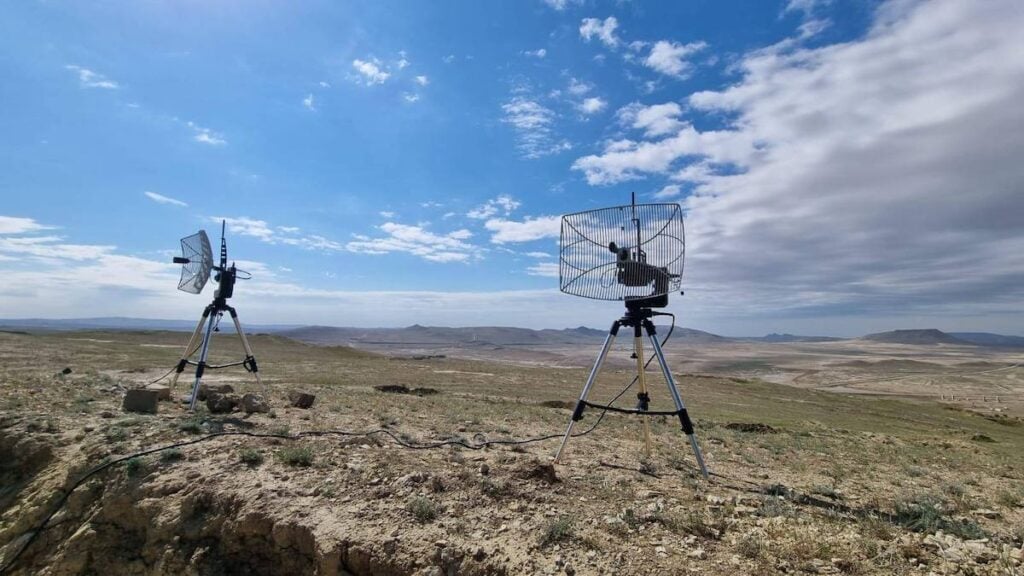
Loitering munitions are weaponized Unmanned Aircraft Systems (UAS) that remain airborne while an operator or onboard system searches for or confirms a target. They then strike using an integrated warhead. A typical system includes an aircraft, launcher, onboard sensors, navigation and guidance equipment, a communications link, and a control station. These components allow the aircraft to reach an operating area, relay what its sensors detect, and guide it toward a target.
These precision-strike drones can engage targets identified after launch, unlike one-way attack drones sent directly toward a preselected target. They also differ from reusable armed aircraft, which release a separate weapon and return.
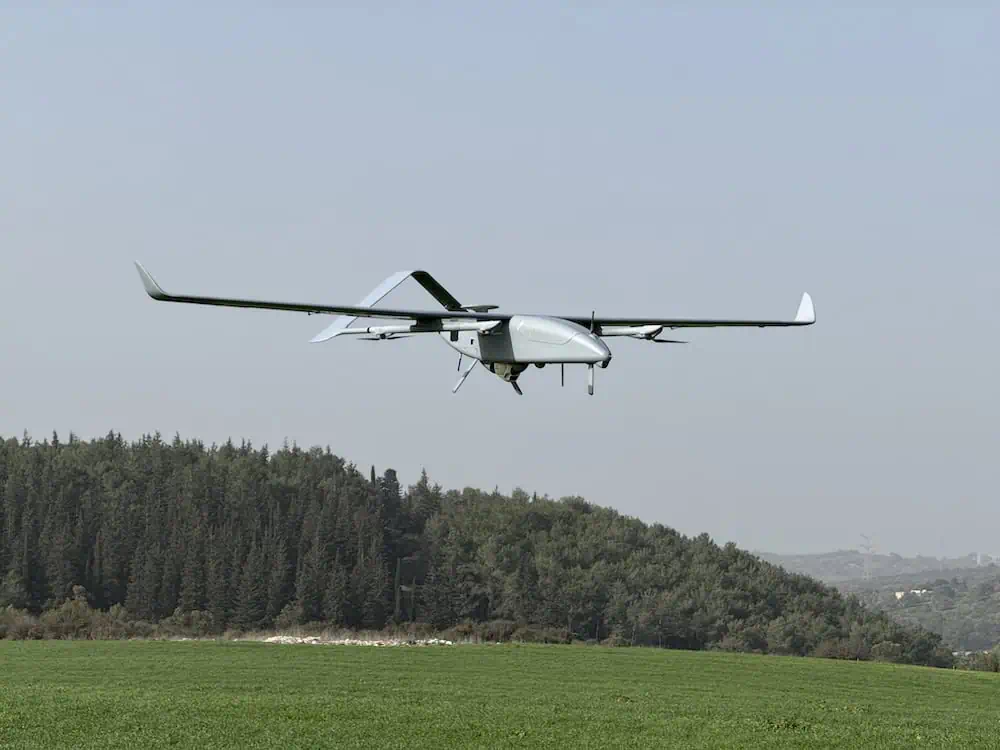
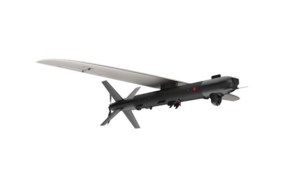
Fixed-wing loitering munitions use wings to generate lift during forward flight. They can remain airborne longer than a similarly sized multirotor, which is useful when the aircraft must travel farther or spend more time observing an area.
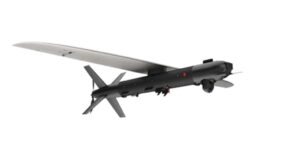
SpyX loitering munition by BlueBird Aero Systems
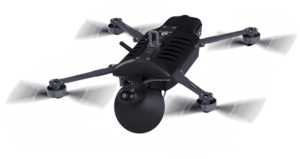
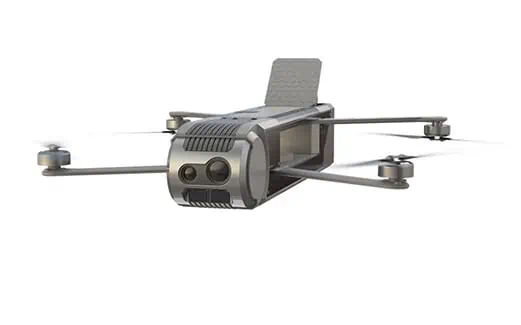
Rotary-wing systems can take off vertically, hover, and maneuver at low speed. Quadcopter loitering munitions can be launched from confined locations, although their flight time and payload are limited by battery capacity and aircraft size.
Hybrid aircraft take off and land vertically, then use their wings for forward flight. This can remove the need for a separate launch device while providing longer flight times than a conventional multirotor of comparable size.
Small loitering munitions can be carried and launched by personnel without a vehicle. Tubes and canisters protect the aircraft during transport and provide a way to launch it from portable equipment or a vehicle-mounted system.
Vehicle-mounted launchers allow a unit to carry several munitions ready for deployment. They can also accommodate aircraft or launch equipment that would be impractical for personnel to carry.
MALE aircraft can carry precision weapons and return after releasing them. Their size and endurance allow them to carry larger sensor and weapon loads over extended missions, but they need launch, recovery, and support arrangements that differ from those of small loitering munitions.
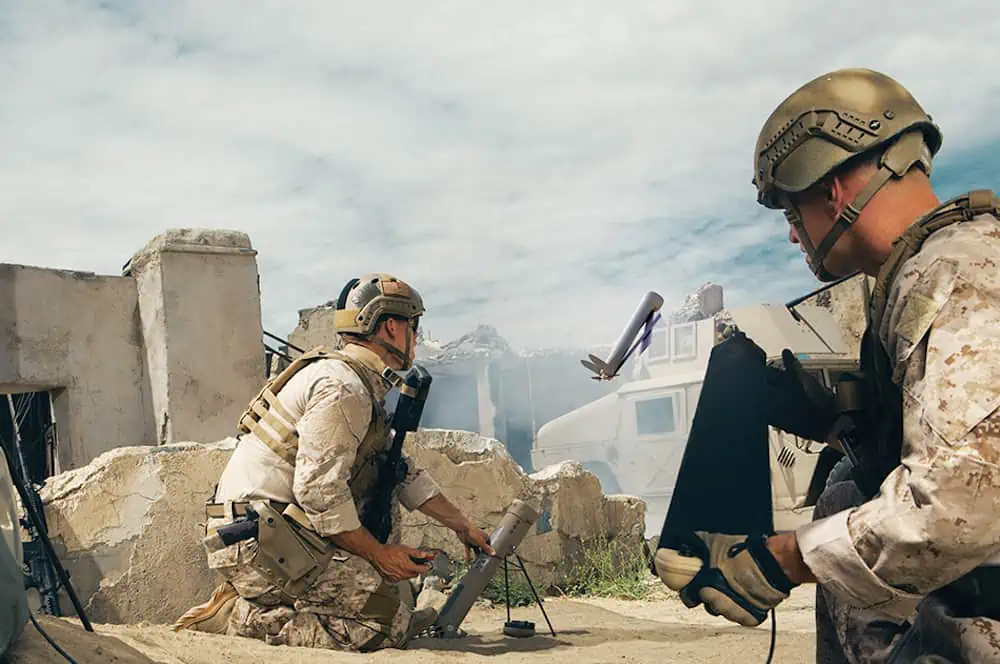
Dismounted units can carry and launch small loitering munitions without dedicated vehicles. The aircraft must be practical to transport and prepare in the field, while its video feed and controls must allow operators to find and assess a target.
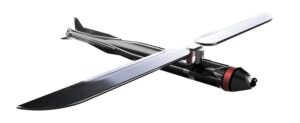
Peregrine UAS dual-use loitering munitions platform by Arctic Horizons
Some purpose-built systems are designed for counter-UAS operations, intercepting other unmanned aircraft. They need timely target information and guidance capable of bringing them into contact with an aircraft that may change speed or direction during flight.
Larger loitering munitions can travel farther or remain airborne longer than compact tactical systems. Their useful operating range also depends on how they receive target information, maintain communications, and identify a target at a distance.
A live sensor feed can help an operator find and assess a target that appears after launch. The aircraft must still have enough flight time to reach it, and the operator must receive the information and authorization needed to engage.
Certain loitering munitions are designed to attack air-defense equipment. An anti-radiation system can use radar emissions to help locate a target, while other aircraft use onboard imaging or target information supplied from elsewhere.
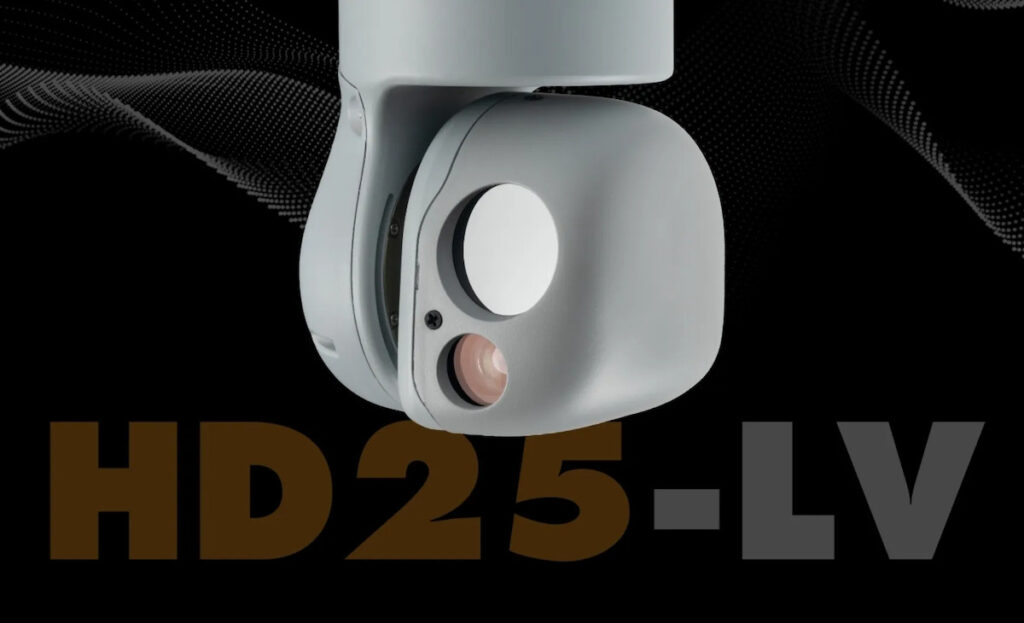
Onboard cameras can show an operator an area before a strike, helping them locate a target and observe its surroundings. The aircraft can also share what it sees with other personnel when its communications link and control system support that exchange.
Coastal forces and vessels may launch suitable systems to observe or engage targets at sea and near shore. Operations over water call for appropriate launch arrangements, communications coverage, moving-target tracking, and protection against salt exposure.
A loitering munition can extend observation around a remote position and give its operators a way to respond to a detected threat. Its usefulness depends on whether they can identify the target, maintain control, and obtain authorization before the aircraft runs out of flight time.
Anti-tank loitering munitions carry warheads designed for armored targets. Reaching and striking the intended part of a vehicle depends on target identification, the aircraft’s guidance, the warhead, and the conditions during the attack.
Fragmentation warheads are designed to affect personnel and other vulnerable targets within their area of effect. Their selection and use require attention to the likely effects around the target and any restrictions on the engagement.
Some product families offer different warheads or other payload configurations for the same aircraft or launcher. Crews may be able to use familiar controls and launch equipment across the range, but each configuration has its own handling and performance requirements.
Loitering munitions may be launched from vehicles or vessels and used alongside reconnaissance aircraft and tactical command systems. Operators need to receive mission information, control the aircraft, and share what its sensors observe with other units.
Requirements vary with the aircraft, payload, and location of use. Procurement and operational planning commonly address:
Testing and approvals must cover the parts of the system and the operating conditions relevant to its intended use.
New designs aim to make these systems easier to deploy and produce while sustaining navigation and control in difficult signal conditions:
Changes to the aircraft and its equipment also affect operator training, maintenance, and the supplies needed to keep systems in service.


 Searching Companies & Products