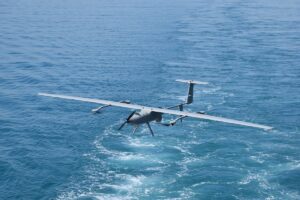

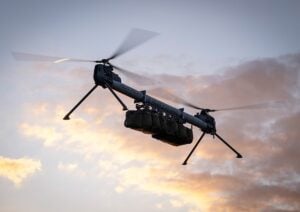

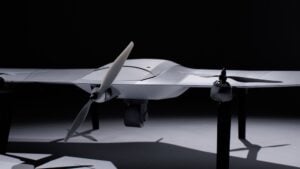

Showcase your capabilities
If you design, build or supply eVTOL Drones, create a profile to showcase your capabilities and connect with visitors who have an active requirement for your solutions.




eVTOL drones are electric or hybrid-electric aircraft designed for vertical takeoff and landing, autonomous flight control, and efficient wingborne cruise. Used across advanced air mobility, logistics, medical transport, offshore support, disaster response, and tactical resupply, these platforms connect prepared pads and remote sites without runway infrastructure.
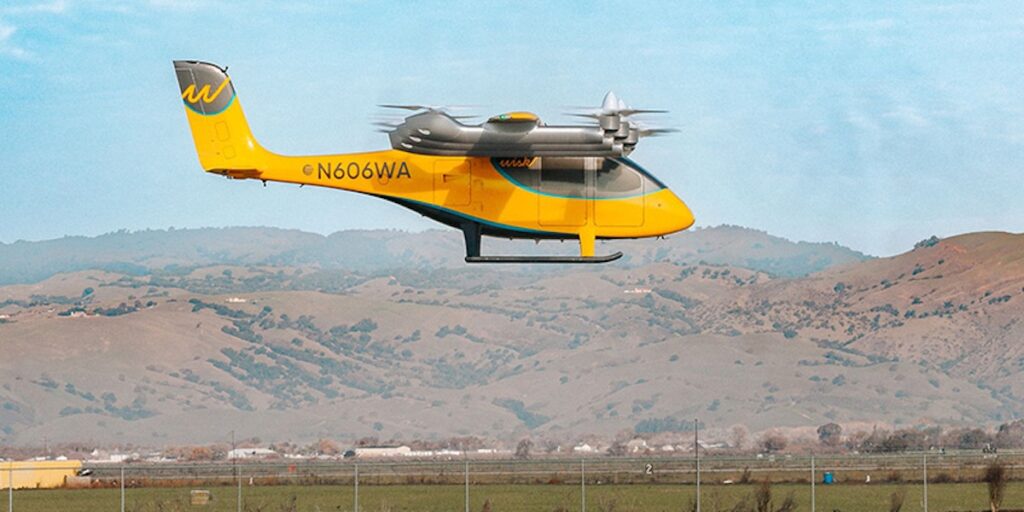
This page showcases eVTOL aircraft in development for autonomous cargo delivery, with configurations including lift-plus-cruise, tiltrotor, tilt-wing, hydrogen-electric, and hybrid electric architectures, with payloads carried in internal bays or external pods.
Read the Technology Overview
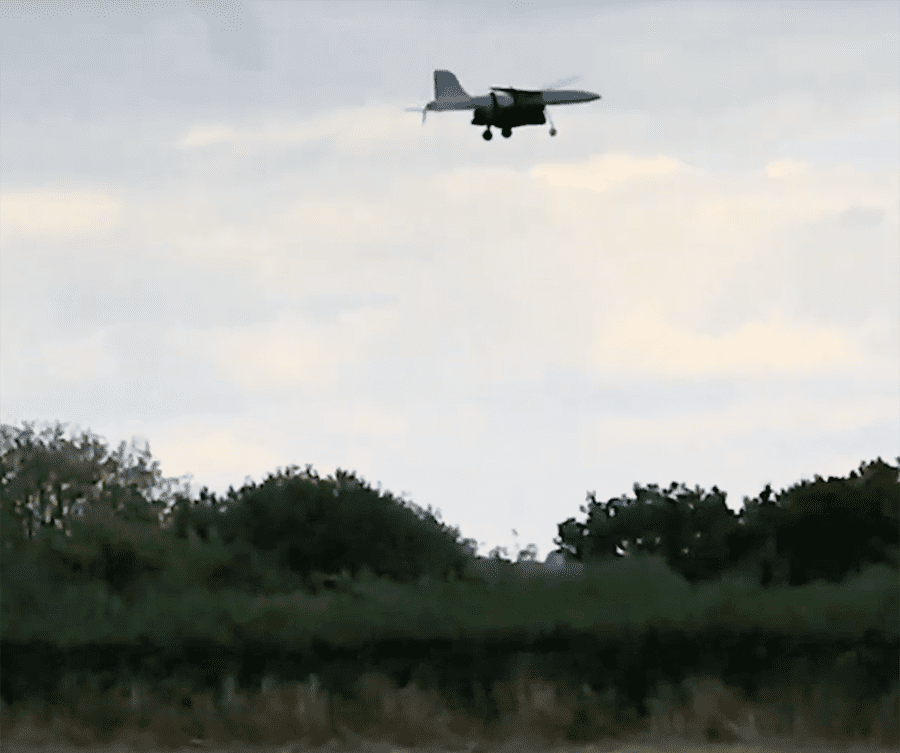
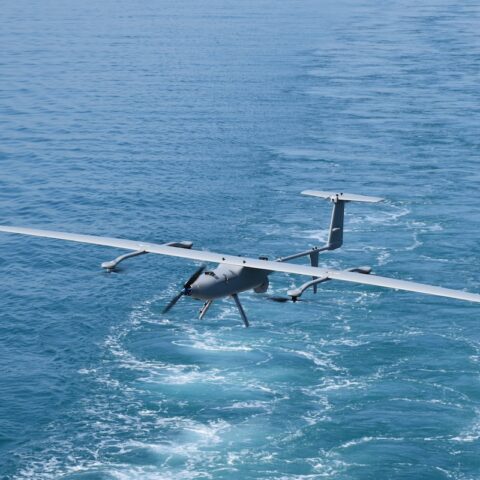
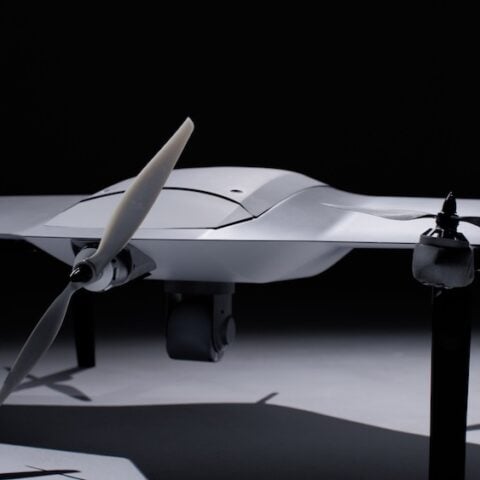
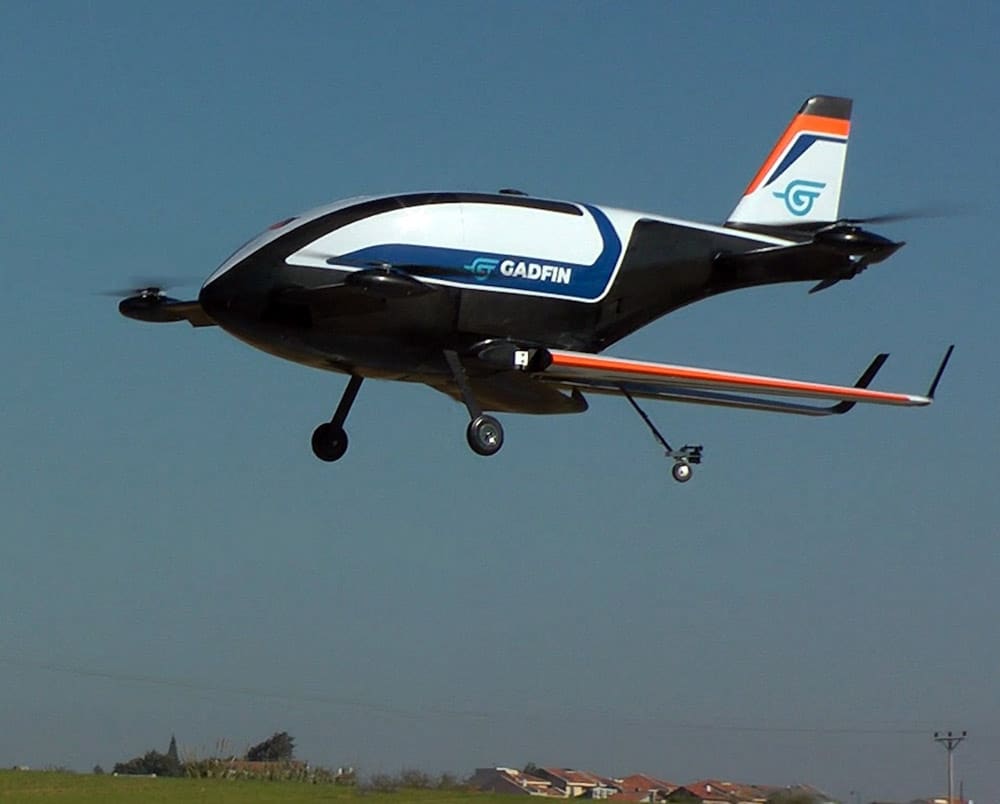
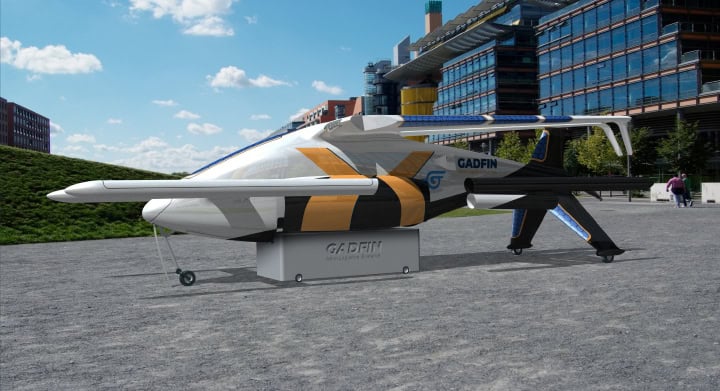
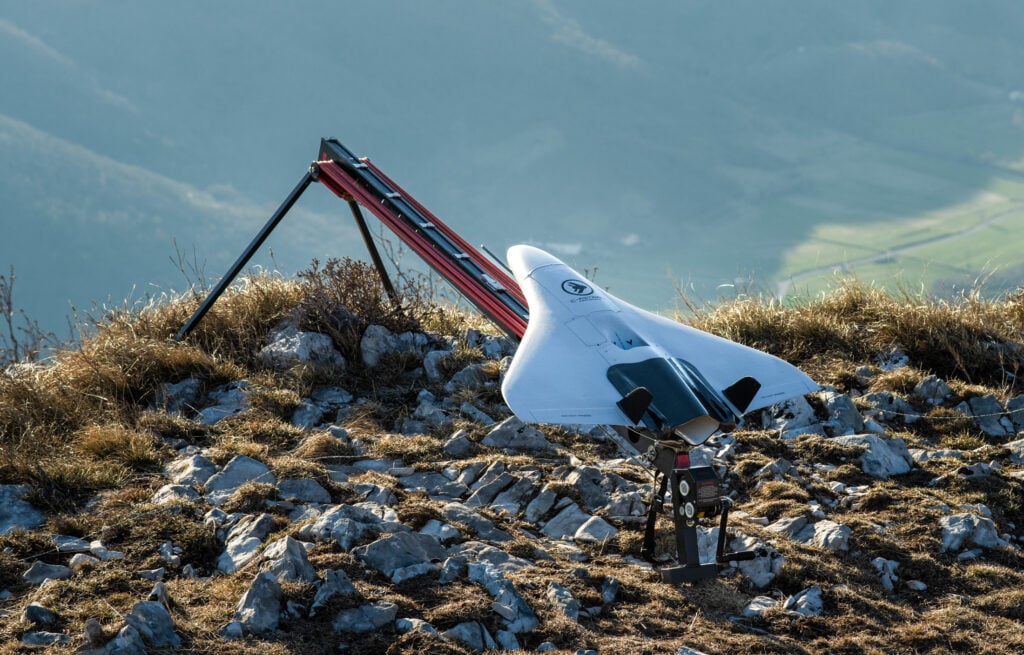
Fixed-Wing Hybrid Drones for Long-Range Medical Package Delivery & Infrastructure Inspections

Customizable, Long-Range Fixed-Wing Drones - Twin-Wing Design Heavy Lifting Drones

If you design, build or supply eVTOL Drones, create a profile to showcase your capabilities and connect with visitors who have an active requirement for your solutions.

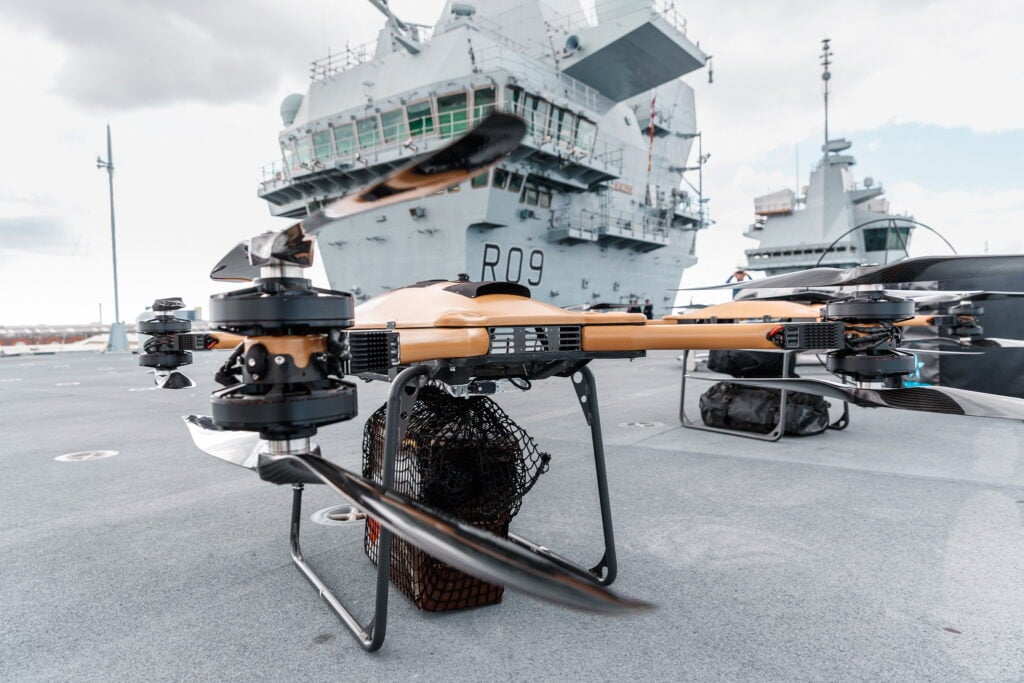
eVTOL drones leverage electric or hybrid electric propulsion alongside highly automated flight control architectures to deliver advanced vertical takeoff capabilities. Unlike small multirotor systems, an AAM class autonomous eVTOL drone is engineered for extended range, higher payload capacities, repeatable logistics operations, and seamless integration into structured airspace.
Within the AAM framework, an autonomous eVTOL functions as an aircraft class system built around rigorous airworthiness standards, complex operational approvals, remote supervision, and dynamic energy reserve management. These electric VTOL platforms are exceptionally valuable for logistics networks that require speed and operational reach without relying on traditional runway infrastructure.
Deploying an eVTOL drone makes the most sense on routes where surface transportation is slow, logistically fragile, expensive, or entirely non-existent. The value proposition of these systems centers on establishing a highly reliable, on-demand aerial logistics layer connecting hospitals, deepwater ports, islands, remote industrial depots, and forward military bases.
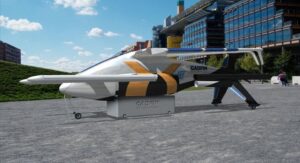
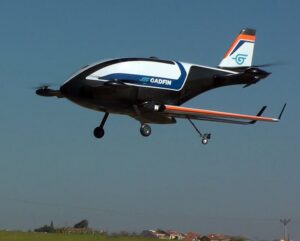
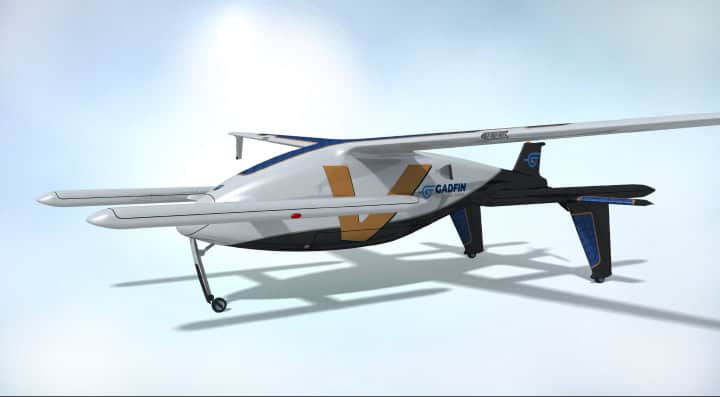
Spirit-X Hybrid eVTOL Drone by Gadfin
AAM class eVTOL aircraft excel where significant transportation gaps exist. Certain locations are too close to justify the deployment of conventional fixed wing aviation, yet too remote or congested for efficient ground transit. Offshore energy facilities, mountainous terrain, border regions, and isolated rural communities present this exact challenge. The engineering imperative is to deliver an aircraft that can operate out of tight, constrained landing footprints while securing the efficient cruise economics of a fixed wing platform. This balance defines lift plus cruise and tilting architectures, removing runway dependence while maximizing range.
Middle mile logistics involves transporting goods between designated distribution hubs rather than direct to consumer doorstep delivery. For operators of autonomous eVTOL platforms, this represents a highly predictable and manageable operational framework. Aircraft transit between known nodes, utilize repeatable flight paths, land on prepared pads, and operate under uniform, audited procedures.
Urgent delivery represents another high margin use case. While these platforms do not replace bulk surface freight, they excel when moving high value, time critical payloads where downtime costs outweigh transportation premiums. Key items include critical components for offshore platforms, aircraft on ground spares, specialized industrial tools, and vital diagnostic equipment.
Medical transport is one of the most technically compelling use cases for an eVTOL UAV. Payloads such as vaccines, lab specimens, organs for transplant, and blood products are low mass but incredibly high value and time sensitive. The engineering design must look beyond flight performance, requiring specialized integrations such as precise active temperature control, vibration isolation, secure chain of custody tracking, and robust payload enclosure security. For highly regulated medical cargo, the onboard systems must continuously log environmental data to prove the payload remained stable throughout the entire mission profile.
Offshore and island maritime routes frequently expose the limitations of traditional logistics. Marine vessels are slow and subject to sea states, while crewed helicopters introduce high operational costs and pilot risk. An autonomous eVTOL provides a reliable mid-tier alternative, moving parts and equipment that are too urgent for a boat but do not warrant a crewed helicopter flight. In disaster management scenarios, the same aircraft can rapidly deploy communication relays, map terrain using advanced sensors, or drop emergency medical provisions into cut-off areas.
The structural configuration of an eVTOL drone dictates its payload capacity, aerodynamic efficiency, structural weight, transition complexity, and maintenance profile. Because there is no single architecture optimized for every mission, eVTOL companies develop distinct configurations based on range, hover duration, acoustics, and fleet operational costs.
Lift plus cruise designs utilize completely distinct propulsion groups for vertical lift and forward flight. Dedicated, vertically oriented rotors provide the thrust required for takeoff and landing, while a clean wing and dedicated tractor or pusher propellers drive the aircraft during cruise. This segregation simplifies the flight control software because the vertical and horizontal thrust vectors are physically isolated.
The primary engineering trade-off is the dead weight penalty, as the vertical lift rotors become aerodynamic drag during forward flight. For mid-range logistics, this penalty is often offset by the benefits of mechanical simplicity, predictable transition aerodynamics, and excellent control authority during gusty hover conditions at the landing site.
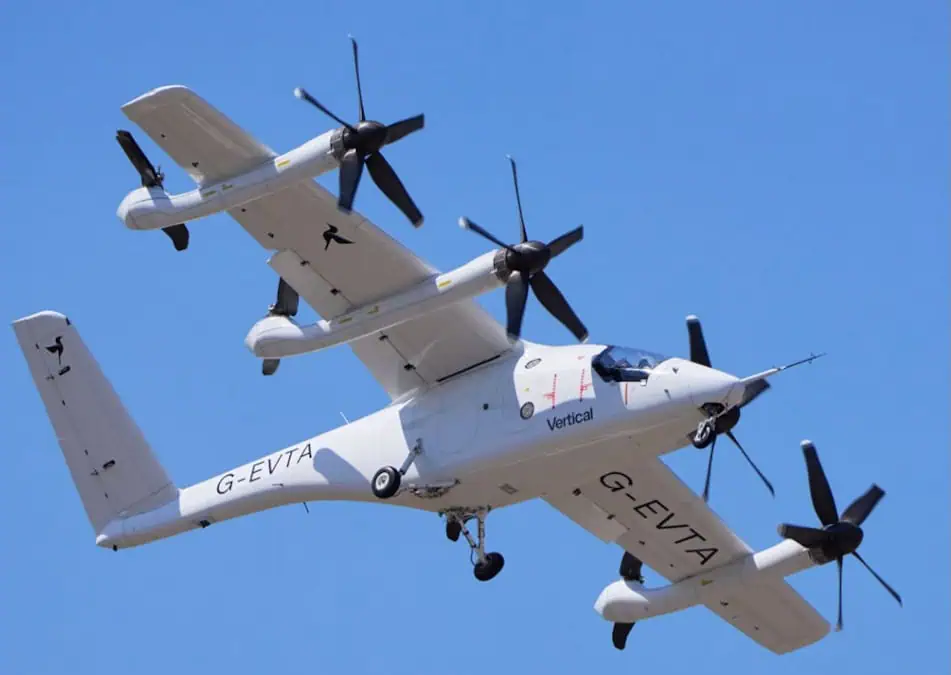
Tiltrotor and tilting propulsion architectures utilize the same motor and propeller units for both vertical lift and forward propulsion. The propulsion assemblies pivot upward for vertical operations and tilt forward to act as conventional propellers during wingborne flight. This approach reduces the lift-only propulsion penalty found in lift-plus-cruise designs, but introduces additional mechanical and control-system complexity.
The primary engineering hurdle centers on the transition phase. The flight control system must maintain stable control margins as the thrust vector rotates and aerodynamic lift transitions to the wing. Actuator redundancy, complex control laws, rotor wing wake interactions, and transient wind conditions require highly robust engineering. The autonomous flight control system must execute this transition repeatedly without human intervention or pilot compensation.
Tilt wing eVTOL UAV systems rotate the entire wing structure along with the propulsion units. This approach minimizes the downwash interference of the rotor wake against the wing surface during hover, maximizing vertical lifting efficiency. However, it introduces significant aerodynamic challenges during the transition phase. A tilting wing presents a massive surface area to crosswinds and gusts, demanding exceptional control authority and active flight envelope protection to maintain structural and flight stability.
While pure battery electric systems are mechanically elegant and quiet, current chemical energy density limits the range and payload capacity of larger eVTOLs. To extend operational range, eVTOL aircraft companies are integrating hybrid electric and hydrogen electric systems. Hydrogen fuel cells generate steady electrical power during flight, using a high power battery buffer to handle transient spikes during takeoff, landing, and sudden maneuvers.
Hybrid electric systems incorporate a compact internal combustion engine or a micro turbine generator to continuously recharge a smaller battery pack or directly assist the cruise motors. These architectures introduce added complexity, thermal management challenges, and fuel handling safety requirements, but they can make long range regional AAM cargo networks commercially viable.
A modular eVTOL drone typically adopts one of two payload strategies: an integrated internal cargo bay or an external podded configuration. Internal bays maintain optimal aerodynamic profiling, protect sensitive payloads from extreme weather, and allow for easy integration of structural restraints and environmental sensors.
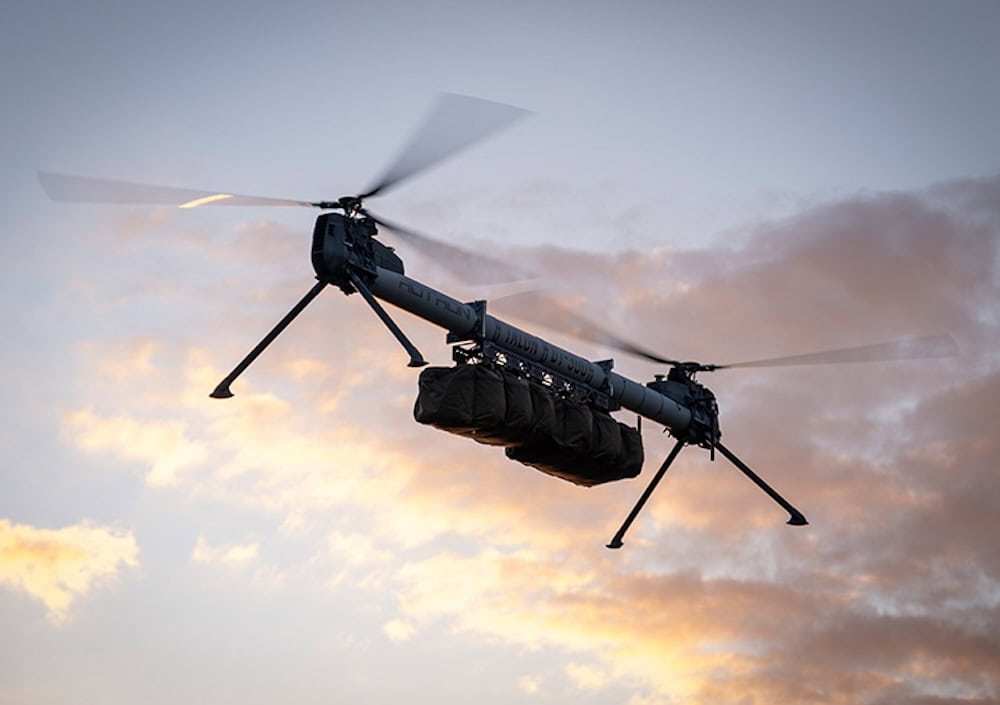
External pods simplify ground handling, enabling rapid hot swapping of cargo modules for high tempo operations. However, they introduce aerodynamic drag penalties, alter the aircraft’s radar and acoustic profiles, and require the flight control system to dynamically adapt to varying center of gravity shifts.
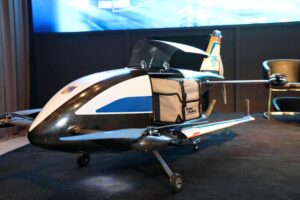
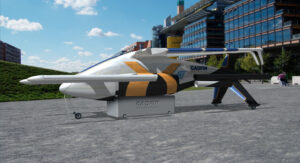
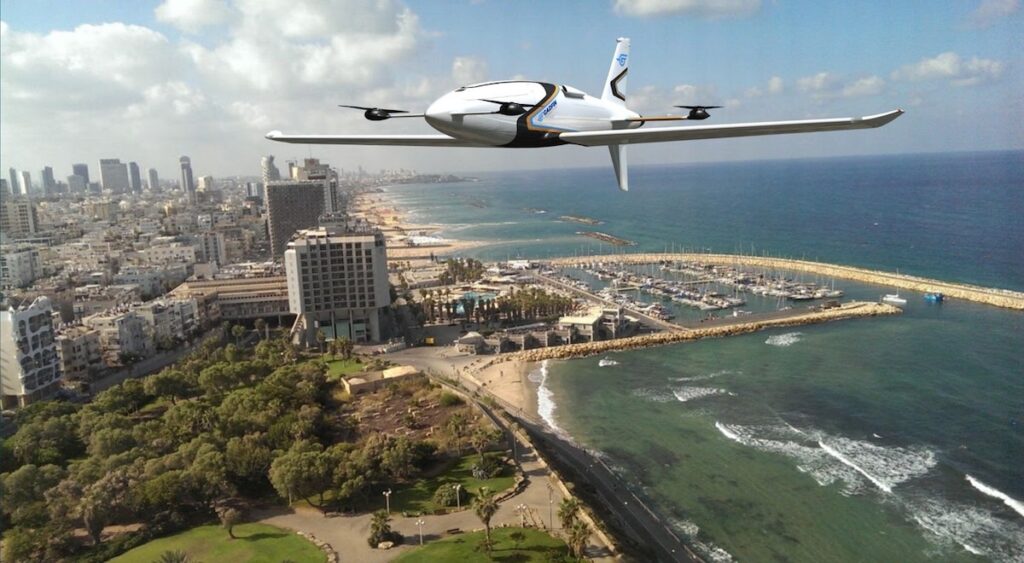
Spirit-One Hybrid eVTOL Drone by Gadfin
Optimizing the airframe of an AAM class eVTOL UAV requires balancing an ultra lightweight structure with the rugged durability demanded by high cycle commercial operations.
Structuring the airframe around these interlocking requirements ensures long term structural integrity without sacrificing payload capacity or operational efficiency.
An autonomous eVTOL drone cannot operate in isolation. It relies on a dense network of intelligent ground infrastructure capable of managing data, cargo, energy, and physical positioning.
While cargo focused vertiports do not require passenger terminals, they demand military grade operational discipline. These sites incorporate precision landing guidance systems, automated obstacle detection, real time micro weather sensing, and automated ground handling systems.
The operational nodes within a logistics network can be highly specialized:
To unlock commercial scale, the autonomous aircraft must interface directly with enterprise resource planning platforms, hospital inventory networks, and port authority management software. This connectivity automates mission dispatch based on real time inventory deficits, tracks high value assets across the supply chain, updates estimated delivery windows, and automatically handles exceptions when an aircraft diverts due to localized weather or airspace constraints.
Navigating international aerospace regulation is a critical step toward establishing commercial viability for any new electric VTOL platform.
Adhering to these evolving regulatory standards provides eVTOL companies with a clear, universally recognized compliance path that balances traditional aviation rigor with operational flexibility.
The future of Advanced Air Mobility depends on shifting from individual aircraft demonstrations to fully orchestrated, high density autonomous ecosystems.
The final result will be a deeply integrated transport architecture where the autonomous aircraft, physical ground nodes, and digital airspace management software function as a unified engine.


 Searching Companies & Products