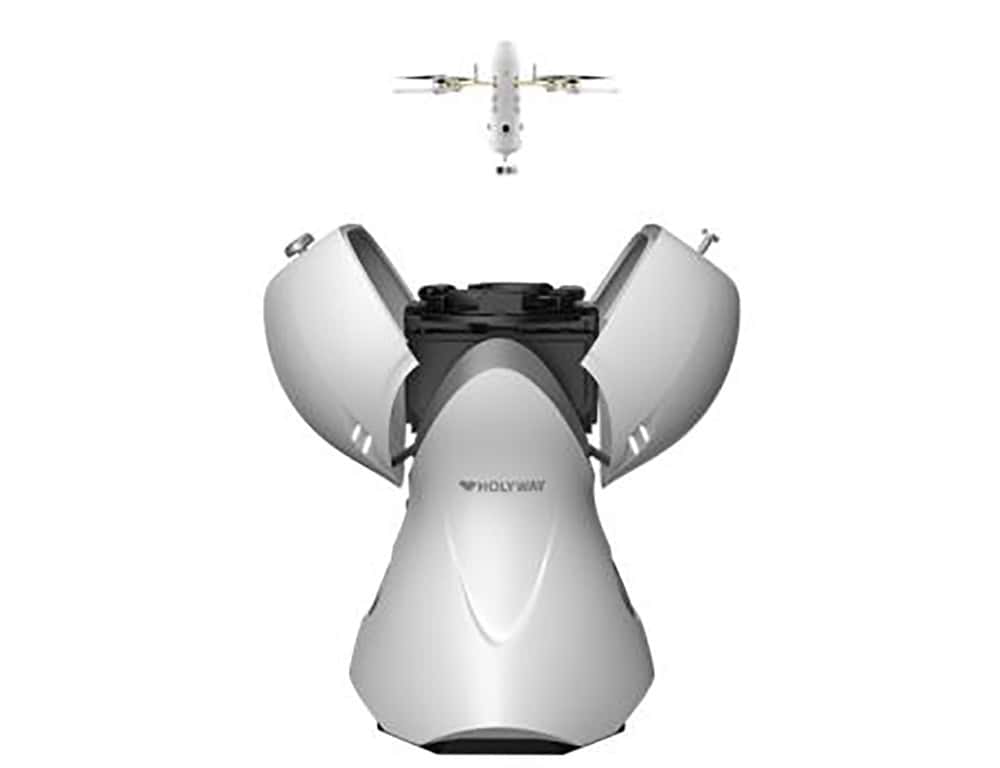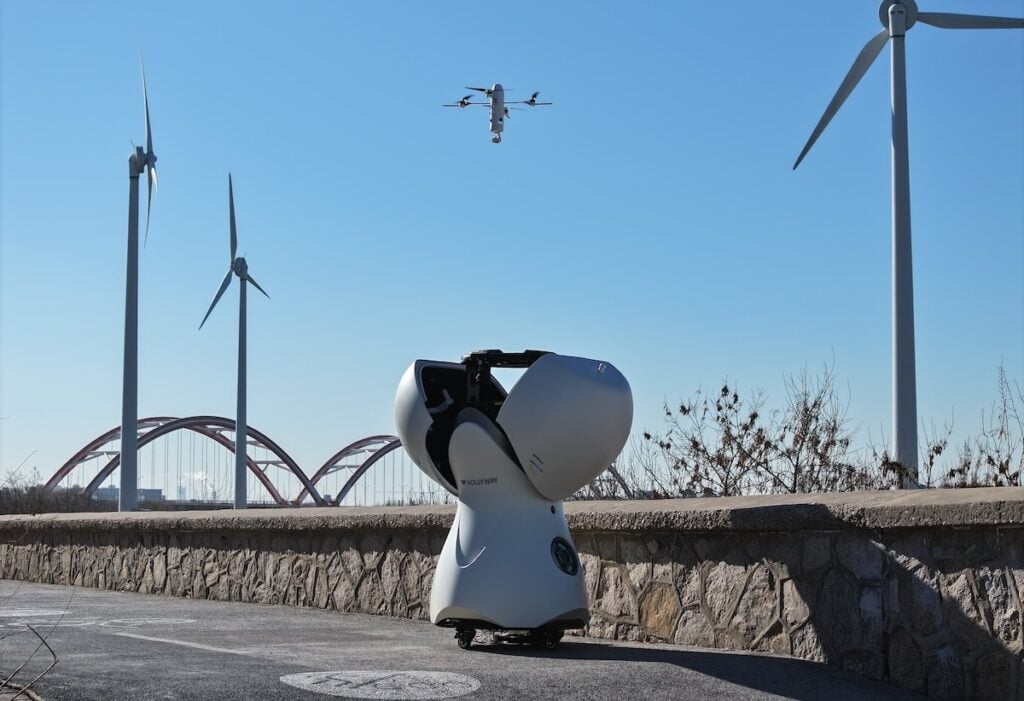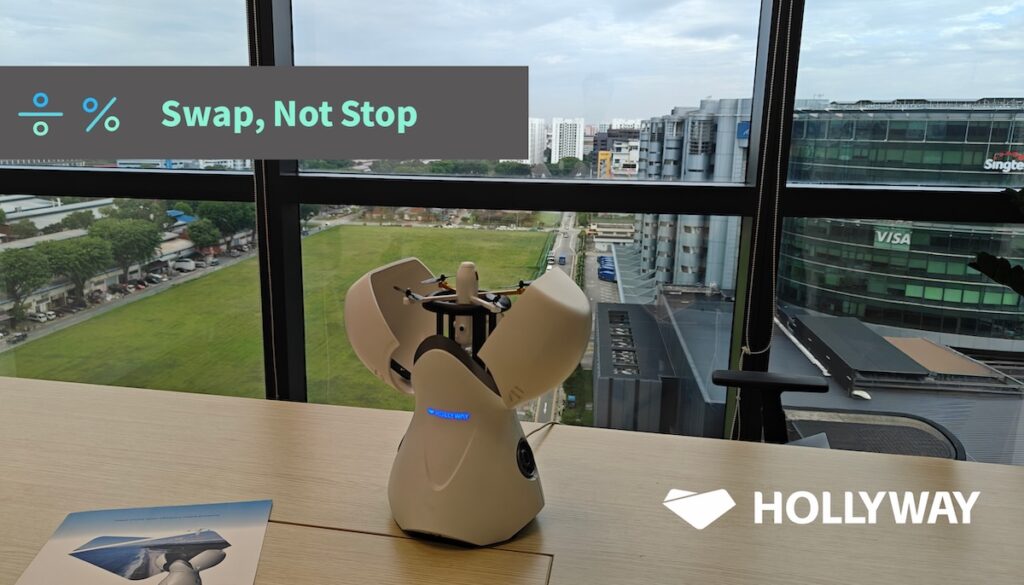
Hollyway has developed a specialized battery swapping architecture to address the fundamental limitations of energy replenishment in Drone-in-a-Box (DiB) systems.
Overcoming the Charging Bottleneck
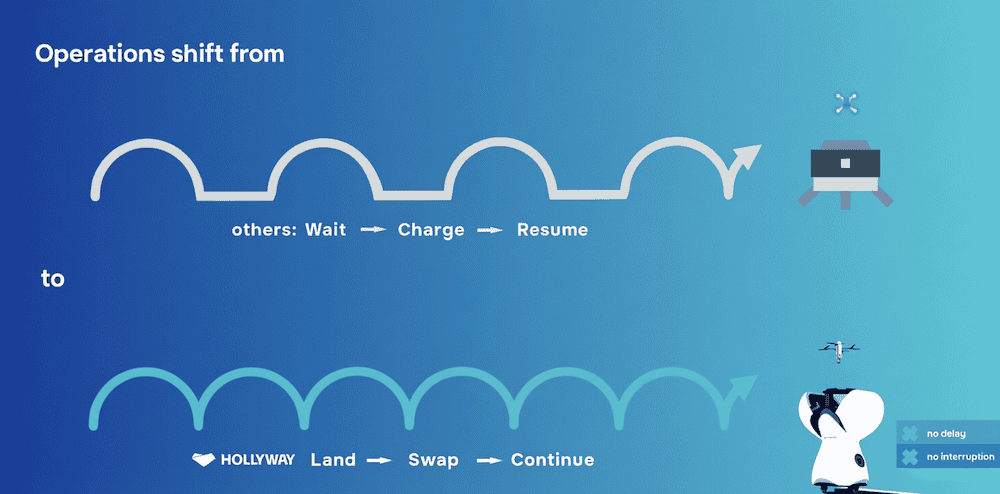
While traditional DiB systems have relied on onboard charging, this method often forces drones to remain grounded for 40 to 90 minutes after a short flight. This dynamic has historically reduced effective operational availability to 30–40%. Hollyway has approached this problem by replacing the “wait-and-charge” model with a “swap-and-continue” workflow. The system has integrated a robotic mechanism that removes a depleted battery and replaces it with a fully charged one in under 50 seconds.
Engineering for Persistent Flight
The transition to automated swapping has required the company to solve complex engineering challenges regarding precision and durability. Hollyway has implemented integrated vision-based positioning to ensure robotic alignment and stable electrical contact over thousands of high-load cycles. The Iron Series has been engineered to support multi-battery configurations, allowing drones to navigate intelligently between multiple docks.
Impact on Industrial Applications
The shift to a swapping model has transformed the capabilities of drones in Security & Surveillance, Emergency Response, and Infrastructure Inspection. By removing the blind spots caused by charging cycles, these aerial assets can maintain a persistent presence.
Field Performance in Power Grid Inspection
The technology has been deployed across a 200 km transmission network in the MENA region, where ambient temperatures exceed 45°C. In this scenario, Hollyway has demonstrated significant operational improvements:
- Mission frequency has increased by 3× per drone per day.
- Full inspection cycles have been reduced from 15 days to under 80 hours.
- Operational costs have been lowered by approximately 40%.
The company has maintained that while swapping systems introduce greater mechanical complexity than simple charging, the necessity of operational continuity in mission-critical environments justifies the trade-off. As drone applications evolve into persistent infrastructure, always-on autonomous networks have become essential.