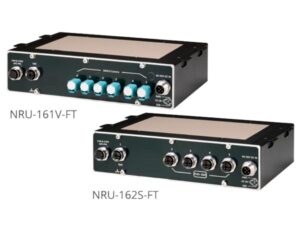
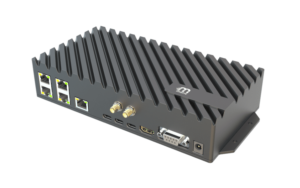
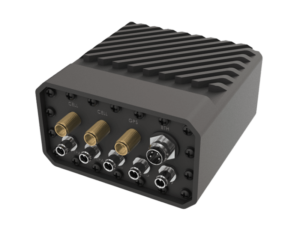
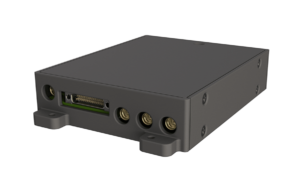
Rugged embedded computers are onboard processing platforms engineered to acquire sensor data, run control software, manage payloads, and support autonomous functions across UAVs, UGVs, UUVs, and robotic systems. They support ISR, sensor fusion, machine vision, communications routing, and GNSS-denied navigation.
This page showcases leading rugged embedded computer manufacturers, including suppliers of SBCs, computer-on-module systems, VPX platforms, and rackmount solutions.
If you design, build or supply Rugged Embedded Computers, create a profile to showcase your capabilities and connect with visitors who have an active requirement for your solutions.
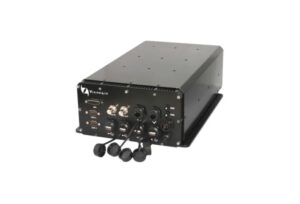
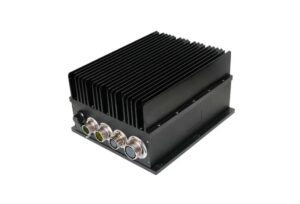
Tactical edge computing system with multi-channel H.264/H.265 streaming & Hailo-8 AI acceleration
Tactical edge computing system with multi-channel H.264/H.265 streaming & Hailo-8 AI acceleration
Opal is a rugged tactical edge computing platform designed for autonomous vehicles, multi-channel... ...B storage, and rugged IP67 construction, Opal is optimized for autonomous vehicle operations,...
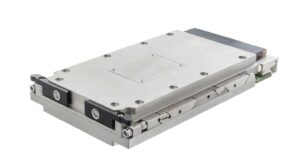
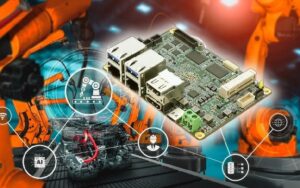
Tailored x86 embedded computing platforms for drones & robotics
Tailored x86 embedded computing platforms for drones & robotics
...rtfolio of x86 embedded computing platforms that can be thoroughly customised to create bespoke,... ...l single-board computers and modules can be equipped with custom heatsinks, enclosures, wiring...
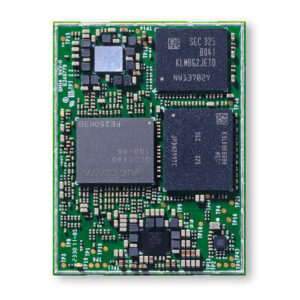
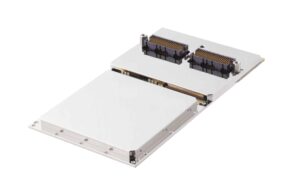
Tailored ARM embedded computing platforms for drones & robotics
Tailored ARM embedded computing platforms for drones & robotics
...rtfolio of x86 embedded computing platforms, offering low power, compact design, and scalable... ...f single-board computer, SoM and integrated HMI form factors...
The Complete Guide to Rugged Embedded Computers for UAV & Robotics
Overview by
William Mackenzie
Updated:
Introduction to Rugged Embedded Computers
Rugged embedded computers provide onboard processing to acquire sensor data, execute control software, manage payloads, and support autonomous decision-making in demanding environments. In an Unmanned Aerial Vehicle (UAV), it may serve as a mission computer, payload controller, data recorder, communications gateway, or perception processor.
Unlike standard commercial computers, rugged systems are designed for vibration, shock, temperature extremes, altitude, humidity, electrical disturbance, electromagnetic interference, dust, moisture, and restricted airflow. A UAV rugged embedded computer must also meet strict size, weight, power, and cooling constraints while tolerating aircraft power fluctuations. Similar requirements apply to Unmanned Ground Vehicles (UGVs), Unmanned Underwater Vehicles (UUVs), and robotic platforms.
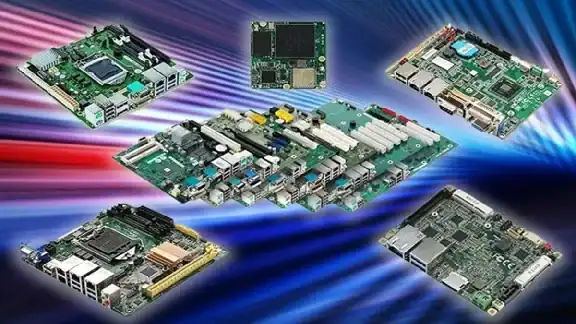
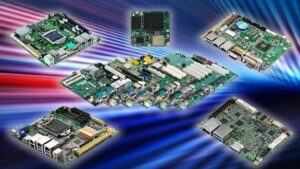
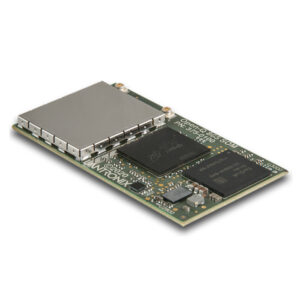
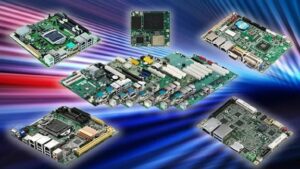
Rugged embedded computers from Review Display Systems, x86 Embedded Systems.
Types of Rugged Embedded Computers
Rugged Box Computers
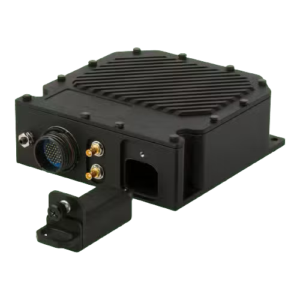
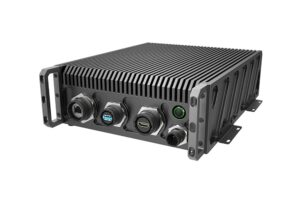
Rugged box computers integrate processors, memory, storage, power conditioning, and interfaces within a sealed or reinforced enclosure. Their self-contained design simplifies installation when Ethernet, serial, Controller Area Network (CAN), Universal Serial Bus (USB), video, or sensor connections are required.
Single-Board Computers
A Single-Board Computer (SBC) combines core processing functions on one compact board. These computers suit space-constrained systems integrated with sensors, autopilots, or custom electronics. Ruggedized models may include extended-temperature components, conformal coating, locking connectors, and conduction cooling.
Computer-on-Module Systems
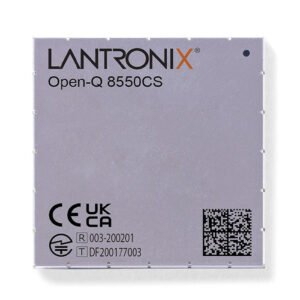
Computer-on-Module systems separate the processor, memory, and core chipset from the application-specific carrier board. This supports custom interfaces without redesigning the main processing architecture. Upgrades remain practical only when pinouts, power limits, firmware, thermal requirements, and availability remain compatible.
VPX and OpenVPX Computers
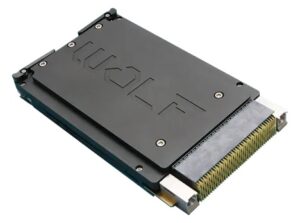
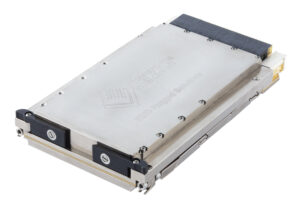
VPX computers use modular cards and high-speed switched backplanes, while OpenVPX defines profiles intended to improve interoperability. These systems support radar, Electronic Warfare (EW), imaging, and sensor-fusion workloads involving processors, accelerators, network switches, and storage modules.
CompactPCI and CompactPCI Serial Systems
CompactPCI architectures provide modular computing through standardized cards and backplanes. CompactPCI Serial adds interfaces such as PCI Express, Ethernet, Serial ATA (SATA), and USB. These systems support distributed control, communications, and data acquisition in long-lifecycle unmanned platforms.
PC/104 and PCIe/104 Computers
PC/104 and PCIe/104 systems use stackable boards to create compact computers without a conventional backplane. Their small footprint suits tightly packaged vehicles, although thermal management, signal integrity, and mechanical retention require careful engineering.
ATR Chassis and Modular Computing Systems
Air Transport Rack (ATR) chassis provide robust enclosures for modular processing cards. They may use conduction cooling, wedge locks, filtered airflow, or liquid-assisted thermal management. ATR systems suit applications requiring replaceable modules, high processing density, and controlled heat transfer.
Rugged Rackmount Computers
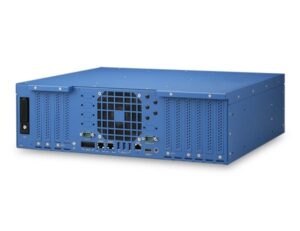
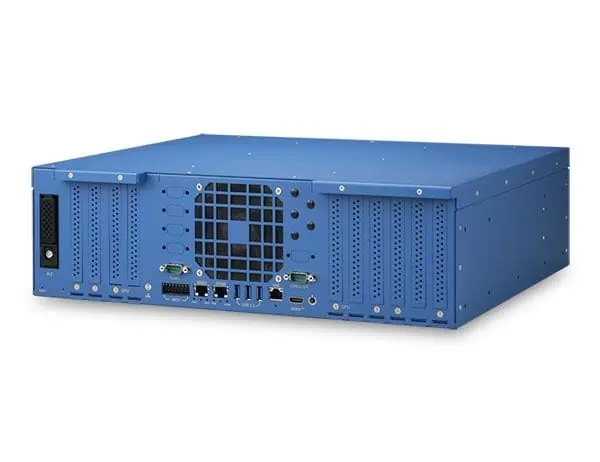
Rugged rackmount computers provide greater expansion capacity than compact systems. They are used in mobile command stations, Ground Control Stations (GCS), mission-planning facilities, and transportable shelters. Reinforced construction, redundant storage, graphics, and network interfaces support supervisory workloads.
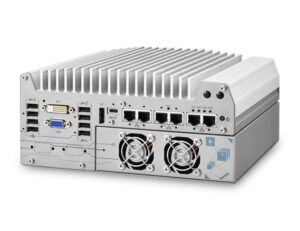
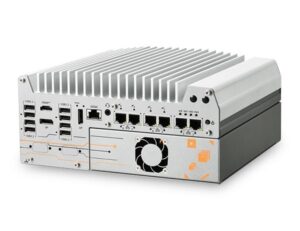
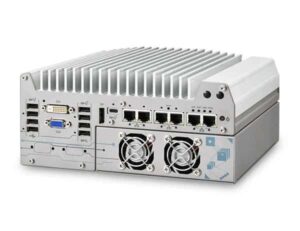
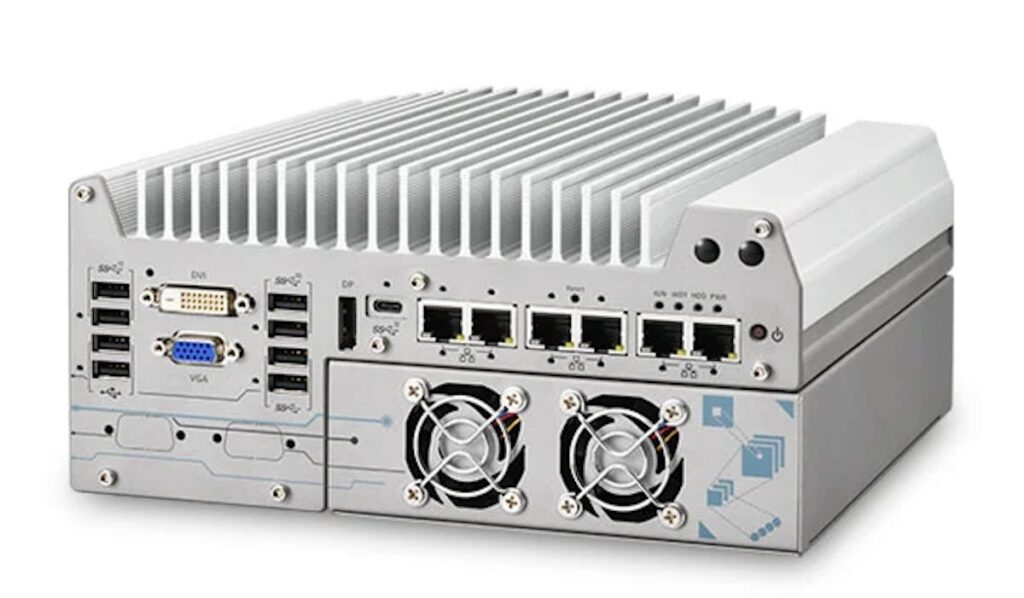
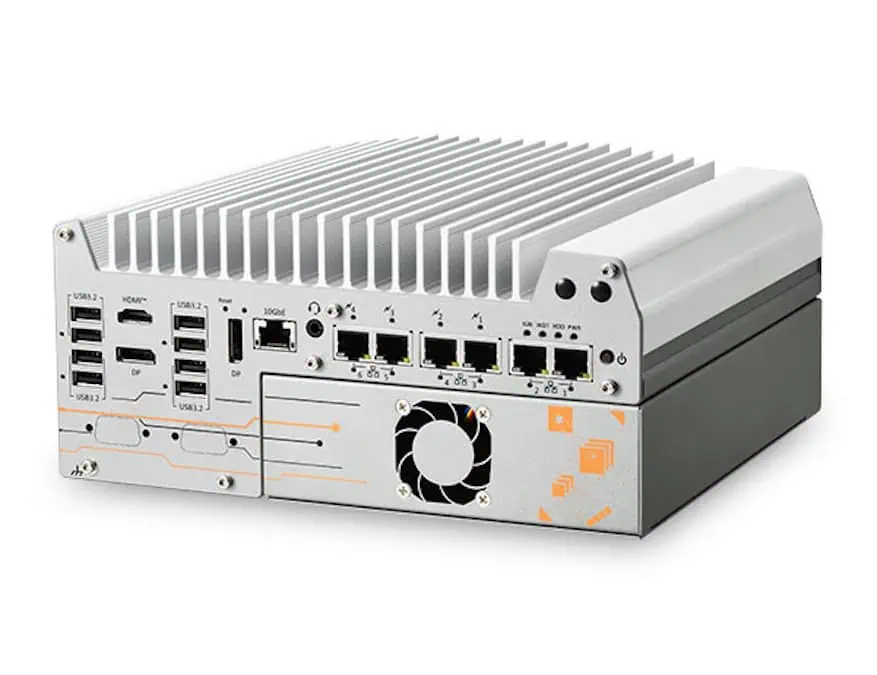
Rugged embedded computer system by Neousys Technology, Nuvo-9154GC.
Processing Architectures & Hardware Acceleration
Processor selection determines how effectively a rugged embedded computer can divide control, perception, communications, storage, and mission-processing workloads. Designers must balance performance against power consumption, thermal output, software compatibility, real-time behavior, cybersecurity, and development tools.
x86 processors: Support mature software environments and high general-purpose performance for mission computing, networking, visualization, and data management.
Arm-based processors: Provide efficient processing for compact, power-limited platforms.
Graphics Processing Units:Graphics Processing Units (GPUs) accelerate image processing, object detection, mapping, video analytics, and neural-network inference.
Field-Programmable Gate Arrays: Field-Programmable Gate Arrays (FPGAs) support deterministic, low-latency sensor interfacing, signal processing, timing, protocol conversion, and acceleration.
Dedicated AI and neural processing accelerators: Execute trained Machine Learning (ML) models while reducing demand on the main processor.
Heterogeneous CPU, GPU, and FPGA architectures: Allocate workloads according to latency, throughput, flexibility, determinism, and power requirements.
The final architecture should be selected from measured workloads, worst-case timing, bandwidth, thermal limits, and failure response rather than peak performance alone. Operating system choice, software partitioning, synchronization, watchdogs, and fail-safe behavior also matter.
Applications of Rugged Embedded Computers Across Unmanned Systems
Artificial Intelligence and Machine Vision
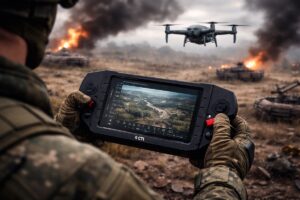
Machine-vision computers process visible, infrared, multispectral, depth, and event-based camera data. They support object classification, target tracking, inspection, landing assistance, terrain assessment, and obstacle avoidance. Local processing reduces transmitted data, although model performance, update control, and degraded behavior should be validated.
Intelligence, Surveillance, and Reconnaissance
Intelligence, Surveillance, and Reconnaissance (ISR) payloads generate imagery, video, radar data, and metadata. Rugged embedded computers coordinate sensors, compress data, record mission information, and prepare outputs for transmission. Processing and storage must match resolution, frame rate, duty cycle, recording duration, and data-protection requirements.
Sensor Fusion and Situational Awareness
Sensor fusion combines cameras, radar, LiDAR, inertial sensors, Global Navigation Satellite System (GNSS) receivers, acoustic systems, and other sources. The computer aligns data in time and space. Synchronization, calibration, latency measurement, and confidence handling are essential.
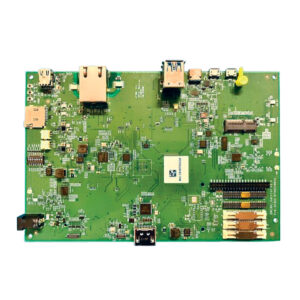
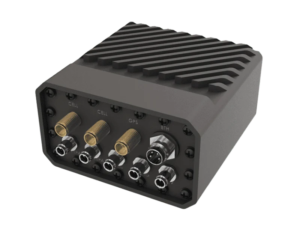
Rugged embedded computing from Maris Tech, Onyx.
Electronic Warfare and Signals Processing
EW and Signals Intelligence (SIGINT) payloads require high-throughput acquisition and low-latency processing. Embedded computers may perform channelization, filtering, spectral analysis, detection, classification, and data reduction. FPGA and GPU acceleration can help, but sustained throughput and data movement often matter more than peak performance.
Communications Routing and Network Management
An onboard rugged embedded computer can connect payloads, vehicle controllers, radios, and ground systems. It may route data across Ethernet, serial, CAN, wireless, satellite, or mesh links while applying prioritization, encryption, bandwidth management, network segmentation, and monitoring.
Precision Navigation in GNSS-Denied Environments
When satellite navigation is unavailable or unreliable, embedded computers can combine inertial measurements with visual odometry, radar, LiDAR, terrain data, or signals of opportunity. Predictable latency, integrity checks, drift estimation, and degraded modes are essential because navigation errors affect route planning and control.
Swarm Coordination and Collaborative Autonomy
Collaborative unmanned systems exchange position, status, sensor observations, and tasking information. Embedded computers support local decisions when network quality changes. Requirements depend on participant count, latency, bandwidth, trust, and coordination complexity.
Payload Management and Reconfigurable Missions
A mission computer may control interchangeable payloads through standardized electrical, mechanical, and software interfaces. It can manage power, health monitoring, commands, recording, and communications. Modular software, configurable I/O, hardware abstraction, and controlled updates help platforms accept new sensors without replacing the entire computer.
Emerging Developments in Rugged Embedded Computing
Rugged computing is evolving as unmanned systems carry more capable sensors and perform complex tasks with less operator involvement. Current developments emphasize processing density, thermal control, cyber resilience, software portability, open interfaces, and power efficiency.
Edge Artificial Intelligence: More perception, classification, and decision-support functions are executed directly on the unmanned platform.
Heterogeneous processing: Central Processing Units (CPUs), GPUs, FPGAs, and dedicated accelerators handle mixed real-time and high-throughput workloads.
Advanced cooling: Improved conduction paths and liquid-assisted cooling manage higher processor power densities in sealed installations.
Open architectures: Standardized interfaces and portable software components reduce integration effort and support technology upgrades.
These developments enable rugged embedded computers to support more autonomous, data-intensive, and reconfigurable unmanned systems within platform constraints.
Engineered for demanding edge deployments, the new Neousys RGS-9805GC server pairs 160-core processing power with dual-GPU acceleration to drive real-time physical AI workloads across harsh autonomous vehicle and robotics environments
Neousys Technology has introduced the Nuvo-9154GC, a rugged edge AI platform combining four GMSL2 camera interfaces with Intel processing and NVIDIA RTX GPU support for AMRs
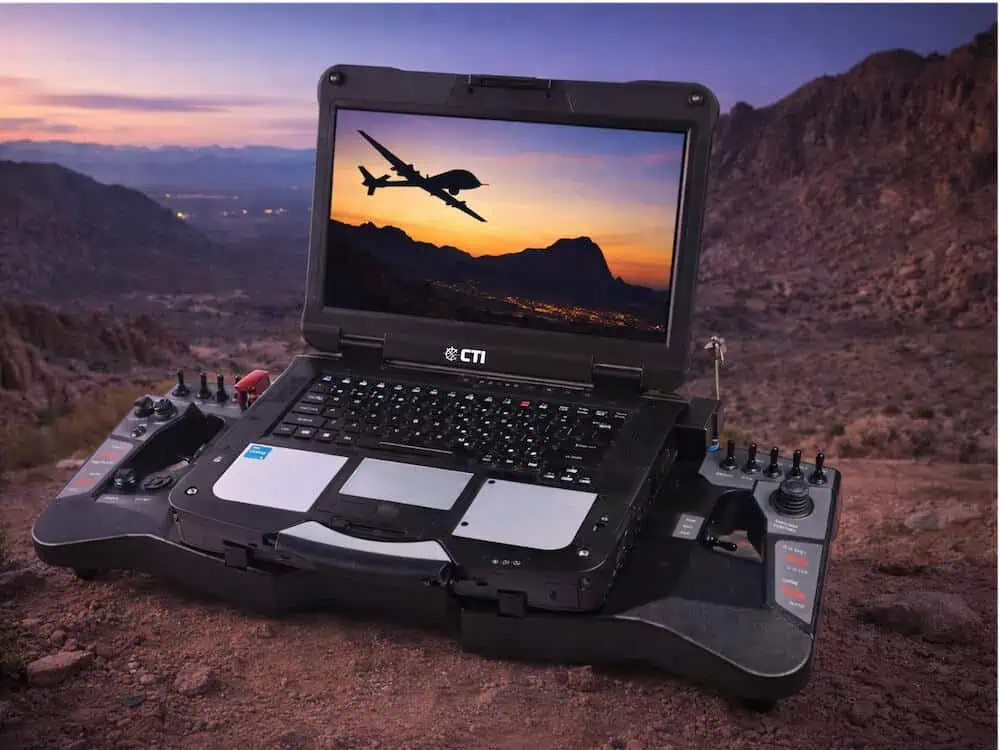
CTI-INTL Solutions will present its advanced Ground Control Systems (GCS) and mission computing technologies at the 2026 Loitering Munitions conference
Neousys will showcase its rugged edge AI embedded computing systems, including the NRU-160-FT, POC-766AWP, Nuvo-10109GC and Nuvo-11000, for AMRs, AGVs, and warehouse automation at LogiMAT 2026
Neousys Technology has launched the Nuvo-11160GC rugged edge AI computing platform, featuring Intel® Core™ Ultra 200S processors and NVIDIA® RTX GPU support for real-time AI inference and data processing in industrial and robotics environments
WOLF has released a whitepaper exploring rugged embedded computing solutions for aerospace and defense, enabling mission success in extreme environments
Neousys highlights how its NRU embedded computing systems, with shock and vibration resistance, wide temperature range, and waterproof and dustproof construction, enable AI-driven, solar-powered autonomous robots to remove weeds in harsh agricultural environments
Neousys Technology will debut its new explosion-proof computers, NVIDIA® Jetson Orin™ computing solutions, and fanless edge AI systems powered by Intel® Core™ Ultra 200S processors at GITEX Global, October 13-17
The latest unmanned systems news, straight to your inbox.
Get our weekly roundup of technology developments, new products and industry news.
THANK YOU FOR SIGNING UP
Thanks for joining us. Check your inbox.
We've sent you an email. Click the confirmation link to complete your subscription to the weekly eBrief. In the meantime, explore the latest news, suppliers and technologies on UST.
Advancing Unmanned Systems Through Strategic Collaboration
UST works with major OEMs to foster collaboration and increase engagement with SMEs, to accelerate innovation and drive unmanned systems capabilities forward.