Showcase your capabilities
If you design, build or supply Rugged Tablets, create a profile to showcase your capabilities and connect with visitors who have an active requirement for your solutions.




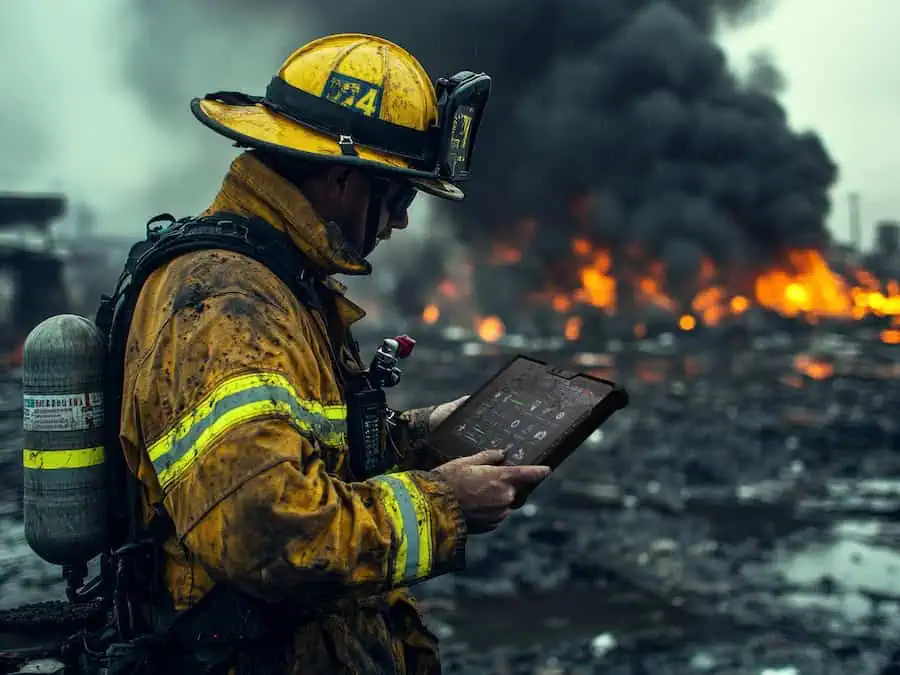
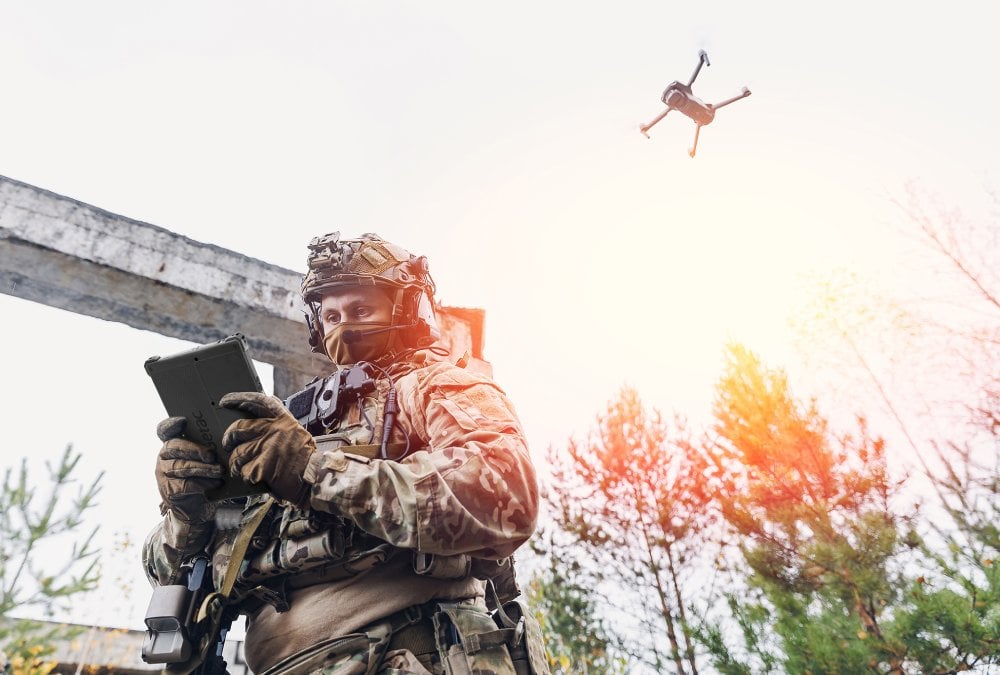
Rugged tablets are portable, hardened computing devices used to control, monitor, and support drones, robotic vehicles, and other unmanned systems in demanding field environments. They can serve as ground control stations, mission-planning terminals, mapping displays, payload interfaces, and maintenance tools across defense, public safety, surveying, inspection, and industrial operations.
This category features rugged tablet manufacturers providing fully rugged, semi-rugged, compact, and vehicle-docked designs running Windows, Android, or Linux.
Read the Technology Overview
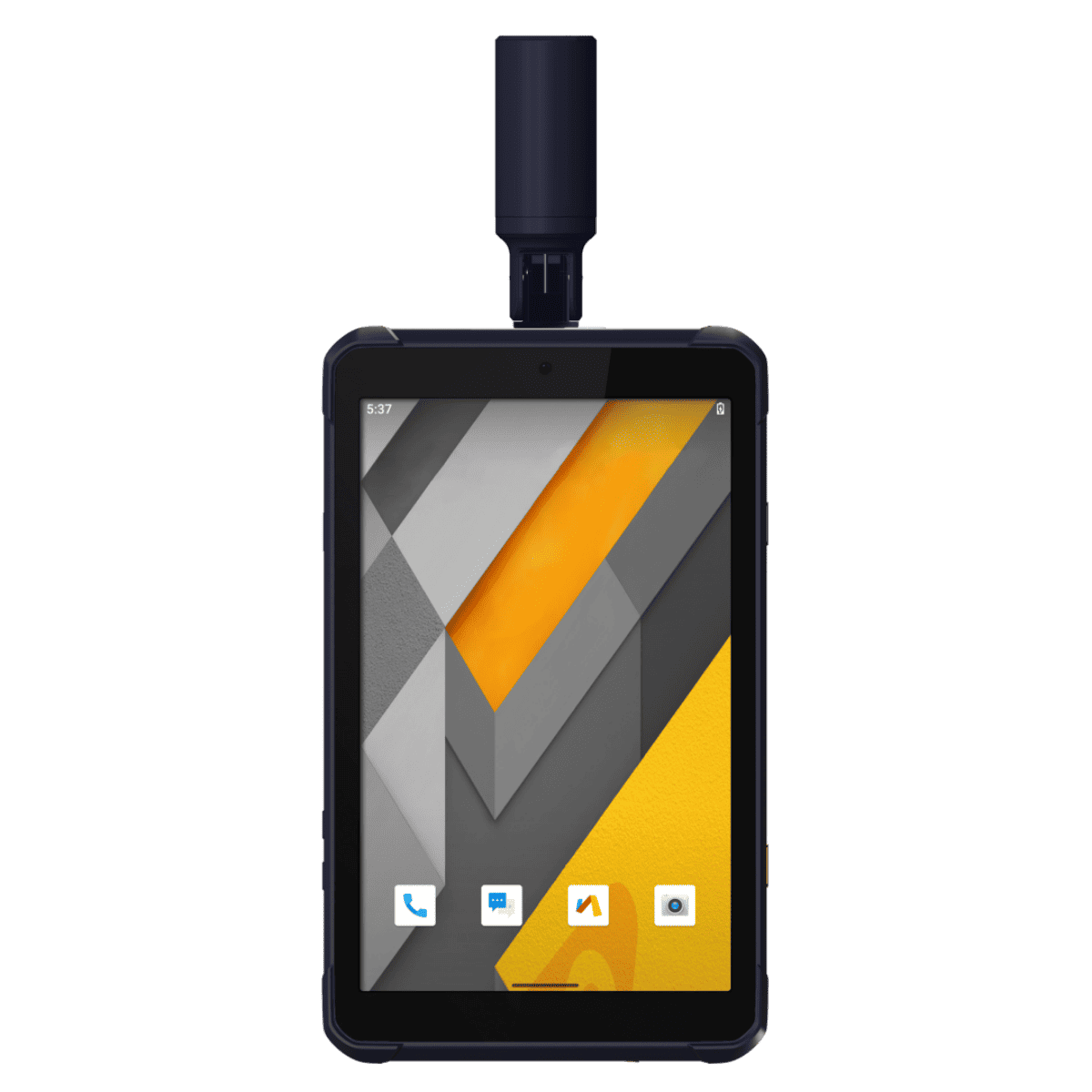
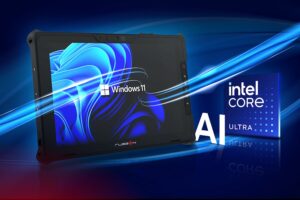
Rugged Computing Solutions for Mission-Critical Command, Control & Communications

GNSS Positioning Systems, 3D SLAM & Mobile Mapping, Unmanned Surface Vehicles

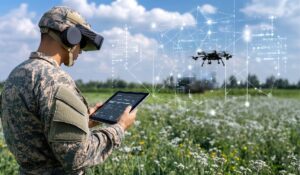
High-Performance Rugged Tablet Solutions for UAV Remote Control

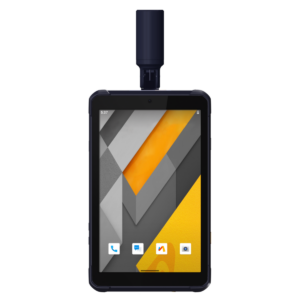
GNSS Positioning & Navigation Systems, Mobile Mapping UAV LiDAR & Unmanned Surface Vehicles

If you design, build or supply Rugged Tablets, create a profile to showcase your capabilities and connect with visitors who have an active requirement for your solutions.

Rugged tablets provide portable computing interfaces for controlling, monitoring, and supporting drones, robotic vehicles, and other unmanned platforms in demanding field environments. Compared with consumer devices, a ruggedized tablet typically incorporates a reinforced enclosure, sealed interfaces, durable display construction, and components designed to tolerate shock, vibration, moisture, dust, and temperature variation.
Within an unmanned system, the device may function as a Ground Control Station (GCS), mission-planning terminal, mapping display, payload interface, or maintenance tool. Rugged tablet manufacturers and rugged tablet OEMs must therefore balance environmental protection with processing performance, battery endurance, connectivity, ergonomics, software compatibility, and platform integration.
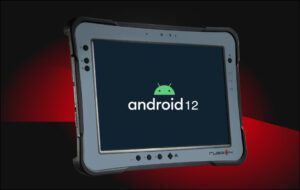
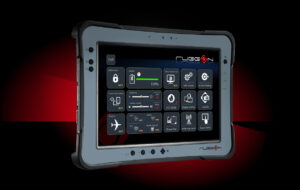
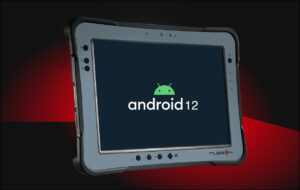
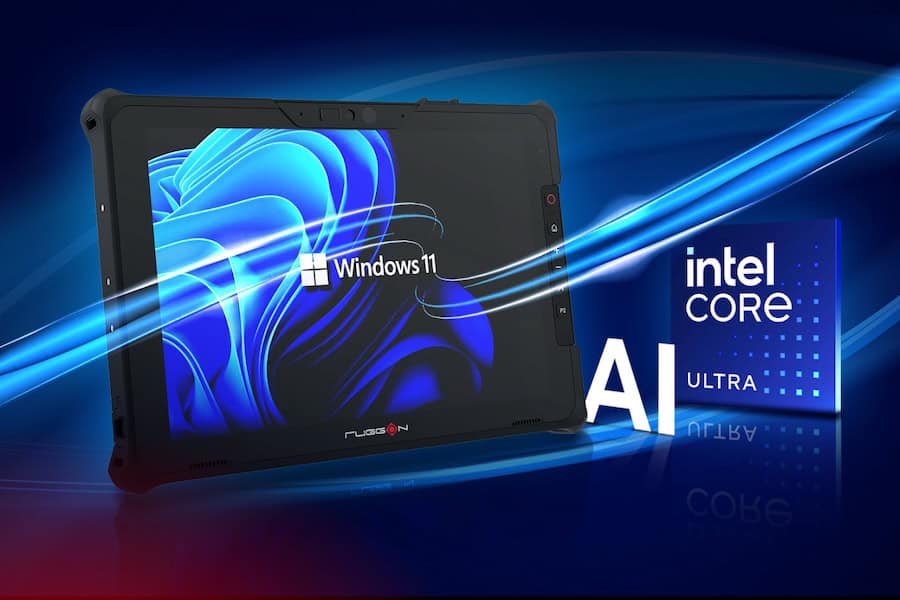
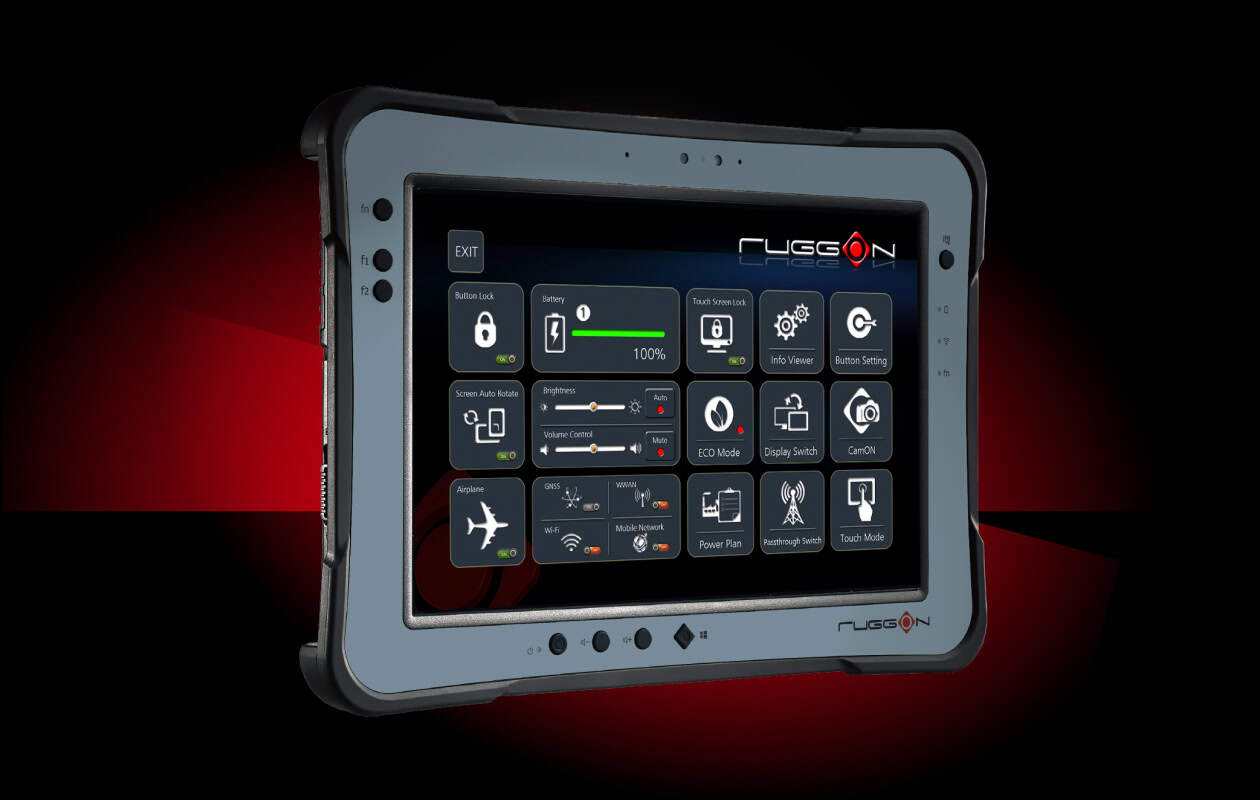
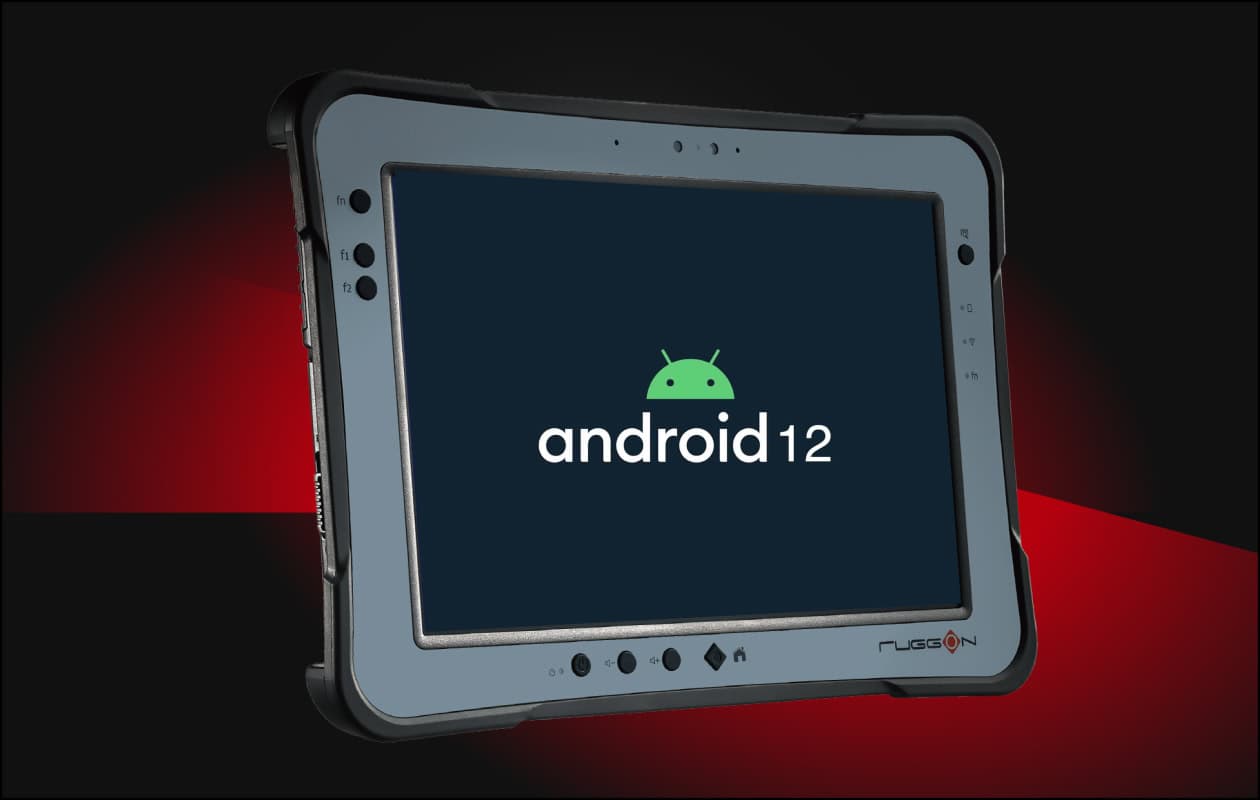
PA501 10.1” Android rugged tablet by RuggON
Fully rugged tablets are designed for sustained use in environments where drops, vibration, airborne debris, rain, and repeated handling are expected. A military tablet may also incorporate secure storage, controlled wireless interfaces, specialized connectors, and compatibility with vehicle or command-system infrastructure.
Semi-rugged tablets provide more protection than standard commercial devices while retaining a relatively light and compact form factor. They can suit sheltered control stations, field service teams, inspection work, and operations where the tablet experiences moderate rather than continuous environmental stress.
A compact handheld rugged tablet prioritizes portability, one-handed operation, and reduced operator burden. These devices can support dismounted drone teams, quick-look telemetry, asset inspection, and field data collection where a full-size display would be difficult to carry or mount.
Large-format rugged tablets provide more screen area for maps, video feeds, sensor overlays, and multi-panel control applications. They are well suited to command vehicles, mobile operations centers, and complex payload-control tasks, although the larger display can increase power consumption, weight, and mounting requirements.
Detachable and two-in-one tablets combine touchscreen operation with a removable or foldable rugged keyboard. This configuration supports both field interaction and document-heavy tasks such as mission preparation, report writing, data review, and software configuration without requiring a separate laptop.
Vehicle-docked rugged tablets connect to powered cradles that can provide charging, data connections, antenna pass-through, and secure retention. Similar configurations are used for Unmanned Ground Vehicle (UGV) control, mobile command posts, patrol vehicles, and for public safety operations involving drones or robotic response systems.
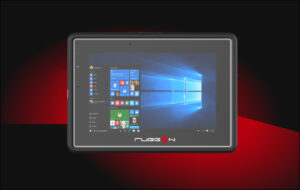
The operating system and processor architecture determine software compatibility, peripheral support, security options, and power requirements:
The selected platform should be validated against the complete mission software and hardware stack.
Rugged drone tablets can host route planning, geofencing, waypoint management, navigation displays, and direct or supervisory control functions. A GIS tablet may combine digital maps with live vehicle positioning, while a GNSS tablet or RTK tablet can support surveying, precision navigation, and repeatable field data collection.
Operators use rugged tablets to review battery condition, propulsion data, communications quality, fault alerts, and mission progress. During multi-vehicle operations, the tablet may provide a consolidated supervisory view that helps personnel identify anomalies and prioritize intervention without continuously controlling each platform.
A ruggedized tablet can display electro-optical video, thermal imagery, radar information, environmental measurements, or manipulator feedback. Rugged tablets for mapping and inspection may also support annotation, image capture, metadata entry, and synchronization with wider command, survey, or asset-management systems.
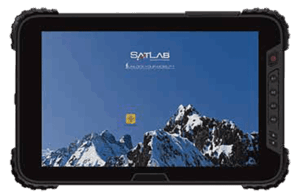
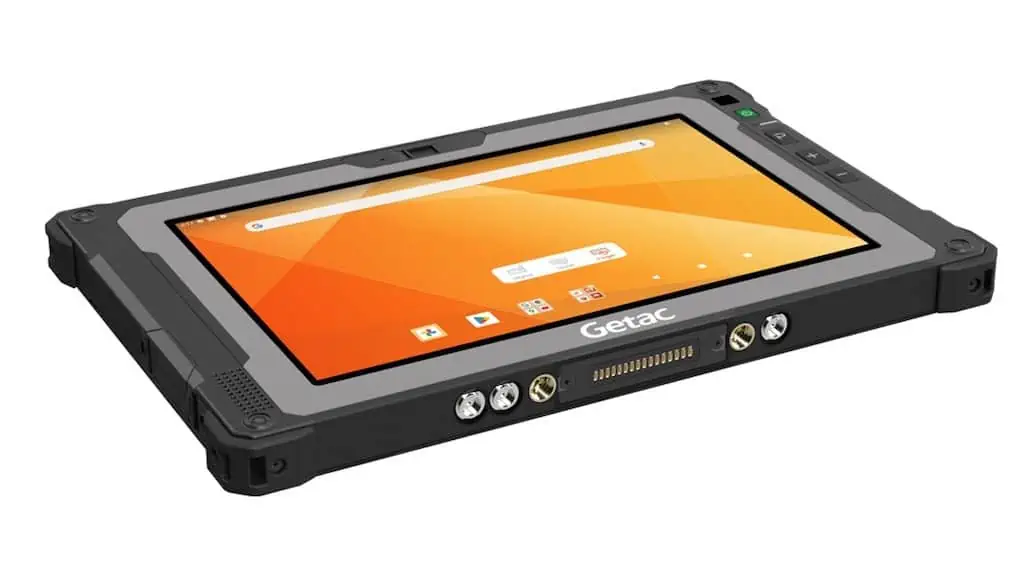
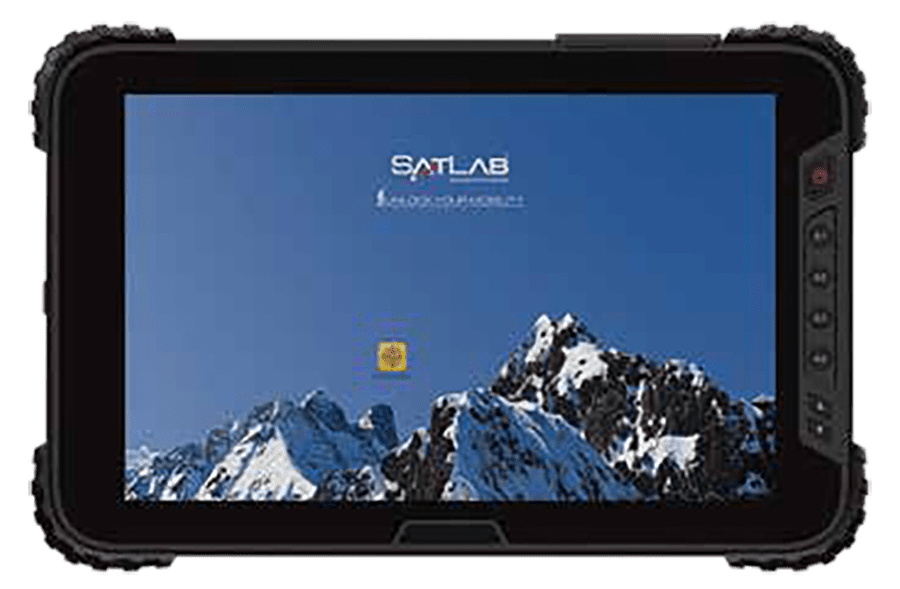
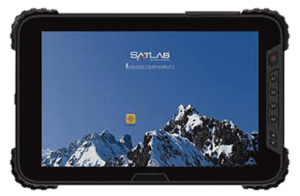
TBA rugged handheld tablet by SatLab Geosolutions
Environmental specifications should reflect conditions experienced during operation, transport, storage, charging, and vehicle mounting:
Test results should be reviewed against the intended mission profile and installation.
Sunlight-readable displays help operators interpret maps, telemetry, and video in open environments where glare can obscure critical information. Effective outdoor visibility depends on brightness, contrast, optical bonding, surface treatment, viewing angle, and the ability to maintain readable output without excessive battery consumption.
High-brightness panels improve visibility, while anti-reflective and anti-glare treatments reduce distracting surface reflections. The correct balance depends on ambient light, operator position, thermal management, and whether the rugged tablet will be used inside a vehicle, beneath a canopy, or in direct sunlight.
Glove-compatible touchscreens allow operators to interact with the device while wearing protective or cold-weather equipment. Wet-touch modes help distinguish deliberate input from rain or surface moisture, although physical controls may still be required for frequently used or safety-related commands.
Programmable buttons provide rapid access to functions such as emergency stop, map recentering, video switching, push-to-talk, or screen brightness. They can reduce menu navigation and improve usability when the operator is moving, wearing gloves, or working under time pressure.
Night-vision-compatible and blackout modes reduce visible light output during low-light operations. Effective implementation requires control over display brightness, status indicators, keyboard illumination, and software themes so the device does not interfere with operator vision or surrounding mission conditions.
Several developments are expanding the role of rugged tablets within connected and increasingly autonomous operations:
These technologies provide the greatest operational value when combined with suitable software, thermal management, cybersecurity controls, and mission-specific communications.


 Searching Companies & Products