Heavy equipment remote control systems enable operators to command excavators, bulldozers, haul trucks, cranes, and other mobile machinery from outside the cab. These solutions combine operator stations, wireless communications, vehicle control units, positioning sensors, and safety logic to support line-of-sight control, video-based teleoperation, and autonomous workflows.
This page showcases leading industrial remote control manufacturers and retrofit remote control systems for mining, demolition, construction, firefighting, and hazardous-site operations.
If you design, build or supply Heavy Equipment Remote Control Systems, create a profile to showcase your capabilities and connect with visitors who have an active requirement for your solutions.
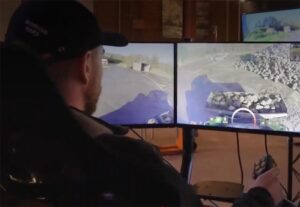
Efficient conversion of heavy machinery into teleoperated UGVs
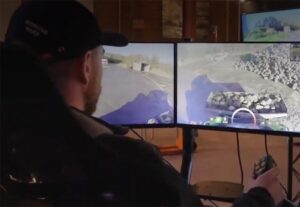
Efficient conversion of heavy machinery into teleoperated UGVs
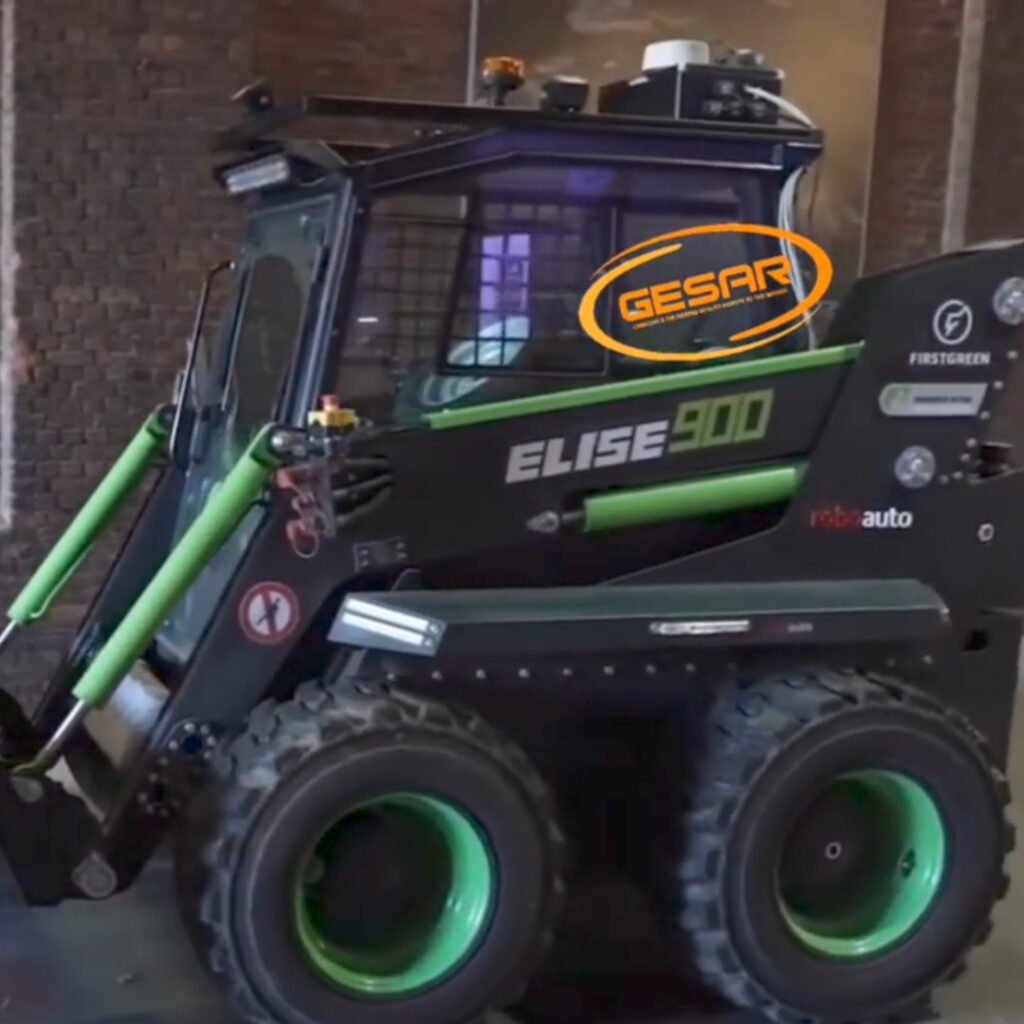
GESAR’s HeavyEquipmentRemoteControl Retrofit Systems enable excavators, skid steers and... ...on and machine control. The solution also enables equipment to be utilized in locations where direct...
The Comprehensive Guide to Heavy Equipment Remote Control Systems
Overview by
William Mackenzie
Updated:
Introduction to Heavy Equipment Remote Control Systems
Modern heavy equipment remote control systems allow operators to command mobile machinery from outside the conventional cab environment. This approach turns standard machinery into teleoperated Unmanned Ground Vehicles (UGVs) by routing steering, propulsion, braking, and implements through an electronic control architecture. Retrofitting existing fleets of excavators, loaders, bulldozers, or haul trucks involves adding vehicle control units, communications gear, and actuator interfaces.
Some modern electrohydraulic systems can integrate through CAN bus or other electronic interfaces, although access may depend on the machine architecture and OEM protocols. Older machines may require mechanical actuators, electrohydraulic valves, servo systems, or other external control interfaces. Well-engineered installations ensure predictable behavior during signal drops while preserving appropriate local manual controls or overrides. This technology is vital where conventional operation exposes personnel to unstable structures, contamination, or extreme terrain.
Remote-Controlled Heavy Equipment Types
Excavators and Material Handlers
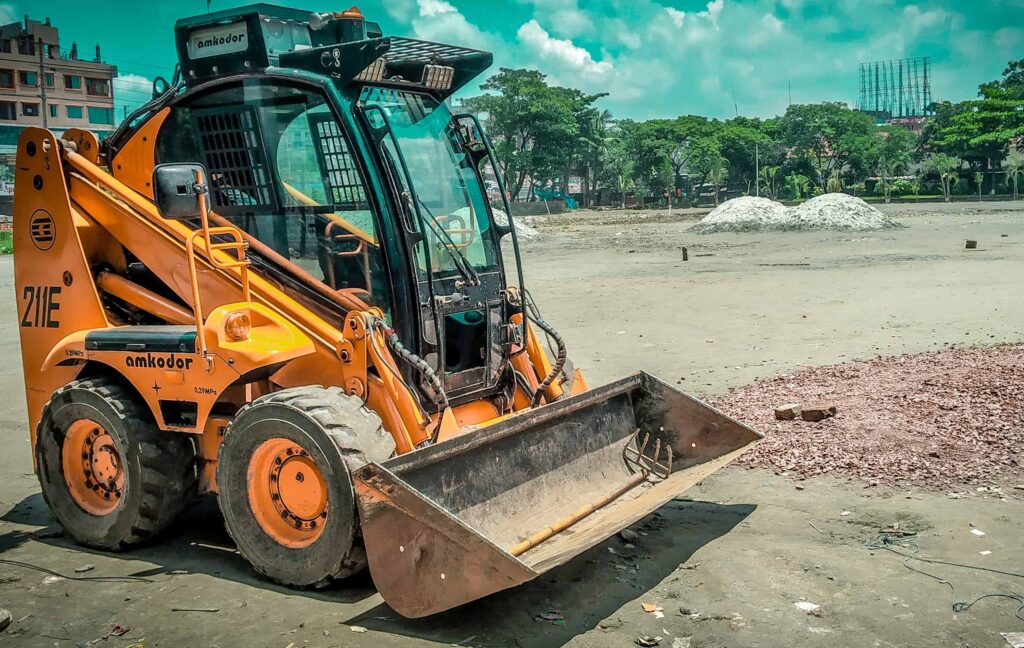
Modern excavators can integrate effectively with remote control due to their electrohydraulic layouts, although compatibility depends on the machine architecture and available control interfaces. Systems replicate boom, dipper, bucket, slew, and travel commands. While line-of-sight units suit local demolition, video-based teleoperation is used for underground mining. High-definition cameras, multiple viewpoints, ranging sensors, telemetry, and haptic controls can help compensate for reduced depth perception and the loss of cab feedback.
Demolition Robots and Unmanned Ground Vehicles
Purpose-built demolition robots are compact, tracked wireless platforms managed via an industrial remote controller inside unsafe structures. Larger UGVs for firefighting or route clearance feature advanced navigation and automated path-following. These complete robotic deployments require holistic safety planning across the network and vehicle.
Bulldozers, Graders and Loaders
Deploying remote control for heavy equipment on earth-moving machinery mitigates highwall and rollover risks. Remote bulldozers utilize real-time inclination telemetry for safety. Graders demand low-latency links to maintain surface quality, while wheel loaders may use automated return-to-dig functions to return the bucket or linkage to a preset position and reduce repetitive operator inputs. Cameras and proximity sensors help address bucket and machine blind spots.
Dump Trucks and Haulage Vehicles
Teleoperated haul trucks require continuous authority over propulsion, steering, and braking. Safety logic prevents dangerous operations such as traveling with an elevated body. Because of their immense mass, vision feeds are paired with radar, LiDAR, and GNSS geofencing to detect hazards and enforce operating-zone restrictions, while fleet and traffic-management systems coordinate traffic patterns.
Cranes and Lifting Equipment
Industrial remote control allows crane operators to maintain the best possible vantage point during a lift. The interface provides crucial data on load weight, radius, and stability limits. If communication fails, the system initiates a defined safe response, such as neutralizing commands, holding the load, applying brakes, or performing a controlled stop without introducing additional instability.
Levels of Remote & Automated Machine Control
Implementing a remote system involves selecting the appropriate level of remote control and automation to balance operator workload and mission complexity.
Direct Wireless Remote Control: The operator maintains visual contact, managing the asset via a portable transmitter within a limited line-of-sight range.
Remote Operation with Live Video Feedback: Onboard cameras and telemetry replicate the cab environment at a distant workstation over high-bandwidth networks.
Assisted Teleoperation: The human operator controls the task while software actively enforces safety boundaries and obstacle avoidance.
Supervisory Control of Multiple Machines: A single operator monitors several assets executing routine cycles, intervening only during system exceptions.
Semi-Autonomous Task Execution: The machine completes bounded tasks independently while the operator approves key operational transitions.
Fully Autonomous Heavy Equipment: The system independently plans and executes work within a controlled domain without continuous human input.
Selecting between these levels depends heavily on the existing site infrastructure and the required level of network performance.
Core Components of Industrial Remote Control Systems
Sourcing components from reliable industrial remote control manufacturers helps ensure the complete system meets relevant environmental and electromagnetic requirements.
Component
Function and Integration Considerations
Handheld, Portable and Fixed Operator Stations
Portable units support line-of-sight tasks, while fixed desks provide multi-display arrays for extended teleoperation.
Rugged Joysticks, Keyboards, Pedals and Haptic Controls
Input devices replicate primary controls, using haptic feedback to communicate physical resistance to the operator.
Radio Transmitters, Antennas, and Microphones
This hardware manages wireless commands and telemetry, utilizing antenna diversity to mitigate multipath interference.
Positioning units and IMUs provide real-time navigation and orientation data, while joint-angle sensors, encoders, cylinder-position sensors, and linkage sensors track implement configurations.
Proximity, Obstacle and Personnel-Detection Sensors
Radar, LiDAR, and ultrasonic sensors identify hazards outside the camera view to trigger automated speed reductions.
Onboard Computers and Vehicle Control Units
Safety-rated processors translate incoming wireless signals into machine actions and manage fail-safe routines.
Displays, Video Walls and Immersive Operator Interfaces
Multi-monitor layouts prioritize critical alarms and video streams to reduce operator cognitive overload.
Functional Safety & Fail-Safe Design
Functional safety engineering compensates for the loss of physical cab feedback by implementing deterministic hardware and software architectures.
Emergency Stop Architecture: Redundant safety channels using safety relays, safety PLCs, contactors, or safety-rated controllers stop or inhibit hazardous movement and require deliberate operator re-engagement. The emergency stop does not necessarily remove all machine power where doing so could create an additional hazard.
Loss-of-Link Behavior: Onboard controllers monitor command signals through configured heartbeat and timeout parameters, initiating a controlled stop or other defined safe response when communication is lost or degraded.
Safe-State and Controlled-Stop Functions: Systems must arrest or control specific movements safely, such as holding crane loads or sequentially applying haul truck brakes.
Command Authentication and Control-Priority Logic: Encryption, authentication, and secure pairing reduce the risk of unauthorized control. Defined mode-selection and control-priority logic determine whether local cab controls, remote controls, or safety systems have authority in each operating state.
Geofencing and Operating-Zone Restrictions: Virtual boundaries restrict travel speeds and machine entry into hazardous areas to complement physical site controls.
These safety functions must be rooted in a comprehensive site hazard assessment to protect both personnel and the asset.
Safety Standards & Regulatory Compliance
Compliance requires holistic validation of the modified machine and network rather than simply compiling certified individual parts.
ISO 13849 Safety-Related Control Systems: Evaluates safety-related control system parts using Performance Levels, often requiring redundant architectures for critical remote functions.
IEC 61508 Functional Safety: Represents a foundational framework for electrical, electronic, and programmable electronic safety-related systems, outlining a lifecycle approach for reducing and managing risks associated with random hardware failures and systematic faults.
IEC 62061 Machinery Safety: Addresses the functional safety of safety-related control systems used on machinery, including their hardware and software integrity.
ISO 17757 for Mining Machinery: Establishes safety requirements for autonomous and semi-autonomous earth-moving and mining machine systems, including system-level considerations involving operating areas, communications, interactions, and traffic management.
ISO 15817 for Earth-Moving Machinery: Outlines safety requirements for remote operator control systems used with earth-moving machinery, including control behavior, operator interfaces, and responses to communication failures.
Applying these international frameworks supports robust system design and can contribute to regulatory, contractual, and certification compliance, although applicable legal requirements depend on the machine, jurisdiction, and operating environment.
Emerging Trends in Heavy Equipment Remote Control Systems
Rapid advancements in network speed and processing power are reshaping how industrial remote control systems operate in the field.
Artificial Intelligence-Assisted Teleoperation: Neural networks process real-time video feeds to identify personnel, track attachments, and superimpose predictive overlays.
Automated Path Planning and Task Execution: Software allows machines to navigate mapped routes independently, shifting the human operator to a supervisory role.
5G-Advanced and Low-Latency Edge Computing: Private networks can use dedicated quality-of-service mechanisms and network slicing to prioritize machine-control traffic and improve latency consistency for complex maneuvers.
These emerging platforms allow fleets to transition smoothly from localized remote operation to high-efficiency autonomous execution over time.
In this Q&A, GESAR INC discusses teleoperated heavy machinery, modular unmanned ground vehicle chassis design, GPS-denied navigation, and robotics development for hazardous and hard-to-access industrial environments
The latest unmanned systems news, straight to your inbox.
Get our weekly roundup of technology developments, new products and industry news.
THANK YOU FOR SIGNING UP
Thanks for joining us. Check your inbox.
We've sent you an email. Click the confirmation link to complete your subscription to the weekly eBrief. In the meantime, explore the latest news, suppliers and technologies on UST.
Advancing Unmanned Systems Through Strategic Collaboration
UST works with major OEMs to foster collaboration and increase engagement with SMEs, to accelerate innovation and drive unmanned systems capabilities forward.