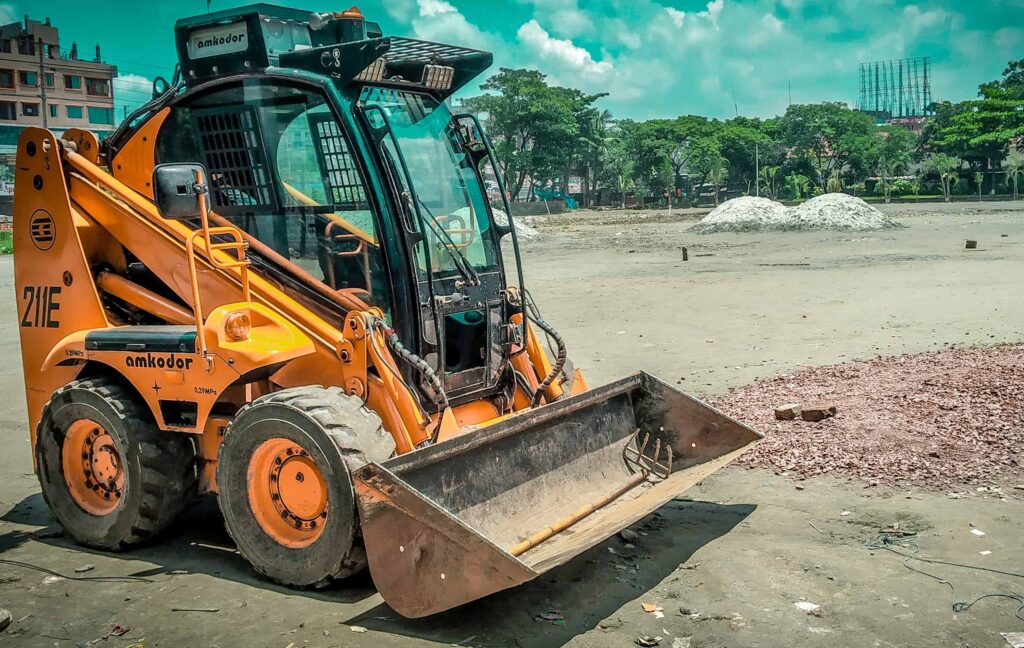
GESAR INC is a leading provider of advanced robotic technologies that enable industrial and heavy equipment to operate remotely in challenging environments.
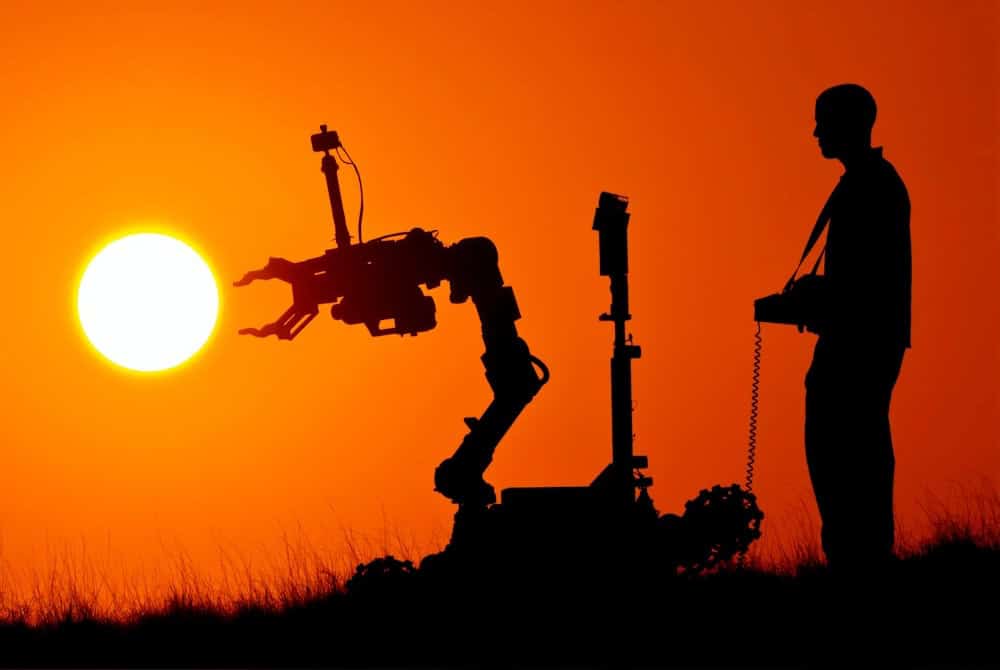
In this exclusive Q&A, Unmanned Systems Technology spoke with the team at GESAR to learn how the company is helping convert existing heavy equipment into remotely operated and semi-autonomous Unmanned Ground Vehicles (UGVs), the operational challenges driving adoption, and how robotics retrofit systems can support safer, more efficient work in hazardous and hard-to-access environments.
What challenges is GESAR helping customers solve through remote operation, UGV development and robotics expertise?
 GESAR helps customers solve challenges where humans either can’t safely, efficiently, or cost-effectively operate equipment on-site.
These include dangerous environments such as demolition zones, unstable structures and mining sites; remote or hard-to-access operations such as pipelines, disaster zones and offshore or industrial yards; labor shortages for skilled heavy equipment operators; high downtime costs due to equipment relocation or staffing gaps; lack of autonomy-ready infrastructure on legacy machinery; and the need for faster deployment of robotics without replacing entire fleets.
The core value is converting traditional machinery into remotely operated or semi-autonomous systems instead of buying new autonomous equipment.
How do GESAR’s Heavy Equipment Remote Control Retrofit Systems convert existing machinery into teleoperated unmanned ground vehicles?
GESAR’s retrofit systems turn standard heavy equipment into teleoperated unmanned systems by layering control, perception, and communication systems onto existing hydraulic/electromechanical platforms.
Typical conversion includes:
 Electronic actuation interfaces (hydraulic valve control, servo/drive interfacing)
- Drive-by-wire conversion modules for steering, throttle, boom, and implement control
- Sensor stack integration (cameras, LiDAR, IMU, GNSS when available)
- Onboard compute unit (edge computer for control + streaming)
- Low-latency communications link (LTE/5G, mesh, or RF systems)
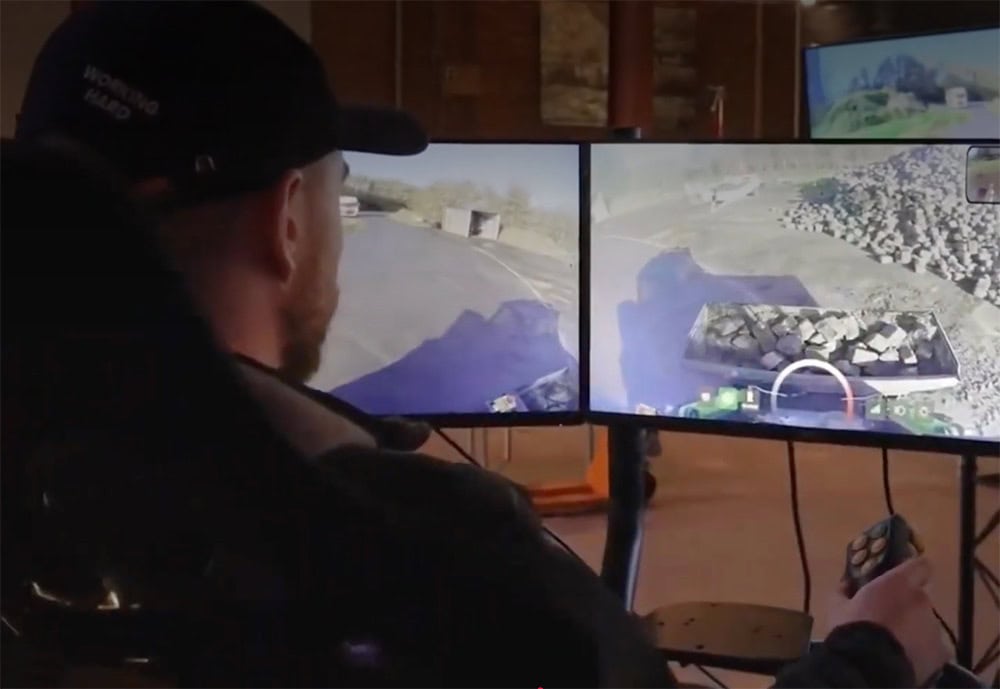
- Operator control station (joystick or UI-based teleoperation console)
- Optional: semi-autonomy layers (assisted digging, path hold, geofencing)
This effectively creates a “remote cockpit” for machines that were never designed to be remotely controlled.
What types of heavy equipment and industrial machinery can GESAR’s retrofit systems be integrated with?
GESAR’s retrofit approach is designed to be platform-agnostic across most hydraulic heavy machinery.
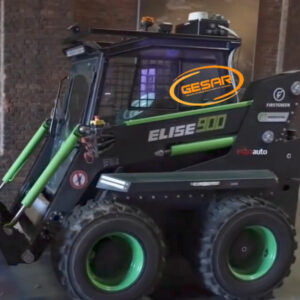 This includes excavators such as Komatsu, Caterpillar, and Hitachi models; skid steers and compact track loaders; dozers and graders; wheel loaders; dump trucks and articulated haulers; material handlers and demolition machines; forestry and mining equipment; and specialty industrial machinery such as crushers, conveyors, and drilling rigs.
The system is adapted to each machine based on its hydraulic architecture and control complexity.
What are the key operational and safety benefits of enabling heavy equipment to be controlled remotely?
Enabling heavy equipment to be controlled remotely delivers both safety and productivity improvements by separating the operator from the danger zone while keeping full machine capability.
It eliminates operator exposure to hazardous zones such as collapse, fire, and toxic environments, reduces on-site staffing requirements, and enables 24/7 operations with remote operators across time zones. Remote operation can also improve precision in high-risk tasks via stabilized sensor feedback, reduce equipment downtime by allowing operation without relocating personnel, support disaster response and military or defense applications, and increase utilization of existing fleet assets instead of purchasing new machines.
How are GESAR’s custom four-wheel UGV chassis configured to support autonomy, sensor integration and GPS-denied navigation?
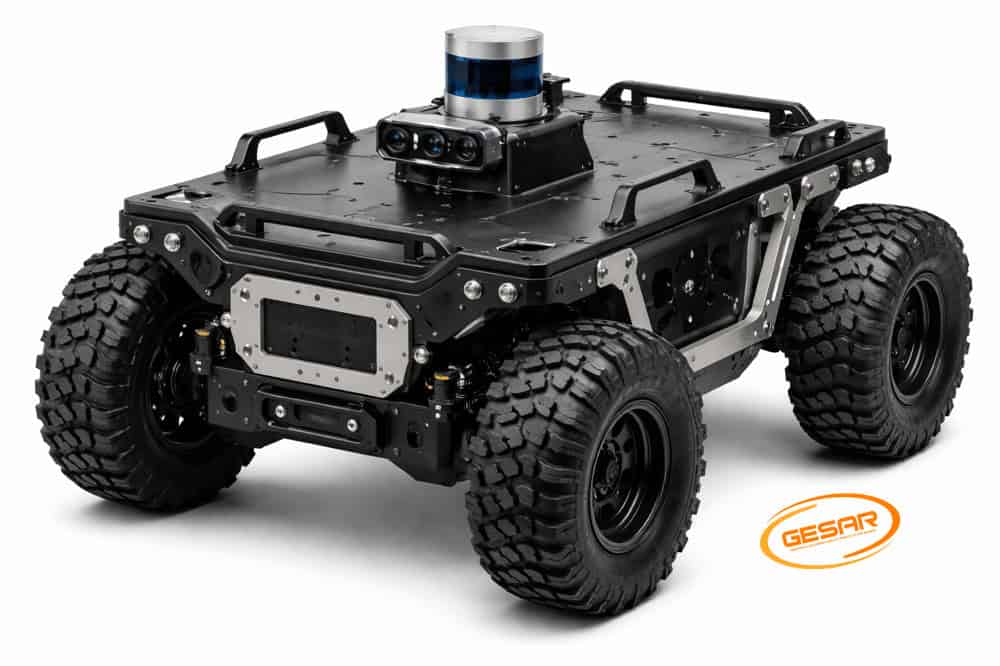
GESAR’s custom four-wheel UGV chassis are configured as modular robotics platforms rather than fixed-purpose machines, allowing them to support autonomy, sensor integration, and operation in GPS-denied environments.
Key design features include:
- A four-wheel rugged drivetrain optimized for uneven terrain and industrial environments
- Modular mounting architecture for sensors, including LiDAR, stereo cameras, and radar
- An edge compute integration bay for Jetson-class or industrial PCs
- A power system designed for high-load autonomy payloads
- ROS 2 compatibility for navigation and autonomy stacks
- Sensor-fusion readiness using VIO, LiDAR, and IMU for GPS-denied environments
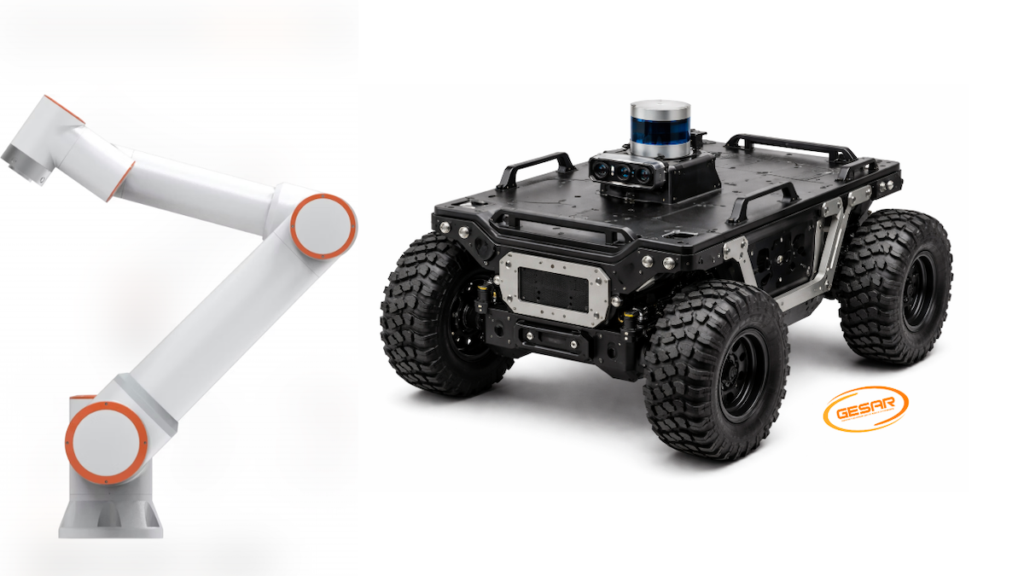
- Expandability for payloads such as manipulators, inspection tools, and mapping rigs
Navigation in GPS-denied zones is supported through Visual-Inertial Odometry, LiDAR SLAM, IMU fusion, and optional radar-based perception in degraded environments.
Together, these systems allow the UGV chassis to operate in tunnels, urban canyons, indoor industrial sites, and disaster zones.
How does GESAR support customers through its robotics, drone consulting, training and autonomous systems development expertise?
GESAR operates as both an engineering provider and applied robotics integrator, supporting customers through teleoperation system design and integration, retrofit planning, hardware selection, and control architecture.
Its robotics consulting and development support also covers autonomy development consulting, including SLAM pipelines, navigation stacks, and sensor fusion strategies, as well as drone and robotics systems advisory for aerial and ground coordination, inspection workflows, and mapping systems.
GESAR also supports training and operator enablement through remote operator workflows, safety procedures, and system handling. Its prototype-to-deployment engineering helps turn early UGV concepts into field-ready systems, while custom R&D supports specialized builds for demolition, mining, inspection, and defense use cases.
Overall, GESAR acts as a bridge between traditional heavy industry and modern robotics autonomy without requiring full fleet replacement.
It has been a pleasure speaking with GESAR and we look forward to following the company’s continued work in remote operation, heavy equipment retrofit systems, unmanned ground vehicle development, and robotics solutions for hazardous and hard-to-access environments.