
Suppliers: Optical Components

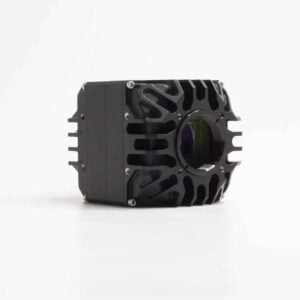
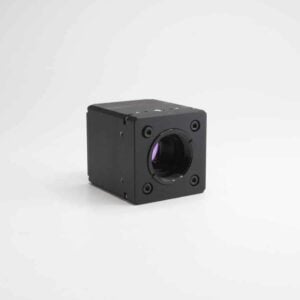
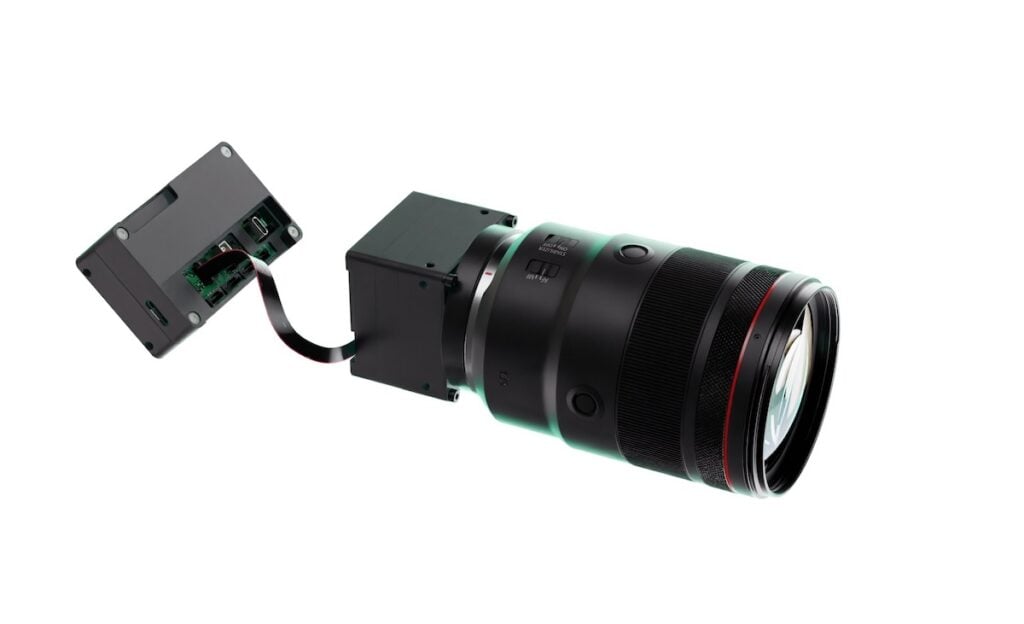
Cubert

Cutting-Edge Hyperspectral Camera Solutions - Critical Real-Time Insights for UAV-Based Applications

New Imaging Technologies

SWIR Cameras & Sensors for Infrared Imaging Applications With Drones & Unmanned Systems

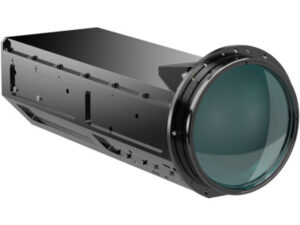
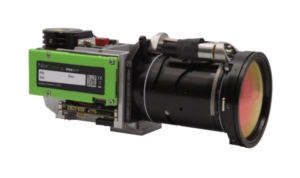
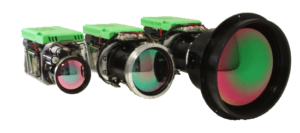
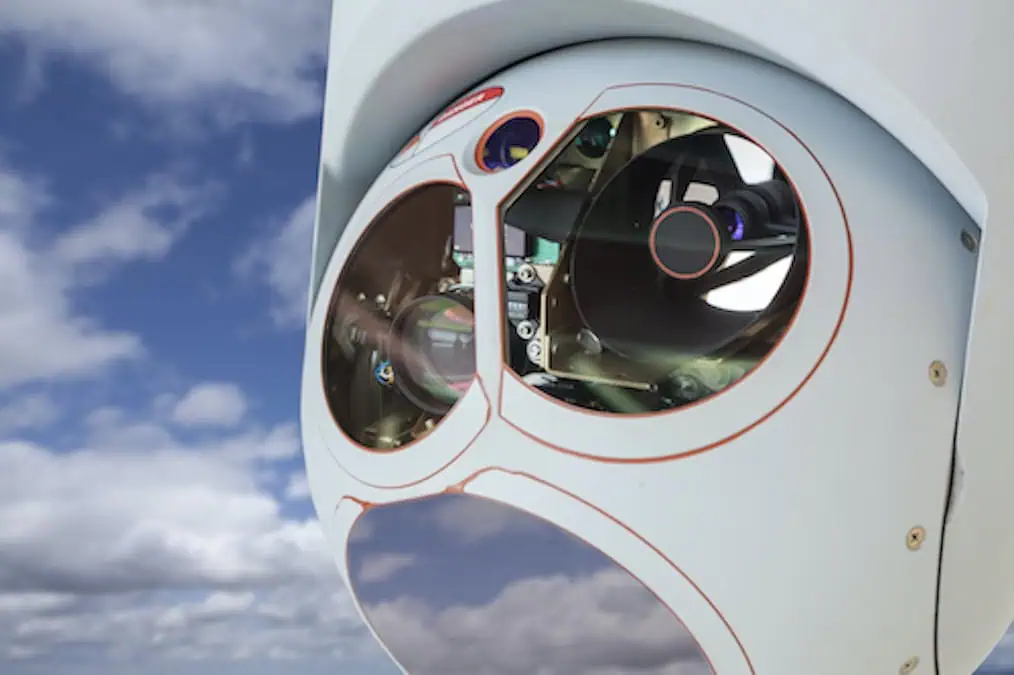
Noxant

High-Performance Infrared Cameras & Cores for Surveillance & Monitoring with Drones & Robotics

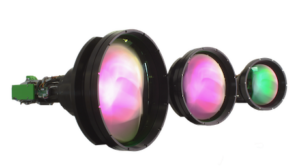
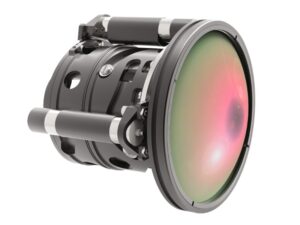
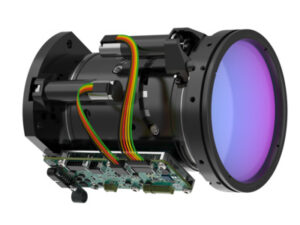
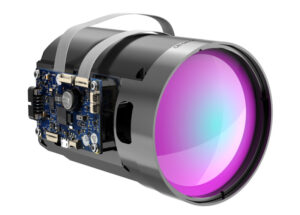
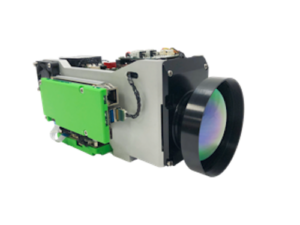
MKS-Ophir

High Performance Infrared Zoom Lenses for UAVs and Drones: Low-SWaP, Extended-Range, Ruggedized Lenses

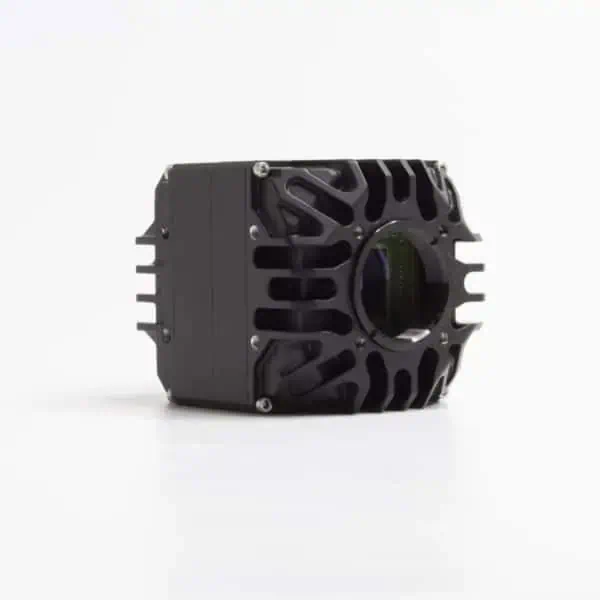
Steatite

Ultra-Reliable Rugged Hardware Solutions for Mission-Critical UAVs & Unmanned Systems Operating in Extreme Environments

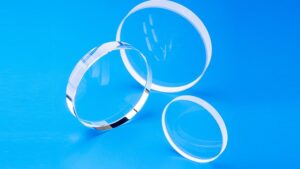
Meller Optics

Custom Sapphire Optical Windows, Domes & Lenses for Drones, ROVs & Gimbal Imaging Systems

Knight Optical

Quartz Optical Windows & Lenses for UAVs, ROVs & Robotics

Showcase your capabilities

If you design, build or supply Optical Components, create a profile to showcase your capabilities and connect with visitors who have an active requirement for your solutions.


Create Supplier Profile

Products

20 Cutting-edge Solutions
Add your solutions
SupIR-X 15-300 mm f/4.0

Continuous zoom MWIR lens for precision cooled camera systems

Continuous zoom MWIR lens for precision cooled camera systems
...r professional unmanned platforms and advanced electro-optical payloads. Designed for 10 µm SXGA...
SupIR 10-135mm f/1.8

MWIR Zoom Lens for Thermal Imaging in ISR & Uncrewed Systems

MWIR Zoom Lens for Thermal Imaging in ISR & Uncrewed Systems
...anced uncrewed systems and gimballed payloads, the lens supports critical ISR missions with a rugged...
FoldIR 25-275mm f/5.5

Lightweight MWIR zoom lens for compact UAV gimbals

Lightweight MWIR zoom lens for compact UAV gimbals
...ficient folded optical design, the system measures just 107mm x 101.5mm x 96mm (with detector) and... ...(127mm) gimbal systems on UAVs and other airborne platforms. Built to match the latest 15μm pitch...
SWIR & NIR 25-250mm

Continuous zoom lens for SWIR & NIR imaging

Continuous zoom lens for SWIR & NIR imaging
The Ophir SWIR & NIR 25-250mm is a continuous zoom lens designed for 5μm SXGA, 10μm SXGA, and 15μ...
ULTRIS 5

Cost-effective miniature hyperspectral camera

Cost-effective miniature hyperspectral camera
...drone OEMs and system integrators....
ULTRIS SWIR1

SWIR hyperspectral camera with frame rate of up to 80 Hz

SWIR hyperspectral camera with frame rate of up to 80 Hz
Cubert’s ULTRIS SWIR 1 is an innovative hyperspectral snapshot camera that covers the 980 to 1650 ...
SenS 1920 SWIR Camera

High-sensitivity Full HD SWIR camera for UAVs & robotics

High-sensitivity Full HD SWIR camera for UAVs & robotics
The SenS 1920 is a high-performance SWIR camera delivering Full HD 1920x1080 resolution, based aroun...
SenS 1280 SWIR Camera

High-sensitivity SXGA format SWIR camera for drones & robotics

High-sensitivity SXGA format SWIR camera for drones & robotics
... wide range of systems....
WiDy SenS SWIR Camera

Low-SWaP qVGA & VGA format SWIR camera cores

Low-SWaP qVGA & VGA format SWIR camera cores
...ted drones and unmanned systems. A variety of I/O options are provided including USB3.0, CamLink,...
Noxcore HD MWIR Camera Core

High-definition infrared camera cores with larger field of view

High-definition infrared camera cores with larger field of view
...for drones and unmanned vehicles. Featuring a larger field of view for enhanced situational...
NoxCore F4 Infrared Camera Core

SD infrared camera cores for surveillance & security

SD infrared camera cores for surveillance & security
...for drones and unmanned vehicles. Featuring a reduced SWaP (size, weight and power) footprint, the...
NoxCore Vision Infrared Camera Core

Compact SD infrared camera cores for system integrators

Compact SD infrared camera cores for system integrators
...for drones and unmanned vehicles. Featuring a reduced SWaP (size, weight and power) footprint, the...
NoxCore LW LWIR Camera Core

LWIR camera cores for infrastructure inspection

LWIR camera cores for infrastructure inspection
...y of drone and unmanned vehicle platforms....
Optical Filters

Interference Bandpass, Dichroic, ND, Fluorescence Filters, IR Cut

Interference Bandpass, Dichroic, ND, Fluorescence Filters, IR Cut
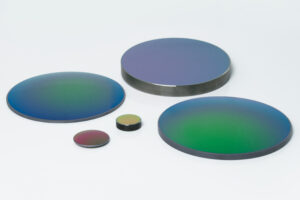
Knight Optical's product catalogue includes an extensive range of optical filters, available to... Knight Optical can also provide custom optical filters to meet our customer's requirements. This...
Sapphire Windows

Ideal Protective and Sensor Windows

Ideal Protective and Sensor Windows
Sapphire windows are ideal protective windows and are often used in viewports due to the durability ...
Germanium Lenses

Ideal for LWIR Thermal Imaging Applications

Ideal for LWIR Thermal Imaging Applications
Germanium lenses are often used in thermal imaging cameras due to their transmission in both the MWI...
Germanium Windows

Ideal for LWIR Thermal Imaging

Ideal for LWIR Thermal Imaging
Knight Optical can offer custom germanium windows manufactured to our customer's individual...
Sapphire Optical Windows

Custom optical windows for drones, AUVs & ROVs

Custom optical windows for drones, AUVs & ROVs
...; for critical optical and laser applications...
Sapphire Lenses

Rugged lenses for drone & deep water applications

Rugged lenses for drone & deep water applications
...ller Optics’ optical-grade monocrystalline sapphire lenses are ideal for imaging and focusing, IR...
Sapphire Domes

Optical domes for drone & ROV cameras & sensors

Optical domes for drone & ROV cameras & sensors
...ision sapphire domes can be provided with diameters of up to 100 mm and included viewing angles of...

Optical Windows, Lenses, and Domes for Unmanned Systems

Caroline Rees

Updated:

Unmanned systems such as UAVs, UGVs, USVs, and ROVs rely on precise imaging technologies to carry out a wide range of tasks, from surveying and surveillance to inspection and mapping. Central to these capabilities are optical windows, lenses, and domes—components that protect delicate sensors and optics while enabling optimal image transmission across various spectral bands.

Material Choices for Unmanned Optics

Material properties directly affect the performance and suitability of optical components in unmanned environments. Below is an overview of commonly used materials and how they contribute to imaging effectiveness:

Sapphire

Sapphire is widely recognized for its strength, scratch resistance, and ability to transmit light across a broad spectrum. These properties make sapphire an excellent choice for UAVs and ROVs operating in abrasive or high-pressure environments. Sapphire optics can withstand impacts, high-speed airflow, and temperature variations, but they are typically more costly than other materials.
Germanium

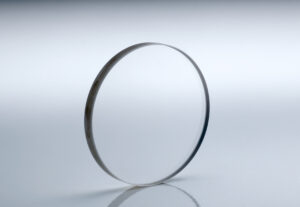
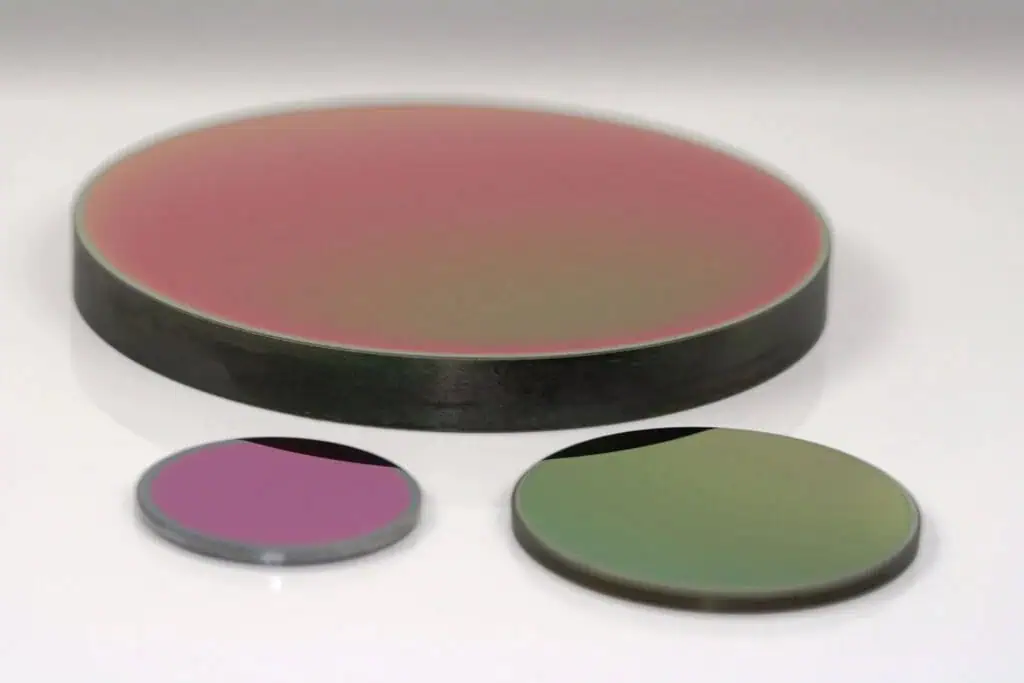
Germanium Windows

Germanium Windows by Knight Optical

Used primarily for infrared imaging, germanium is ideal for thermal cameras on drones and robotic platforms. It provides excellent transmission in the mid-wave infrared (MWIR) and long-wave infrared (LWIR) bands, making it suitable for night-time operations or heat-based inspections. While germanium optics offer superb IR performance, they are dense and may not be suitable for weight-sensitive platforms.

Quartz (Fused Silica)

Quartz (fused silica) is favored for its thermal stability and wide spectral range, covering ultraviolet, visible, and some infrared wavelengths. These properties are useful for multispectral imaging and precision applications where clarity and consistency are key. Quartz is more prone to scratching compared to sapphire but is more cost-effective.

Optical Glass

Offering a good balance between cost, weight, and optical clarity, glass is a popular choice for drones and ground-based unmanned systems. It supports a wide range of imaging tasks where extreme environmental resistance isn’t critical. Various formulations are available, each optimized for specific wavelengths and performance characteristics.

Understanding Optical Component Types

Unmanned imaging systems incorporate multiple optical components, each performing a defined role within the imaging payload to protect sensors, control light transmission, and maintain image quality across operating environments.

Optical Windows

Optical windows are flat protective elements positioned in front of lenses or sensors to shield internal components from dust, moisture, pressure, and debris while preserving optical clarity. Their design prioritizes transmission efficiency and environmental durability.

Common types include:

  • Flat glass windows for visible-spectrum cameras
  • Sapphire windows for high-abrasion or high-pressure environments
  • Fused quartz windows for ultraviolet or infrared transmission
  • Pressure-rated windows for subsea and deep-water applications
  • Germanium windows for thermal infrared imaging applications

Optical Lenses

Optical lenses collect, shape, and focus incoming light onto the image sensor, directly influencing resolution, field of view, and spectral performance. Imaging lenses are engineered to match specific wavelength bands and operational requirements.

Common types include:

  • Visible-spectrum lenses for daylight imaging
  • MWIR lenses optimized for mid-wave infrared sensors
  • SWIR lenses for low-light and atmospheric-penetration imaging
  • Fixed-focus and zoom lenses for static or variable field-of-view systems

Optical Domes

Optical domes are spherical or hemispherical enclosures that protect gimballed, pan-tilt, or omnidirectional camera systems while allowing unrestricted viewing angles. They are widely used on drones and ROVs where full field-of-view coverage and smooth aerodynamic or hydrodynamic flow are required.

Common types include:

  • Hemispherical domes for forward-looking sensors
  • Full spherical domes for 360-degree imaging systems
  • Sapphire domes for high-speed or abrasive environments
  • Polymer domes for lightweight airborne platforms

Optical Filters

Optical filters selectively transmit specific wavelength ranges to improve image contrast, suppress unwanted light, or isolate spectral bands for advanced sensing applications. They are positioned either in front of the lens or within the optical path.

Common types include:

  • Neutral Density (ND) filters for reducing overall light intensity without altering color balance
  • Polarizing / Polarizers (CPL) for suppressing reflections and improving contrast
  • UV (MCUV) filters for blocking ultraviolet radiation and protecting optical elements
  • IR cut filters for preventing infrared contamination in visible-spectrum sensors
  • IR pass / NIR filters for transmitting infrared and near-infrared wavelengths

This structured approach allows optical systems in unmanned platforms to be tailored precisely to mission requirements, environmental conditions, and sensor technologies.
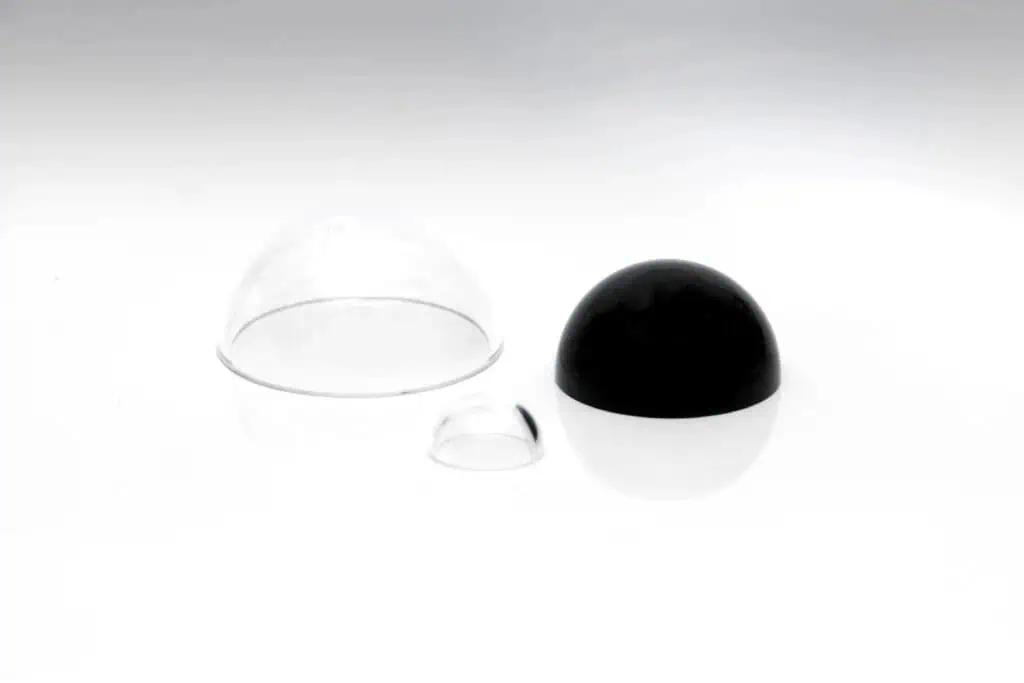
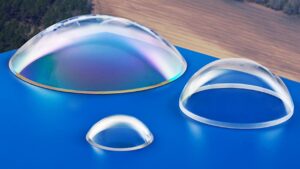
Optical Domes

Optical Domes by Knight Optical

Application Examples in Unmanned Systems

The need for reliable, high-clarity optical components extends across multiple unmanned platforms and environments:

Aerial surveillance and mapping (UAVs)

Drones equipped with cameras for geospatial mapping or infrastructure inspection benefit from fused silica or sapphire windows that ensure high optical transmission and environmental resistance. These materials support multispectral and hyperspectral imaging systems used for agriculture, construction, and environmental monitoring.

Thermal imaging (UAVs, UGVs, ROVs)

Infrared-capable drones and robotic platforms often use germanium or silicon optics. Germanium windows and lenses provide superior IR transmission for MWIR and LWIR bands, while silicon is used for lightweight LWIR applications. Germanium optics are widely used in fault detection, search and rescue, and pipeline inspection.

Subsea exploration and inspection (ROVs and AUVs)

ROVs and autonomous underwater vehicles require robust dome windows that can withstand high pressure and saltwater corrosion. Sapphire domes and fused quartz domes offer excellent resistance to harsh underwater conditions while maintaining optical clarity for sonar, camera, and laser systems.

Land-based autonomous systems (UGVs)

Unmanned ground vehicles benefit from optical glass or sapphire windows depending on terrain and environmental exposure. These systems often integrate imaging lenses and filters tailored for low-light or IR-enhanced navigation.

Considerations for Material Selection

Choosing the right optical component for your unmanned system depends on various factors:
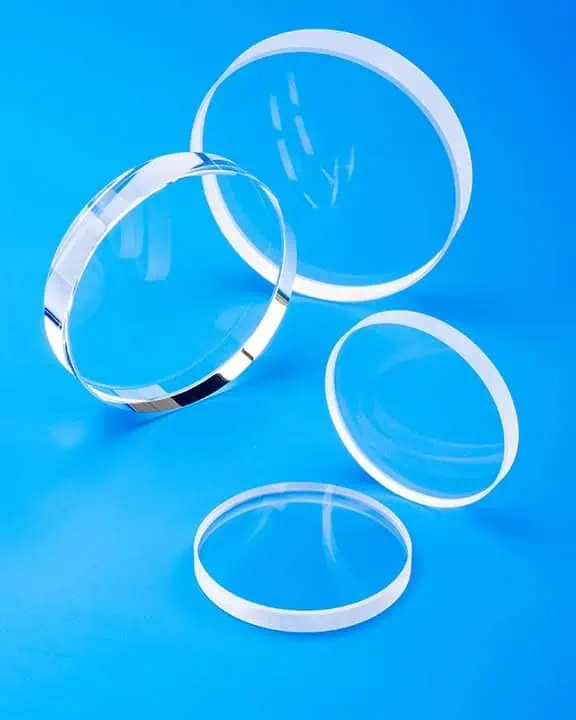
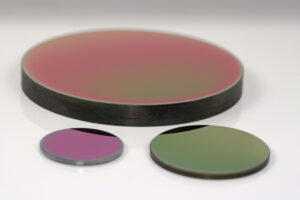
sapphire windows

Sapphire Windows by Meller Optics

  • Spectral requirements – what wavelengths does the sensor operate in (UV, visible, IR)?
  • Environmental exposure – will the system face impact, vibration, chemicals, or high pressure?
  • Weight and size constraints – particularly important for aerial and mobile systems
  • Budget and lifecycle – cost vs. durability trade-offs, especially in high-risk or disposable systems

Working with manufacturers that offer custom optical windows and domes ensures that your imaging payload is optimized for its specific application. Whether you need a high-durability sapphire lens or a lightweight polymer window, custom engineering can improve optical performance and extend system longevity.

High Quality Optics Means High Performance

As imaging technology becomes more integrated into unmanned platforms, the importance of high-quality optical windows, lenses, and domes continues to grow. From sapphire optics for rugged drones to germanium domes for thermal marine systems, these components provide critical protection and clarity. Selecting the right material and optical design ensures maximum performance from your imaging system—whether it’s navigating a dense forest canopy or exploring the ocean floor.


Related Articles

Multispectral Imaging & The Optical Science of Precision Agriculture

Knight Optical has highlighted how multispectral imaging systems transform crop health management by detecting stress and nutrient deficiencies weeks before symptoms become visible, significantly reducing pesticide use and protecting global food yields

May 27, 2026
ECHO 10K Sensor & AI Platform Launched for Persistent UAV Surveillance

Sapient Perception has launched ECHO, a purpose-built 10K sensor for unmanned aerial vehicles that offers 100 times more area coverage than conventional systems while maintaining full resolution for autonomous missions

May 11, 2026
High Sensitivity Full HD SWIR Imaging with SenS 1920

New Imaging Technologies SenS 1920 SWIR camera combines Full HD resolution, high sensitivity, and low noise performance for demanding industrial inspection and ISR imaging applications

May 11, 2026
Knight Optical Highlights the Role of Beam Expanders in Defence Laser Applications

Knight Optical examines how beam expander design, optical components, and material selection influence laser performance, supporting reliable operation across defence applications including rangefinding, LiDAR, and remote sensing systems

Apr 20, 2026
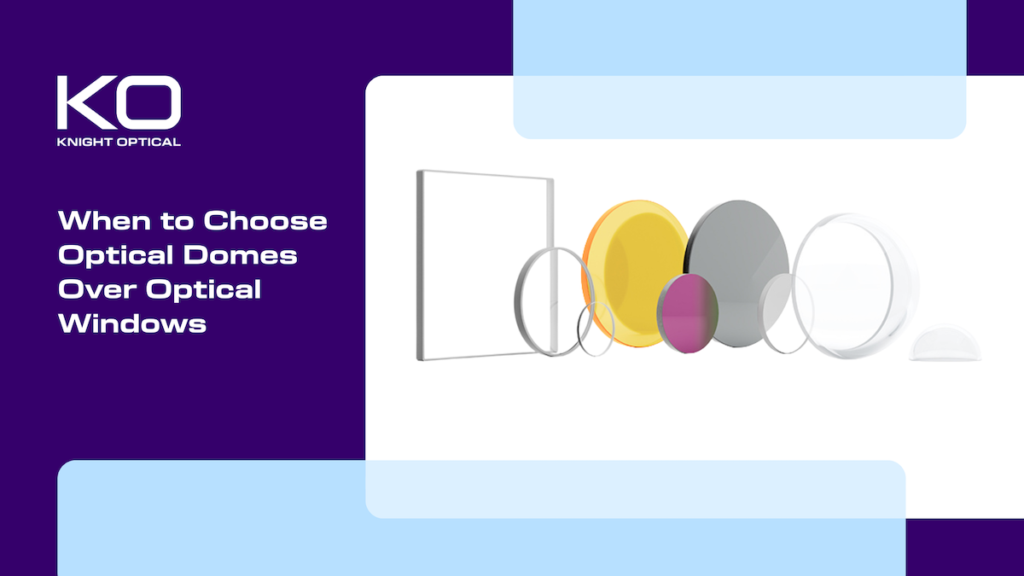
Choosing Between Optical Domes & Optical Windows in Imaging Systems

Knight Optical explains when to select optical domes or optical windows, considering how geometry, performance, and field of view influence their suitability for imaging and sensing applications across different operating conditions

Mar 30, 2026
Knight Optical Examines the Optical Components Driving LiDAR Advancements

Knight Optical examines how precision optical components underpin modern LiDAR technologies, supporting advancements in accuracy, reliability and performance across a wide range of applications

Jan 22, 2026
Knight Optical Discusses How International Events Are Driving Optical Innovation

Through participation in international trade events, Knight Optical shares how practical discussions around optics contribute to the evolution of sensing and imaging technologies supporting next-generation unmanned systems

Dec 16, 2025
MKS-Ophir Unveils High-Resolution Continuous Zoom Lens for UAV & ISR Applications

MKS-Ophir has introduced the Ophir® SupIR 16-80mm f/1.2, a compact, high-resolution continuous zoom LWIR lens designed for SXGA uncooled detectors

Oct 22, 2025
MKS Unveils New MWIR Zoom Lens for High-Resolution ISR Detection & Range

The Ophir SupIR-X 15-300mm f/4 lens is purpose-built for 10 µm SXGA detectors, offering unmatched clarity and an extended detection range up to 26km

Oct 20, 2025