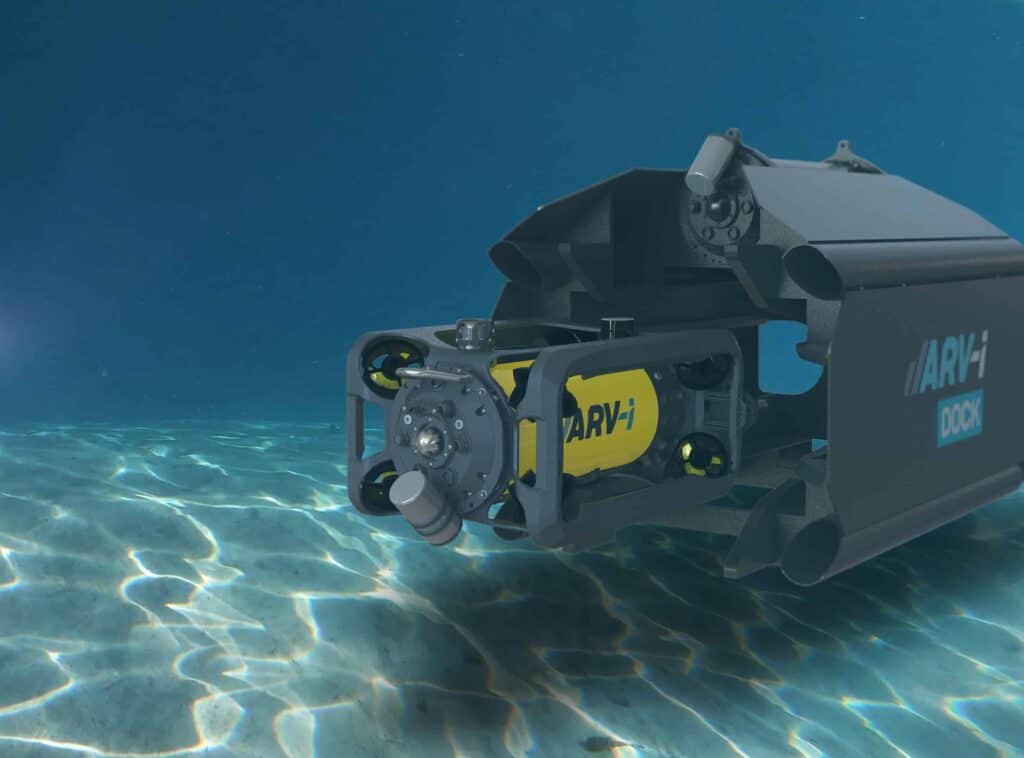
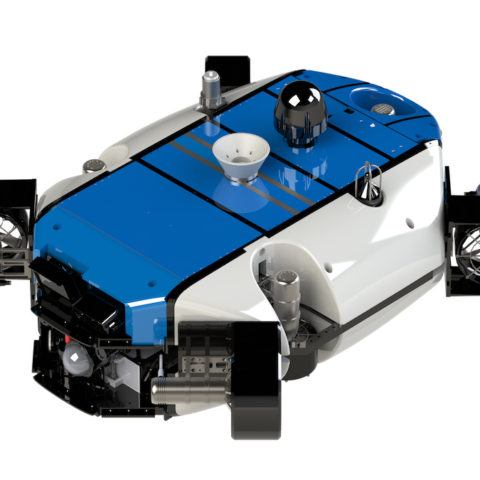
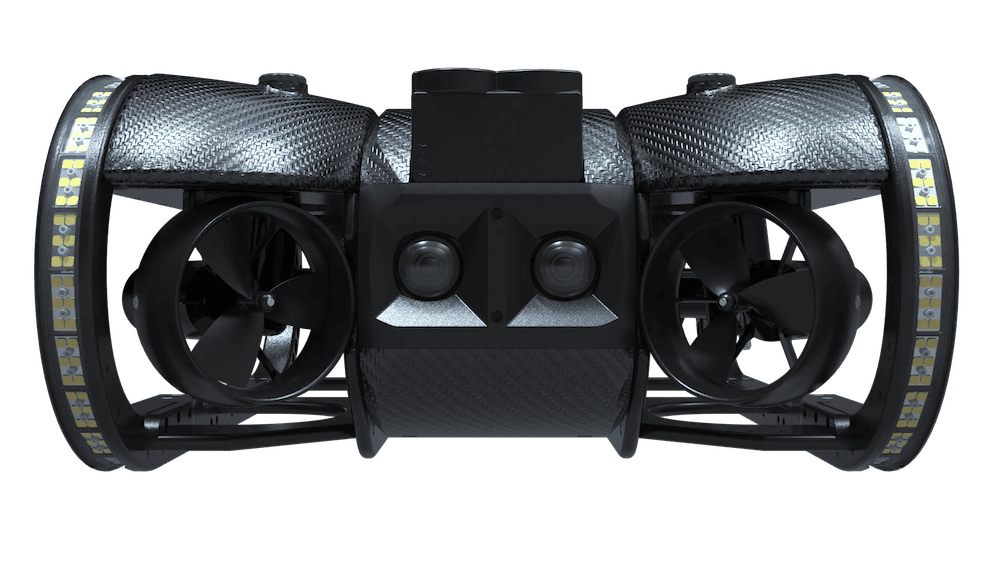
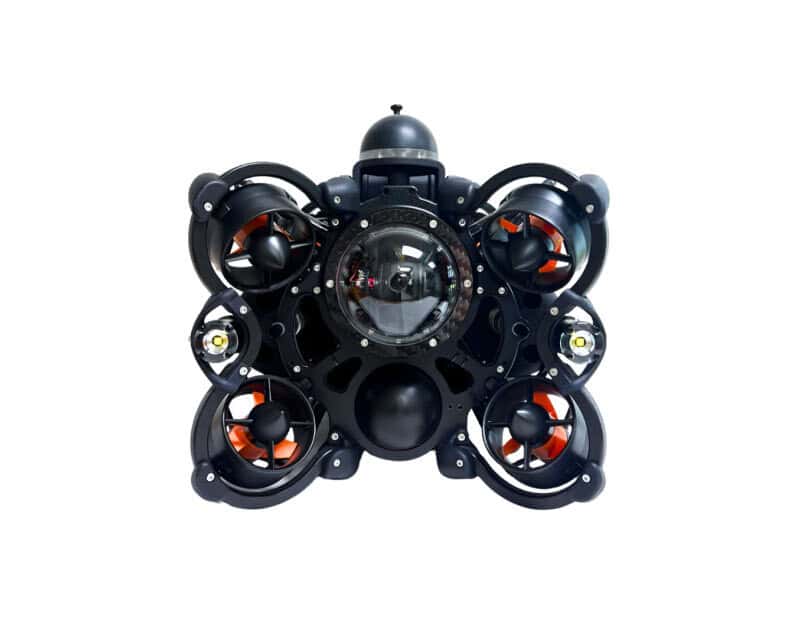
Remotely Operated Vehicles (ROVs) are tethered underwater robotic systems that enable real-time control, imaging, sensing, inspection, and intervention during subsea operations. ROV systems range from portable mini and observation-class vehicles to work-class, crawler, towed, and hybrid platforms.
This category showcases underwater ROV manufacturers offering platforms for offshore energy, marine research, aquaculture, infrastructure assessment, and other subsea applications.
If you design, build or supply Remotely Operated Vehicles (ROV), create a profile to showcase your capabilities and connect with visitors who have an active requirement for your solutions.
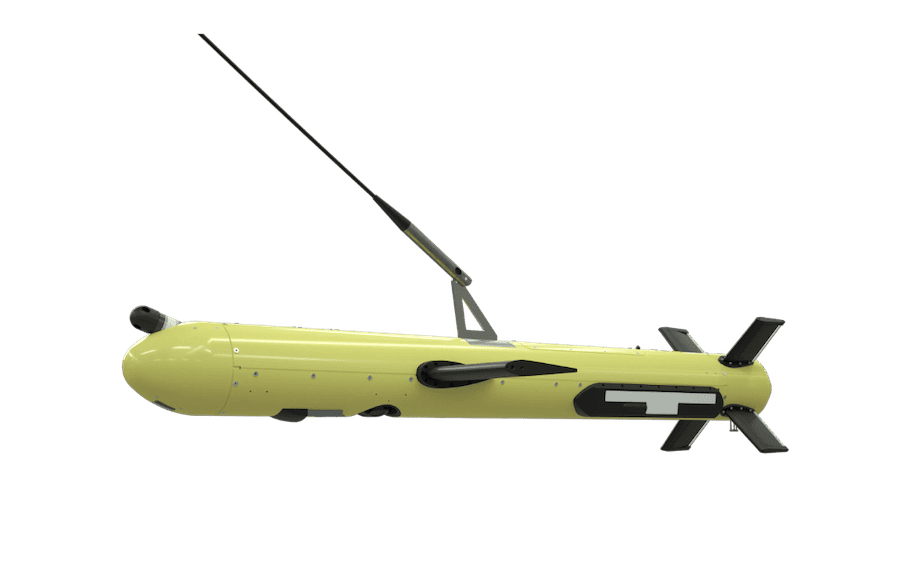
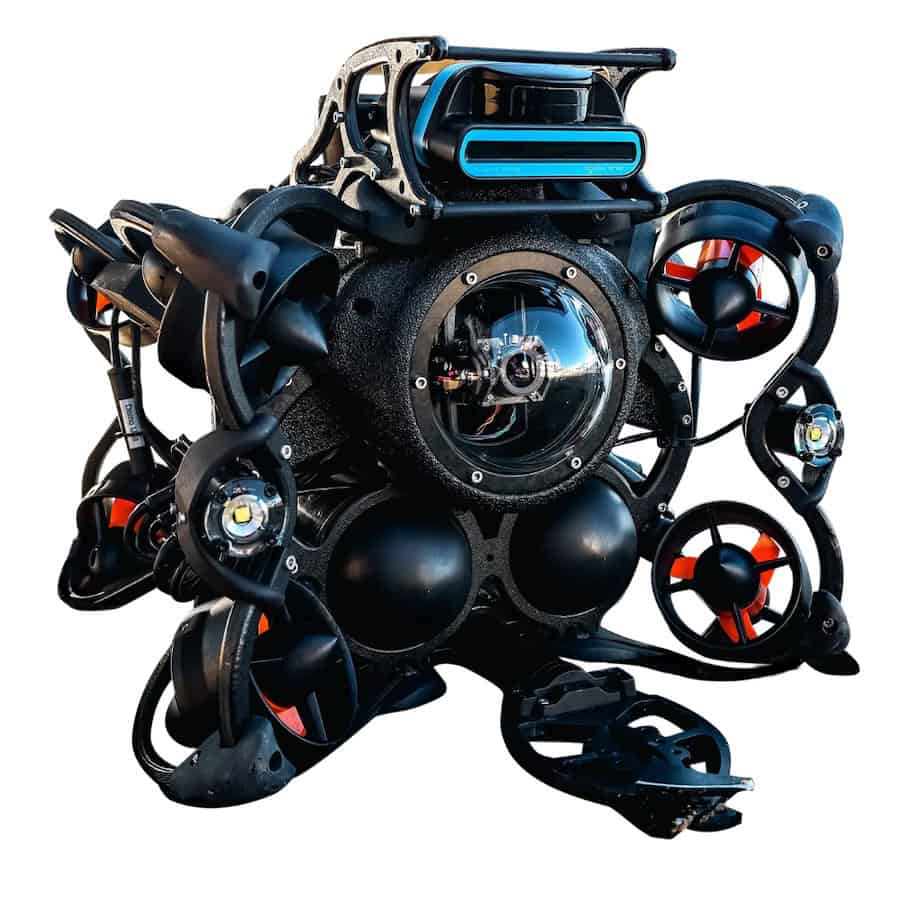
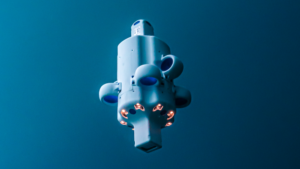
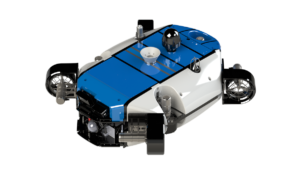
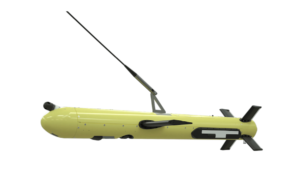
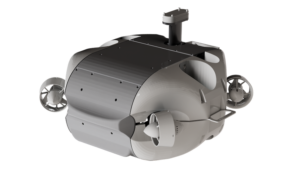
...L and INS, the underwater robotic vehicle is capable of carrying out missions in challenging subsea... ...the autonomous underwater drone revolutionising underwater data collection by eliminating the...
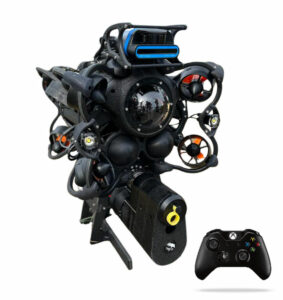
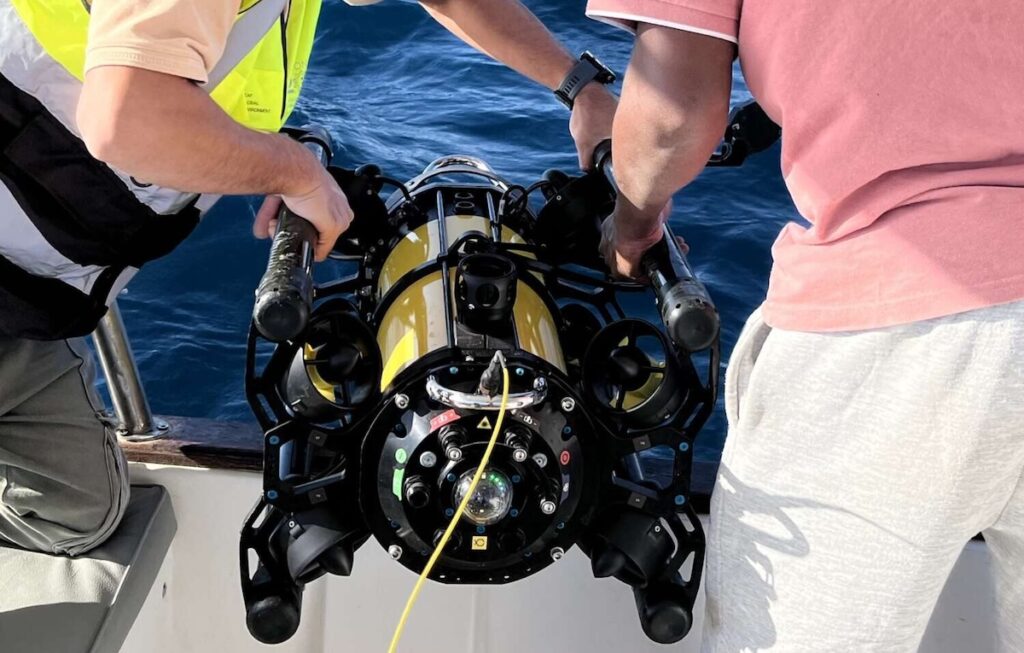
The ultimate portable and toughest micro ROV on the market.
The ultimate portable and toughest micro ROV on the market.
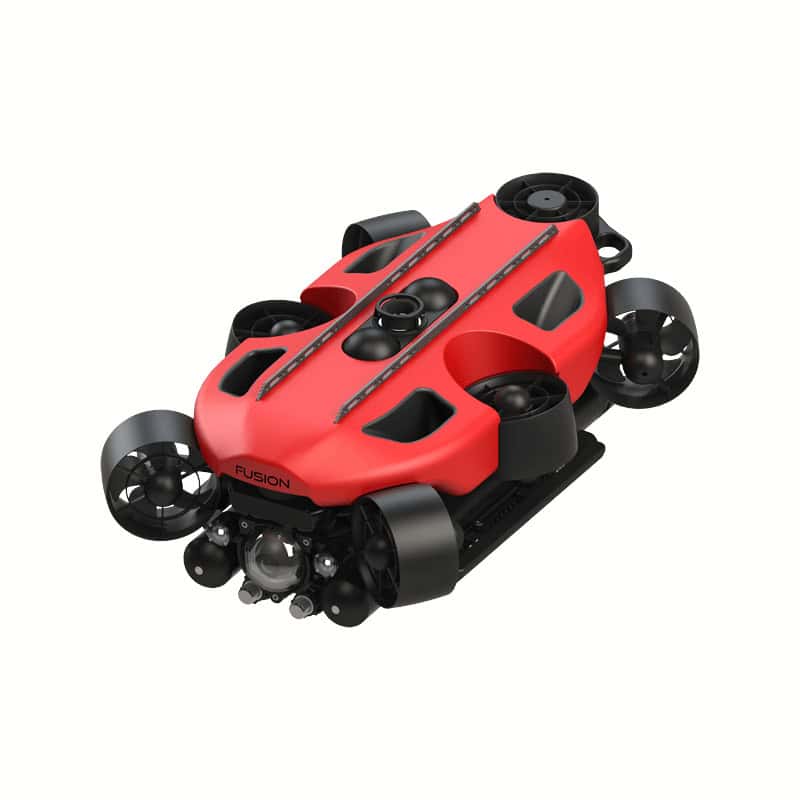
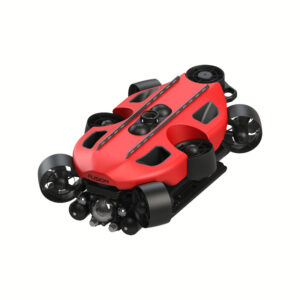
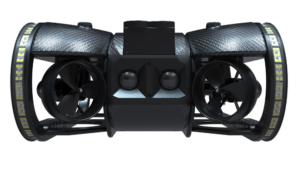
...oughest little ROV on the market. Powered by six thrusters, engineered with aluminium and carbon... ...ican case, the ROV is easily portable. The battery tube is certified for both passenger and cargo...
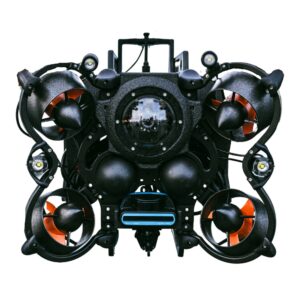
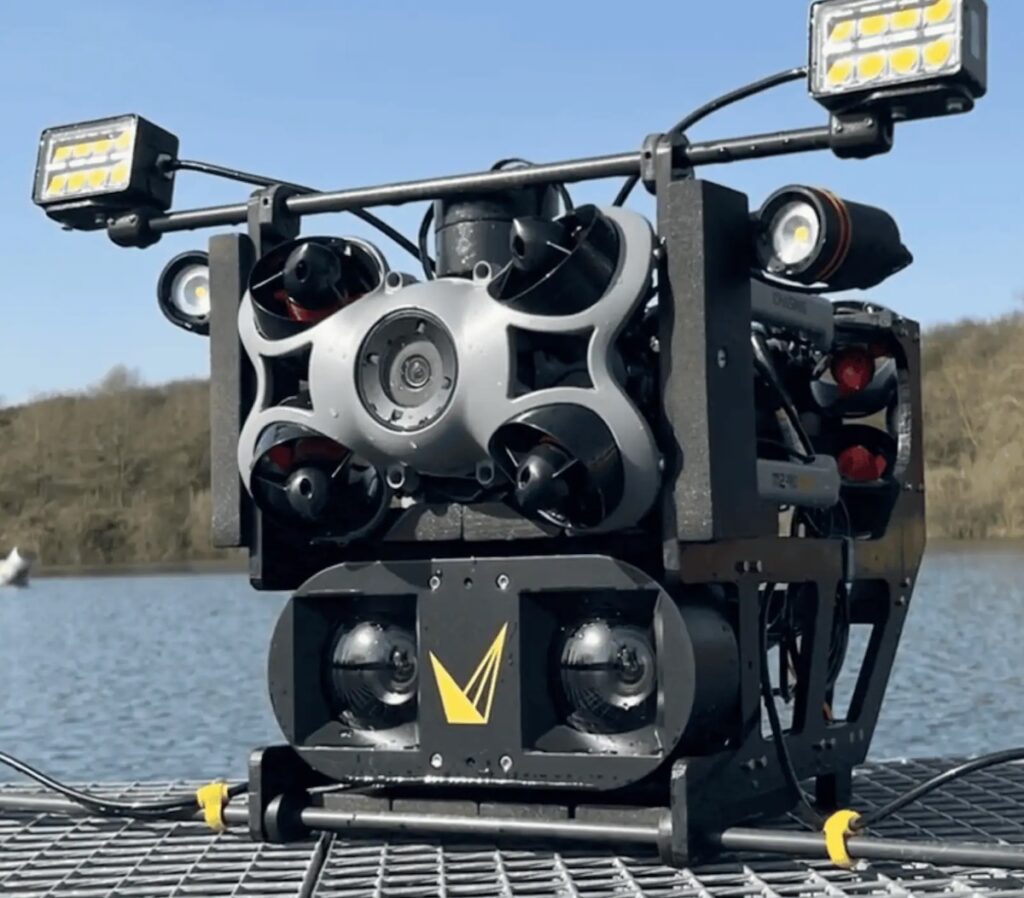
Intelligent and advanced capabilities for underwater surveys
Intelligent and advanced capabilities for underwater surveys
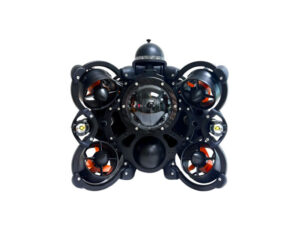
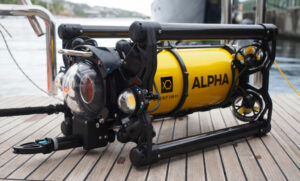
...ervation class ROV, designed for quick deployment and reliable underwater surveys.... ...ion-class mini ROV designed for quick deployment and low-maintenance operation. Fitting completely...
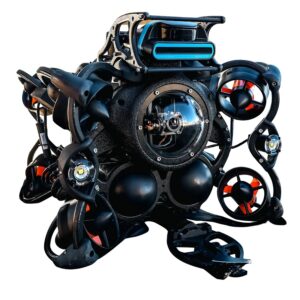
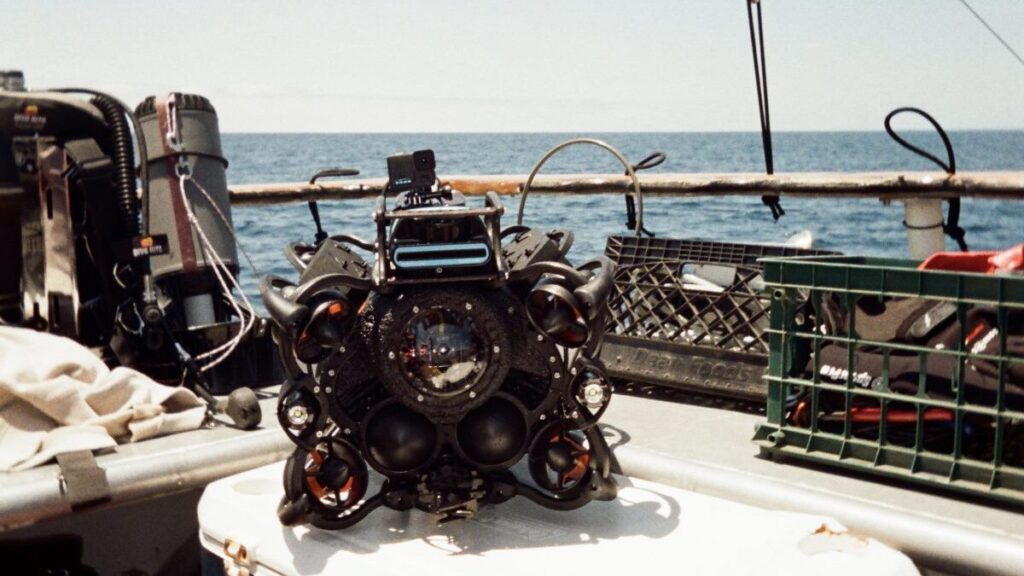
Mission ready with advanced stabilization and payload capabilities.
Mission ready with advanced stabilization and payload capabilities.
......anced stabilization allows users to pilot the vehicle precisely underwater, even in high current.... ...t and flexible underwater capabilities for complex deep ocean missions. It consists of six thrusters...
Overview of Remotely Operated Underwater Vehicles: Classes, Applications & Payloads
Overview by
William Mackenzie
Updated:
Introduction to Remotely Operated Vehicles
Remotely Operated Vehicles (ROVs) are tethered underwater robots used across offshore energy, marine science, infrastructure inspection, and defense. Unlike Autonomous Underwater Vehicles (AUVs), which operate independently using pre-programmed missions and onboard navigation, ROVs remain connected to a surface vessel or control station by a tether or umbilical. This connection enables operators to pilot the vehicle in real time, receive continuous video and sensor data, and control tools or manipulators during complex subsea tasks.
Although many vehicles can be configured for multiple roles, the industry generally categorizes ROVs in two ways:
By class – based on size, capability, and power.
By application – based on the mission they’re equipped to perform.
Understanding both perspectives helps engineers, operators, and project teams choose the right vehicle for the task.
ROV Types by Class
Mini ROVs
Also known as: Micro ROVs, Small ROVs, Compact ROVs, Lightweight ROVs, Miniature ROVs, Portable ROVs, Eyeball-class ROVs
Mini ROVs are compact, portable systems designed primarily for visual inspection in confined, shallow, or low-risk environments. They are often operated from small vessels, pontoons, or even shore-based locations and can be deployed quickly with minimal crew and infrastructure. Payload options are typically limited to cameras, lights, and basic sonar. Still, their low cost and ease of use make them popular for inland waterways, aquaculture, basic hull checks, and rapid assessments.
Observation-Class ROVs
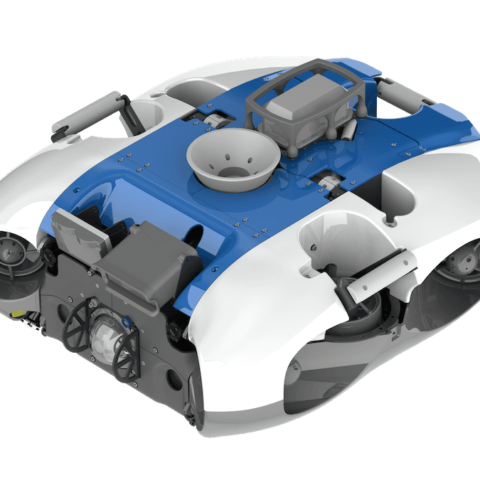
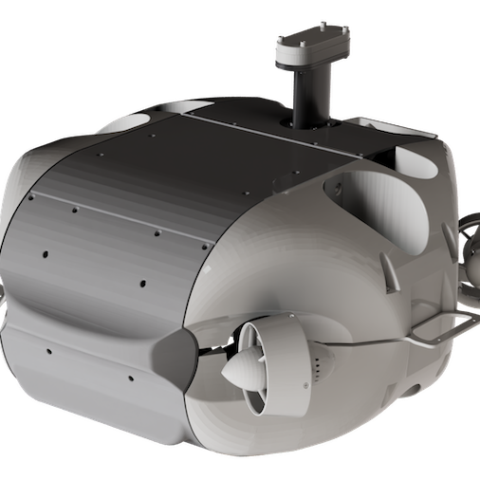
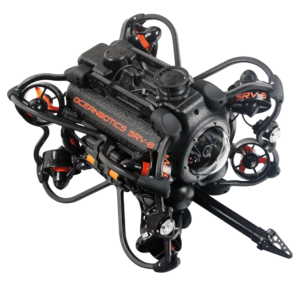
SRV-8 MDV by Oceanbotics
Also known as: Observation ROVs, Inspection ROVs, Inspection-class ROVs, Survey-class ROVs
Inspection ROVs occupy the middle tier of capability. They are larger and more potent than mini systems, offering better stability, higher-quality imaging, and the ability to integrate sensors such as multibeam sonar, laser scanners, and positioning aids.
They are widely used for structural inspections, environmental monitoring, and survey tasks that require detailed situational awareness but do not require heavy intervention tools. Survey-configured variants may support metrology, seabed mapping, or bathymetric work.
Work-Class ROVs
Work-class vehicles are built for demanding offshore missions where payload capacity, stability, and power are critical. They operate at greater depths, support multiple manipulators, and integrate advanced control systems and heavy tooling. Advanced buoyancy modules, often based on depth-rated syntactic foam, are used to maintain neutral buoyancy and vehicle stability while accommodating heavy tooling and sensor payloads.
Light Work-Class ROVs
Also known as: Utility ROVs, Medium-duty ROVs
Light work-class platforms bridge the gap between inspection and full intervention vehicles. They offer more thrust, improved payload options, and limited tooling capability, making them suitable for general utility work, light construction support, and more complex inspections.
Heavy Work-Class ROVs
Also known as: Heavy-duty work ROVs, Construction-class ROVs
Heavy work-class systems are designed for intervention and construction in deep and harsh offshore environments. They routinely carry dual manipulators, hydraulic tools, cutting systems, torque tools, and specialist subsea interfaces. These vehicles are standard in oil and gas, offshore wind, and subsea construction programs.
Crawler ROVs
Also known as: Underwater Crawler ROVs, Tracked ROVs, Underwater Tracked Vehicles
Crawler ROVs use tracks, wheels, or other contact-based locomotion to travel across the seabed or along submerged structures rather than relying solely on thrusters for free-swimming movement. This configuration provides stability and sustained contact with an inspection surface, particularly where tooling, cleaning, non-destructive testing, or close-range sensor measurements are required.
They are used for applications including pipeline and cable inspection, hull and tank inspection, seabed intervention, cleaning, and other tasks where maintaining consistent contact with a structure or surface is advantageous.
Remotely Operated Towed Vehicles (ROTVs)
Also known as: Towed ROVs, Remotely Operated Towed Vehicles
ROTVs differ from conventional free-swimming ROVs because they are towed behind a surface vessel while their position or flight path can be actively controlled. This architecture is particularly suited to continuous survey missions, where an ROTV can carry cameras, sonar, oceanographic instruments, and other sensing payloads through the water column or above the seabed.
ROV Types by Application
While class describes the platform, the application describes the mission configuration. A single vehicle can often serve multiple roles by swapping payloads and tools.
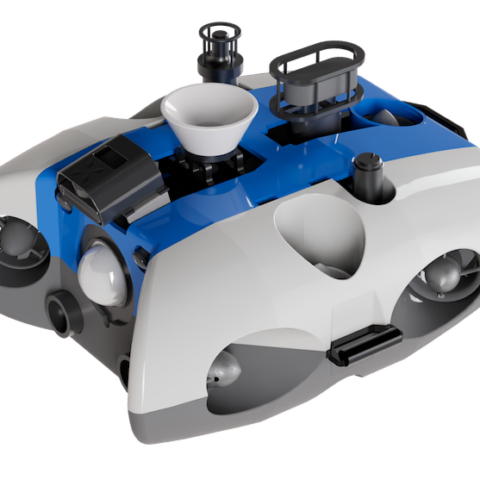
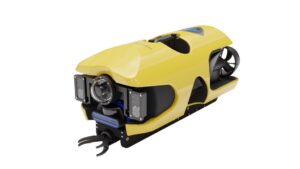
Deep Trekker’s REVOLUTION Remotely Operated Vehicle
Intervention ROVs
Configured to interact physically with subsea equipment, including operating valves, inserting tools, connecting hoses, and supporting repairs. Commonly fitted with manipulators, torque tools, and hydraulic interfaces. Specialized intervention configurations include refueling ROVs equipped to support subsea refueling or fluid-transfer operations using manipulators, connectors, hoses, cameras, and positioning systems.
Construction ROVs
Support installation and commissioning of subsea structures, assisting crane operations, guiding placements, monitoring alignment, and performing final checks.
IRM ROVs (Inspection, Repair and Maintenance)
Optimize long-term asset integrity tasks. They combine high-quality inspection tools with manipulators and the capability for light intervention.
Trenching ROVs
Purpose-built for cutting or fluidizing seabed material to create trenches for cables and pipelines. Often equipped with jetting or mechanical cutting systems.
Cable / Pipeline Burial ROVs
Specialized vehicles that reposition or bury assets after installation. They may follow a laid route and ensure a compliant burial depth for protection.
Deep-water / Ultra-Deep ROVs
Engineered for extreme depth and pressure environments. These systems focus on reliability, redundancy, and specialized materials to enable scientific exploration and deep-ocean industrial work.
Science / Research ROVs
Science, research, and cinematography ROVs can be configured for sampling, habitat observation, oceanographic measurements, underwater filming, broadcasting, documentary production, and visual surveying. Scientific systems typically include sensors, sampling baskets, and precise station-keeping, while cinematography configurations may prioritize stable movement, low acoustic disturbance, high-quality camera payloads, lighting, and precise positioning.
Aquaculture ROVs
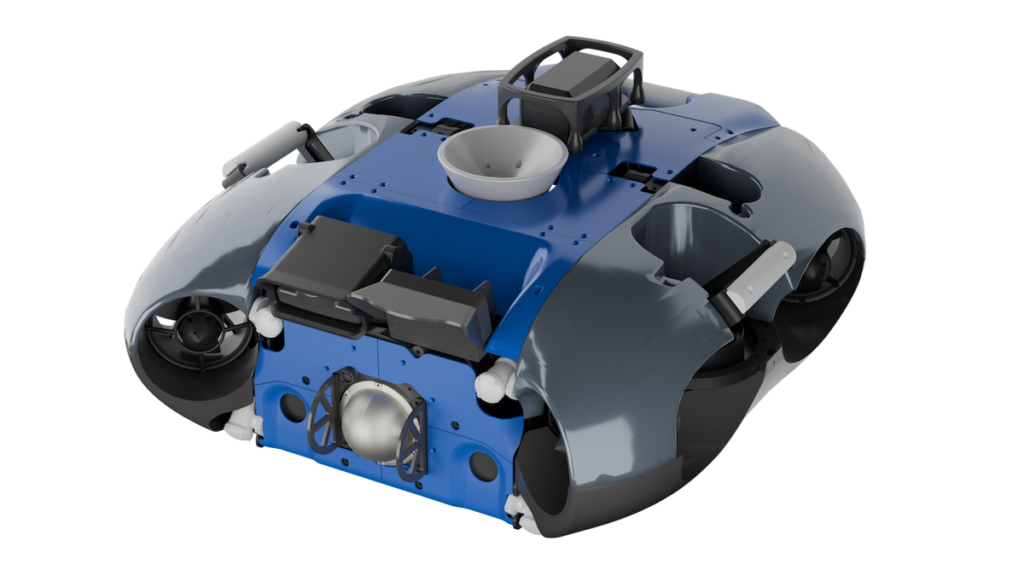
VideoRay’s compact Mission Specialist Ally ROV
Aquaculture ROVs are used to monitor, inspect, and maintain fish-farming infrastructure, including nets, cages, moorings, and feeding systems. They help operators assess stock health, detect damage or biofouling, and verify mooring integrity without the cost and risk of diver intervention. Many aquaculture-focused ROVs prioritize maneuverability, portability, and camera quality, making them well-suited for daily farm operations and routine compliance inspections.
Salvage & Underwater Rescue ROVs
Used for search, recovery, rescue support, and forensic assessment of wrecks, lost equipment, or underwater incidents. They may integrate grab tools, lifting aids, manipulators, sonar, and high-detail imaging to locate and recover objects or support diverless response operations.
Pipeline Inspection ROVs
Pipeline and cable inspection ROVs are typically outfitted with sonar, cameras, lasers, and tracking tools to follow, document, and assess the condition of subsea pipelines and cables, including fault localization and burial verification.
Nuclear Inspection ROVs
Designed for reactor pools and contaminated environments. Emphasize radiation-tolerant materials, compact size, and precise control.
Military / Mine Countermeasure (MCM) ROVs
Also known as: Military ROVs, Tactical ROVs
Tactical ROVs support naval missions, including mine detection, investigation, and neutralization, often in hazardous or shallow environments where divers cannot operate.
Port Security ROVs
Port Security ROVs support maritime law enforcement and harbor authorities by enabling rapid underwater investigation in busy, confined, and low-visibility environments. They are used to inspect vessel hulls, piers, and quay walls for hazards, contraband, and structural issues without disrupting port operations or putting divers at risk. These systems often integrate imaging sonar, high-definition cameras, and optional manipulator tools to document findings and support incident response.
EOD ROVs
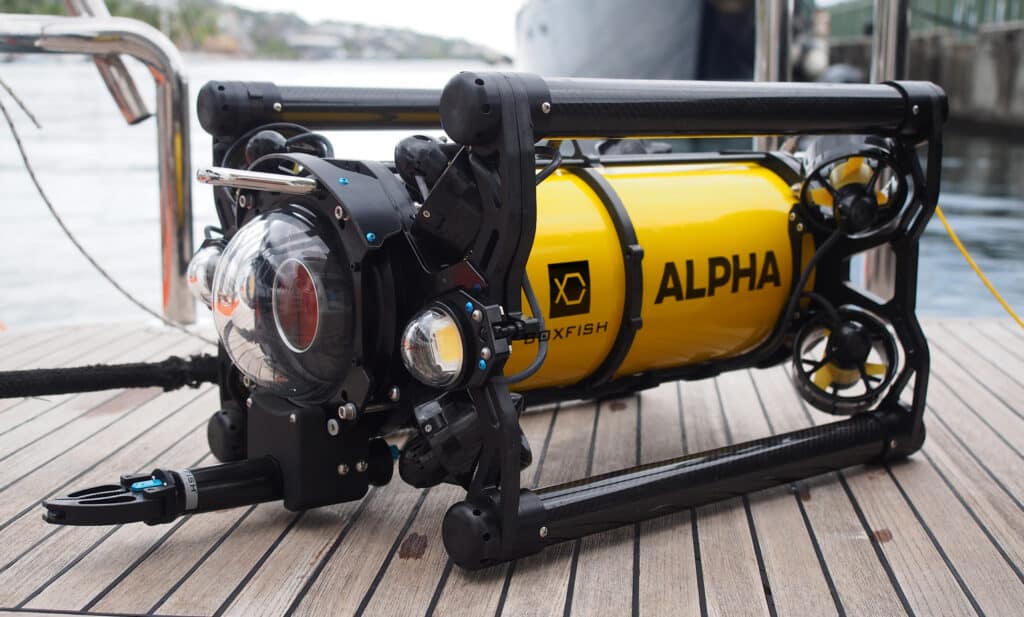
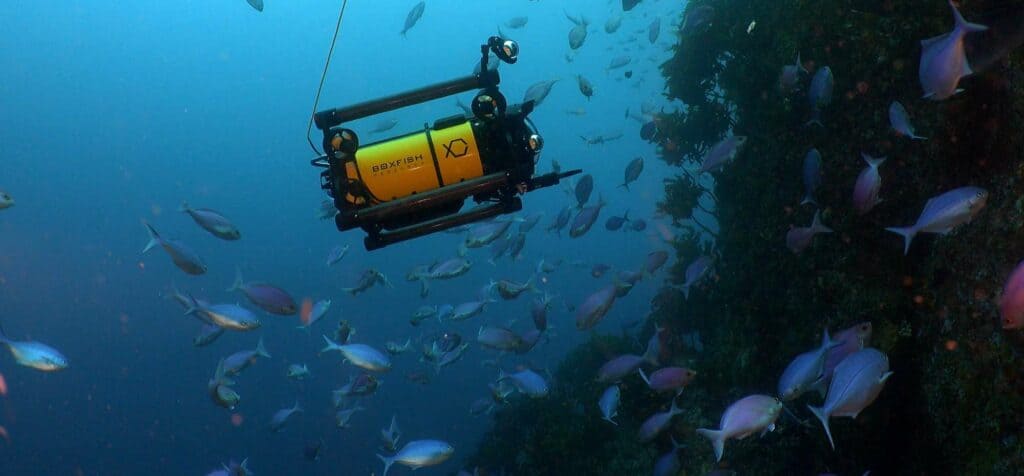
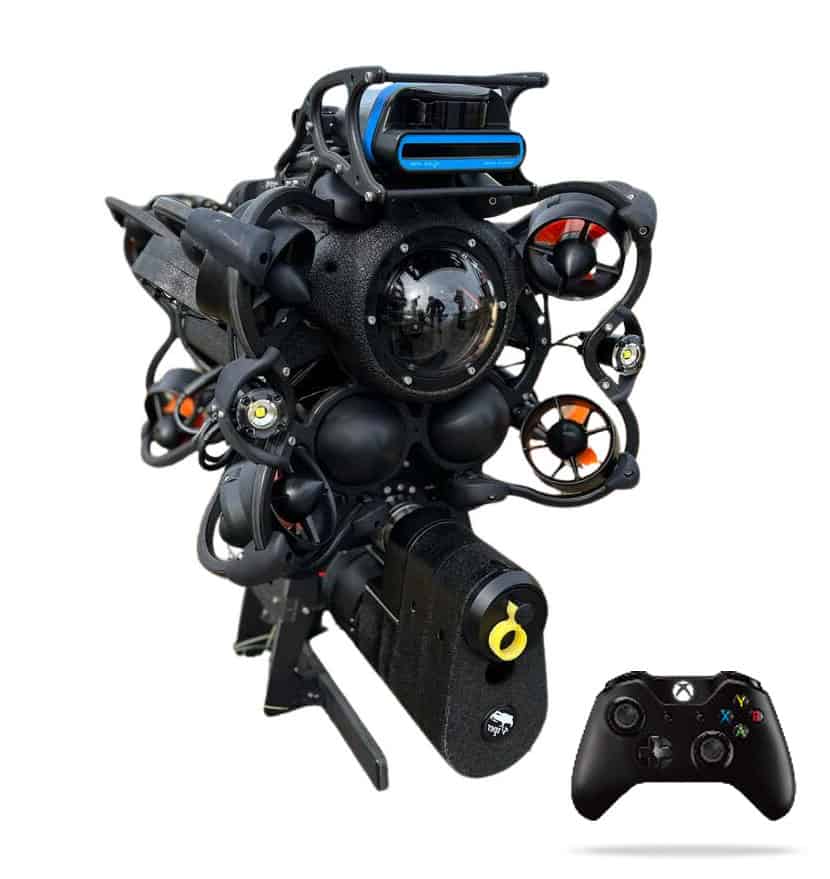
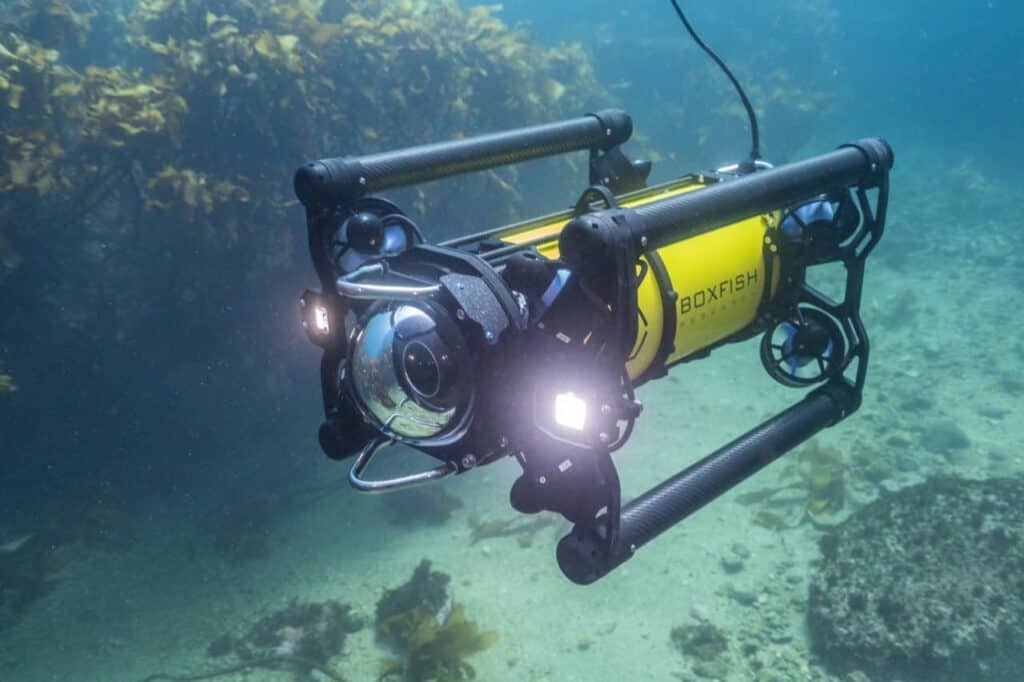
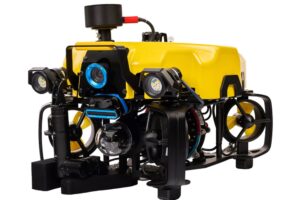
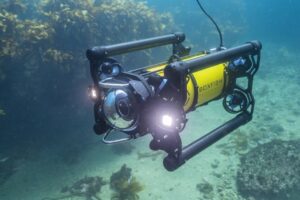
Boxfish ROV by Boxfish Robotics
Explosive Ordnance Disposal vehicles adapted for underwater tasks, enabling remote assessment and safe handling of unexploded ordnance.
Penstock / Intake / Tunnel Inspection ROVs
Operate inside intake tunnels, penstocks, tanks, reservoirs, storage vessels, and long conduits with limited visibility and constrained maneuvering space. Tank and reservoir inspection ROVs can examine internal surfaces, sediment buildup, corrosion, coatings, and structural conditions while reducing the need for draining or diver entry.
Hybrid ROV/AUV Systems
Also known as: Autonomous ROVs, Hybrid Underwater Vehicles
Combine tethered operation with autonomous modes. They can perform extended surveys as AUVs, then reconnect or operate tethered for intervention.
Resident ROVs
Remain docked subsea for weeks or months, ready for on-demand deployment. Ideal for facilities requiring frequent inspections without repeated vessel mobilization.
Free-Swimming ROVs (Extended-Excursion)
Operate with long tethers or TMS systems, allowing significant lateral range from the deployment point.
TMS-Deployed ROVs (Cage-Launched)
Launched within a Tether Management System (TMS), improving handling in deep water and harsh currents while protecting the primary umbilical.
Launch and Recovery Systems (LARS) Deployment
Launch and Recovery Systems (LARS) are purpose-built handling systems that deploy and retrieve ROVs safely in varying sea states. Typical setups include A-frames, cranes, winches, and guided docking systems that stabilize the vehicle as it enters or leaves the water. LARS units are often integrated with tether management systems (TMS) to protect the umbilical and reduce loads on the vehicle, improving safety, repeatability, and operational uptime during offshore missions.
Common ROV Payload Options
ROVs can carry a wide range of interchangeable payloads depending on the mission, available power, vehicle size, and integration interfaces. Common payloads include:
Sampling equipment: Water samplers, sediment corers, suction samplers, and biological collection tools support scientific missions.
Inspection sensors: Ultrasonic thickness gauges, cathodic protection probes, and other non-destructive testing instruments assess subsea structures.
Intervention tools: Torque tools, cutters, grinders, cleaning systems, and valve-operation tools support maintenance and repair tasks.
Environmental monitoring sensors: Detect hydrocarbons, chemicals, radiation, or other parameters relevant to environmental assessment.
Standards & Integration Considerations
Underwater ROV deployment is influenced by industry standards and best practices related to electrical safety, pressure testing, electromagnetic compatibility, and environmental protection. In defense and government programs, alignment with relevant military and maritime specifications supports interoperability and operational assurance. For commercial and research users, adherence to recognized subsea standards supports safe operations, system longevity, and regulatory compliance across diverse operating environments.
As underwater operations continue to expand across energy, defense, infrastructure, and scientific domains, remotely operated vehicles remain a foundational capability within the broader unmanned underwater systems ecosystem.
BeeX's commercial autonomous underwater drones have been selected to advance toward U.S. Navy integration after successfully demonstrating untethered mine reacquisition and neutralization capabilities during defense prize trials
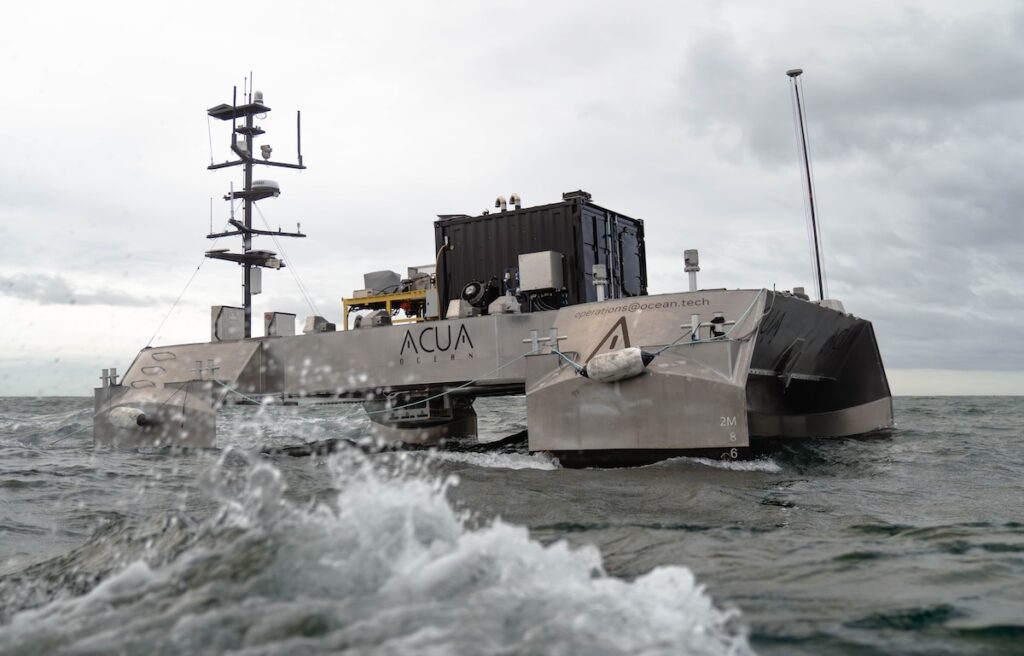
Three weeks of offshore trials in Plymouth successfully demonstrated fully remote subsea inspection and light intervention capabilities by pairing an ACUA Ocean USV with a highly maneuverable underwater robotic vehicle
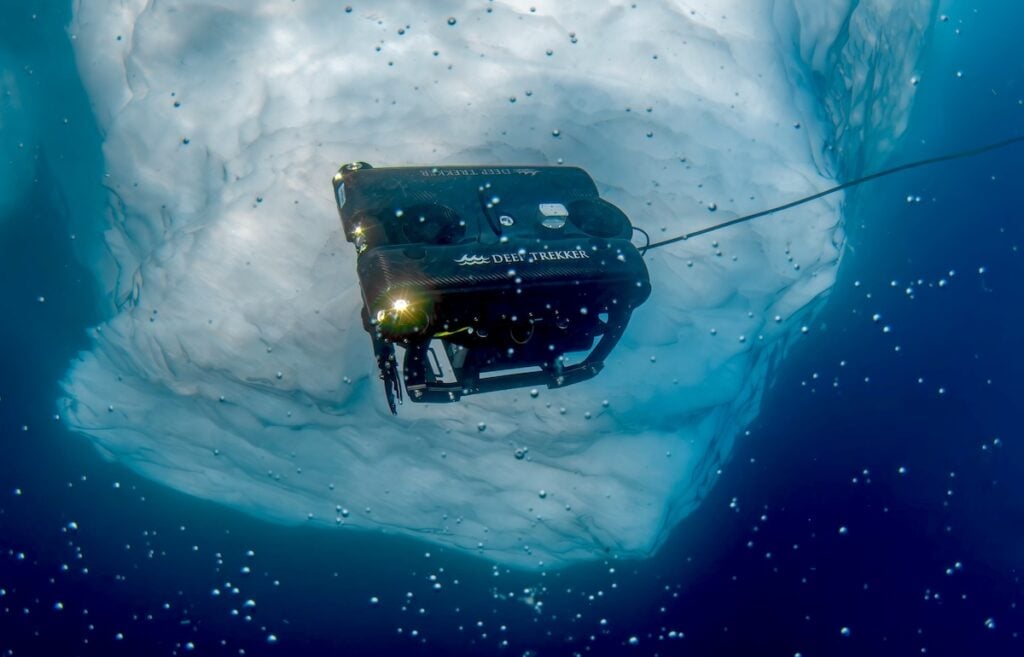
Retracing Sir Ernest Shackleton’s historic route, a multidisciplinary research team deployed Deep Trekker's compact underwater robotics and spatial mapping across Antarctica to capture 4K seafloor imagery, revealing changing polar marine ecosystem dynamics
Oceanbotics outlines how mission requirements inform selection of the SRV-8C, SRV-8, and SRV-8X ROVs, examining their operating depths, station-keeping capabilities, payload capacities, and applications across subsea inspection, intervention, and survey work
Leaf Global Environmental Services incorporates the Boxfish Alpha ROV into its marine survey procedures to expand underwater monitoring, capture repeatable video transects, and enhance data collection beyond scientific diving depths
Voyis and French partner CADDEN have demonstrated a unified subsea inspection platform combining advanced stereo photogrammetry with a compact ROV for detailed underwater 3D infrastructure assessments across challenging environments
Oceanbotics deployed its SRV-8 ROV with new standard 4K camera technology, 2D imaging sonar and NavPod navigation to film Mako sharks off Catalina Island, California
The latest unmanned systems news, straight to your inbox.
Get our weekly roundup of technology developments, new products and industry news.
THANK YOU FOR SIGNING UP
Thanks for joining us. Check your inbox.
We've sent you an email. Click the confirmation link to complete your subscription to the weekly eBrief. In the meantime, explore the latest news, suppliers and technologies on UST.
Advancing Unmanned Systems Through Strategic Collaboration
UST works with major OEMs to foster collaboration and increase engagement with SMEs, to accelerate innovation and drive unmanned systems capabilities forward.