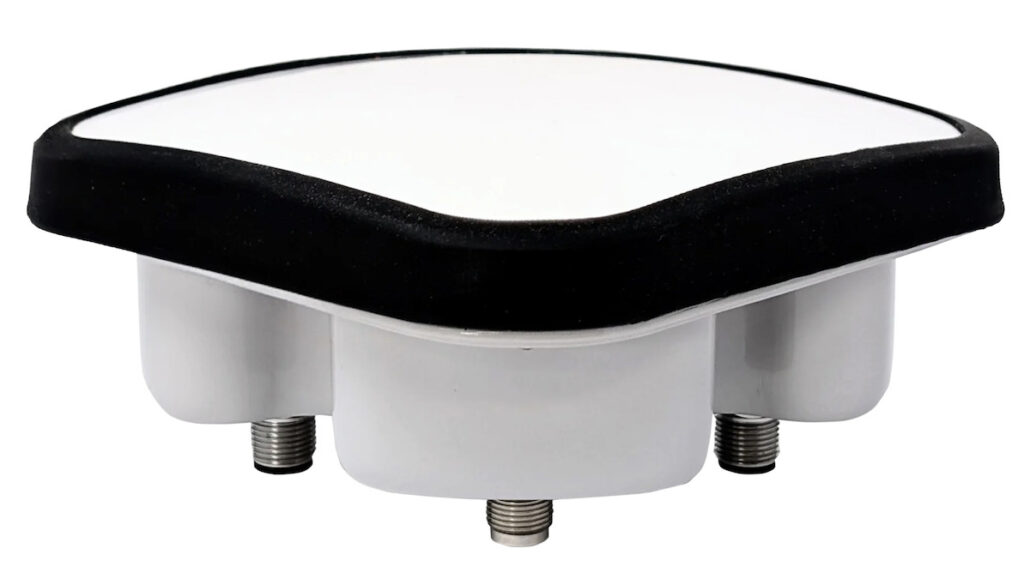

As GNSS jamming and spoofing become routine features of contested operational environments, Calian is advancing a portfolio of resilient antenna technologies designed to maintain reliable Positioning, Navigation, and Timing (PNT) for defence platforms operating where GPS availability can no longer be assumed.
The threat landscape has shifted considerably. Across active theaters, commercially available jammers can disrupt satellite positioning signals across wide areas, while more sophisticated spoofing techniques feed false location data to receivers — causing platforms to navigate toward the wrong destination without any indication that their PNT data has been compromised. For UAVs, autonomous ground vehicles, maritime platforms, and other mission-critical systems, unreliable PNT translates directly into degraded operational effectiveness.
The Vulnerability at the Heart of GNSS
GNSS signals arrive at Earth’s surface at very low power levels, which makes them inherently susceptible to interference from both intentional jamming and unintentional RF sources. As jamming and spoofing techniques become more accessible, maintaining reliable PNT has become a core design requirement for defence systems operating in contested spectrum environments.
The response has been a shift toward layered protection architectures that address interference at multiple points in the signal chain, beginning at the antenna itself.
Filtering Out the Noise: XF+ Technology
Before any processing happens, before null steering or signal authentication, the quality of what enters the system depends on what the antenna lets through. This is where Calian’s XF+ extended filtering technology plays its first role.
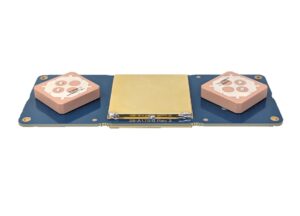
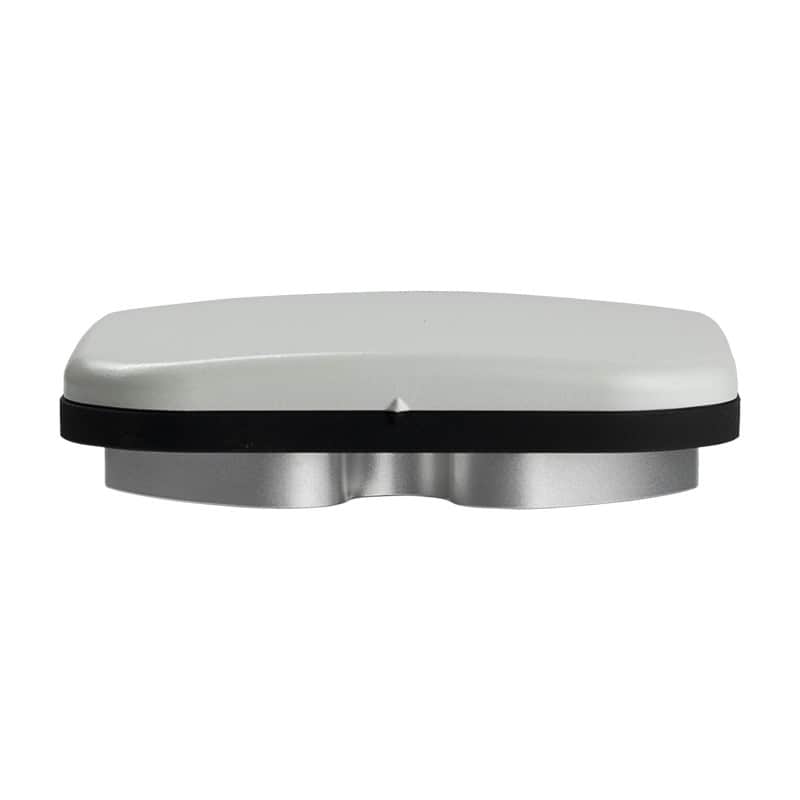
CR7712EXF embedded Controlled Reception Pattern Antenna (CRPA) by Calian.
XF+ applies deep out-of-band filtering across the 400 MHz to 3 GHz range, providing approximately 80 dB of rejection against interference from LTE signals and other external RF sources. That level of attenuation means the noise floor arriving at the receiver is dramatically cleaner than it would be with standard antenna filtering.
The ‘+’ in XF+ refers to a cross-band isolation capability built into the LNA chain. This matters in practice: if an adversary jams the upper GNSS band, cross-band isolation ensures the lower bands continue delivering usable signals. Rather than a single point of failure, the system maintains reception continuity across the spectrum even under partial attack.
XF+ filtering provides a cleaner signal environment for downstream processing, and forms the front-end foundation on which Calian’s active interference mitigation capabilities are built.
CRPA: Real-Time Interference Suppression
Controlled Reception Pattern Antenna (CRPA) technology takes interference mitigation a step further by actively shaping what the antenna hears.
Where a conventional antenna receives signals equally from all directions, a CRPA uses multiple antenna elements working in concert to dynamically steer nulls — deep attenuations — in the direction of jamming sources. The effect is that interference arriving from a known direction can be suppressed by 20 to 40 dB in real time, while valid GNSS signals from other angles continue to be received normally.
The process is continuous and adaptive. As a jammer moves, or as the platform maneuvers, the null-steering algorithm updates its response. There is no manual intervention required; the system responds to the electromagnetic environment as it changes.
Calian’s CRPA systems, engineered and built in Ottawa and drawing on decades of Tallysman heritage in high-precision GNSS technology, are designed for defence and mission-critical applications. Beyond suppressing interference, they provide operators with situational awareness via proprietary NMEA SITREP messages over RS232/RS422, reporting jamming state, estimated jammer direction, and power level — data that supports both navigation continuity and electronic threat assessment.
A Portfolio Built for Platform Reality
No single antenna configuration suits every defence platform. Calian’s CRPA product line reflects that, offering a range of form factors and capability levels matched to different mission requirements and integration constraints.
CR7712EXF — Low-SWaP Anti-Jam for Compact Platforms
The CR7712EXF is a two-element, single-null adaptive beamforming antenna operating in the L1/E1/B1 band. Designed explicitly for low Size, Weight, and Power (SWaP) applications, it draws just 60 mA at 5V — a figure that matters considerably when integrating into a UAV or lightweight autonomous system with tight power budgets.
The antenna steers a single planar null to mitigate interference in the upper GNSS band, and a serial interface provides state information confirming whether jamming has been detected. It is compatible with standard COTS GNSS receivers, which simplifies integration into existing platform architectures without requiring specialist receiver hardware.
For small unmanned systems, light vehicle platforms, and other applications where every gram and milliwatt counts, the CR7712EXF delivers meaningful anti-jam capability without forcing difficult SWaP trade-offs.
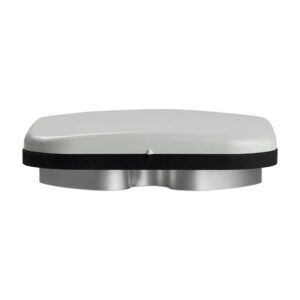
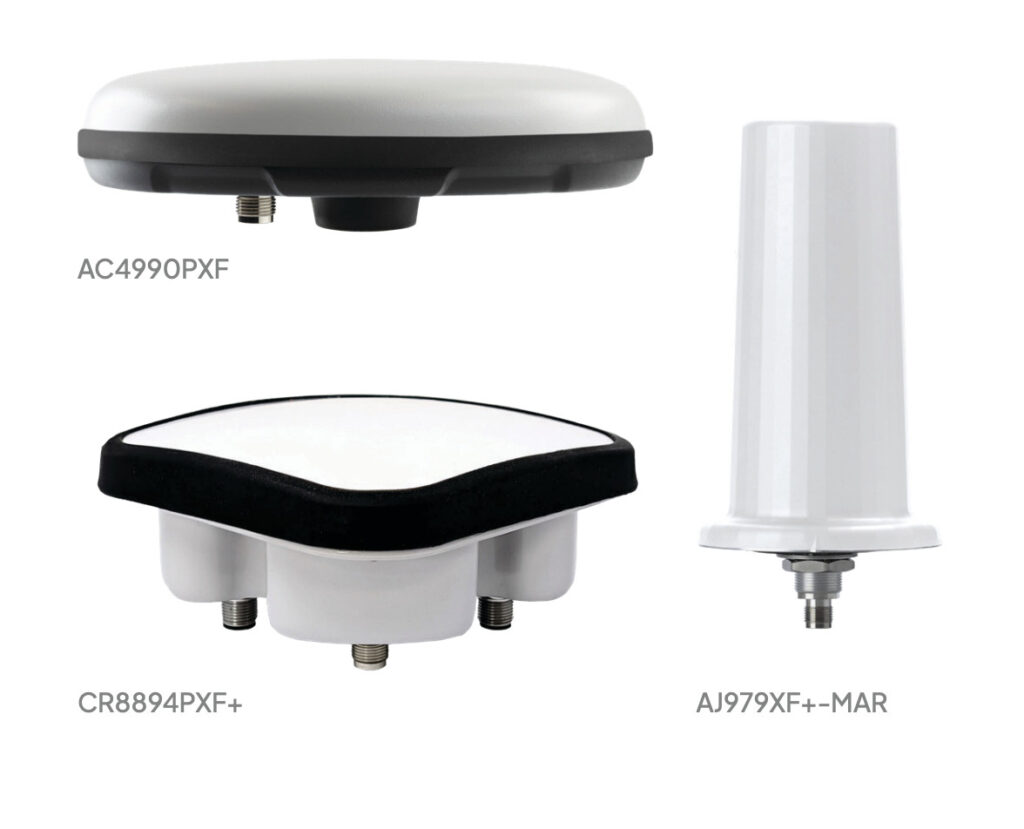
CR8894SXF+ CRPA by Calian.
CR8894SXF+ — Multi-Band Anti-Jam with Situational Awareness
For platforms requiring more robust protection across multiple GNSS constellations, the CR8894SXF+ steps up considerably in capability. It is a four-element dual-band CRPA supporting GPS L1/L2, Galileo E1/E5b, GLONASS G2/G3, and BeiDou B1/B2b — including M-Code on both L1 and L2 for military GPS applications.
The four-element array enables the CR8894SXF+ to mitigate up to three jammers per band, six in total, with null depths of 20–40 dB depending on conditions, a capability relevant to dense electronic warfare environments where multiple interference sources may be active simultaneously.
Like the CR7712EXF, it provides serial interface reporting, but with richer situational awareness output. NMEA SITREP messages indicate jamming state, estimated direction to the interference source, and signal status, giving operators and platform management systems the data they need to assess the electromagnetic environment and respond accordingly. The CR8894SXF+ is IP67 rated and draws 150 mA at 5V, with surface-mount installation supporting integration across a wide range of platform types.
Layered Resilience Beyond the CRPA
CRPA technology addresses interference at the antenna level. But complete GNSS resilience for mission-critical platforms requires thinking across the full system.
Calian’s broader resilient GNSS portfolio complements the CRPA line with Fixed Reception Pattern Antennas (FRPAs) that extend protection to different threat profiles and deployment types. The triple-band AJ977XF+ MAR is optimized to mitigate low-angle interference and suited for timing-critical applications, while the single-band TW3742AJ provides a passive, cost-effective anti-jamming layer that reduces jammer impact without active electronics.
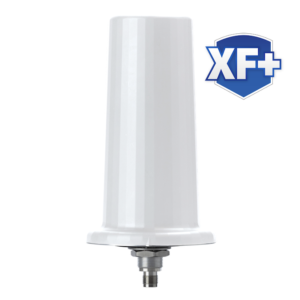
AJ979XF+ MAR Anti-Jam Multi-Constellation Full-Band Antenna.
Together, these systems allow resilience to be layered and tailored. A deployed platform might combine an active CRPA for real-time null steering with FRPA elements addressing low-elevation interference; a fixed infrastructure site might rely primarily on FRPAs with CRPA elements added for higher-threat environments. The architecture is modular by design, matched to operational requirements rather than forcing a one-size-fits-all approach.
Built for the Mission Environment
Every antenna in Calian’s portfolio is designed, tested, and built in Canada, with engineering teams drawing on decades of GNSS and RF design expertise rooted in Tallysman’s precision antenna development heritage. Design and manufacturing are consolidated at Calian’s Ottawa facility, supporting quality control and supply chain assurance requirements relevant to defence procurement.
All systems are tested to environmental, mechanical, and electromagnetic extremes, supporting deployment across platforms operating in demanding conditions including airborne, maritime, and ground vehicle environments.