Advanced Navigation has addressed the economic and physical challenges of counter drone defense by delivering high-precision tracking and targeting solutions that remain cost-effective for large-scale deployment.
The proliferation of low-cost drones has created an asymmetrical drain on resources, making it logistically impractical to rely on high-value traditional missiles for every interception. This asymmetry has forced a pivot in counter drone defense strategies.
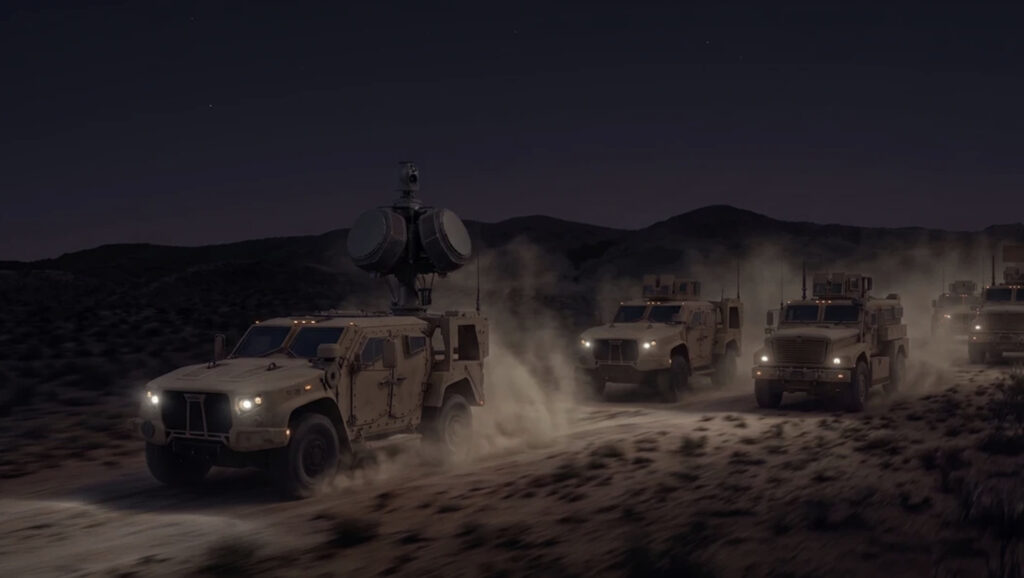
To restore the economic balance, defense forces are turning to low-cost kinetic effectors to provide a defense option at a fraction of the cost of traditional interceptors. However, shifting to kinetic solutions still requires a tracking system that can lock onto threats with precision. When that system is mounted on a vehicle moving over rough terrain, ensuring the optical lens and barrel are pointing in the right direction becomes both an engineering and economic challenge in modern defense.
The Challenge of Mobility
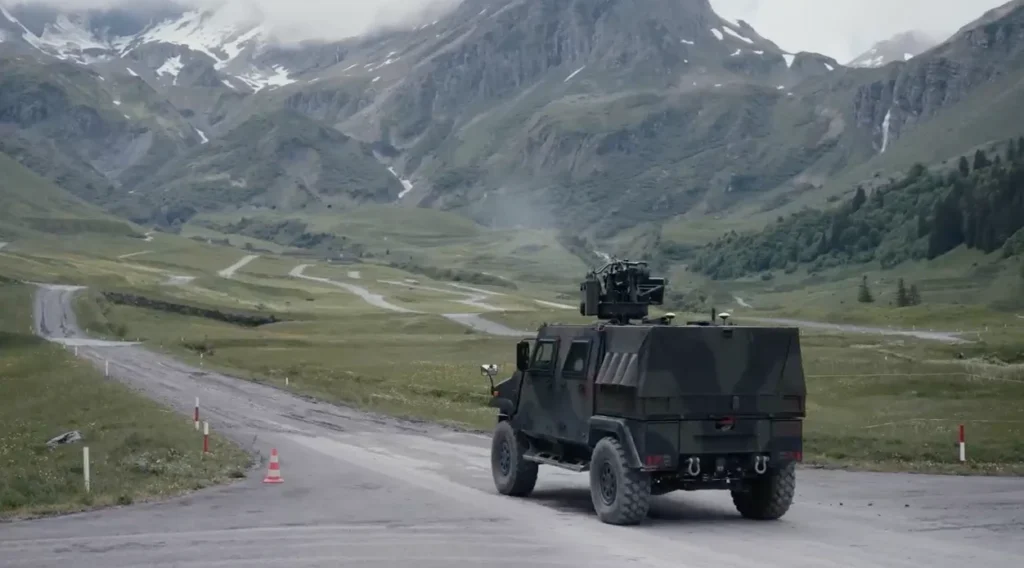
Counter drone technology must be mobile to move in lock-step with the asset it is protecting and to increase its survivability. However, mobility is often the enemy of accuracy. As a C-UAS platform traverses rugged landscapes, it experiences pitch, roll, and high-frequency vibration. For a kinetic effector attempting to hit a maneuvering drone, even a single degree of inaccuracy, or challenges with multi-path GNSS errors could translate to a miss of several feet. To achieve accuracy while on-the-move, the system requires reliable navigation and stabilization. The challenge for defense integrators is achieving this stabilization without escalating the platform’s cost beyond viability.
Sensor and Effector Latency
The gap in many mobile C-UAS designs is the latency between detection and reaction. The optical lens used for tracking the drone must remain locked on target regardless of the platform movement. Similarly, the kinetic effector must be stabilized so that the firing solution is calculated based on the target’s motion, not the vehicle’s vibration.
If the stabilization system relies on standard GNSS or low-end sensors, the update rate is often too slow to counterbalance high-frequency vibrations, leading to optical feed blurs, tracking algorithm failure, or the kinetic effector being off-target. Conversely, upgrading to legacy defense-grade sensors often makes the platform too expensive to mass-produce.
High-Performance Inertial Sensing
The solution lies in high-performance inertial sensing. An Inertial Navigation System (INS), acts as the “brain” of the C-UAS platform. As a result of providing high frequency, low latency data on acceleration and rotation, the INS allows the gimbal motors to counteract vehicle movement in real-time. This ensures the optical lens remains steady and the kinetic effector maintains its lock, effectively decoupling the effector from the terrain below it. For a C-UAS program to scale effectively to meet modern swarm threats, this “brain” must deliver precision at a commercial-scale price point.
Accessible Performance and Supply Chain Security
Historically, the level of stabilization required for a counter drone platform demanded Fiber Optic Gyroscopes (FOGs). While effective, these units were often massive, power-hungry, and prohibitively expensive, breaking the proportionate response economic model of C-UAS. This is where Advanced Navigation changes the equation. By leveraging advanced sensor fusion algorithms, Advanced Navigation provides INS devices that deliver accuracy at a value that makes widespread deployment feasible.
- Boreas D50: For FOG accuracy in GNSS-denied environments, allowing platforms to maintain the heading accuracy required for a precise solution.
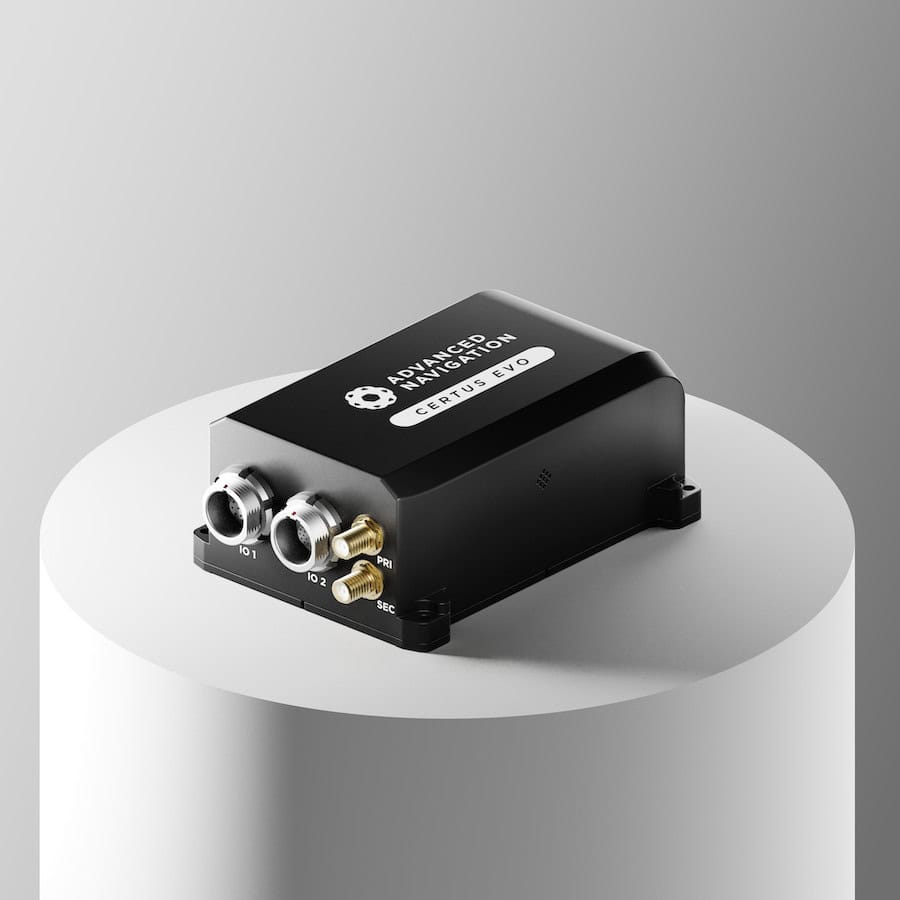
- Certus Evo: Ideal for agile C-UAS platforms, this GNSS/INS offers industry-leading size, weight, and power (SWaP) characteristics, providing the high-frequency data needed to stabilize optical sensors in dynamic environments.
In the current geopolitical climate, a great technical solution is not effective if it has a 24-month lead time. The demand for counter drone defense is immediate. Advanced Navigation distinguishes itself through a highly secure supply chain and advanced in-house integration. Rather than relying on unchecked webs of component providers, Advanced Navigation mandates a comprehensive evaluation process as an essential prerequisite for any partnership. This ensures not only the security of the hardware, but also the speed-to-market required to fill urgent C-UAS capability gaps.
The cost of the solution must be proportionate to the threat, without sacrificing the precision required to neutralize it. By integrating the Advanced Navigation Boreas D50 or Certus Evo, defense integrators can ensure their kinetic effector stays on target, their lenses stay focused, and their platforms remain cost-effective. In the race to counter the drone threat, stabilization is more often the key factor determining the difference between a hit and a miss.
Read High Precision Navigation at Scale for Counter Drone Technology for more information.