Critical infrastructure is increasing in height, scale, and geographic distribution. Wind turbines exceed 100 meters in hub height, industrial rooftops span expansive footprints, and utility scale solar farms cover hundreds of acres. Similar access challenges exist across transmission networks, telecom towers, bridges, and vertical industrial facilities.
Traditional inspection methods including rope access, scaffolding, elevated work platforms, and manual climbing place personnel directly within hazardous environments. These approaches require safety supervision, specialized equipment, and often partial or complete operational shutdowns.
Drone inspection services shift workflows from human at height to sensor at height. This change materially alters exposure risk, cost structure, and data capture capability.
Safety Exposure Comparison
Worker safety remains the clearest differentiator between conventional access methods and drone-based inspection. Traditional techniques require technicians to operate at elevation, frequently under variable weather conditions.
Safety Exposure Comparison
| Metric | Traditional Access (Rope or Scaffold or MEWP) | Drone Inspection |
| Fall Risk Exposure Hours | High personnel physically at height | Minimal pilot remains ground-based |
| Personnel at Height | One to three technicians typical | None |
| Rescue Requirements | Formal rescue planning required | Not applicable |
| Weather Sensitivity | Elevated worker safety constraints | Operational limits without height exposure |
| Incident Probability | Higher due to fall risk | Reduced human elevation risk |
By removing technicians from elevated positions, inspection drones significantly reduce fall hazards and confined space exposure. While UAV operations introduce aviation-specific procedures, overall human risk exposure is structurally reduced.
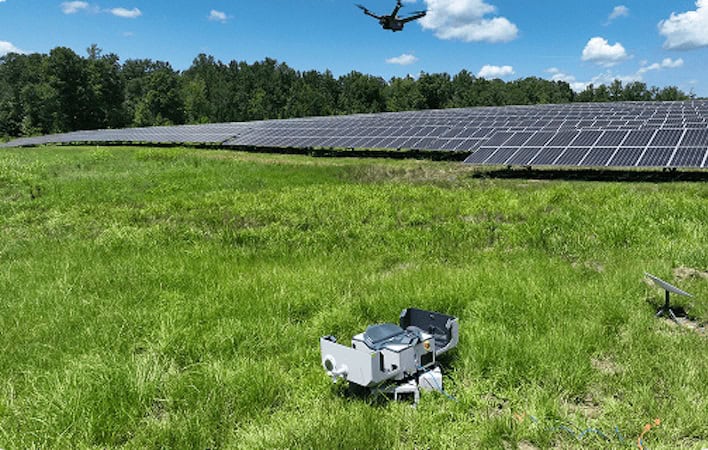
Drone Aerial Imaging Services for Solar Inspection by Blue Nose Aerial Imaging
This is particularly significant in sectors where working at height regulations are strict and incident reporting thresholds are closely monitored.
Cost Per Asset Comparison
Inspection economics extend beyond direct labor rates. Mobilization, access equipment, staging time, and repeat visits influence total cost per asset.
Cost Per Asset Comparison
| Cost Factor | Rope or Scaffold | Drone Inspection |
| Mobilization | Heavy equipment transport and setup | Rapid deployment with limited equipment |
| Equipment Rental | Scaffolding lifts safety systems | UAV platform and sensor payload |
| Labor | Multi-person technical crew | Pilot plus observer if required |
| Setup Time | Hours to days depending on scale | Often completed within hours |
| Repeat Inspection Cost | Full setup required each time | Fast redeployment possible |
Traditional access methods may involve lift rental, scaffold erection, and multi-day site preparation. Drone platforms can be transported in light vehicles and deployed quickly. This is particularly valuable for distributed infrastructure portfolios.
For large wind or solar installations, the ability to scale inspections without relocating heavy mechanical access equipment materially alters cost dynamics.
Downtime Impact
Operational downtime often represents the most substantial indirect cost of infrastructure inspection.
- Wind turbines undergoing rope-based blade inspection typically require extended shutdown periods. Drone-based blade surveys can reduce turbine inactivity because inspection is conducted externally without suspended personnel.
- In commercial building environments, scaffolding and lift staging can disrupt tenant activity and logistics. UAV surveys generally require only perimeter safety control and limited rooftop access.
- For utility scale solar facilities, manual inspection may involve isolating sections of an array. Drone thermographic surveys can rapidly assess large areas, minimizing production disruption and accelerating fault localization.
While downtime profiles vary by asset class and regulatory framework, UAV inspection frequently enables shorter inspection windows and faster return to service timelines.
Inspection Resolution & Data Quality
Beyond safety and cost considerations, drone platforms introduce a step change in inspection data quality and repeatability. Modern UAV payloads enable high-resolution optical inspection, calibrated thermal imaging, and structured data collection. For photovoltaic systems, radiometric sensors identify temperature anomalies across entire strings. For composite wind blades, surface defects can be documented with consistent image geometry.
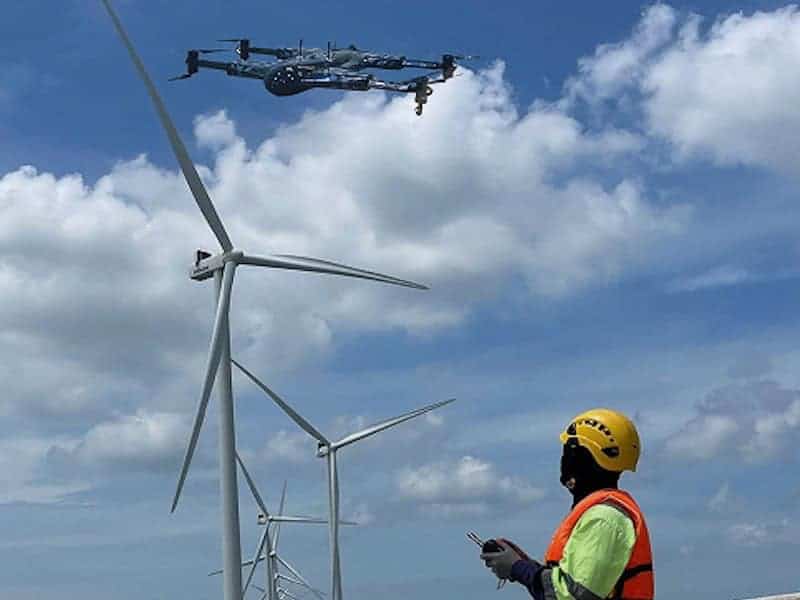
Renewable & Offshore Energy Inspection Services from Drone as a Service (DaaS) by ZenaDrone
The ability to archive time stamped datasets supports condition trending and integration into digital asset management platforms. Repeatable flight paths enhance longitudinal analysis and predictive maintenance strategies.
Application-Specific Considerations
Wind Turbine Inspection
Wind turbines present some of the most challenging inspection environments due to hub height, blade length, and remote site locations. Wind turbine drone inspection services enable detailed blade surface surveys without requiring technicians to descend along the blade exterior. Reduced downtime and minimized fall exposure are key operational drivers.
Commercial Roof Assessment
Large industrial roofs often involve fragile membranes, skylights, and fall hazards. Drone roof inspection companies provide rapid condition mapping and moisture detection (when paired with thermal sensors) without foot traffic that could exacerbate damage or create liability exposure.
Solar Panel Thermographic Inspection
Utility-scale photovoltaic arrays require consistent thermal performance monitoring. Drone solar panel inspection providers deliver thermography for rapid hotspot detection across extensive fields, identifying underperforming modules without manual sampling.
Expanded Applications Beyond Wind, Roof, and Solar
While wind turbines, rooftops, and solar arrays are high visibility use cases, the advantages of drone utility inspection services extend across numerous difficult to access infrastructure categories.
- Transmission and Distribution Infrastructure: High voltage transmission towers, distribution poles, and power lines require periodic structural and component assessment. Drone platforms allow close visual inspection of insulators, conductors, and structural elements without requiring linemen to climb energized structures.
- Bridges and Elevated Transport Infrastructure: Bridges, overpasses, and elevated rail structures present complex access geometries. UAVs can capture high resolution imagery of expansion joints, bearings, and undersides of decks without extensive lane closures or under bridge access units.
- Telecommunications Towers: Cell towers and broadcast masts involve significant climbing risk. Drone inspection enables antenna alignment verification, structural review, and surface condition assessment while keeping technicians on the ground.
- Industrial Stacks and Chimneys: Refineries, power plants, and processing facilities often include tall stacks and flare towers. Traditional inspection requires rope teams or shutdowns. UAVs allow exterior surface review and thermal analysis with reduced disruption.
- Storage Tanks and Silos: Large vertical tanks and silos used in energy and agriculture sectors require periodic surface inspection. Drone systems enable wall condition monitoring and roof inspection without erecting scaffolding.
A Structural Evolution in Elevated Infrastructure Inspection
Drone-based inspection is not simply a faster alternative to scaffolding or rope access. It represents a structural evolution in how elevated and difficult to access assets are evaluated. By reducing worker exposure, compressing mobilization timelines, limiting operational disruption, and enhancing data capture resolution, unmanned systems are redefining inspection practices across energy, utilities, transport, telecommunications, and industrial sectors.
As sensor payloads, autonomy features, and data analytics capabilities continue to mature, the transition from technician at height to sensor at height is accelerating and reshaping safety models and operational economics across the broader infrastructure landscape.