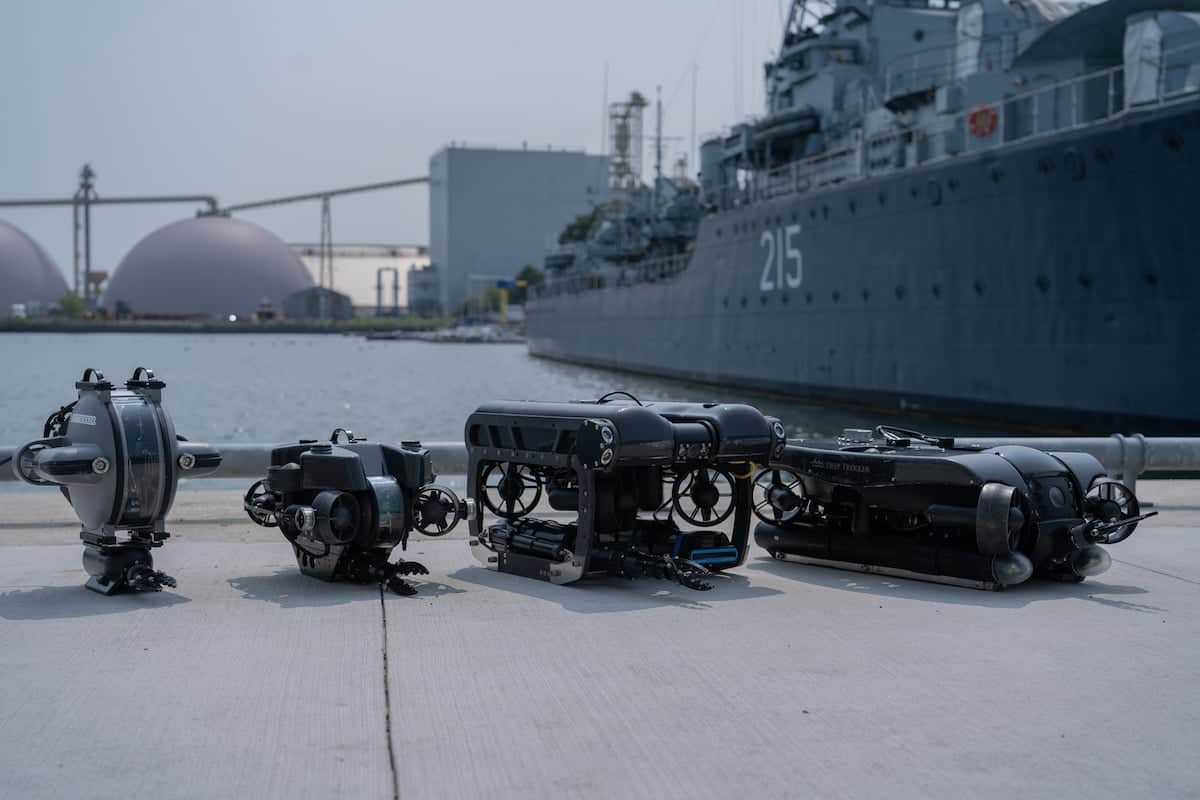
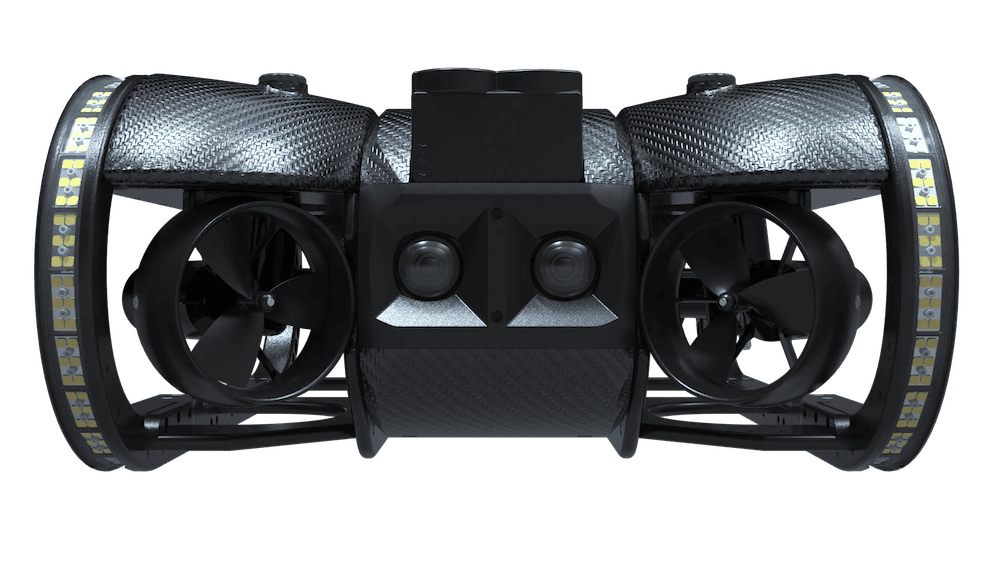
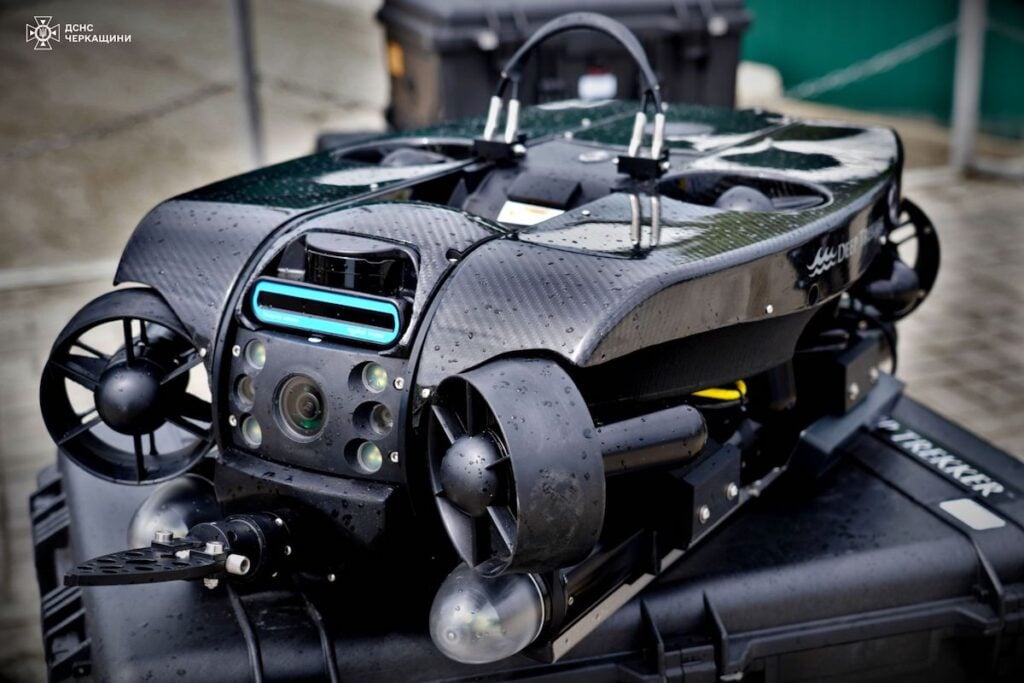
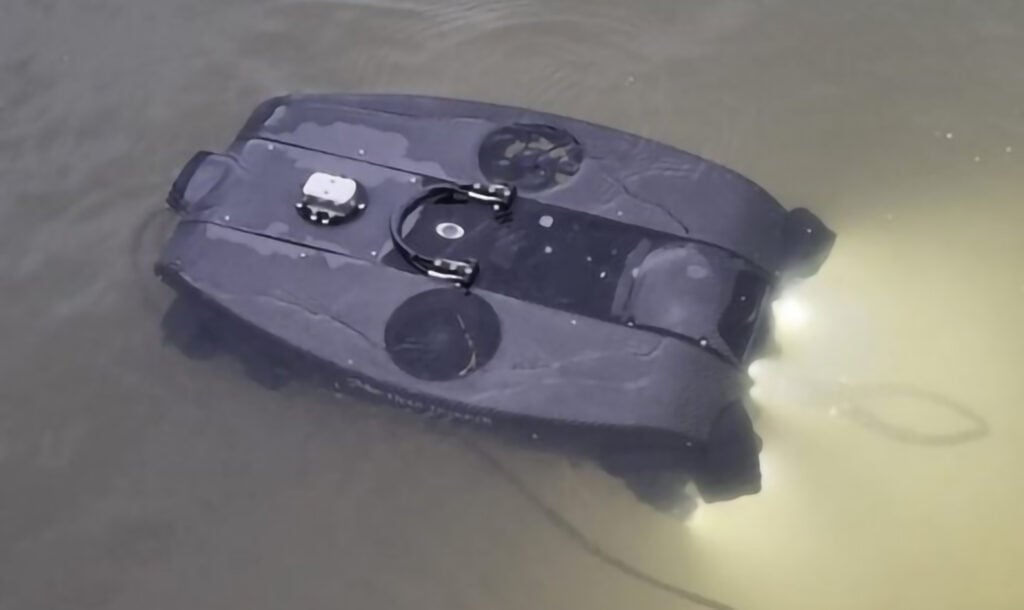
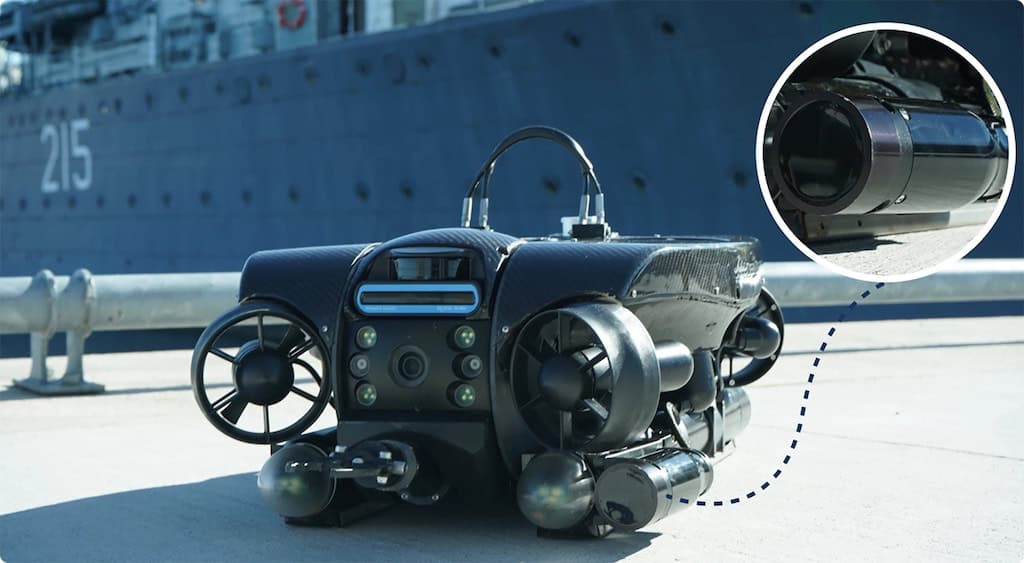
Deep Trekker has introduced the SPECTRA ROV, a next-generation remotely operated vehicle (ROV) developed to support demanding subsea inspection and survey operations.
The system was unveiled at Oceanology International and represents a new addition to the company’s portfolio of portable industrial ROV platforms.
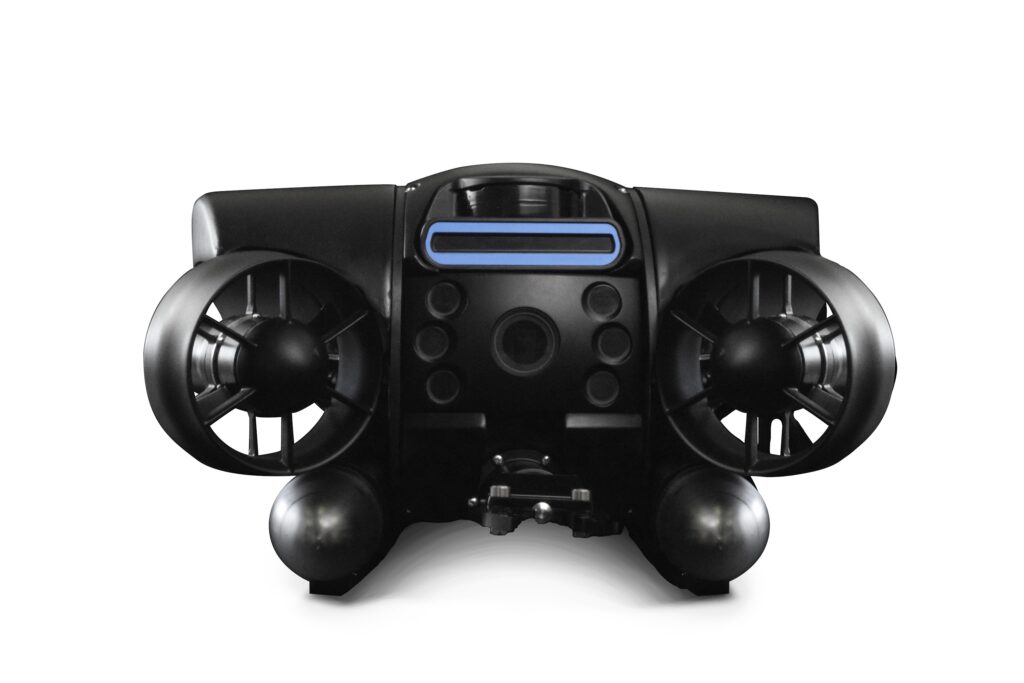
Designed for operation in high-current environments and deepwater conditions, SPECTRA integrates real-time 3D sonar simultaneous localization and mapping (SLAM), factory-calibrated stereo 4K imaging, and onboard processing within a compact system rated to depths of 1,000 meters. The platform is engineered to deliver increased propulsion performance, sensing capability, and payload capacity while maintaining a straightforward operator interface and portable deployment profile.
Deep Trekker President, Alan Middup, comments, “SPECTRA brings completely new capabilities to Deep Trekker, enabling us to push the boundaries of what can be achieved with our portable ROVs – something we have been known for since our beginnings.
“We have taken a ground-up engineering approach, factoring in the broad experience we have built up from over a decade of developing subsea robotic systems. That makes SPECTRA the first in a new generation of ROV technology, one that we are incredibly excited to be launching!”
Expanded Capability with Familiar Operation
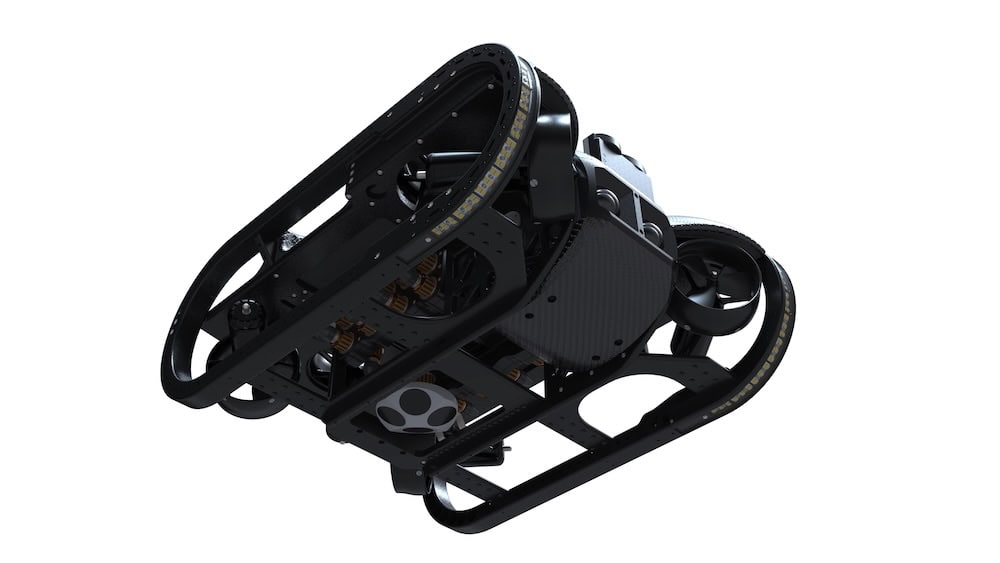
The SPECTRA platform was developed to enhance vehicle performance without increasing operational complexity. Operators using earlier Deep Trekker vehicles can transition to the new system while maintaining a similar piloting experience and control environment.
Key improvements include higher thrust output, greater payload capability, enhanced onboard computing resources, and integrated perception sensors. Despite these expanded capabilities, the system continues to operate using standard control hardware rather than specialized topside computing infrastructure.
Vehicle control characteristics have been tuned to support precise maneuvering during inspection tasks. Low-speed modulation enables gradual positioning adjustments, while stable station holding allows operators to maintain proximity to structures during detailed inspection work.
High-Current Stability and Maneuverability
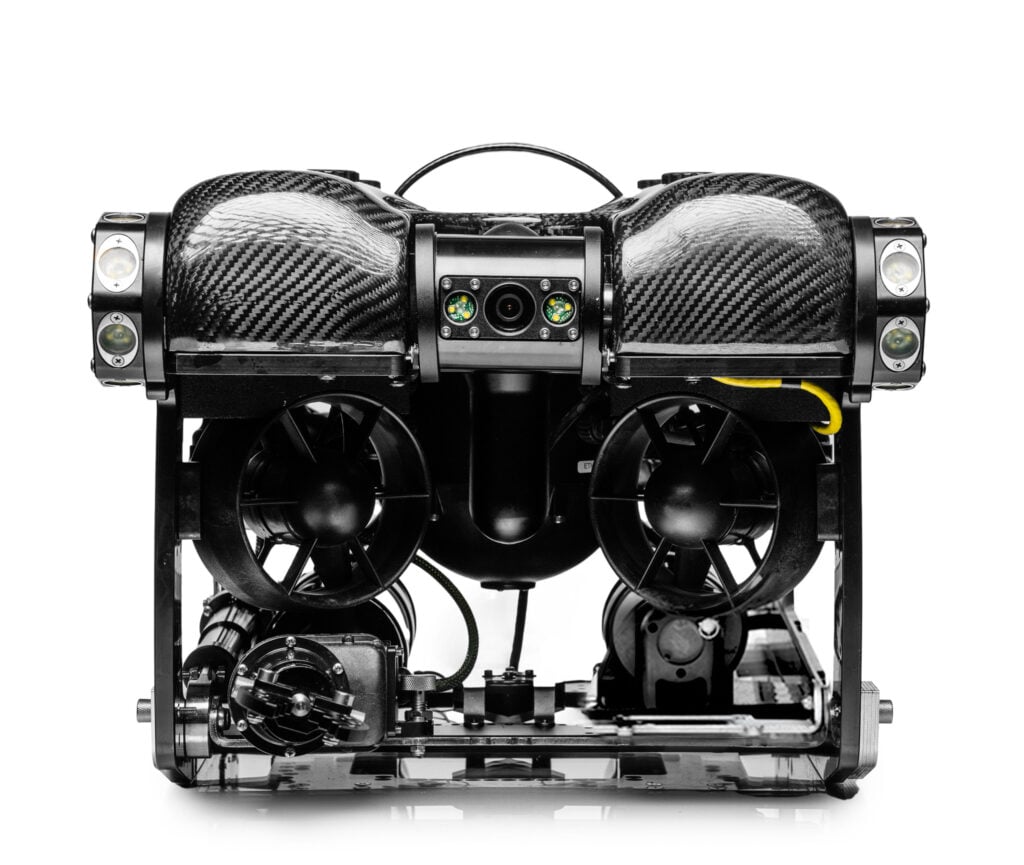
SPECTRA incorporates a seven-thruster propulsion arrangement designed for positional control in dynamic underwater environments. The thrusters are arranged symmetrically to improve maneuverability and cross-current stability.
The vehicle can maintain position in currents of up to three knots regardless of direction and can achieve forward speeds greater than four knots. Lateral translation performance is significantly faster than many vehicles of comparable size, supporting movement around structures or along complex inspection routes.
Deep Trekker Commercial Vice President, Cody Warner, explains, “The biggest thing for a vehicle of this size is the ability to operate effectively in strong currents. It’s going to be deployed into some really tough environments. So, you need something that’s going to be able to not only move fast forwards, but also hold up in current from all directions. So, lateral movement is key here.”
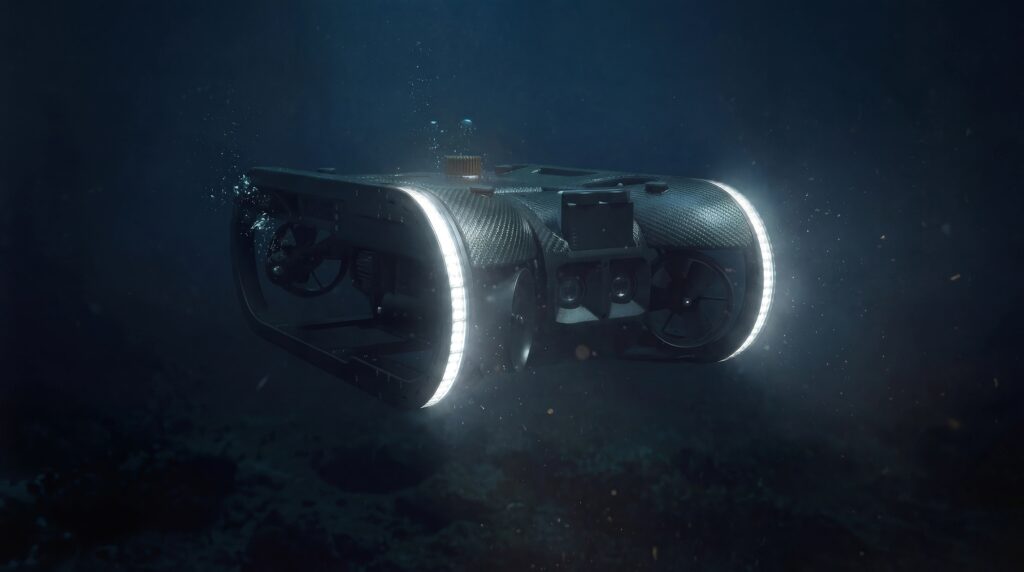
Development work emphasized not only peak thrust capability but also precise thrust modulation. Inspection tasks involving risers, hulls, or offshore infrastructure often require gradual positioning adjustments rather than aggressive propulsion. Control tuning therefore prioritizes stable station keeping and controlled maneuvering in variable surface-driven currents.
Balanced thruster distribution and steeper vector angles enable strong lateral authority relative to drag forces. This configuration allows the vehicle to maintain accurate positioning in cross-current environments such as splash zones and around offshore structures.
Although the propulsion system delivers high output, the vehicle remains hand deployable, avoiding the launch complexity typically associated with larger work-class ROVs.
Real-Time 3D Spatial Awareness
SPECTRA incorporates onboard 3D sonar SLAM technology to improve spatial awareness during underwater operations. The system generates real-time point cloud models that represent surrounding structures and terrain.
By combining sonar data with onboard sensor inputs, the vehicle continuously estimates its relative position and orientation while simultaneously building a spatial representation of the inspection area. This functionality enables operators to interpret asset geometry even in low visibility or highly turbid water.
The resulting point cloud allows operators to confirm inspection coverage during operations and identify unexamined areas before leaving the site. Structural context beyond a single camera viewpoint assists with target reacquisition, alignment for measurement tasks, and repeatable inspection paths across multiple surveys.
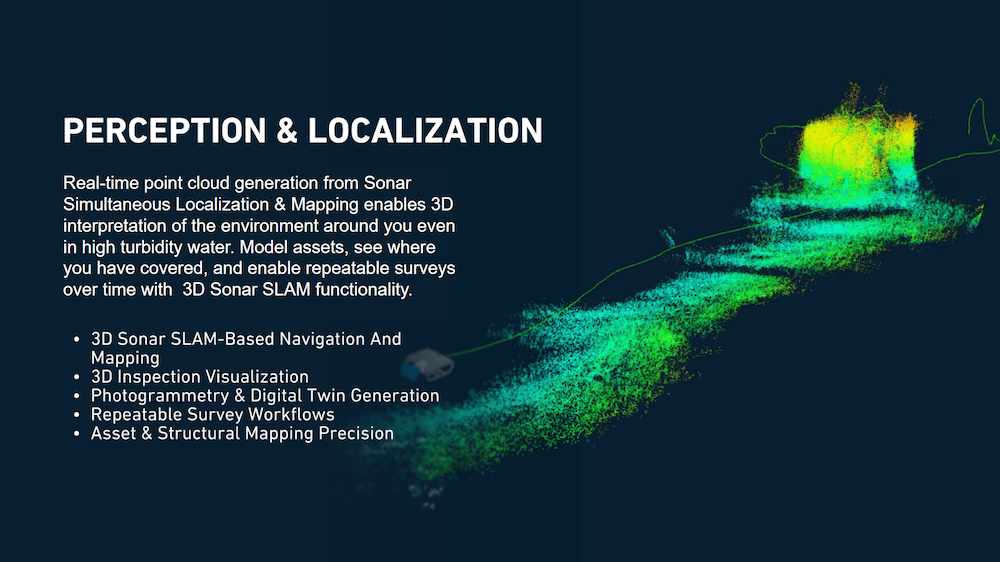
In environments where GNSS signals are unavailable or acoustic navigation systems are unreliable, onboard SLAM processing helps reduce navigation uncertainty and supports consistent data collection.
All SLAM calculations occur within the vehicle itself. As a result, operators can run the control software on a standard computer while receiving continuous three-dimensional spatial feedback.
Chad Plesa-Naden, Engineering Director, states, “Bringing high-capability, scaled photogrammetry into an integrated and highly maneuverable platform is unmatched in the market today. Combined with the perception capabilities of Sonar SLAM integrated with onboard computing – which eliminates the need for bulky topside computers – this creates a highly sophisticated sensor payload in a fully portable package.”
Integrated Stereo Vision and Photogrammetry
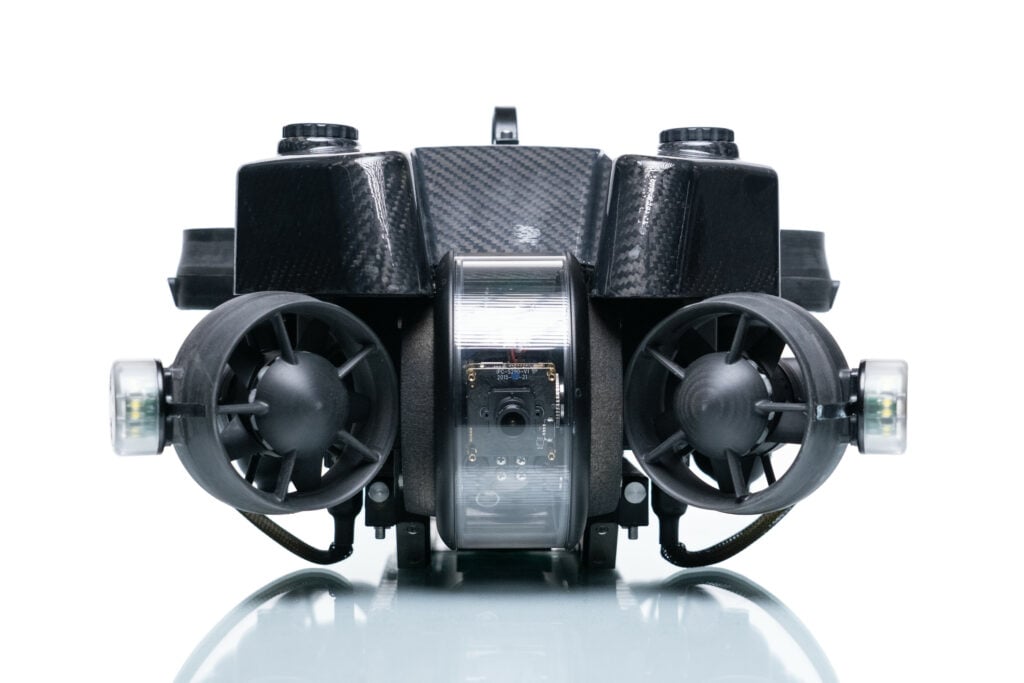
The vehicle includes a rotating stereo camera assembly equipped with two synchronized 4K sensors operating at up to 60 frames per second. The system is factory calibrated with a fixed baseline between lenses, allowing accurate depth measurements directly from stereo imagery.
Unlike bolt-on stereo skids commonly used with inspection vehicles, the imaging system is incorporated directly into the vehicle structure, maintaining balanced handling characteristics.
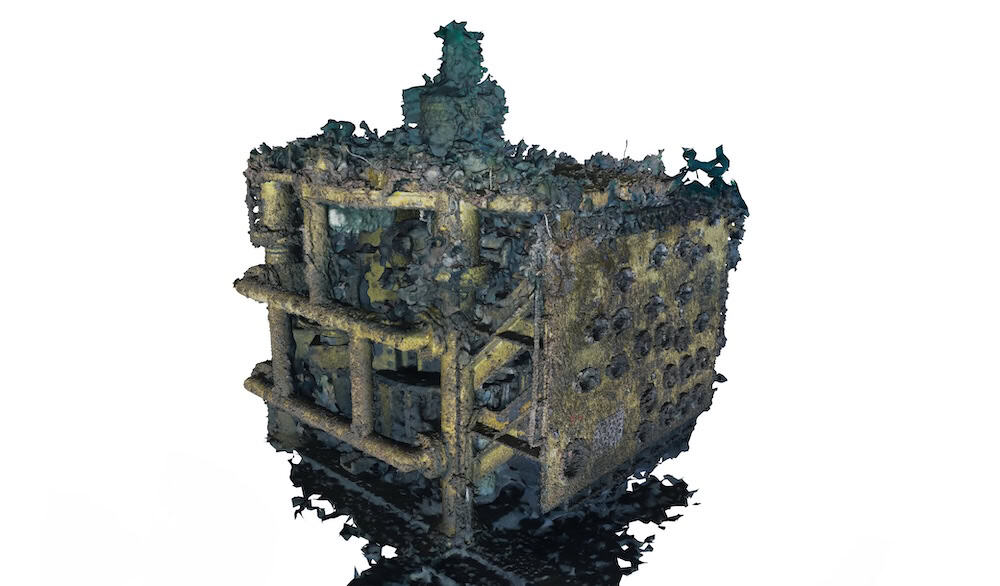
Deep Trekker Perception Engineering Manager Vishal Panchal explains, “Our integrated stereo camera enables effective underwater 3D vision. With the Deep Trekker camera system, users can create photorealistic 3D models with metric scaling out of the box. This means that to model an underwater asset, there is no need to deploy a reference measurement marker. Users can start the inspection within the UI, download the data, and import the images into photogrammetry software to generate a fully scaled 3D model.”
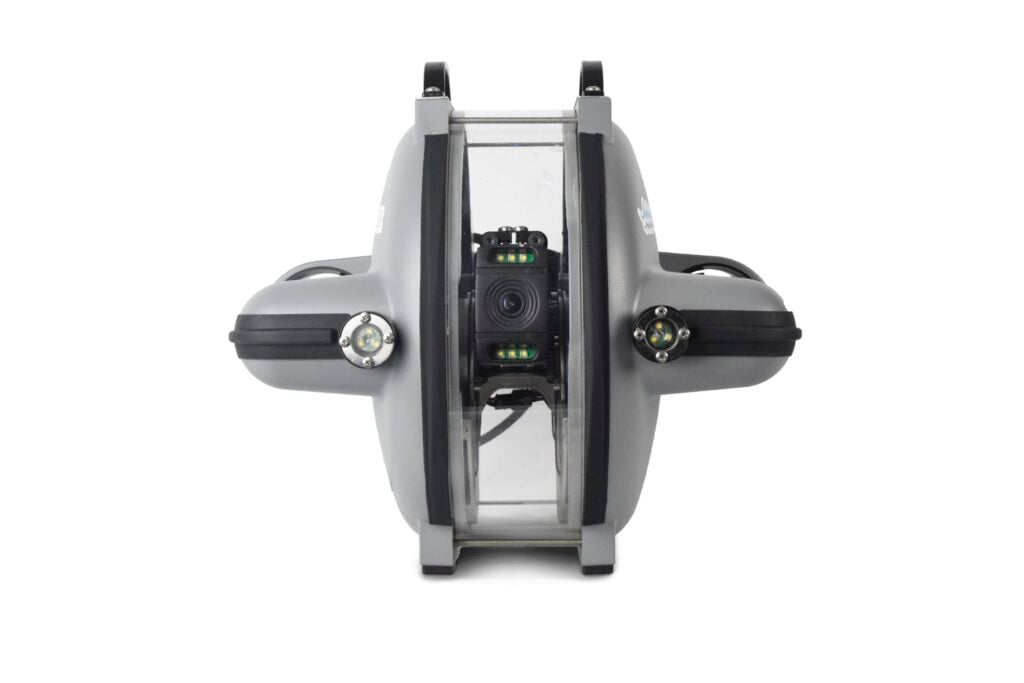
The rotating camera mechanism provides up to 180 degrees of motion, allowing operators to inspect above, below, and around structures without repositioning the vehicle.
Panchal adds, “SPECTRA features a very powerful continuous lighting system that follows the camera head. This ensures illumination is always aligned with the optical axis. When paired with a large-format, high-sensitivity image sensor, this combination illuminates underwater scenes more effectively than ever.”
A 300,000-lumen lighting array automatically tracks the orientation of the camera system, directing illumination along the optical axis. This configuration supports image and video capture in low-light underwater environments and produces datasets suitable for photogrammetric reconstruction.
After completing a mission, operators can export synchronized stereo imagery for processing in standard photogrammetry software to generate scaled three-dimensional models of inspected structures.
Modular Design for Industrial Operations
SPECTRA was engineered as an industrial inspection platform intended for routine operational use. Major subsystems were designed for quick replacement to reduce downtime during field operations.
Field-serviceable components include thrusters, the camera assembly, SensorPod X modules and cabling, the power distribution system, tether termination interfaces, and LED lighting modules. Most of these components can be replaced in approximately thirty minutes or less.
The primary structural frame is the only component not designed for field replacement. This modular configuration supports rapid maintenance and minimizes operational interruptions during offshore deployments or remote missions.
New Product Development Team Lead Engineer Owen Hooper explains, “We wanted this vehicle to be as robust as possible. It’s industrial equipment that operators will rely on day in and day out, so durability and repairability were top priorities. Ease of use was equally important – hand deployment ensures operators can simply place it in the water without requiring a crane or davit, making the system practical and accessible in the field.”
Validation and Performance Testing
Development of SPECTRA included expanded validation procedures to confirm system performance and reliability.
Testing included controlled current evaluation in flume tanks, pressure testing beyond the 1,000-meter depth rating, and field deployments involving real-world assets to benchmark photogrammetry and SLAM performance.
Internal testing programs subjected the system to stress conditions exceeding expected operational limits. Engineers deliberately pushed components to failure, analyzed performance data, and refined the design before finalizing the production platform.
Chad Plesa-Naden explains, “To support the performance of SPECTRA, we’ve also raised the bar for testing. The vehicle underwent evaluations at world-class facilities, including flume tanks for performance and current-handling validation, and pressure testing beyond 1,000 meters depth. In parallel, our in-house testing pushed the system beyond expected field conditions, taking it to failure, analyzing results, iterating, and ultimately launching a highly optimized, robust platform.”
See the SPECTRA ROV at Oceanology International, London, Booth G550.