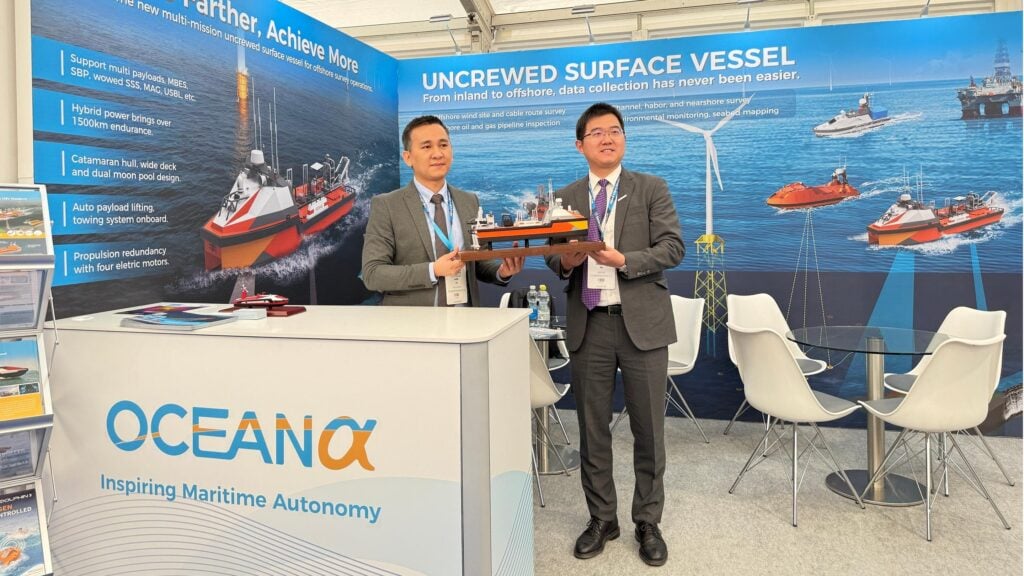
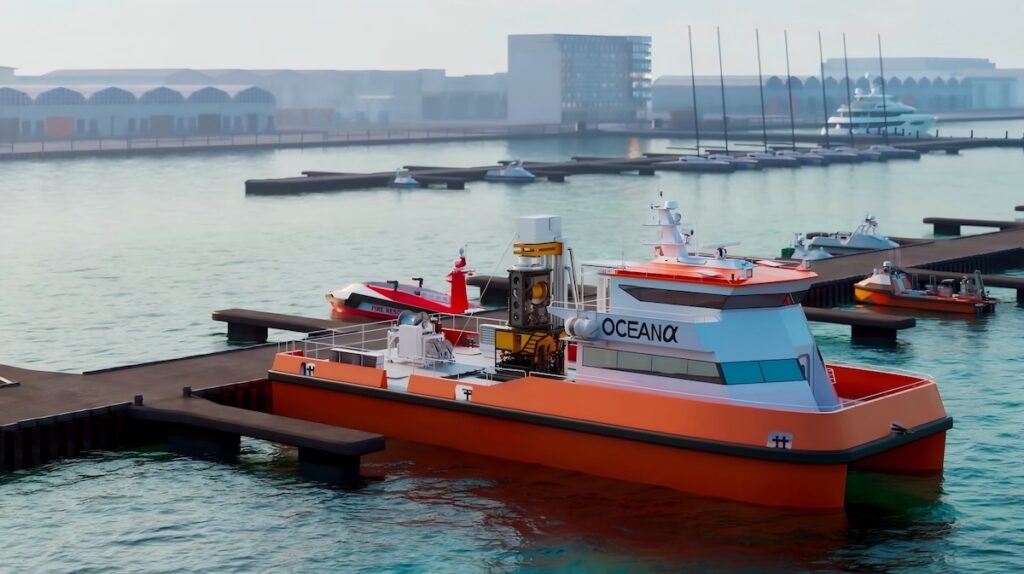
OceanAlpha has launched its 24-meter V180 USV–ROV system for deep-sea and offshore subsea operations at Oceanology International 2026.
The unmanned platform combines a DP2-enabled offshore Unmanned Surface Vessel (USV) with an integrated 2-tonne work-class Remotely Operated Vehicle (ROV). The system is engineered for subsea Inspection, Maintenance, and Repair (IMR) missions up to 3,000 meters.
With a full-load displacement of 180 tonnes, the V180 features a dual-moonpool configuration and an open deck layout, allowing for the flexible deployment of various mission modules.
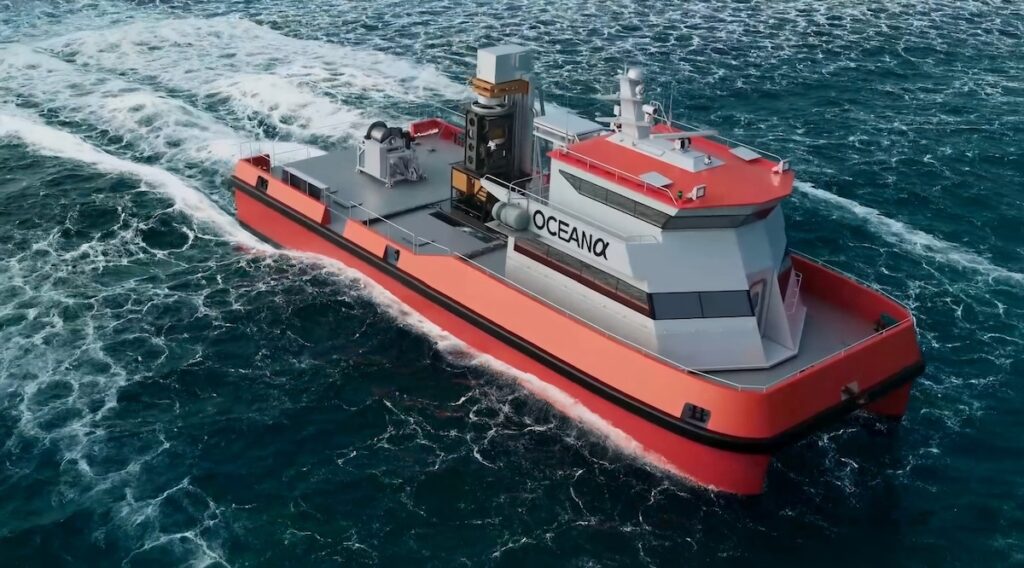
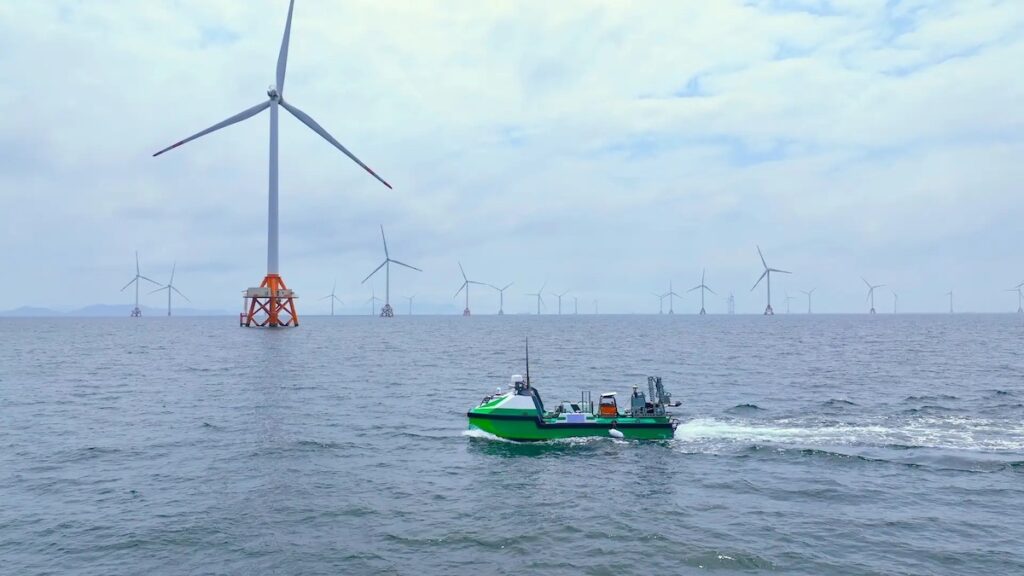
The platform offers an operational endurance of up to 30 days, facilitating rapid transitions between deep-sea engineering, subsea surveying, and oceanographic research. Its applications span several sectors, including offshore oil and gas infrastructure inspection, wind farm construction, and marine scientific exploration.
Pinestone Shi, General Manager of OceanAlpha, commented, “Only a very limited number of projects worldwide are currently exploring USVs in the 24-meter class for work-class ROV collaboration due to the significant engineering challenges involved in integrating offshore-class vessel architecture, autonomous navigation systems, dynamic positioning capability, and ROV launch and recovery systems into a fully unmanned platform. Against this backdrop, the introduction of the V180 USV–ROV System represents a major step forward in enabling unmanned deep-sea operations and expanding the role of USVs in offshore engineering.”
Operational flexibility is provided through three distinct modes: autonomous navigation, remote control, and crewed operation. By utilizing an unmanned design, the vessel eliminates the need for crew accommodation and working spaces, providing increased capacity for fuel and mission-critical equipment. This design, paired with a hybrid power system and extended endurance, is intended to reduce operational costs, logistical complexity, and carbon emissions compared to conventional crewed offshore vessels.
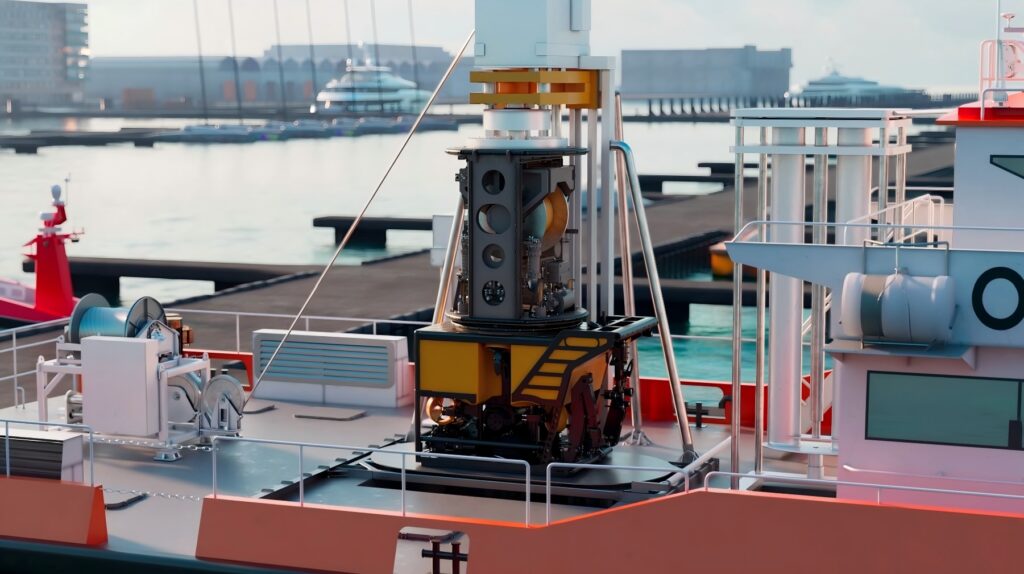
Precision station-keeping is enabled by a DP2 dynamic positioning system, while a dual Starlink satellite communication system supports shore-based remote control. These technologies allow shore-based operators to control both the USV and the ROV from a remote center. This approach removes personnel from hazardous sea states and high-risk offshore environments, significantly reducing human exposure to operational risks.
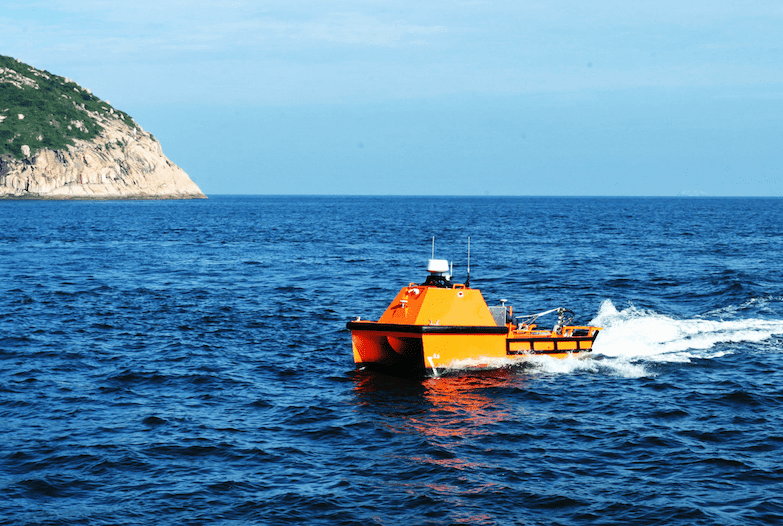
The launch of the V180 marks a milestone in the expansion of OceanAlpha’s maritime portfolio, which now includes a tiered fleet ranging from the 4.5-meter M40P to the upcoming 15-meter V11 and the new 24-meter V180. This spectrum of vessels allows the company to cover missions from nearshore environments to extended deep-sea operations, scaling from single-sensor payloads to complex cross-domain collaborations between USVs and ROVs.