Volatus Aerospace has introduced its proprietary V-Cortex™ AI Flight Controller and Autonomy Operating System at CANSEC 2026, marking a significant step in the company’s evolution toward a vertically integrated defence technology platform.
Developed entirely in Canada using domestically controlled intellectual property, the V-Cortex ecosystem combines advanced flight control hardware and firmware, embedded autonomy software, mission systems integration, and AI-enabled capabilities within a modular architecture. The system is designed to support a broad range of uncrewed platforms across air, ground, and maritime domains.
Measuring approximately 3.5 cm x 3.5 cm and weighing less than 15 grams, V-Cortex is among the smallest fully integrated autonomous operating systems in its class. The platform supports advanced capabilities including autonomous mission execution, dynamic onboard decision-making, GNSS-denied navigation, edge computing, seeker and targeting integration, counter-UAS applications, and multi-domain interoperability.
Glen Lynch, CEO of Volatus Aerospace, commented, “This is more than a flight controller. V-Cortex represents the foundation of a sovereign Canadian autonomy ecosystem designed to support the future of intelligent uncrewed systems. Our objective is to provide Canada and its allies with a flexible, interoperable, domestically controlled autonomy framework capable of evolving rapidly alongside changing operational requirements.”
As part of the V-Cortex autonomy stack development, Volatus is receiving advisory services and funding from the National Research Council of Canada Industrial Research Assistance Program (NRC IRAP) through its Defence Industry Assist initiative. The support is helping the company advance autonomous capabilities designed to keep pace with rapidly evolving technology and mission requirements in modern operational environments.
Built on a Modular Open Systems Architecture (MOSA), V-Cortex is designed to support rapid integration of sensors, mission payloads, autonomy behaviours, and third-party systems without requiring a full platform redesign. The architecture is intended to support distributed autonomous operations, crewed-uncrewed teaming, counter-UAS applications, and multi-platform mission coordination in contested and GNSS-denied environments.
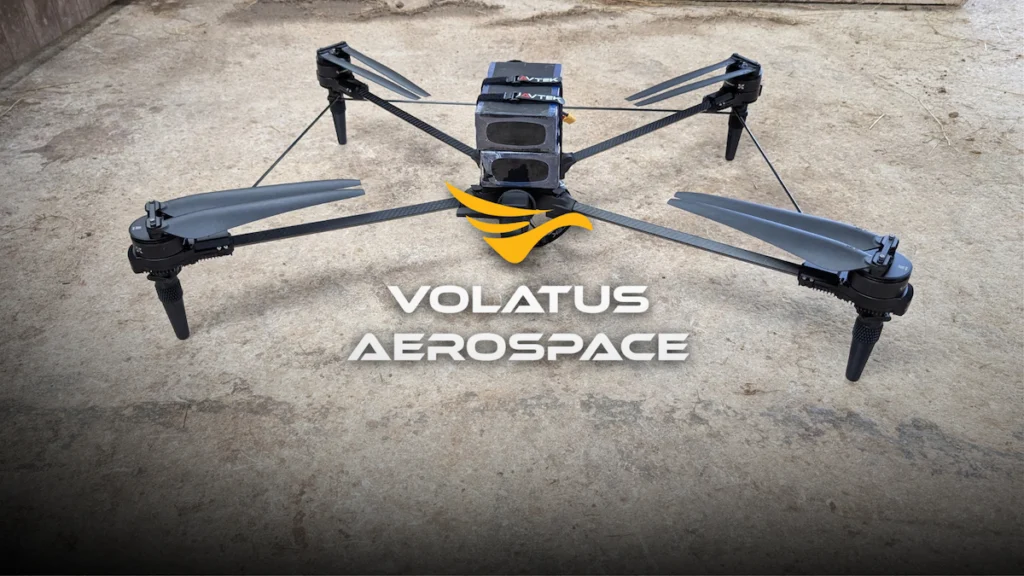
Volatus is incorporating the V-Cortex autonomy stack into its V-Series aircraft family and Condor platform from the outset of production, while maintaining a platform-agnostic design ready for integration across a broad range of third-party systems and uncrewed platforms.
The introduction of V-Cortex AI at CANSEC is believed by the company to position Volatus Aerospace at the forefront of next-generation autonomous systems and reinforces their role in supporting Canadian and allied defence priorities through integrated technology, manufacturing, operations, and training capabilities.