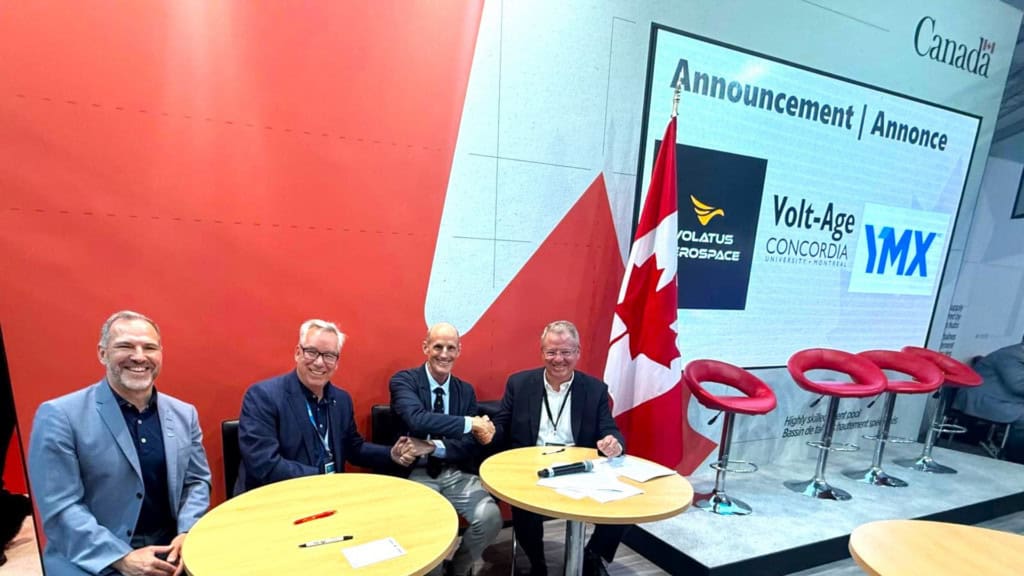

Volatus Aerospace and Sentinel R&D have entered into a Memorandum of Understanding (MoU) to collaborate on advancing a Canadian-developed interceptor Unmanned Aerial Vehicle (UAV) platform.
The agreement establishes a framework that supports a broader strategy to strengthen the Canadian aerospace sector. Sentinel will contribute its expertise in UAV platform engineering and advanced composite structures, while Volatus will lead systems integration, mission systems development, AI-enabled autonomy software, operational testing, and global commercialization. The partnership will also explore opportunities for scalable production within Canada, including at Volatus’ Mirabel aerospace manufacturing facility.
The initiative aligns with Canada’s Defence Industrial Strategy, which prioritizes sovereign industrial capacity in key technology domains. By combining their capabilities, the companies aim to address evolving global security requirements while strengthening Canadian aerospace and defense capability.
As a global aerospace and defense firm, Volatus focuses on delivering integrated uncrewed systems and aerial intelligence.
Glen Lynch, Chief Executive Officer of Volatus Aerospace, commented, “Volatus continues to execute on its strategy of combining Canadian manufacturing, autonomy software, and operational capability into an integrated aerospace platform – building an integrated aerospace and defence capability spanning manufacturing, autonomy, and operations.
“Collaborations such as this support the development of Canadian unmanned systems capability while reinforcing our investments in advanced manufacturing initiatives, including the Company’s Mirabel aerospace manufacturing facility, and our V-Cortex™ AI autonomy platform.”
Dr. Katheron Intson, Chief Executive Officer of Sentinel R&D, added, “Volatus brings strong integration, autonomy, and operational expertise that complements Sentinel’s platform engineering capabilities. We believe this collaboration represents a meaningful opportunity to strengthen Canadian unmanned systems innovation and manufacturing capability.”
The current agreement is a non-binding MoU that outlines the framework for engineering cooperation and potential future commercial arrangements. While it sets the stage for technical alignment, it does not currently create binding purchase obligations and remains subject to ongoing commercial discussions between the two parties.