
Showcase your capabilities
If you design, build or supply RF Filters, create a profile to showcase your capabilities and connect with visitors who have an active requirement for your solutions.




RF filters are frequency-selective components that pass desired signals while attenuating unwanted frequencies and interference in drones, UAVs, and other unmanned systems. RF and microwave filters support communications, telemetry, GNSS navigation, radar, electronic warfare, and sensing applications.
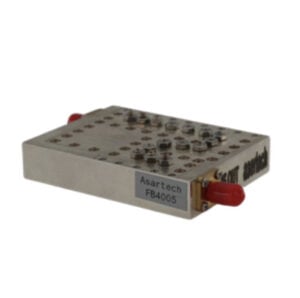
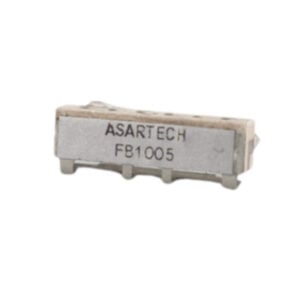
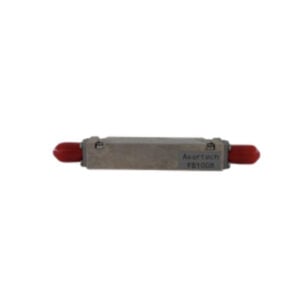
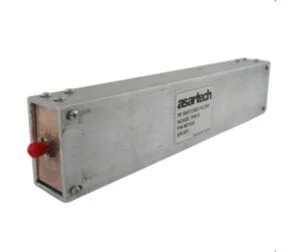
This category features RF filter manufacturers offering band-pass, low-pass, high-pass, band-stop, and notch filters, alongside tunable filters and switched filter banks.
Read the Technology Overview
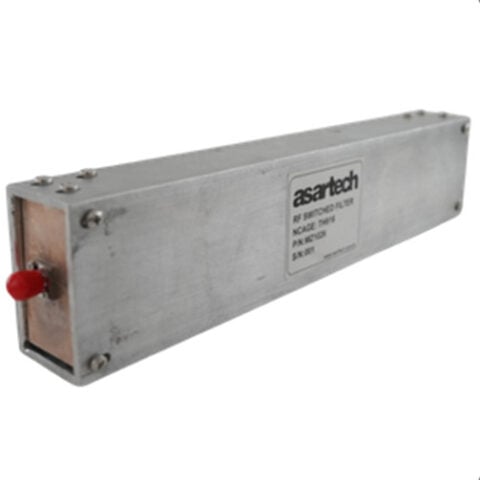
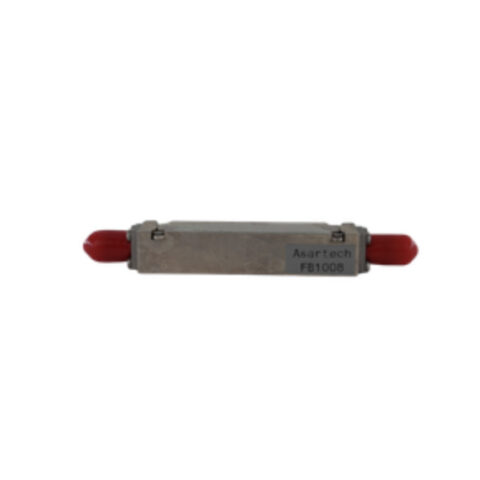
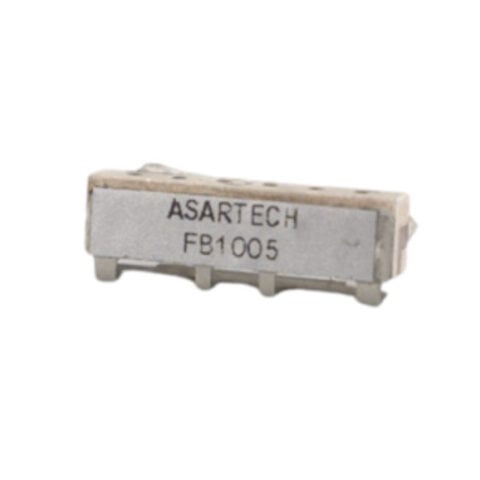
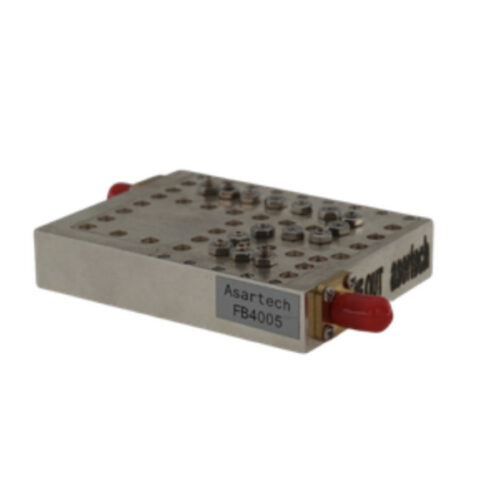

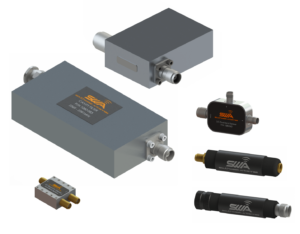
High Performance RF & Microwave Antennas for UAVs, Robotics, USVs and Unmanned Marine Vehicles

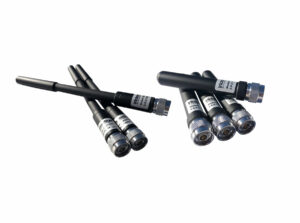
RF & Microwave Antennas for Drones & GCS | Surveillance & Communication Antennas

If you design, build or supply RF Filters, create a profile to showcase your capabilities and connect with visitors who have an active requirement for your solutions.

Radio Frequency (RF) and microwave filters control which frequencies are passed through an electronic system and which are attenuated, helping manage unwanted signals and interference within RF signal chains. In drones and other unmanned systems, they are used across radios, navigation receivers, radar systems, and payloads supporting command, telemetry, communications, and sensing functions.
Filters may be implemented as discrete components, integrated circuits, or elements within larger RF front-end modules. Their frequency response, construction, impedance matching, and position within the signal chain influence wanted-signal transmission, out-of-band rejection, insertion loss, and timing characteristics.
Low-Pass Filters (LPFs) pass frequencies below a defined cutoff while attenuating higher-frequency signals, whereas High-Pass Filters (HPFs) pass frequencies above the cutoff and suppress lower-frequency content. Band-Pass Filters (BPFs) select a defined range between lower and upper frequency limits, while Band-Stop Filters (BSFs) reject a specified band. Notch filters provide narrow rejection around a particular frequency, making them useful for suppressing localized interference while preserving nearby signals.
Filter approximations determine the trade-off between passband behavior, transition steepness, stopband attenuation, and phase response. Butterworth filters provide a maximally flat passband, while Chebyshev filters allow ripple in the passband or stopband to achieve a steeper transition. Elliptic, or Cauer, filters use ripple and transmission zeros to produce particularly sharp transitions for a given filter order, whereas Bessel-Thomson filters prioritize approximately linear phase and flat group delay across the passband to help preserve signal shape.
Multi-port filtering networks combine or separate signals according to frequency and signal-path requirements. Diplexers separate or combine two frequency bands, while duplexers allow transmit and receive paths to share an antenna under defined isolation conditions using frequency-selective or switching arrangements. Multiplexers combine or separate several channels, and channelizers divide a wider input spectrum into narrower bands for parallel processing. These networks are used in multi-band radios, shared-antenna architectures, and wideband monitoring payloads.
Filter hardware influences operating frequency, insertion loss, selectivity, power handling, physical size, and integration requirements. Different technologies use electrical, electromagnetic, or acoustic resonances to produce frequency-selective responses, with the most suitable approach depending on performance, packaging, and system constraints.
| Technology | Characteristics and Typical Integration |
| Lumped-Element (LC) Filters | Use inductors and capacitors in compact circuits and can be integrated directly onto a Printed Circuit Board (PCB). Performance at higher frequencies is increasingly influenced by component parasitics, impedance matching, and PCB layout. |
| Planar & Distributed Filters | Use transmission-line structures such as microstrip or stripline, with substrate properties, conductor geometry, and transmission-line dimensions determining the frequency response and achievable loss. |
| Cavity, Coaxial & Waveguide Filters | Use electromagnetic resonant structures that can provide high selectivity, low insertion loss, or high power handling. They are typically installed as discrete components or assemblies, with physical dimensions strongly influenced by operating frequency. |
| Ceramic & Dielectric Resonators | Use dielectric materials to form compact resonant structures and are available as both board-mounted components and larger assemblies. Dielectric properties, temperature stability, and material losses influence overall performance. |
| Acoustic Wave Filters (SAW & BAW) | Surface Acoustic Wave (SAW) and Bulk Acoustic Wave (BAW) filters convert electrical signals into acoustic vibrations within piezoelectric materials to provide compact frequency selection. They are commonly integrated into radio front ends operating within defined frequency bands. |
| Integrated Passives (IPD) & MMIC Filters | Integrated Passive Devices (IPDs) and Monolithic Microwave Integrated Circuits (MMICs) incorporate filtering structures into compact chips or modules, supporting close integration with amplifiers, switches, and other RF circuitry. |
RF and microwave filters use several approaches to support either fixed operating bands or systems that must adapt to changing frequency requirements.
Digital filtering cannot prevent overload, compression, or distortion in preceding analog stages, so receiver architectures may require both RF preselection and subsequent digital filtering to maintain signal quality.
Command and Control (C2), telemetry, video downlinks, Satellite Communications (SATCOM), and mesh radios may operate across several frequency bands on the same platform. Band-pass filters help isolate the required operating band, while low-pass filters may be used to suppress transmitter harmonics and other unwanted high-frequency components. Cellular-connected drones may also incorporate Fifth-Generation (5G) RF filters within their communications modules to support operation across designated cellular bands.
Global Navigation Satellite System (GNSS) receivers use RF filters to select required satellite frequency bands while attenuating out-of-band energy that could degrade receiver performance. Multi-band receivers and Controlled Reception Pattern Antenna (CRPA) anti-jam front ends require coordinated filtering across multiple antenna and receiver paths, where insertion loss affects sensitivity and amplitude and phase consistency can be important for multi-channel signal processing.
Radar altimeters, collision-avoidance sensors, and Synthetic Aperture Radar (SAR) payloads use filters within transmit, receive, or Intermediate Frequency (IF) signal paths. Filtering helps control unwanted emissions and reject interference, while passband width and group-delay characteristics must accommodate the radar waveform without significantly degrading range measurements, target detection, or image formation.
Automatic Dependent Surveillance-Broadcast (ADS-B), Remote Identification (Remote ID), and Identification Friend or Foe (IFF) equipment use filters within their RF signal chains to select operating bands and reduce interference from nearby transmitters. Transmit-capable equipment may also require filtering to suppress harmonics and other unwanted out-of-band emissions before signals reach the antenna.
Electronic Warfare (EW) and Signals Intelligence (SIGINT) payloads may need to detect, analyze, or transmit signals across multiple frequency bands. Spectrum monitoring, Electronic Countermeasures (ECM), and RF direction-finding systems can use fixed filters, tunable filters, or switched filter banks, while receiver preselection helps limit strong unwanted signals before low-noise amplification and frequency conversion, preserving usable dynamic range.
Closely installed radios and RF systems can interfere with one another through transmitter leakage, harmonics, intermodulation products, or energy coupled between antennas and cables. Filters help control these unwanted signal paths as part of wider platform Electromagnetic Compatibility (EMC) engineering. High-power filters may be required in transmit paths, while sensitive receivers need filtering selected around insertion loss, rejection, linearity, and overload limits, working alongside antenna separation, shielding, and suitable RF front-end design.
Developments in RF and microwave filtering are addressing the need for smaller payloads, wider operating bandwidths, adaptable frequency coverage, and improved interference control between closely integrated systems.
As operating frequencies increase, it becomes increasingly important to characterize filters within their intended assemblies, where impedance mismatches, packaging, interconnects, nearby structures, and integration effects can alter the measured response.


 Searching Companies & Products