
Showcase your capabilities
If you design, build or supply RF Multiplexers, create a profile to showcase your capabilities and connect with visitors who have an active requirement for your solutions.




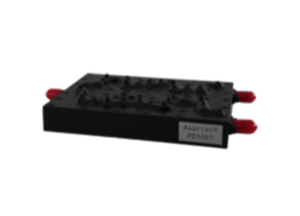
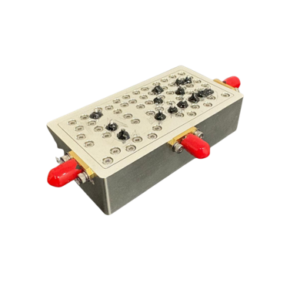
RF multiplexers are frequency-selective components that combine or separate multiple RF signals across different frequency bands, enabling shared antennas and signal paths in drones, UAVs, and unmanned systems. Available configurations include RF diplexers, triplexers, quadplexers, and multi-channel multiplexers, using cavity, ceramic, dielectric, or planar filter technologies.
This category features suppliers of RF multiplexers supporting multi-band communications, telemetry, GNSS navigation, radar, and RF sensing applications while reducing antenna and cabling requirements.
Read the Technology Overview
If you design, build or supply RF Multiplexers, create a profile to showcase your capabilities and connect with visitors who have an active requirement for your solutions.

Radio Frequency (RF) multiplexers combine or separate signals across different frequency bands, allowing multiple RF channels to share a common antenna, transmission line, or signal path. In drones, Unmanned Aerial Vehicles (UAVs), and other unmanned systems, these components support multi-band communications, telemetry, navigation, radar, and sensing while reducing the need for separate RF connections.
RF multiplexing is commonly achieved using frequency-selective filter networks, including RF diplexers, triplexers, quadplexers, and higher-channel-count devices. These networks use separate filter branches connected to a common port, allowing designated frequency bands to pass while attenuating signals outside their intended channels. Multiplexers may use cavity, ceramic, dielectric, or planar technologies, with their construction influencing insertion loss, channel isolation, power handling, size, and integration requirements.
RF multiplexers are available in different channel configurations and filter architectures. Channel count determines how many frequency bands can be combined or separated through the shared RF path, while the underlying filter technology influences electrical performance, physical dimensions, and integration requirements.
| Multiplexer Type | Architecture & Operating Principle | Typical Unmanned System Applications |
| RF Diplexers | Two frequency-selective filter branches combine or separate two distinct frequency bands through a common port. | Dual-band antennas, Global Navigation Satellite System (GNSS) integration, and UAV communications. |
| RF Triplexers | Three frequency-selective filter branches combine or separate three distinct bands through a shared RF connection. | Multi-band datalinks and shared-antenna radio systems. |
| RF Quadplexers | Four frequency-selective filter paths combine or separate four distinct frequency bands through a common port. | Multi-frequency RF front ends and integrated communications payloads. |
| Multi-Channel RF Multiplexers | Five or more coordinated filter branches combine or separate multiple designated frequency bands through a shared port. | Multi-radio platforms, ground stations, and complex antenna systems. |
| Cavity-Based RF Multiplexers | Resonant metallic cavities provide frequency-selective filtering across multiple channels, often offering high selectivity, low insertion loss, and substantial power handling. | Ground control stations, high-power RF links, and larger unmanned platforms. |
| Ceramic and Dielectric RF Multiplexers | Dielectric resonators and ceramic filter structures provide frequency-selective signal separation in relatively compact configurations. | Compact UAV radios, navigation receivers, and multi-band RF modules. |
| Planar and Microstrip RF Multiplexers | Printed transmission lines and resonant structures on dielectric substrates create frequency-selective paths within Printed Circuit Board (PCB)-integrated networks. | PCB-integrated RF front ends, UAV datalinks, and lightweight communications payloads. |
RF antenna multiplexers allow signals operating in different frequency bands to share a common antenna feed, provided the antenna supports the required frequencies. Separate filter branches pass their designated bands to or from the common port while attenuating out-of-band energy, reducing the number of antennas and coaxial connections required on an unmanned platform. This can simplify installation while potentially reducing weight, aerodynamic drag, cabling, and mounting requirements.
Frequency-selective RF multiplexing allows different communications channels to share RF infrastructure while maintaining separate frequency paths. UAV systems can use these networks to integrate compatible command, telemetry, payload data, and video links through common antennas or transmission lines. Unlike a switched RF analog multiplexer, a passive frequency multiplexer can carry signals in several supported bands simultaneously without actively selecting individual signal paths.
RF multiplexers provide frequency-selective isolation between connected transmitters and receivers, helping reduce unwanted signal coupling and receiver desensitization. High-isolation designs are particularly useful where several RF systems operate in close proximity on a UAV, ground vehicle, or control station. Filter rejection, channel spacing, transmitter power, and out-of-band emissions must still be considered, as multiplexers cannot eliminate interference that falls within overlapping or insufficiently separated passbands.
RF multiplexers support the integration of compatible multi-frequency navigation receivers, radar subsystems, and RF sensing equipment. Frequency-selective networks can, for example, combine or separate designated GNSS bands or route different radar frequency channels through shared RF hardware. Appropriate insertion loss, rejection, and passband characteristics are particularly important where weak navigation or sensing signals must be preserved.
RF multiplexers are closely related to several other RF components used for signal distribution, selection, and frequency management, but their operating principles differ according to how signals are combined, separated, or routed through the system.
Component selection therefore depends on whether the system requires simultaneous multi-band operation, reconfigurable signal routing, transmit and receive separation, or conventional signal distribution.
Developments in RF filtering, resonator technology, and packaging are supporting smaller, more selective, and increasingly integrated multiplexing networks for advanced communications and sensing systems.
These developments support RF multiplexer designs with greater integration density, improved channel isolation, and increasingly compact form factors, particularly for UAV communications equipment, multi-band radio systems, and advanced sensing payloads.


 Searching Companies & Products