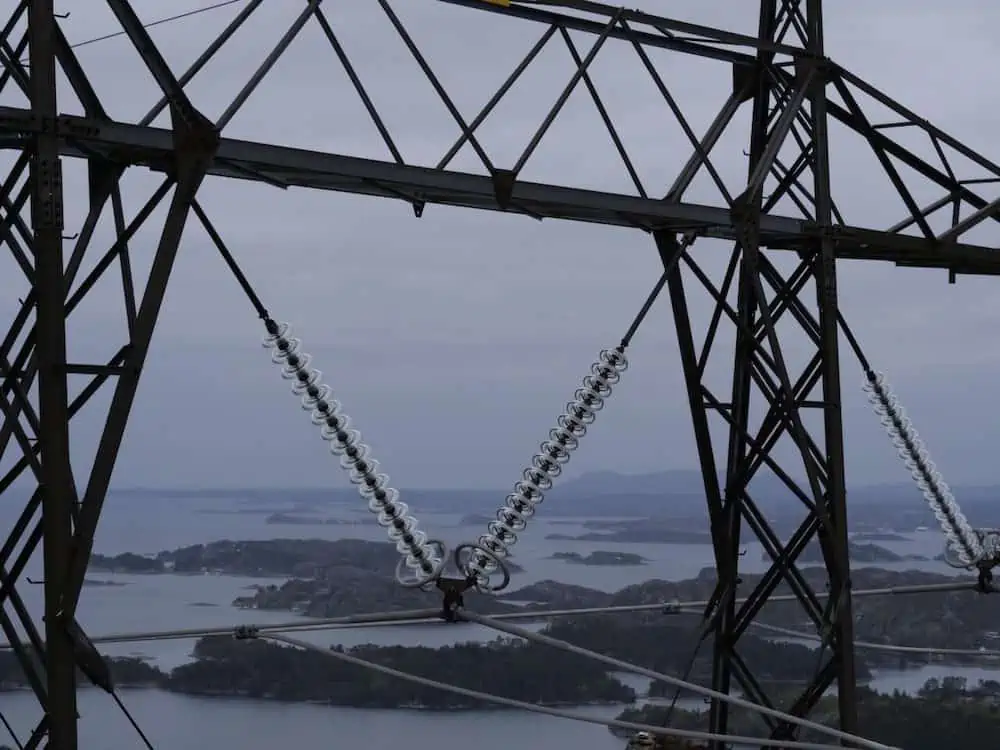
Powerline inspection drones enable electrical providers to assess transmission and distribution assets with enhanced precision and safety. Equipped with thermal, optical, and LiDAR sensors, these Unmanned Aerial Vehicles (UAVs) detect faults, corrosion, vegetation risks, and mechanical wear, helping grid operators improve reliability and reduce inspection costs.
This category highlights powerline inspection drone suppliers for utilities, engineering firms, and infrastructure operators that require reliable aerial platforms for routine assessment, fault detection, and ongoing maintenance of overhead electrical networks.
If you design, build or supply Powerline Inspection Drones, create a profile to showcase your capabilities and connect with visitors who have an active requirement for your solutions.
Powerline inspection drone systems provide a highly efficient, data-rich alternative to conventional manual and helicopter-based methods for assessing the condition of transmission and distribution infrastructure. Designed for precision operation around energized assets, these platforms are purpose-built to handle the electromagnetic, environmental, and regulatory challenges associated with electric utility inspection missions.
Key Advantages of UAV Powerline Inspection
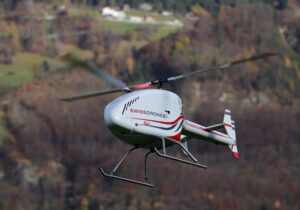
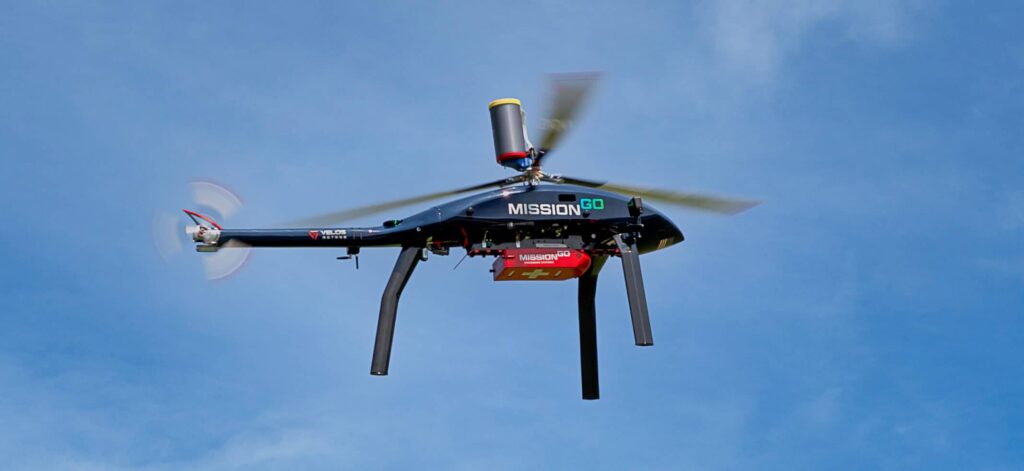
SDO 50 Helicopter UAV for Powerline Inspection by SwissDrones
Modern powerline inspection drones are engineered with advanced flight control systems, high-voltage-safe airframes, and sensor payloads optimized for multi-modal data capture. Depending on mission requirements, inspection payloads may include 4K and 8K optical zoom UAV cameras, radiometric thermal imagers, and LiDAR scanners for precise 3D modeling of conductors, insulators, and tower structures.
LiDAR systems enable high-density point cloud generation that can be used for vegetation encroachment analysis, sag and clearance measurements, and digital twin creation. Thermal cameras detect anomalies such as hotspots caused by corrosion, mechanical wear, or resistive heating, providing early warnings for potential component failure. Combined optical and thermal imagery allows for cross-validation of detected defects, improving diagnostic accuracy and reducing false positives.
Safety, Compliance & BVLOS Operations
The integration of autonomous flight planning, real-time obstacle avoidance, and Beyond Visual Line of Sight (BVLOS) capabilities enables long-distance inspection of transmission corridors with minimal operator intervention. Drones operating under BVLOS exemptions can survey multiple towers in a single mission, transmitting telemetry and inspection data through secure cellular or satellite networks.
Redundant avionics, fail-safe protocols, and high electromagnetic shielding protect critical systems from interference near high-voltage environments. Specialized training programs focus on flight safety procedures, airspace compliance, and data acquisition standards required by regulatory bodies such as the FAA, EASA, and Transport Canada.
Powerline Drone Inspection Software Formats
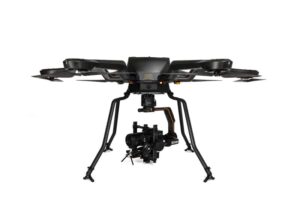
Shadow S3 Unmanned Helicopter for Powerline Inspection by ZIYAN
Powerline drone inspection software serves as the backbone of modern utility asset management workflows. These software suites handle automated flight path generation, real-time data visualization, and AI-assisted defect detection. Machine learning algorithms classify image anomalies such as cracked insulators, rusted fittings, and vegetation risks, accelerating maintenance prioritization.
Cloud-based platforms allow inspection data to be seamlessly shared with asset managers, engineers, and GIS systems, enabling predictive maintenance and long-term trend analysis. Many solutions integrate with enterprise-level SCADA and asset performance management (APM) systems for comprehensive infrastructure monitoring.
Purpose-built drones for powerline inspection typically feature long-endurance powertrains, either high-capacity lithium-polymer batteries or hybrid gas-electric systems, allowing flight durations exceeding 60 minutes. Gimbal-stabilized payload mounts ensure vibration-free imaging, while modular designs support quick interchange of camera and sensor packages.
Some inspection UAVs employ corrosion-resistant materials, composite booms, and electrical shielding to mitigate interference from electromagnetic fields. Rotor configurations are often optimized for stability in turbulent airflows found around tall pylons and open corridors.
Applications of Powerline Inspection Drones
Powerline inspection companies deploy drone systems for a wide range of tasks, including:
Transmission and distribution line inspection
Substation and transformer monitoring
Right-of-way vegetation management
Construction verification and commissioning
Post-storm damage assessment
Leading inspection providers offer end-to-end services encompassing flight operations, data analytics, and maintenance reporting. When selecting the best drone for powerline inspection, opt for a model that combines rapid deployment, LiDAR mapping, and thermographic imaging to provide a comprehensive view of asset health.
Emerging Capabilities for Powerline Inspection Companies
As electrical networks expand and grid modernization accelerates, emerging UAV technology plays an increasingly critical role in enhancing reliability and minimizing downtime. By providing rapid situational awareness, drones help utilities detect and respond to potential faults before outages occur.
The ongoing integration of AI-based image analysis, autonomous swarm inspection, and edge processing enables near real-time condition assessment. This evolution reduces inspection cycles from weeks to hours, improving operational efficiency and reducing environmental impact compared to traditional methods.
Inspired Flight provided its IF1200 drone to Quanta Aviation Services for a transmission line installation project, achieving safer, faster, and more precise rope pulls across active rail corridors
Ascent AeroSystems’ Cybersecurity Maturity Model Certification Level 2 confirms compliance with National Institute of Standards and Technology 800-171 standards
Xer Technologies has partnered with the Unmanned Safety Institute to deliver standardized global training for its X8 aircraft, enhancing safety and operational readiness
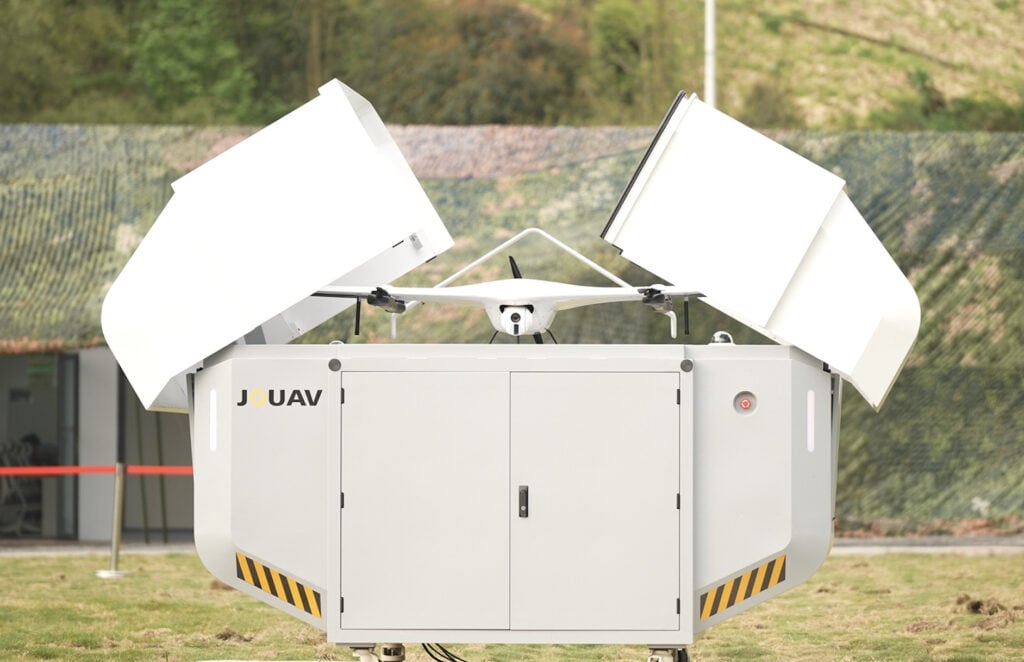
JOUAV and the Guangxi Power Supply Bureau have launched China’s first "Fixed + Mobile" UAS inspection system, advancing power grid monitoring with autonomous drones, VTOL hangars, and real-time data transmission
The long-range demonstration, led by ARA Robotics, involved two ARA-405 unmanned aerial vehicles (UAVs), state-of-the-art sensors, and beyond-line-of-sight (BVLOS) operations, controlled from a distance of 11 kilometres
FulcrumAir used its E7500 heavy lifting UAS to assist K-Line Line Maintenance and Construction in reconstructing a 138KV line for a leading power provider in Canada
The visual system uses fixed and steerable sensors combined with robotics and AI algorithms to autonomously capture detailed images of powerline components
Jun 20, 2022
Advancing Unmanned Systems Through Strategic Collaboration
UST works with major OEMs to foster collaboration and increase engagement with SMEs, to accelerate innovation and drive unmanned systems capabilities forward.