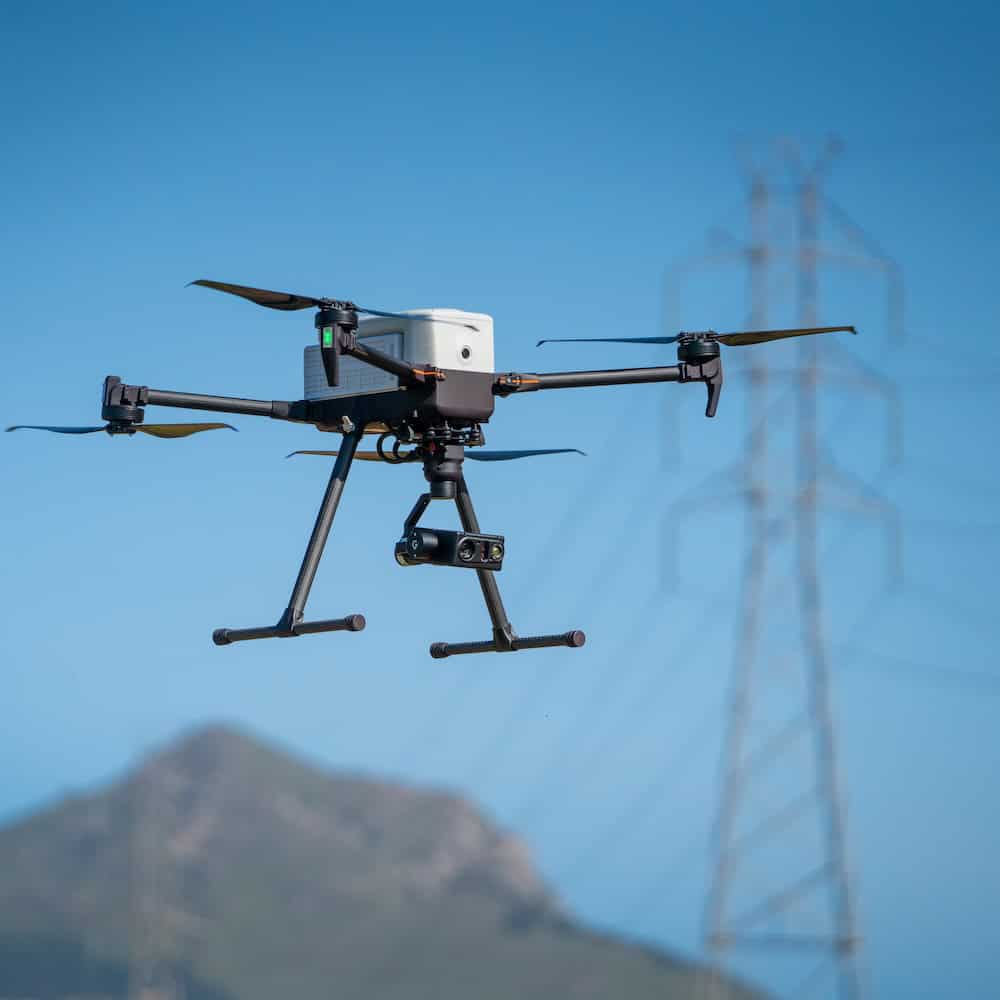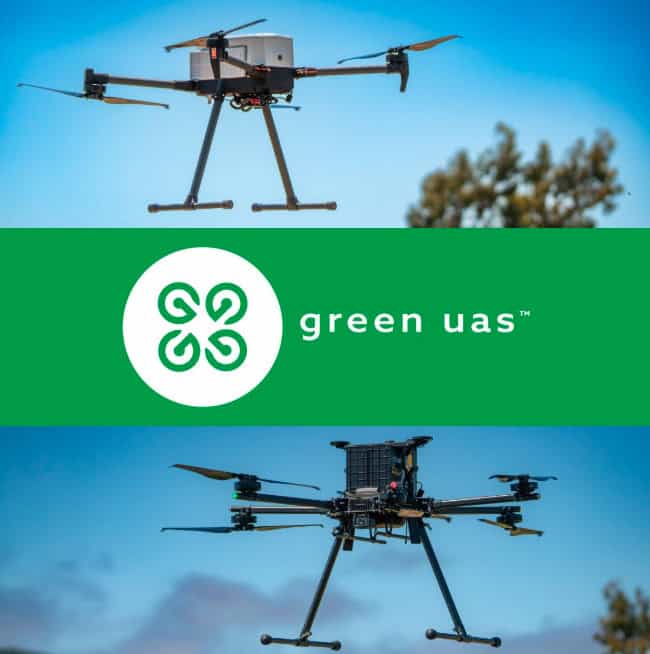

Inspired Flight provided its IF1200 Unmanned Aerial System (UAS) for Quanta Aviation Services (QAS) during a multi-day transmission line installation project that required rope pulls spanning 800-foot distances across an active railyard.
The IF1200 demonstrated measurable gains in safety, operational efficiency, and team flexibility, highlighting how advanced UAS technology is transforming utility construction practices.
Project Background
Quanta Aviation Services was tasked with installing six conductors and two static lines across three transmission structures. The project required careful navigation of active rail corridors, limited ground access, and tight timelines while maintaining strict safety and precision standards.
Traditionally, rope pulls across such terrain depend on labor-intensive rigging or the use of cranes and bucket trucks. These conventional methods often lead to higher labor requirements, elevated safety risks, and limited accessibility, especially in railyards or environmentally sensitive zones.
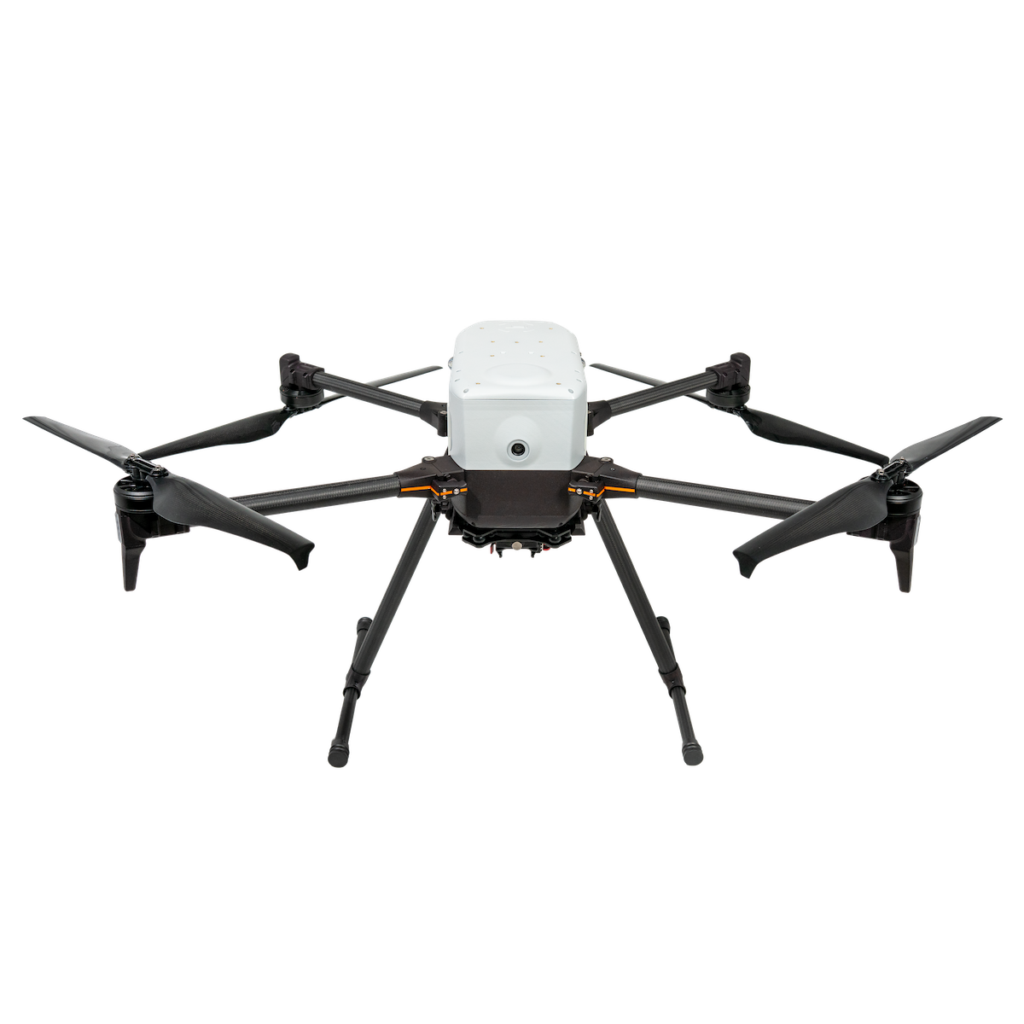
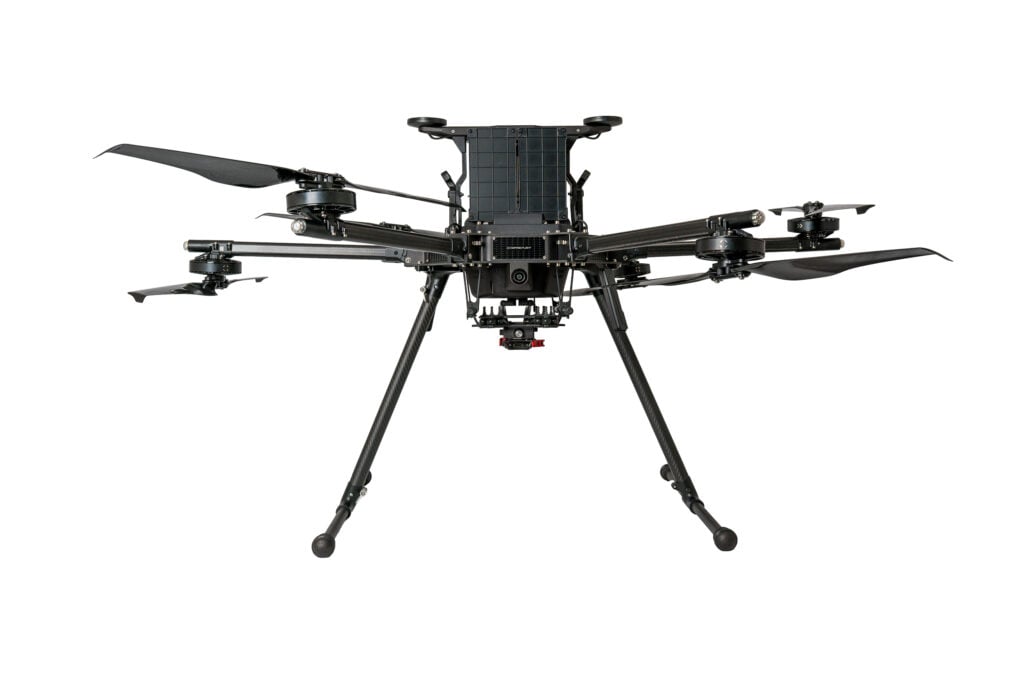
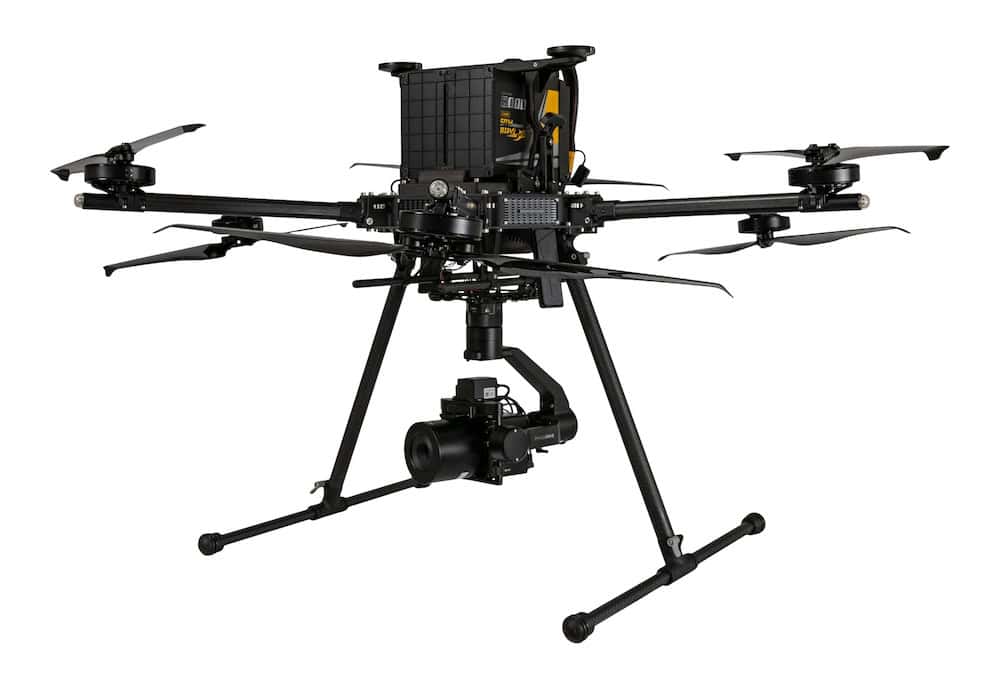
To address these challenges, QAS utilized the Inspired Flight IF1200, a heavy-lift drone designed for industrial operations.
Objectives
The objectives of the project focused on improving safety, precision, and overall efficiency while reducing manual effort in challenging conditions. The IF1200 was deployed to transport and release a ¼-inch pilot rope across 800-foot spans, maintaining safe flight over live rail corridors and restricted areas.
By replacing traditional manual rigging with aerial delivery, QAS aimed to increase setup speed, minimize labor demands, and ensure precise payload placement. The drone’s utility-grade quick-release system allowed for controlled deployment, enabling consistent and accurate placement without disrupting rail operations or requiring rework.
Equipment
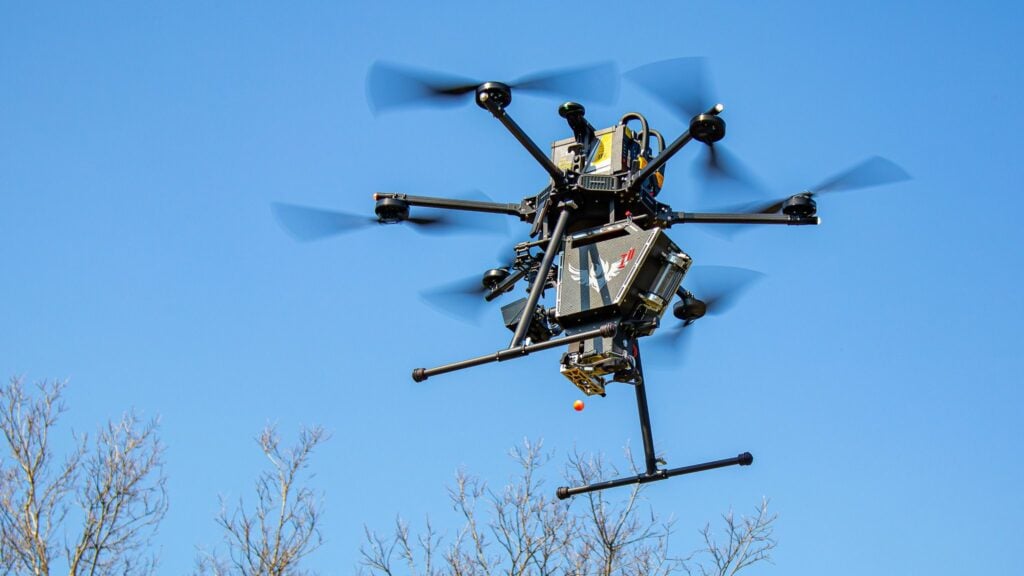
For this operation, the IF1200 served as the primary drone platform, carrying a ¼-inch pilot rope mounted on a utility-grade quick-release system. The aircraft offered up to 30 minutes of flight time with a return-to-home battery reserve and could lift a maximum payload of 19.1 lbs. The IF1200 is NDAA-compliant, meeting government and industry standards for secure field use.
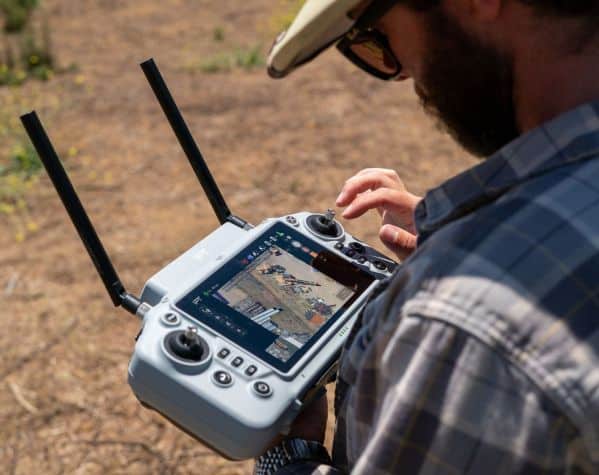
The project also incorporated constant two-way radio communication between flight crews and ground teams, pre-flight safety briefings, and coordination with crane operators and Qualified Electrical Workers (QEWs). This comprehensive setup ensured that all flight and ground activities were executed safely and efficiently.
The IF1200 was equipped with a utility-specific quick-release mechanism to carry and release rope between transmission structures. Given the challenging terrain, each flight required precise placement while maintaining uninterrupted rail operations. The drone conducted several flights per day, achieving successful rope drops on the first attempt.
Key operational procedures included:
- Pre-mission planning and safety reviews
- On-site coordination between drone operators, ground teams, and crane crews
- Real-time aircraft monitoring and controlled payload release
- Post-flight equipment inspections and data recording
Results & Performance
The use of the IF1200 delivered significant improvements across operational metrics. Setup time was reduced, and the need for complex ground-based rigging in inaccessible areas was eliminated, allowing multiple spans to be completed per day with fewer personnel. Safety was enhanced by removing crew members from hazardous areas near rail lines and elevated positions, lowering fall risks and equipment exposure.
The drone’s quick-release system enabled precise rope placement without drift or the need for rework, maintaining accuracy even within tight aerial corridors. Feedback from QAS crews was highly positive, noting reduced physical strain and improved workflow efficiency, with interest expressed in applying drone-based methods to future projects.
The operation confirmed the IF1200’s effectiveness in rope pull applications over challenging terrain. The drone’s precision, payload capability, and flight stability enabled Quanta Aviation Services to meet project requirements while improving safety, reducing labor, and maintaining consistent operational tempo.
Future Applications
Following the success of this rope pull project, the IF1200 has demonstrated strong potential for additional utility applications. It can support pre-job route analysis to evaluate terrain and line paths before installation, thermal inspections and hotspot detection for ongoing maintenance, and structure modeling with 3D mapping to assist engineering and planning teams.
The platform also provides value for post-installation documentation and QA/QC activities, capturing visual records to verify project completion and quality standards. These expanded uses show how the IF1200 can continue to contribute to efficient, safe, and precise utility field operations.
Andrew Thayer, UAS Project Manager at QAS, commented, “The IF1200 was selected for its heavy-lift capability, flight precision, and compatibility with quick-release systems. It was ideal for running pilot rope across long spans in a controlled and accurate manner. The drone eliminated the need to manually rig every structure—especially where equipment couldn’t reach. It reduced both time and manpower.
“Platforms like the IF1200 will become core assets. They offer safer, faster, and more efficient alternatives in complex environments. Every drop was performed with pinpoint accuracy. The aircraft handled payloads confidently with no drift or disruption.”