




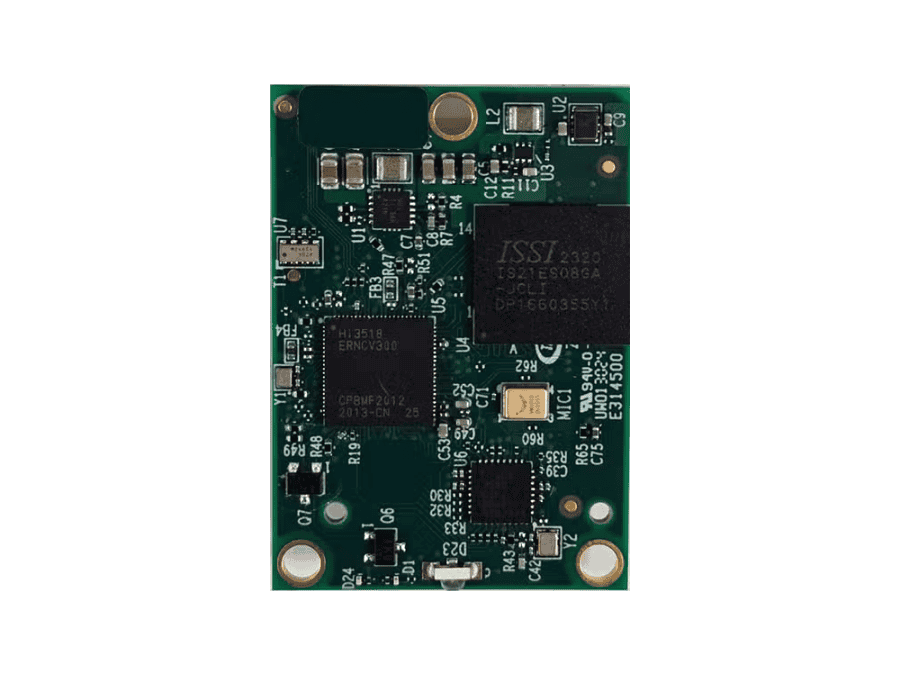

Showcase your capabilities
If you design, build or supply Video Recorders & DVRs, create a profile to showcase your capabilities and connect with visitors who have an active requirement for your solutions.




Drone video recorders deliver reliable data acquisition, real-time processing, and secure video storage. These solutions enable seamless recording and analysis of drone footage, supporting critical applications such as aerial surveillance, intelligence gathering, and professional drone cinematography with precision and efficiency.
This page features suppliers of drone video recorders and marine DVRs for Remotely Operated Vehicles (ROVs) and unmanned systems.
Read the Technology Overview



Mission-Critical Video Transmission & Streaming Solutions for UAVs & Ground Robotics

Edge AI Video Processing & Streaming Solutions Providing Real-Time Situational Awareness for Mission-Critical UAVs & Unmanned Systems

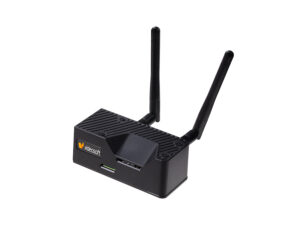
Ultra-Low-Bandwidth Real-Time Video Streaming Solutions for UAVs, Unmanned & Robotic Systems

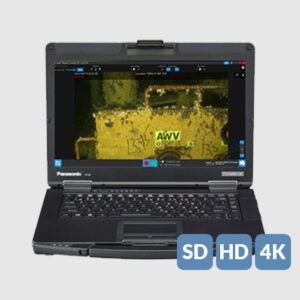
Cutting-Edge Underwater Imaging Systems & Remote Operations Solutions For Subsea Inspection

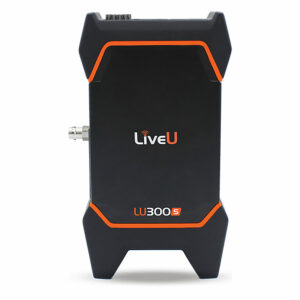
UAS Video Streaming Technology: Secure, Low-Latency, Live Video Streaming and Transmission Solutions

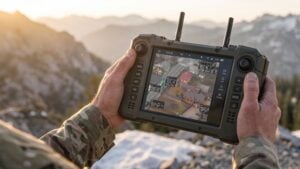
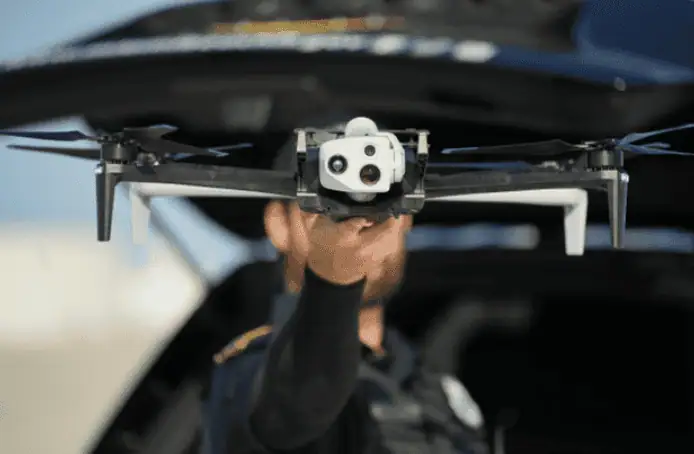
Field-Proven Vision Intelligence for Defense and Unmanned Systems

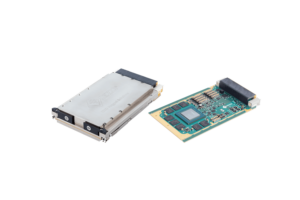
High-Performance Video Graphics, GPGPU, AI/ML Processing & Display Solutions for C5ISR Applications

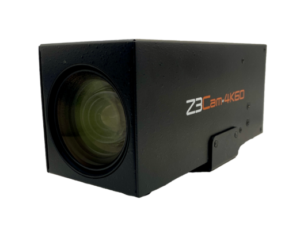
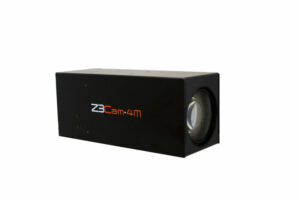
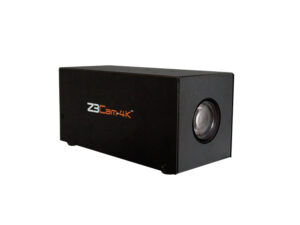
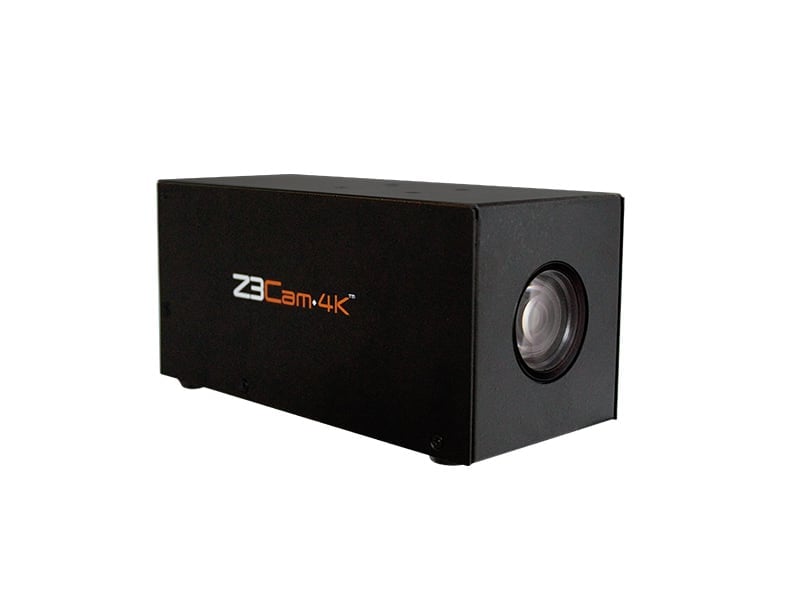
4K HD Cameras and Video Processing Solutions for Drones and Robotics

If you design, build or supply Video Recorders & DVRs, create a profile to showcase your capabilities and connect with visitors who have an active requirement for your solutions.

Video recorders for drones and unmanned systems capture and store footage from onboard cameras, imaging payloads, and remote video feeds. These systems support mission documentation, surveillance, inspection, and operational review across unmanned aerial, ground, and maritime platforms.
Drone video recorders range from miniature Digital Video Recorder (DVR) modules designed for compact Unmanned Aerial Vehicles (UAVs) to ruggedized, multi-channel systems capable of recording several video streams simultaneously. Depending on the configuration, they support high-definition recording, video compression, metadata integration, and local or ground-based data storage. Recorders can compress raw video or save an encoded stream.
Different video recording architectures accommodate the payload capacity, camera interfaces, and operational requirements of unmanned platforms. Systems receive camera video through a compatible interface, then either encode the signal or retain an existing encoded stream using storage control electronics and recording media.
| Recorder Type | Characteristics | Suitable Platforms |
| Onboard UAV Video Recorders | Capture video directly from onboard cameras, with local storage independent of the live downlink. | Multirotor drones, fixed-wing UAVs, Vertical Takeoff and Landing (VTOL) UAVs |
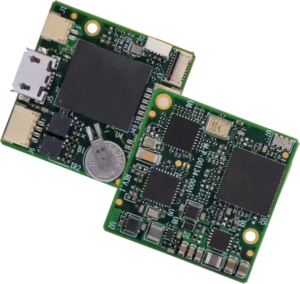
| Compact Embedded Video Recording Modules | Miniature, lightweight circuit boards designed for integration into space-constrained systems. | Small UAVs, micro drones, compact Unmanned Ground Vehicles (UGVs) |
| Ruggedized DVRs | Enclosed recording units designed to withstand vibration, shock, and demanding operating environments. | Military UAVs, UGVs, Unmanned Surface Vessels (USVs), industrial robots |
| Network Video Recorders (NVRs) | Record video streams received over Ethernet or other IP networks from compatible cameras and encoders. | Networked UGVs, USVs, ground stations |
| Multi-Channel Video Recorders | Capture and store multiple camera feeds, with simultaneous recording supported by the hardware. | Intelligence, Surveillance, and Reconnaissance (ISR) UAVs, UGVs, USVs, Remotely Operated Vehicles (ROVs) |
| Ground Control Station Video Recorders | Record video received through a drone’s communications link, supporting mission review and ground-based archiving. | UAV ground control stations, remote operations centers |
| Integrated Video Encoding and Recording Systems | Combine video compression and recording functions within a single device or embedded module. | UAVs, UGVs, USVs, ROVs |
Miniature drone DVR systems are particularly suited to platforms with limited available space, weight, and power. Larger recording units can accommodate multiple video inputs, higher recording bitrates, and greater storage capacities.
For unmanned maritime applications, marine DVR and ROV DVR systems can capture footage from underwater cameras and inspection payloads. Underwater camera DVR equipment may be installed in a pressure-rated enclosure, a dry compartment, or topside control equipment, with subsea camera feeds transmitted to the recorder.
Drone video recording supports ISR missions by capturing footage from Electro-Optical/Infrared (EO/IR) payloads. Recorded full-motion video can assist with target observation, activity analysis, mission debriefing, and intelligence assessment. Systems with compatible metadata handling can associate video frames with timestamps, platform position, and sensor orientation.

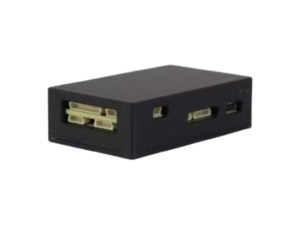
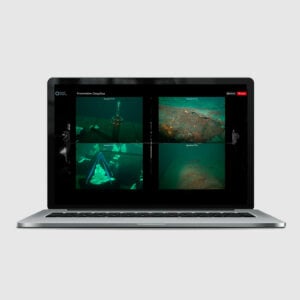
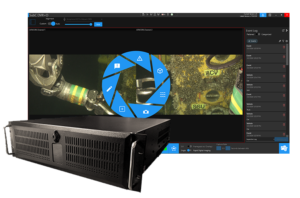
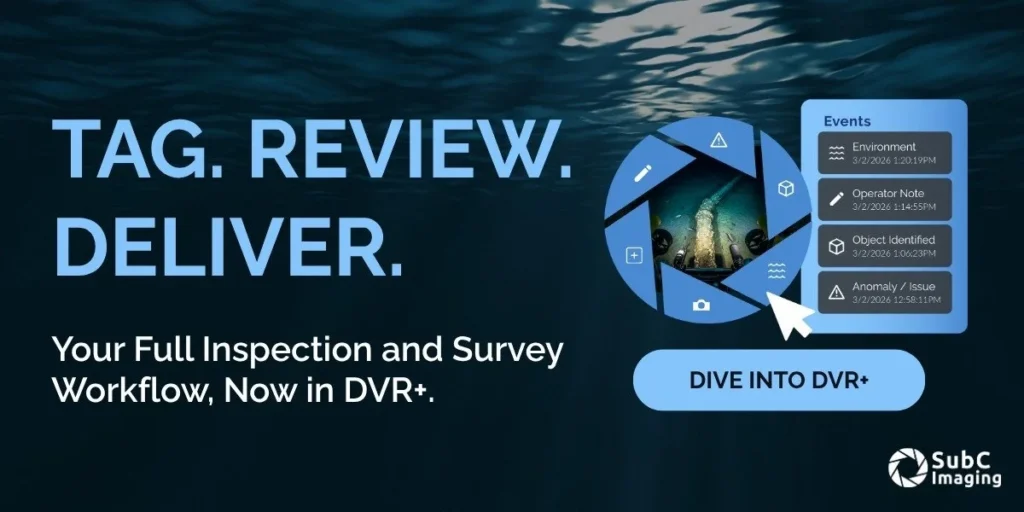
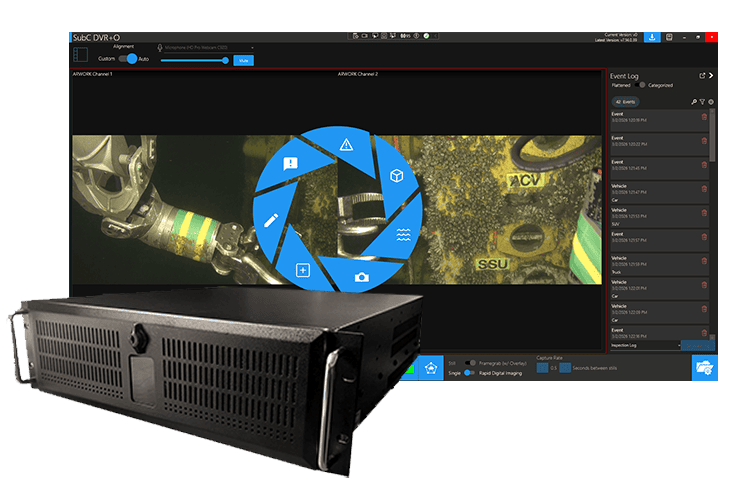
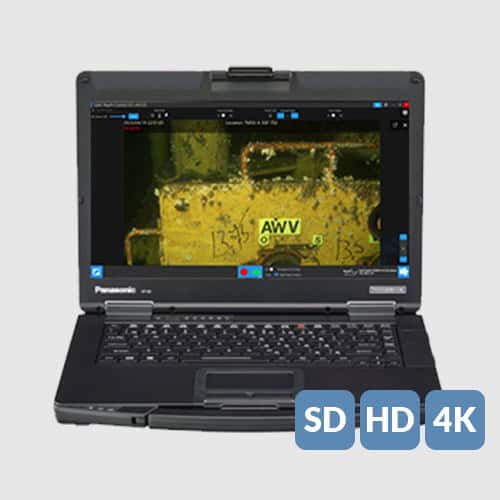
DVR with Overlay Video Recording Software by SubC Imaging
Unmanned platforms use video recorders to document inspections of pipelines, power lines, industrial facilities, bridges, and other infrastructure. High-resolution footage allows operators to review visible structural conditions, identify potential defects, and maintain inspection records. Onboard recording is particularly valuable when wireless links cannot consistently transmit the full-quality camera feed.
Video recording systems support emergency response teams operating drones and unmanned ground vehicles during incidents, disaster assessments, and search and rescue missions. Recorded visible-light and thermal imagery provides a reference for reviewing search areas, documenting operations, and assessing changing conditions. Ground-based recording also allows command personnel to retain footage received from deployed platforms.
Drone video capture provides continuous visual documentation during aerial surveys, environmental assessments, and mapping operations. Recorded imagery can support site monitoring, terrain observation, and change detection over time, but video alone does not provide survey-grade mapping. Where accurate geospatial measurements are required, synchronized positioning data, camera calibration, and suitable processing workflows are essential.
Video recorders support remotely operated and autonomous ground and maritime platforms by preserving footage from navigation, inspection, and observation cameras. UGV recording can document route conditions and operational activity, while USV systems can capture surrounding maritime environments.
For underwater operations, ROV DVR and underwater camera DVR equipment capture visual evidence during subsea inspections, pipeline surveys, and maintenance activities. Multi-channel systems can preserve simultaneous views from navigation and inspection cameras.
Drone video recorders must interface with cameras, control electronics, storage devices, and onboard power supplies. Integration requirements depend on the recording architecture and the wider unmanned system.
Reliable integration also requires sufficient data throughput and storage write performance to sustain the required recording resolution, frame rate, and number of video channels.
Video recording equipment may need to satisfy video format, environmental, and interoperability requirements, particularly for defense and industrial unmanned systems.

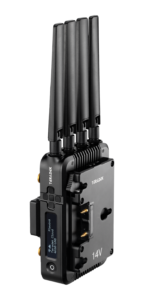
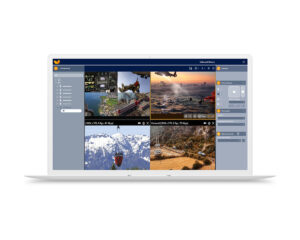
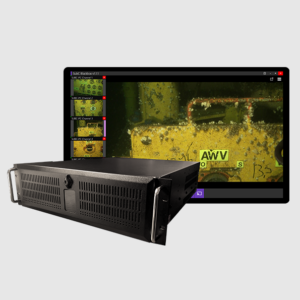
FireLight™ Video Platform by Videosoft Global
Compliance requirements depend on the intended platform, operating environment, and procurement specification. Video format compatibility, metadata interoperability, and environmental qualification should therefore be evaluated separately.
Choosing a drone recorder requires balancing recording performance, physical integration, and the operational demands of the unmanned platform.
| Selection Consideration | Key Requirements |
|---|---|
| Onboard vs. Ground-Based Recording | Onboard recording preserves locally captured footage during communication interruptions, while ground-based recorders store video successfully received over the downlink. |
| Camera Interface and Format Compatibility | The recorder must support the camera’s output interface, video resolution, signal format, and any required decoding or encoding functions. |
| Resolution, Frame Rate, and Compression | High-resolution and high-frame-rate recording can preserve greater image detail and motion information but typically increases processing and storage requirements. Compression settings influence both file size and recorded image quality. |
| Number of Video Channels | Multi-channel recorders must provide sufficient simultaneous input capacity and processing throughput for the platform’s installed cameras. |
| Storage Capacity and Media | SD cards, embedded flash memory, and solid-state drives offer different capacity, endurance, and integration characteristics. Storage selection should account for recording duration, sustained write speeds, and data retrieval requirements. |
| Power Consumption and Physical Dimensions | Miniature drone DVR modules can reduce integration demands on small UAVs, while larger systems may offer additional connectors, processing capacity, and storage options. |
| Mission Computer and Data Link Integration | Control interfaces and communications compatibility determine how recording operations can be managed locally or remotely. Integrated streaming and recording systems can reduce the need for separate video-processing devices. |
| Metadata, Synchronization, and Security | Mission-critical applications may require GNSS timestamps, synchronized sensor data, encrypted storage, access controls, and mechanisms for verifying recorded file integrity. |
Operating temperature, shock and vibration resistance, file integrity and recovery following unexpected power loss, and secure access to recorded data are also important considerations for recorders installed on unmanned platforms.
A suitable video recording system should provide dependable footage capture within the platform’s available power, space, and data storage limits while supporting the required mission workflow.


 Searching Companies & Products