
Showcase your capabilities
If you design, build or supply Video Data Links (VDL), create a profile to showcase your capabilities and connect with visitors who have an active requirement for your solutions.



Find Video Data Link (VDL) manufacturers and suppliers of video transmitters for drones and unmanned vehicles; UAV, UAS, UGV, USV and robotics. Including FPV video transmitters and receivers
Read the Technology Overview




BVLOS UAV Satellite Datalinks for Real-Time Telemetry, Imagery & Data Streaming

Mission Enablement for Uncrewed Systems: BVLOS Connectivity, GPS-Denied Positioning & Fleet Insights

Advanced RF, Navigation & Electronics Solutions for UAVs & Autonomous Systems

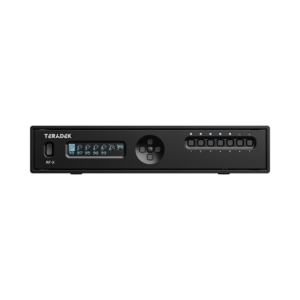
Mission-Critical Video Transmission & Streaming Solutions for UAVs & Ground Robotics

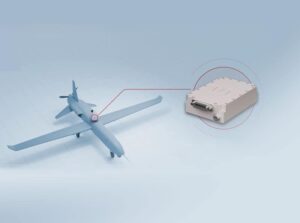
Anti-Jam GPS-GNSS Devices, Tactical Data Links, Telemetry Systems, Electronic Warfare Equipment & Flight Termination Systems

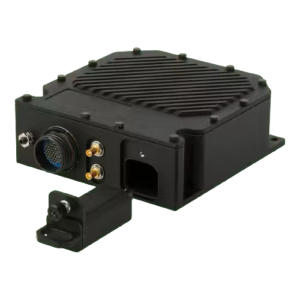
Edge AI Video Processing & Streaming Solutions Providing Real-Time Situational Awareness for Mission-Critical UAVs & Unmanned Systems

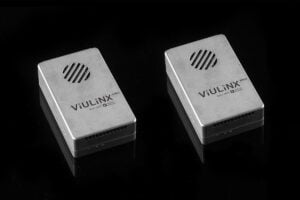

Ultra-Low-Bandwidth Real-Time Video Streaming Solutions for UAVs, Unmanned & Robotic Systems

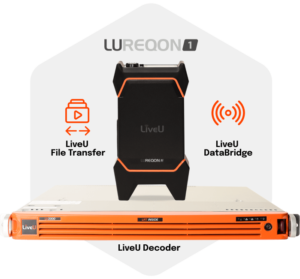
UAS Video Streaming Technology: Secure, Low-Latency, Live Video Streaming and Transmission Solutions

ASVs for Tactical Maritime Missions | UAV Components: SAR, Radar Altimeter, Data Links, Telemetry, GNSS Products & C-UAS

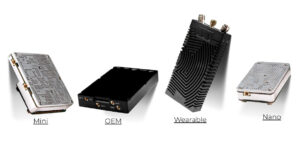
Mesh Radio, WiFi Transceivers & Wireless Mesh Network Technology for Drones, UAVs, UGVs & Robotics


Professional UAV Components & Sensors: Drone Flight Controllers, GNSS Modules, Telemetry Solutions

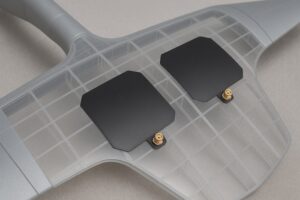
UAV Antennas, Tracking & Video Solutions for Mission-Critical Connectivity, Real-Time Visibility, & Robust Communications

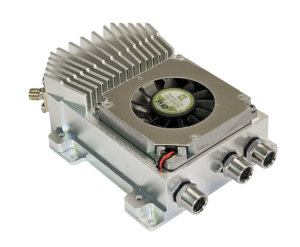

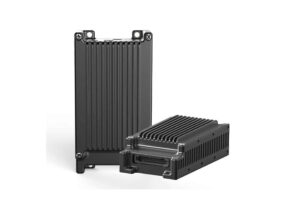
Cognitive Wireless MANET Radio & Mesh Technology for Tactical, Mission-Critical Datalinks

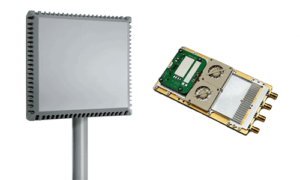
Wireless Radio Communications, Tactical Data Links & Radio Transceivers for Unmanned Systems

If you design, build or supply Video Data Links (VDL), create a profile to showcase your capabilities and connect with visitors who have an active requirement for your solutions.
No products available No products available from suppliers based in . View products from all territories

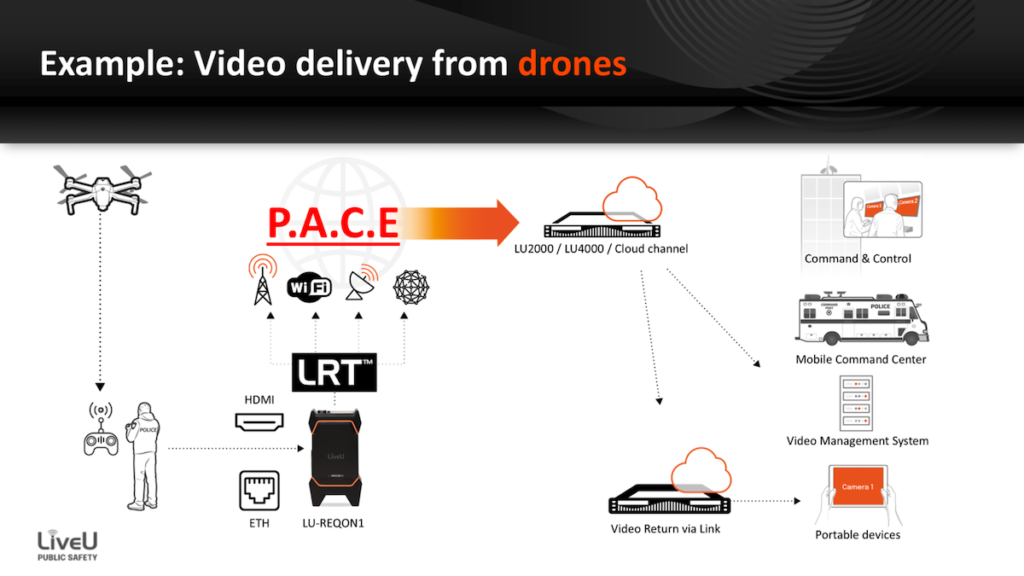
Wireless Video Data Links (VDLs) carry video between an Unmanned Aerial Vehicle (UAV), Unmanned Ground Vehicle (UGV), or other unmanned vehicle and a ground station or another network endpoint. A UAV video link may support surveillance or inspection recording, or provide a live feed for situational awareness and decision-making. Live video feeds can be particularly important for safe remote operation, as with no pilot physically present in the vehicle, the feed may be the operator’s primary means of observing the vehicle’s surroundings. A UAV data link system may also carry telemetry, control commands, and other payload information alongside video.

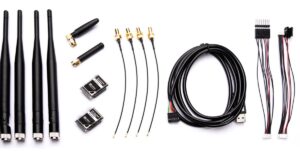
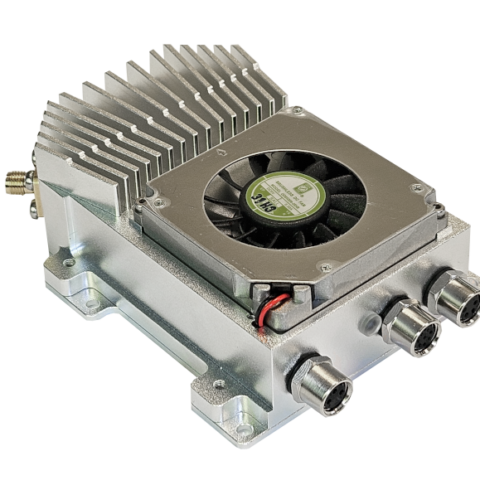
SL200 Software-Defined Radio Link Module by Simpulse
A direct UAV data link typically benefits from Line-of-Sight (LOS) propagation. Some radios also support Non-Line-of-Sight (NLOS) operation through reflected or diffracted signals, depending on terrain, obstructions, and link conditions. For coverage beyond the direct radio horizon, relay stations may extend the communications range, or the vehicle may communicate through cellular networks or Satellite Communications (SATCOM). These options can support long-range military UAVs and Beyond Visual Line of Sight (BVLOS) drones, although BVLOS operation does not necessarily mean the radio link is NLOS.
Drone video links use various frequency bands, including sub-1 GHz bands and commonly used 2.4 GHz and 5.8 GHz bands, with higher-frequency bands used in some specialist systems. Available frequencies for civilian drone use vary by jurisdiction, with some bands restricted to particular services or military applications. Higher frequencies may offer access to wider channels, but data transfer rates also depend on channel bandwidth, modulation, and signal quality. Range and obstacle penetration depend on frequency, antenna configuration, transmit power, and other link conditions.
Point-to-point links connect two radio endpoints, while point-to-multipoint and mesh systems support networks of vehicles and ground stations. A bidirectional drone data link may carry video, telemetry, and control commands over the same connection, with capacity allocated according to the application’s requirements.
A digital video link for critical applications such as Intelligence, Surveillance, and Reconnaissance (ISR) may need to carry High-Definition (HD) video to provide useful detail on targets. In addition to daytime camera footage, UAV video links may carry imagery from other payloads such as night-vision or thermal infrared cameras. Some systems support multiple video streams over the same downlink, as well as metadata, Internet Protocol (IP) data, and audio feeds. Digital video can also be encrypted using the Advanced Encryption Standard (AES) with 256-bit keys, supported by appropriate authentication and key management.
Available link capacity and delivered throughput can vary during a mission because of physical obstacles, interference, environmental conditions, or transitions between LOS and satellite links. Where supported, onboard video encoders can adjust bitrate, resolution, or frame rate in response to changing data link capacity to maintain a usable feed. Traffic prioritization can help preserve command and telemetry delivery when these share the video link.
End-to-end latency is particularly important for remote piloting. Encoding, buffering, transmission, decoding, and display processing all contribute to the delay between image capture and viewing, so radio latency alone does not describe the complete video delay.
In addition to military ISR, drone video data links support commercial and industrial applications such as infrastructure and utilities inspection, wildfire monitoring, and environmental research. First-Person View (FPV) video links are also used for sport drone racing, where low latency supports responsive piloting.
As the number of sensors on an unmanned vehicle increases, along with their video resolution and frame rates, so does the potential volume of video data requiring transmission. Video compression algorithms such as H.264 and H.265 reduce bandwidth requirements by removing redundancy and, with lossy compression, some image information. Compression settings must therefore balance data reduction against the detail needed for the application. More complex encoding can require greater onboard processing, so video quality and data link requirements must be balanced with the vehicle’s Size, Weight, and Power (SWaP) limitations.
Additional selection considerations include:
Selecting a suitable UAV data link system requires matching these capabilities to the mission’s video quality, latency, and connectivity requirements under expected operating conditions.


 Searching Companies & Products