


Showcase your capabilities
If you design, build or supply Octocopter, create a profile to showcase your capabilities and connect with visitors who have an active requirement for your solutions.



Octocopter drone platforms are multirotor Unmanned Aerial Vehicles (UAVs) with eight propulsion units, designed for high-lift capacity, stability, and fault tolerance in demanding missions. These aircraft are used to carry LiDAR, ISR payloads, and delivery systems for inspection, geospatial mapping, and defense operations.
This page features leading octocopter drone manufacturers and octocopter UAV suppliers, offering flat and coaxial configurations that balance efficiency and compactness.
Read the Technology Overview


Innovative Turnkey UAS Solutions for Mission-Critical Civilian & Defense Applications

NDAA-Compliant Heavy-Lift Drones | Certified Drone Parachutes | Engineering & Flight Operations Support

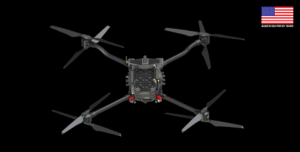
Cutting-Edge USA-Made Helicopter & Multirotor UAVs for Demanding Industrial Applications

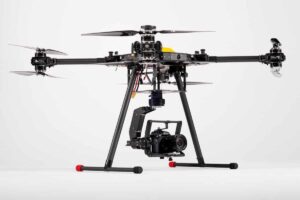
Cinematography Drone Camera Gimbals, Mounts & Stabilizers - Custom and COTS Gimbals

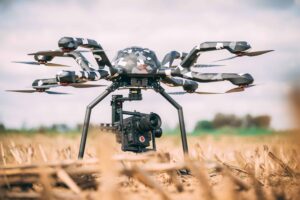
Professional Drones, Quadcopters, Multirotors & Hexacopters for Cinematography, Survey & Inspection

If you design, build or supply Octocopter, create a profile to showcase your capabilities and connect with visitors who have an active requirement for your solutions.

Octocopter drones are advanced Unmanned Aerial Vehicles (UAVs) equipped with eight independent propulsion units. These aircraft occupy a specific segment above quadcopters and hexacopters within the professional unmanned systems ecosystem, serving as a key platform for industrial and defense applications. While smaller platforms are often utilized for agility, the octocopter drone is engineered for high-lift capacity, flight stability, and redundancy.
The primary functional advantage of an octocopter is its distributed thrust architecture. By utilizing eight independent rotors, the system can compensate for the loss of a motor or propeller without a total loss of control, which is a critical safety feature for high-value missions. This fault tolerance makes them suitable for operations over sensitive assets or populated areas. Compared to hexacopters, a drone with eight propellers offers increased control authority and higher payload margins for complex engineering and defense tasks.
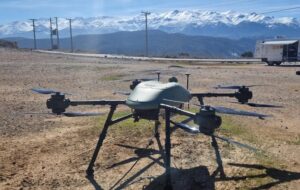
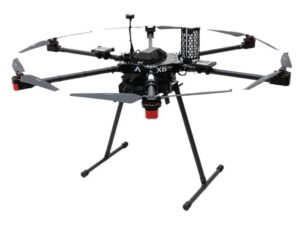
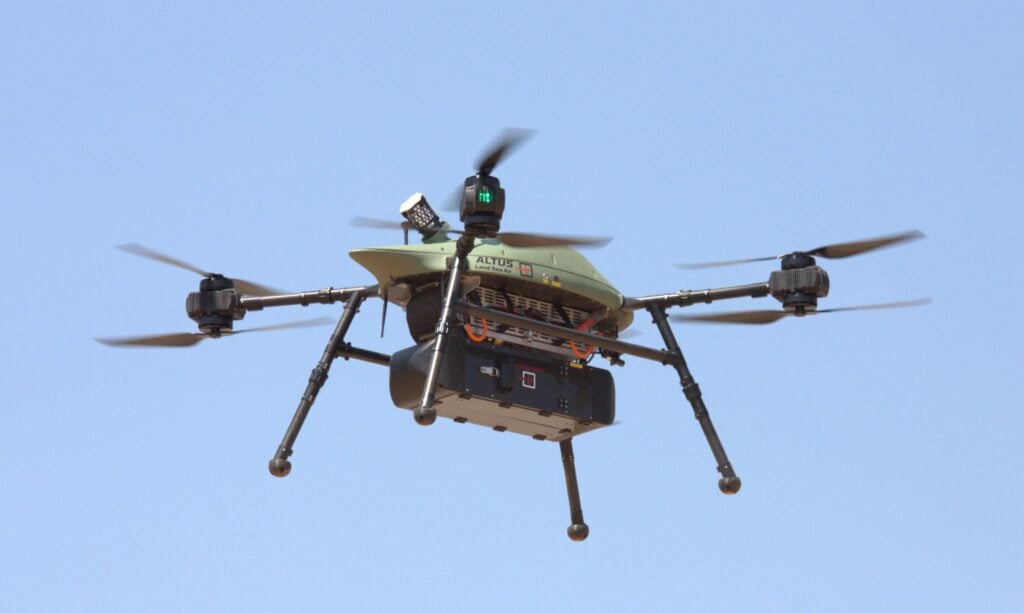
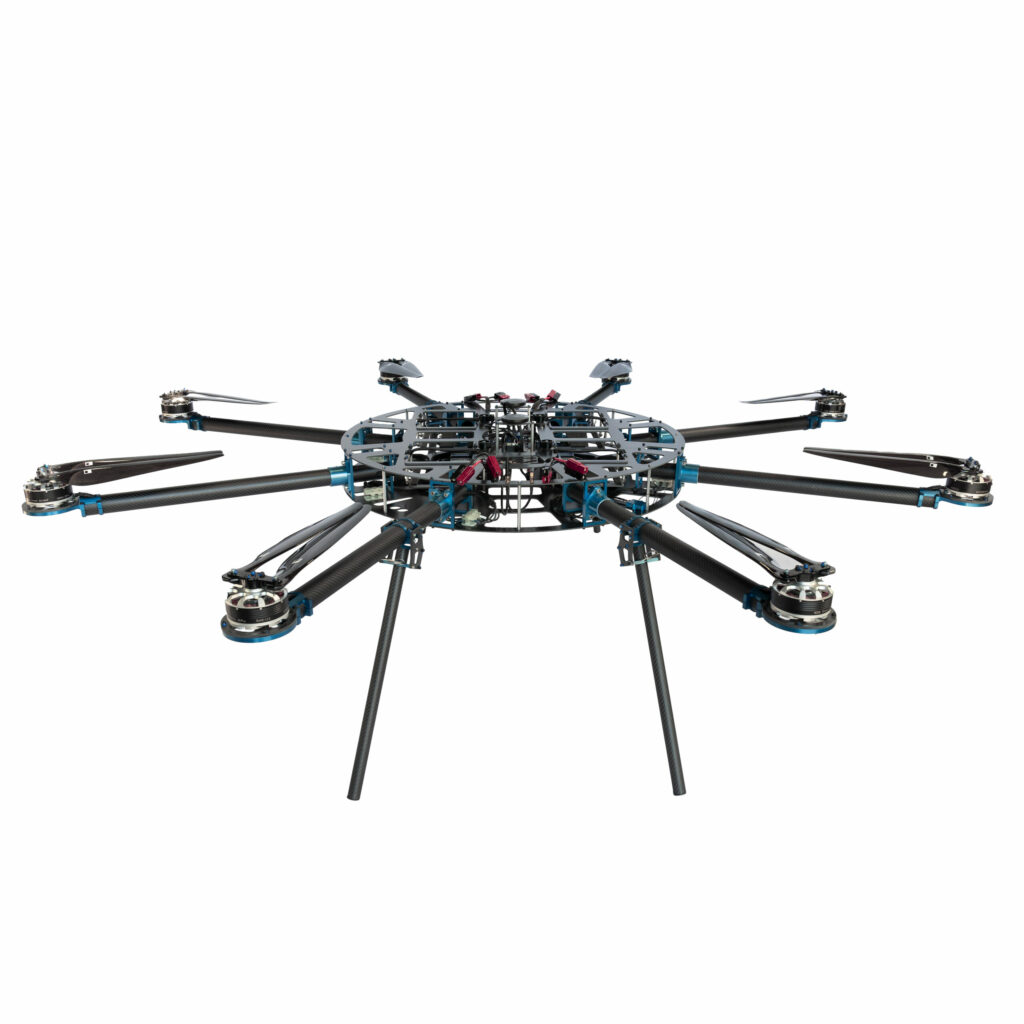
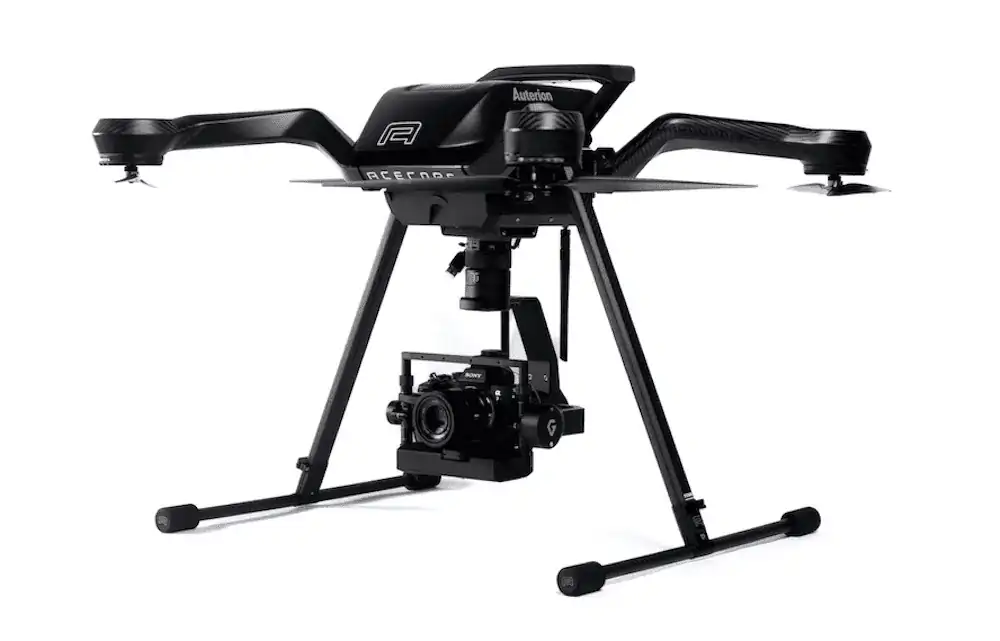
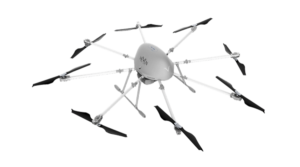
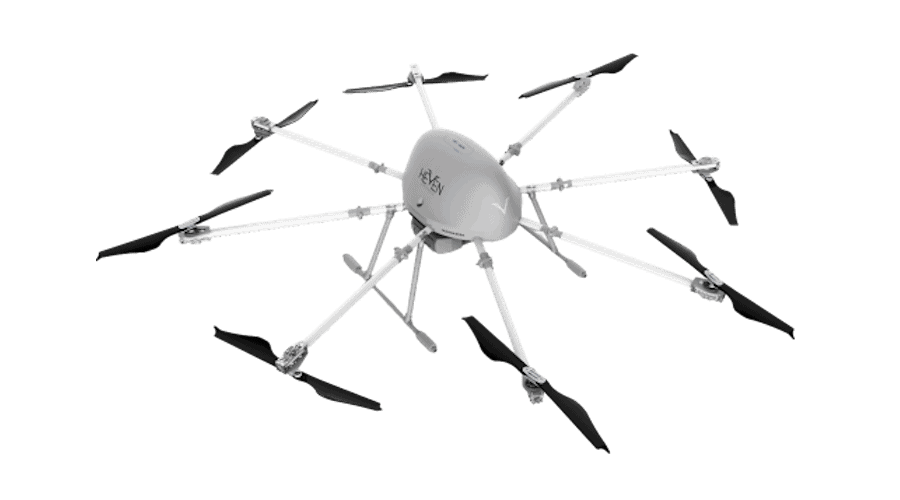
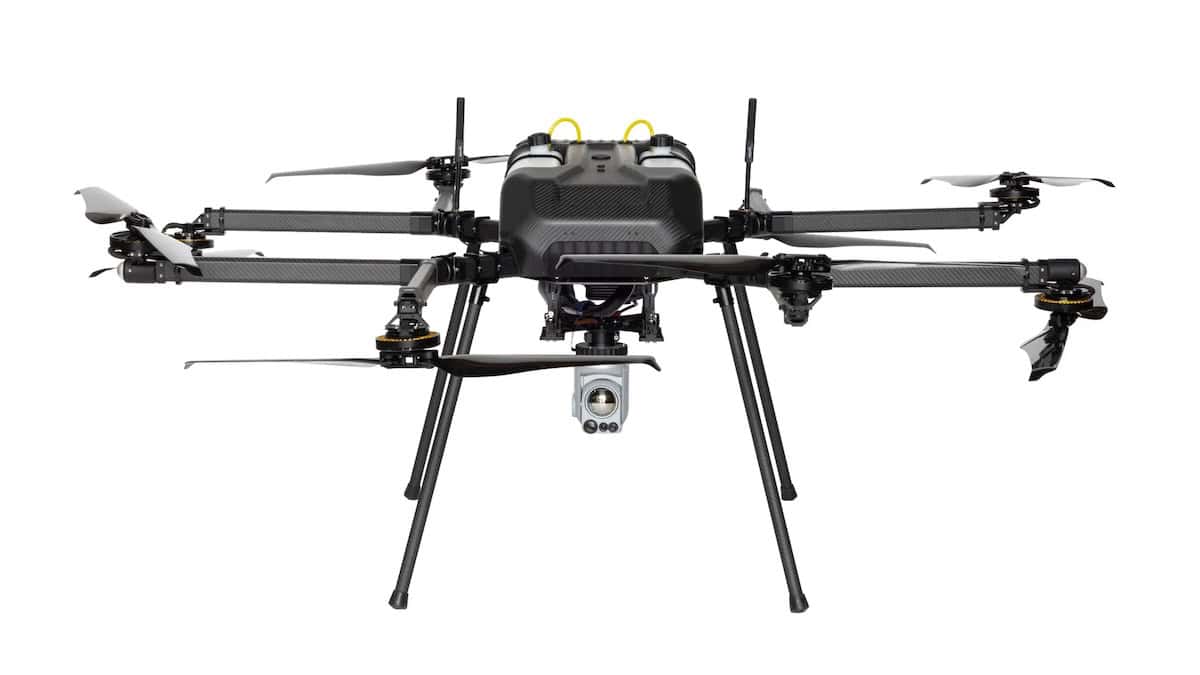
ATLAS 8 heavy lift octocopter by Altus LSA.
The airframe serves as the foundation of the octocopter UAV, determining its mechanical footprint and aerodynamic efficiency. Engineers typically utilize two primary layouts:
Material science is central to the construction of an octocopter frame. High-modulus carbon fiber composites ensure the frame can withstand the torque of eight motors while maintaining a low-weight profile. For a heavy-lift octocopter frame, manufacturers often integrate CNC-machined aluminum alloys at stress points like folding arm joints. This ensures load distribution and structural redundancy, allowing the platform to tolerate localized stress during high-G maneuvers.
The 8-motor thrust architecture provides control granularity that is not possible with fewer rotors. In a heavy-lift octocopter, the propulsion set consists of large, slow-turning propellers paired with high-torque brushless motors. This setup is optimized for thrust efficiency rather than raw speed, providing a stable platform for sensitive sensors.
Electronic Speed Controllers (ESCs) act as the link between the flight controller and the motors. They are precision-calibrated to ensure synchronization across the 8-rotor drone array. Professional-grade ESCs feature real-time telemetry and health monitoring, allowing the system to detect an impending motor failure before it occurs.
Power density is a primary constraint for any large octocopter due to high current requirements.
Power distribution boards (PDBs) are designed with redundancy to prevent single-point electrical failures. Because eight motors consume more energy than four, engineers balance the endurance versus payload trade-off. Increasing battery capacity adds mass, which eventually reaches a point of diminishing returns for total flight time.
The flight controller acts as the central intelligence of the platform. It integrates data from a suite of sensors including Inertial Measurement Units (IMUs), Global Navigation Satellite Systems (GNSS), barometers, and magnetometers. Redundancy is a core requirement. Professional systems often feature triple redundant IMUs and dual GNSS receivers to ensure navigation remains accurate if a single sensor fails or encounters interference.
A heavy-duty octocopter drone is built to carry hardware that smaller UAVs cannot support. Their high-lift capabilities allow for the integration of LiDAR scanners, high-resolution cameras, or tactical delivery systems. To maintain data quality, these platforms use payload stabilization and mounting systems that decouple the sensor from high-frequency motor vibrations during flight.
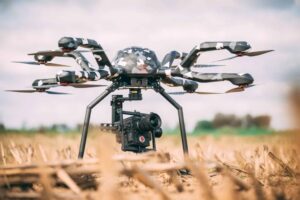
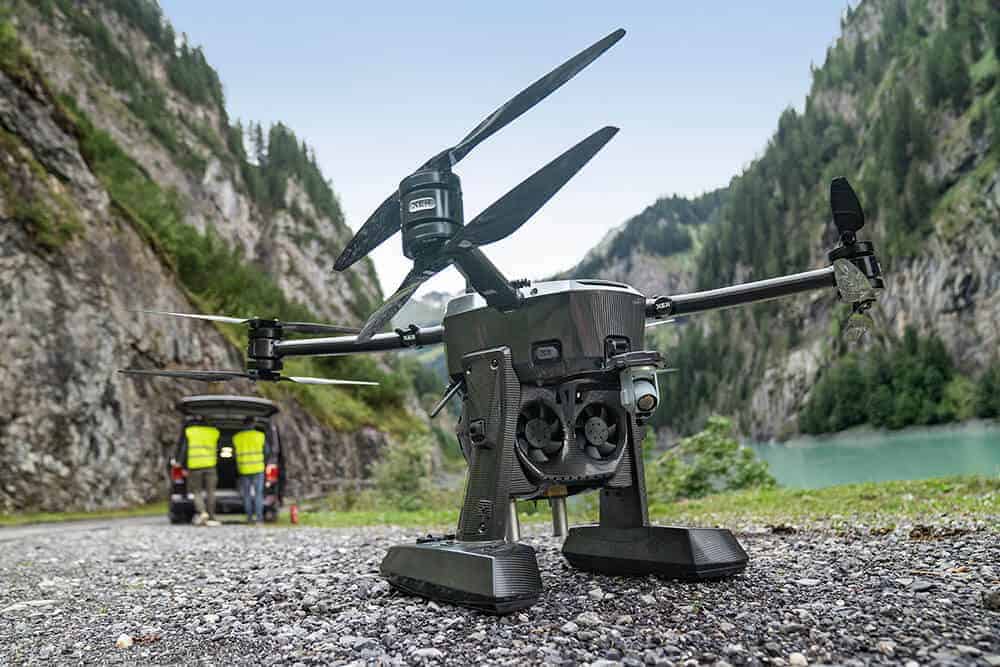
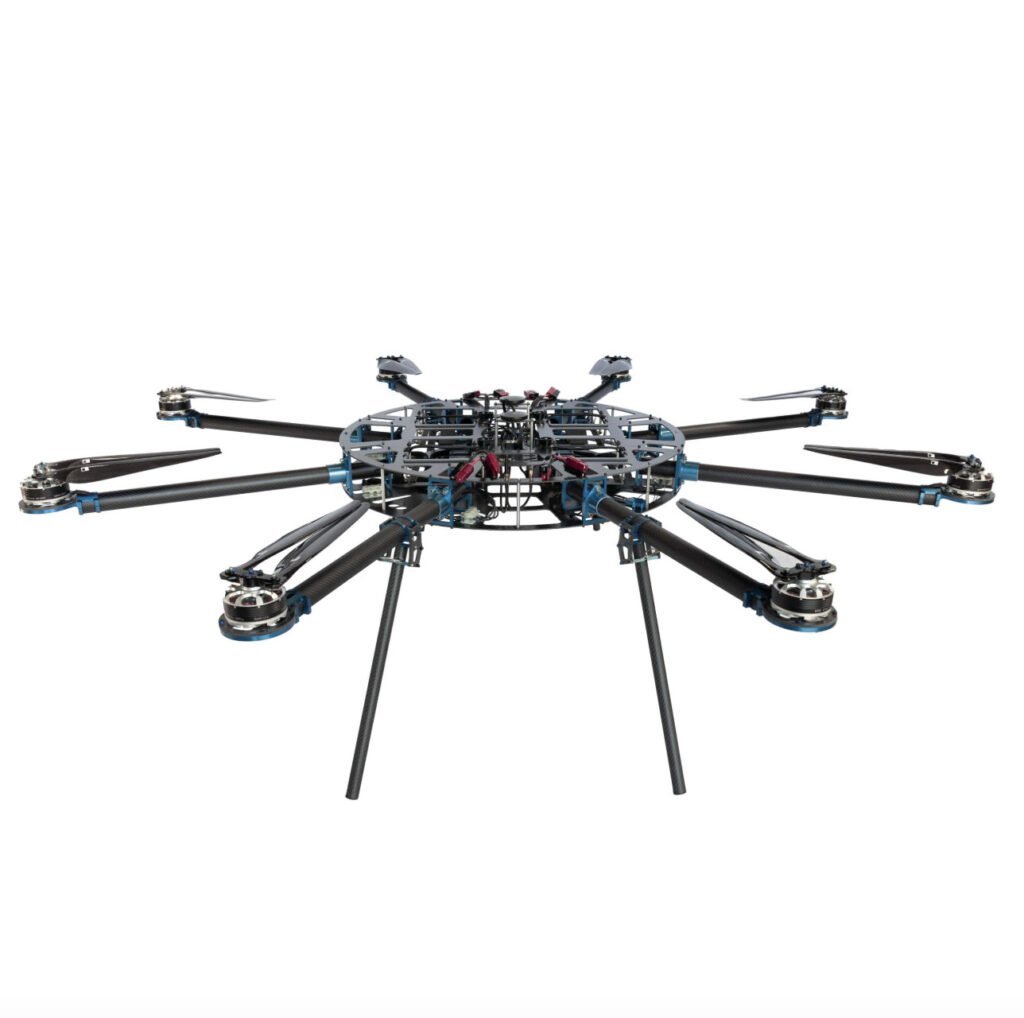
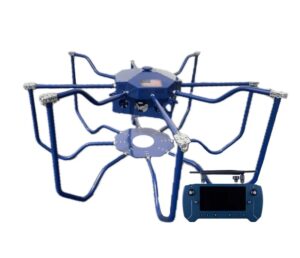
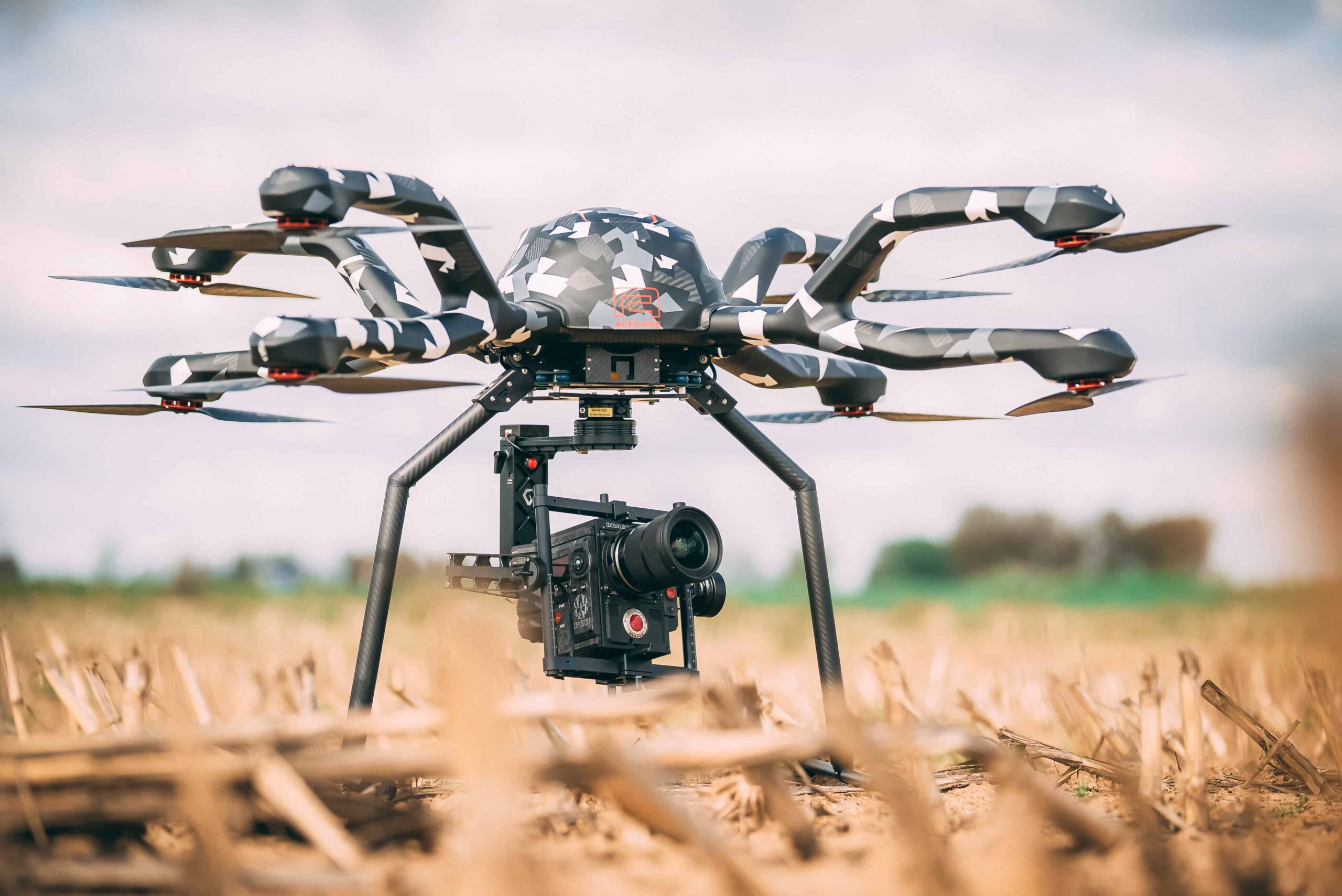
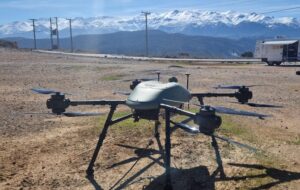
Acecore Neo Octocopter by Acecore Technologies.
The technical driver for an 8-motor drone is its motor failure resilience. If one or two non-adjacent motors fail, the flight controller redistributes thrust to maintain level flight. This stability extends to adverse conditions, where the mass and distributed power of the platform provide wind resistance superior to lighter multirotor systems, allowing for operations in gusty environments.
The use of eight rotors increases energy consumption compared to smaller UAVs. To optimize missions, operators use aerodynamic refinements and mission planning to minimize unnecessary hovering. Efficiency is further improved through high-efficiency propellers and low-resistance power wiring designed to handle high current loads over extended flight durations.
Octocopters are designed for field use and possess high weather tolerance, with industrial models rated for operations in light rain or snow. Pilots must respect operating altitude and temperature constraints, as air density and battery chemistry impact lift and discharge rates in extreme environments. Operational success depends on adhering to these hardware limits to ensure the longevity of the systems.
In the defense sector, military octocopter drones are used for ISR (Intelligence, Surveillance, and Reconnaissance), perimeter security, and tactical deployment. Their ability to carry heavy jamming equipment, multiple sensors, or supply payloads makes them versatile tools for contested areas. The redundancy of eight motors ensures that the aircraft can return to base even after sustaining minor damage to the propulsion system.
The stability of the octocopter is utilized for inspecting power lines, pipelines, and offshore platforms. They carry thermal and zoom cameras to identify structural defects or gas leaks without putting human inspectors in dangerous positions. The 8-motor configuration allows for very steady hovering near structures, which is essential for capturing high-resolution imagery in turbulent coastal or industrial environments.
Octocopters are used for high-precision mapping where data accuracy is the highest priority. They provide a steady platform for LiDAR and photogrammetry, ensuring geospatial data is accurate for engineering and construction projects. The ability to carry heavier, more precise sensors allows for deeper penetration in forested areas or more detailed 3D modeling of complex urban infrastructure.
For heavy-lift delivery use cases, octocopters offer the necessary reliability for transporting valuable or time-sensitive cargo. They are utilized for the transport of medical supplies to remote areas or the delivery of critical parts to offshore vessels. The reliability of the 8-propeller drone system is a prerequisite for receiving flight permits for cargo operations in many international jurisdictions.
Search and Rescue (SAR) teams deploy octocopters to cover large areas quickly after a disaster. Their payload flexibility allows for the simultaneous use of thermal cameras, spotlights, and communication relays, providing incident commanders with situational awareness. The aircraft can remain stable in the high winds often associated with storm response, making them reliable assets for emergency services.
The ability to swap and integrate various sensors is what makes the octocopter a multi-mission tool across scientific and industrial fields.
This versatility ensures that a single airframe can be adapted for a wide variety of data collection or logistics tasks.
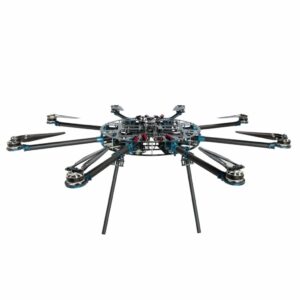
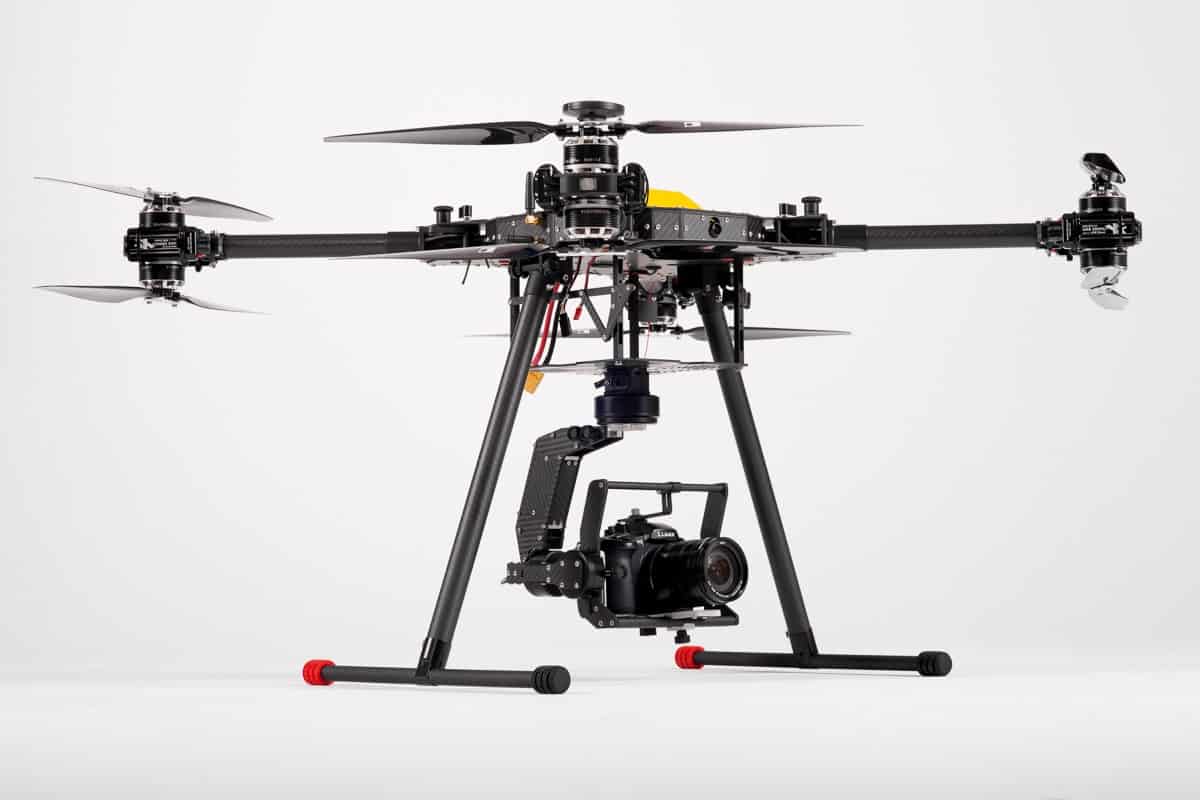
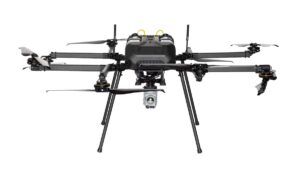
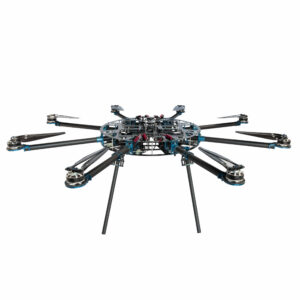
HLM Industrial Octocopter by Aero Systems West.
Reliable communication is the backbone of safe flight operations, especially when operating heavy platforms in complex environments.
These systems work together to provide a secure and stable link between the aircraft and the ground control station.
While RTK and PPK positioning systems provide centimeter-level accuracy, octocopters are increasingly capable of navigation in GNSS-denied environments. Using visual navigation and SLAM (Simultaneous Localization and Mapping), these drones can operate in tunnels, under bridges, or inside buildings. This capability expands the operational envelope of the octocopter UAV into areas where traditional GPS signals are unavailable.
Autonomy allows for waypoint navigation and dynamic rerouting based on real-time environmental changes. Obstacle avoidance systems using ultrasonic, LiDAR, or stereo vision sensors ensure the octocopter can navigate complex environments with minimal human input. This reduces the cognitive load on the pilot and allows for more precise execution of repetitive tasks like grid-based agricultural or industrial surveys.
Onboard AI processors allow for real-time object detection and tracking directly on the aircraft. By processing data at the edge, the drone can identify a target or a structural defect instantly, reducing the requirement for high-bandwidth data transmission. This enables the platform to act as an intelligent sensor, only transmitting the most relevant information to the operator during a mission.
The safety profile of an octocopter is defined by its ability to handle failures and operate within strict aviation guidelines.
These features ensure that the platform can meet the certification standards required for integration into shared global airspace.
The development of the octocopter is defined by hybrid propulsion for extended endurance and the rise of swarming technology for collaborative UAV operations. There is a shift toward increased autonomy where AI-driven missions require minimal human input for decision making. Furthermore, the use of advanced materials like 3D-printed octocopter components and lightweight composites is changing the design of these heavy-lift systems. These advancements suggest a future where 8-propeller drones are more capable, efficient, and deeply integrated into complex networked environments.


 Searching Companies & Products