



Showcase your capabilities
If you design, build or supply USV Motors, create a profile to showcase your capabilities and connect with visitors who have an active requirement for your solutions.




USV motors provide electric propulsion for unmanned surface vessels, converting electrical energy into mechanical power to drive propellers, thrusters, and waterjets. These motors are available in outboard, inboard, podded, and submerged configurations to accommodate different vessel designs and propulsion requirements.
This page features suppliers of USV motors and electric outboard motors for autonomous and remotely operated surface vessels.
Read the Technology Overview
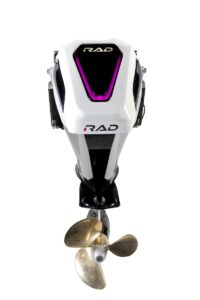
Integrated Electric Propulsion & Vessel Autonomy Solutions for Enabling Autonomous Maritime Operations

If you design, build or supply USV Motors, create a profile to showcase your capabilities and connect with visitors who have an active requirement for your solutions.

Unmanned Surface Vessel (USV) motors provide the mechanical power required to drive propellers, thrusters, and waterjets on remotely operated and autonomous vessels. Electric motors are used across a range of maritime applications, including hydrographic surveying, environmental monitoring, offshore inspection, and maritime security.
USV motors are available in outboard, inboard, podded, and submerged configurations to accommodate different vessel sizes, speeds, and endurance requirements. Motor controllers regulate speed and torque in response to commands from vessel control systems. Key selection considerations include continuous and peak power, torque, efficiency, electrical compatibility, environmental protection, and integration with autonomous vessel controls.
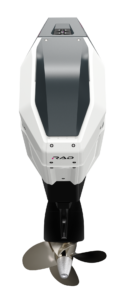
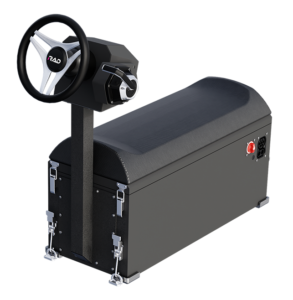
Electric outboard motors are externally mounted units that combine an electric motor with a propeller drive and, in steerable configurations, directional control. They are particularly suited to small and medium-sized USVs due to their relatively straightforward installation, servicing, and replacement. Electric outboard motor manufacturers may offer units with remote throttle and steering capabilities, enabling integration with autonomous navigation and vessel control systems.
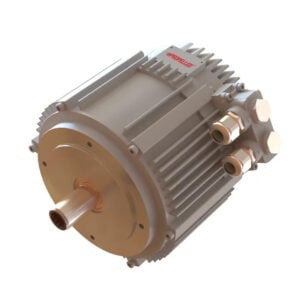
Inboard electric motors are installed within the hull and transmit mechanical power to a propeller shaft or waterjet pump, either directly or through a transmission. They provide flexibility in motor positioning and can accommodate different power ratings and drivetrain arrangements. Installation requires consideration of shaft alignment, transmission efficiency, cooling requirements, and available internal space.
Podded electric motors are housed within external underwater pods, typically driving a propeller directly or through a compact drivetrain. Fixed pods provide thrust in a defined direction, while steerable arrangements can redirect thrust for maneuvering. These configurations can eliminate the need for long drive shafts and are suited to installations requiring compact motor assemblies and integrated directional control.
Rim-driven thrusters use an annular electric motor integrated around the circumference of a propeller or impeller. The stator is housed within the surrounding duct, while the rotor drives the blades through the rotating rim, eliminating the need for a conventional central drive shaft. This arrangement can reduce mechanical complexity and provide a compact underwater drive, although efficiency, noise, and maintenance requirements depend on the specific motor and hydrodynamic design.
Submersible electric motors are designed for underwater installation, using protected windings, sealed electrical connections, and suitable bearing arrangements. Some designs employ oil-filled housings or pressure-compensated construction rather than conventional dry enclosures. These motors are used in submerged thrusters and externally mounted drives where water exposure, pressure resistance, and thermal management are important design considerations.
Electric motors can be installed individually or in multiple independently controlled arrangements, depending on vessel dimensions, maneuverability requirements, and onboard power availability. Common configurations include:
Motor arrangement selection depends on hull geometry, speed requirements, maneuverability, available electrical power, and mission duration. Motor controllers must also support the command interfaces, operating modes, and feedback functions required by the vessel’s autonomous control system.
USV motor specifications vary according to vessel size, displacement, hull design, and operational requirements. The following table outlines key considerations for different types of unmanned surface vessels.
| USV Platform | Motor Requirements |
| Small and Portable USVs | Compact, lightweight motors with low electrical demand and straightforward installation. Electric outboard motors and integrated thruster motors are suitable options for portable survey and monitoring platforms. |
| Medium-Sized Survey and Inspection USVs | Efficient continuous-duty motors with precise speed control for consistent survey operations. Twin-motor configurations can improve low-speed maneuvering and directional control. |
| Large Autonomous Surface Vessels | Higher continuous power ratings, effective cooling, and compatibility with larger electrical distribution systems. Multiple motors may support redundancy and independent control during extended operations. |
| High-Speed USVs | High power density and sufficient torque across the operating speed range. Motors must be matched to propeller or waterjet loads, with adequate continuous and peak power capability. |
| Long-Endurance and Low-Speed USVs | High efficiency at sustained cruising speeds, low standby power consumption, and reliable continuous operation. Motor and propeller matching is particularly important for minimizing energy consumption. |
| Shallow-Water and Nearshore USVs | Compact motors compatible with shallow-draft drive arrangements, with protection against grounding, debris, and sediment. Installation options may include protected propellers, retractable drives, and waterjet pumps. |
USV motors operate in demanding marine environments where moisture, corrosion, vibration, and prolonged operation can affect reliability. Important design considerations include:
For long-duration autonomous missions, motor protection, condition monitoring, and fault detection are particularly important where immediate physical maintenance is unavailable.
USV motors and associated electrical equipment may be subject to marine electrical, environmental, and electromagnetic compatibility (EMC) requirements. Relevant International Electrotechnical Commission (IEC) standards include:
Applicable requirements depend on vessel classification, electrical architecture, operating environment, and the scope of equipment supplied. Suppliers should confirm which standards apply to their motors and provide supporting test documentation where required.
Developments in marine electric motor technology are improving power density, energy efficiency, environmental protection, and compatibility with autonomous vessel controls. Key areas include:
These developments are particularly relevant to autonomous vessels requiring compact electric motors, efficient power utilization, and reliable operation during extended deployments.


 Searching Companies & Products