
Showcase your capabilities
If you design, build or supply Drone Frames, create a profile to showcase your capabilities and connect with visitors who have an active requirement for your solutions.




Drone frames form the structural foundation of unmanned aircraft, supporting propulsion, avionics, batteries, payloads, and landing systems while maintaining the geometry required for stable flight. UAV frames include quadcopter, hexacopter, octocopter, coaxial, foldable, fixed-wing, and hybrid VTOL configurations.
This page features drone frame manufacturers and UAV airframe suppliers, supporting applications ranging from FPV and inspection to mapping, cargo, agriculture, and scientific research.
Read the Technology Overview
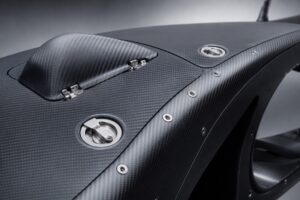
Custom Composite Manufacturing & High-Rate Snap-Cure Production for UAVs

If you design, build or supply Drone Frames, create a profile to showcase your capabilities and connect with visitors who have an active requirement for your solutions.

A drone frame forms the structural foundation of an unmanned aircraft, supporting propulsion, avionics, batteries, payloads, and landing hardware while maintaining the geometry required for stable flight. Frame design affects weight, stiffness, durability, vibration, fatigue life, payload capacity, and maintenance.
The right UAV frame depends on configuration and mission. A frame for compact FPV drone prioritizes low mass and agility, while a frame for an industrial or heavy lift drone must support larger propulsion systems, batteries, and payloads. Fixed-wing and VTOL airframes introduce different aerodynamic, structural, and fatigue demands.
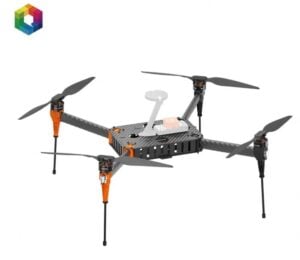
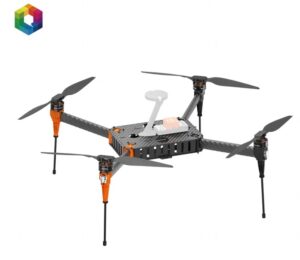
Hexsoon EDU v2 UAV Frame Kits from NW Blue
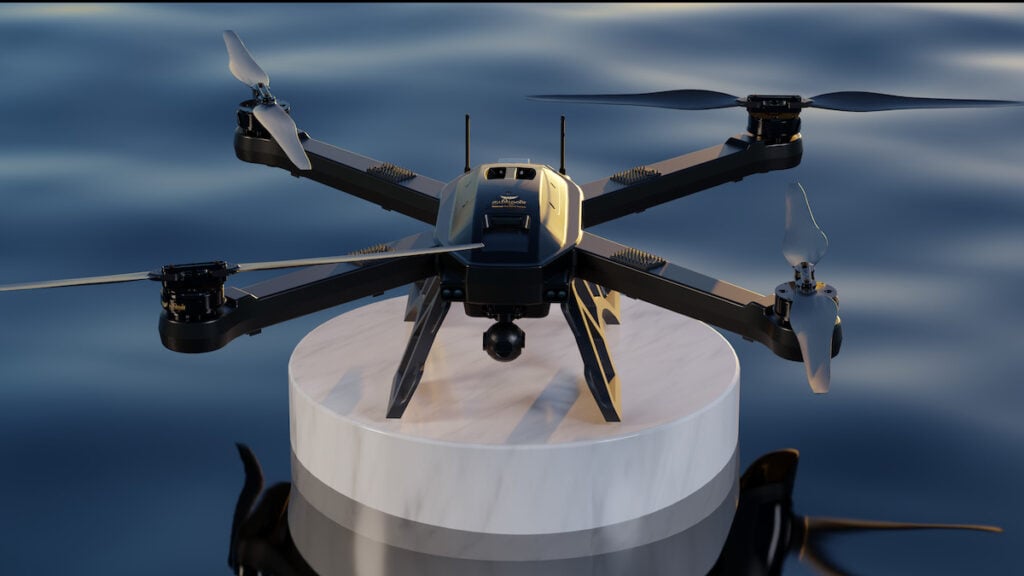
A frame for a quadcopter uses four motor positions around a central body. This low-part-count architecture is common in small UAV frames, FPV drone frames, inspection aircraft, and compact sensor platforms.
Hexacopter frames support six motors, allowing thrust and structural loads to be distributed across additional propulsion points. Depending on the propulsion and flight-control configuration, they can also provide greater tolerance of some motor or propeller failures. They are often used for professional imaging, mapping, and industrial UAVs carrying larger batteries or payloads.
A frame for an octocopter supports eight motors for applications with substantial lift requirements. Octocopter drone frame designs typically need robust central plates, motor mounts, landing structures, and power distribution provisions capable of transferring high concentrated loads.
A coaxial drone’s frame places paired motors on shared arms, with one propeller above the other. This can reduce frame span, although aerodynamic interaction between the propellers can affect efficiency, while concentrated thrust and torque loads require careful structural consideration.
Multirotor geometry influences component space, center of gravity, load distribution, and propeller clearance. X layouts are common for general-purpose quadcopters, while H-style and related FPV frame designs can provide additional central mounting area.
A folding drone frame uses hinges, detachable arms, or telescoping structures to reduce packed dimensions. Joints for foldable drones joints must retain alignment, stiffness, and locking security through repeated deployment, vibration, and operation.
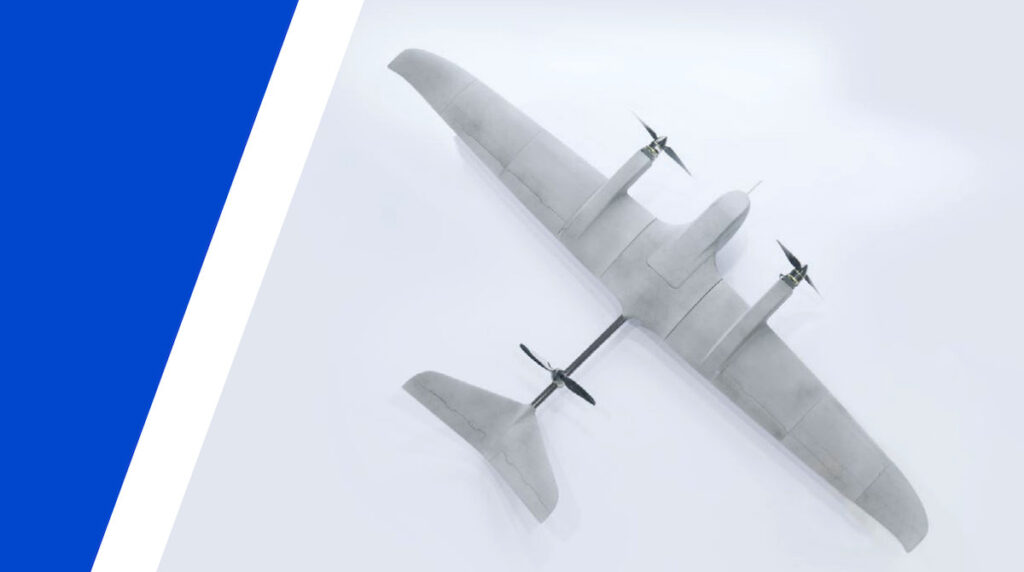
The frame used on a fixed wing UAV distributes loads through the fuselage, wings, spars, ribs, skins, and tail. Fixed wing drone frame design emphasizes aerodynamic efficiency, bending and torsional strength, buckling resistance, and low structural mass.
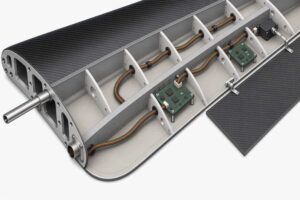
Flight-ready composite structures, including drone airframes, by Fibreworks Composites
Flying-wing and blended-wing airframes integrate much of the structure into the lifting surface. Component placement, control surfaces, antennas, and payload bays must fit within the available aerodynamic volume without compromising structural load paths or center of gravity.
In a VTOL, the frame combines vertical-lift hardware with structures optimized for forward flight. Hybrid UAV airframe design must accommodate lift motors, cruise propulsion, wings, landing loads, and aerodynamic and structural forces generated during transition flight.
Airframes for tilt-rotor drones incorporate movable propulsion assemblies. Their structures must maintain alignment through repeated actuation, placing particular demands on pivots, joints, motor mounts, actuators, and local reinforcement.
Airframe materials are selected according to stiffness, strength, weight, fatigue resistance, manufacturability, environmental exposure, and cost. The table below summarizes common options for drone frames and broader UAV airframe construction.
| Material | Key characteristics | Typical uses |
| Carbon fiber composites | High stiffness-to-weight ratio and directionally tailorable properties | Arms, plates, spars, monocoque structures |
| Fiberglass composites | Good strength and electrical insulation | Fairings, shells, RF-transparent structures |
| Aluminum alloys | Machinable, durable, and repairable | Brackets, joints, motor mounts, central frames |
| Titanium | High strength and corrosion resistance | Highly loaded fittings and specialist components |
| Engineering polymers | Lightweight and easy to mold or print | Housings, ducts, mounts, non-primary structures |
| Sandwich composites | High panel stiffness at low weight | Wings, fuselages, lightweight shells |
A carbon fiber drone frame is common where high stiffness and low weight are priorities. Composite UAV airframe construction can also combine carbon, glass, core materials, and local metal fittings to balance structural, RF, environmental, and manufacturing requirements.
Drone frame design must account for the systems attached to it, since poor integration can introduce vibration, resonance, thermal, balance, maintenance, structural, or electromagnetic problems.
Integrated planning helps prevent the drone chassis from becoming heavier or more complex than necessary as systems are added, while maintaining suitable structural load paths and accessibility.
CNC machining is used for aluminum fittings, carbon plates, motor mounts, and structural interfaces. It provides accurate hole patterns and repeatable geometry for prototype and production UAV frame components.
Composite molding and lamination produce lightweight shells, spars, wings, and monocoque structures. Fiber orientation can be tailored to expected loads, placing stiffness and strength where required, while controlled layup and curing help maintain consistent structural properties.
Injection molding suits higher-volume polymer frame parts, covers, ducts, and housings. It can consolidate several features into one component, although tooling investment generally favors larger production runs.
A 3D printed drone frame can support rapid prototyping, custom mounts, ducts, and low-volume structures. A 3D printable drone frame must still account for directional material properties, heat, fastener loads, fatigue, layer adhesion, and vibration.
Drone frames may combine adhesives, bolts, rivets, inserts, clamps, and bonded composite joints. Joining methods affect repairability, load transfer, structural weight, fatigue behavior, and field servicing within the overall UAV airframe design.
Different missions place different priorities on airframe geometry, payload interfaces, environmental protection, structural life, and transportability.
Application-driven design helps align frame mass and complexity with mission needs rather than adding unnecessary capability.
UAV frame development continues to focus on reducing structural weight, simplifying assembly, improving structural efficiency, and integrating more aircraft functions into fewer components.
These developments are broadening the range of lightweight drone frame architectures available for commercial, industrial, research, and specialist unmanned aircraft.


 Searching Companies & Products