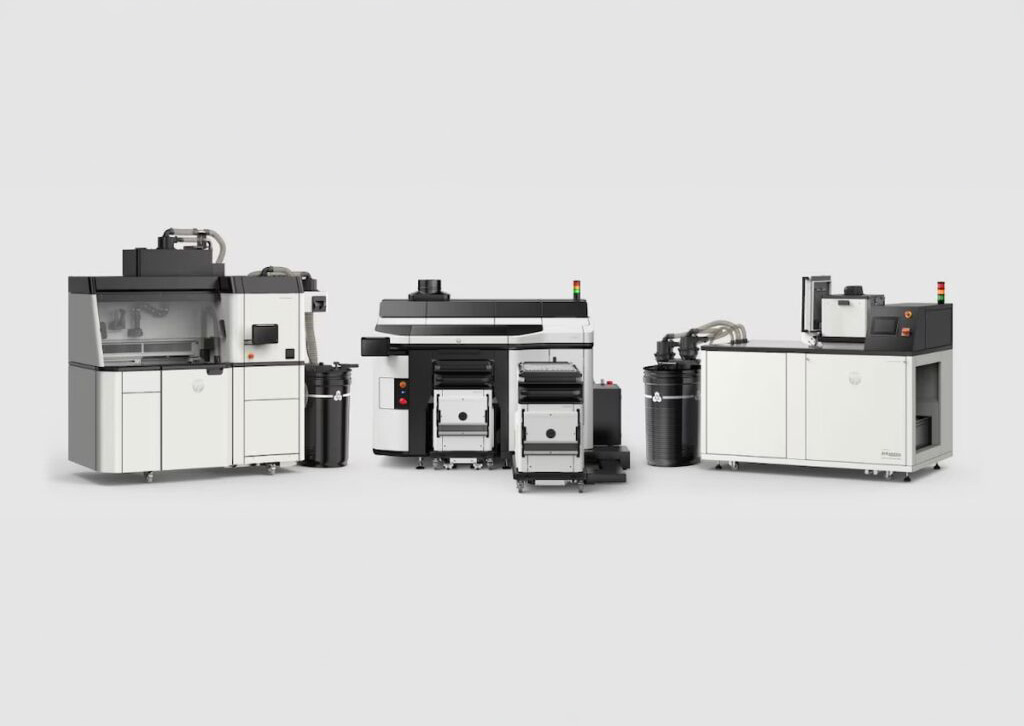
HP Additive Manufacturing Solutions highlights how Multi Jet Fusion (MJF) technology can offer advantages over conventional approaches to lightweight fixed-wing Unmanned Aerial Vehicle (UAV) airframe manufacturing, offering improvements in scalability, assembly efficiency, structural performance, and production flexibility.
Category 1 fixed-wing UAVs typically feature wingspans below two meters and Maximum Take-Off Weights (MTOW) under nine kilograms. These aircraft are widely used across applications that require lightweight construction and scalable production methods.
Conventional UAV airframes are commonly manufactured using Expanded Polypropylene (EPP) foam or carbon fiber composite materials. Foam structures support low-cost production but can present limitations in durability and assembly efficiency, while carbon fiber airframes provide greater strength at the expense of increased manufacturing complexity and cost.
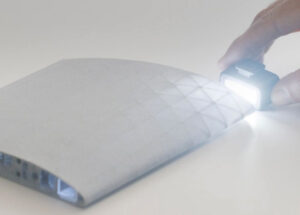 UAV wing and fuselage structures optimized for MJF production can achieve weight characteristics comparable to foam while improving mechanical strength and durability. Additional advantages include simplified part consolidation, reduced lead times, and a more efficient transition from prototyping to production.
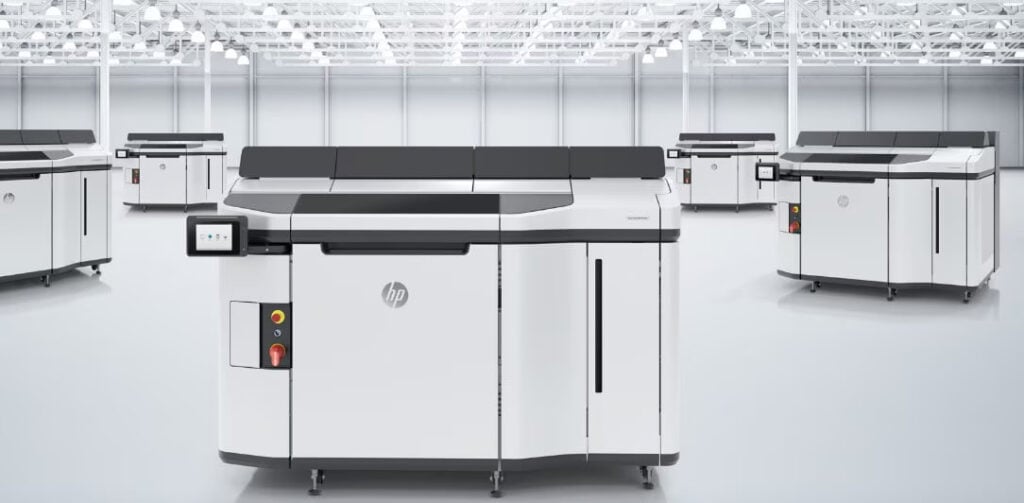
Optimized process parameters combined with the HP Jet Fusion 5600 3D Printing Solution enable drone manufacturers to produce rigid yet lightweight structures with intricate features down to 0.5 millimeters. Design for Additive Manufacturing (DfAM) principles also support accelerated design iteration and production consistency.
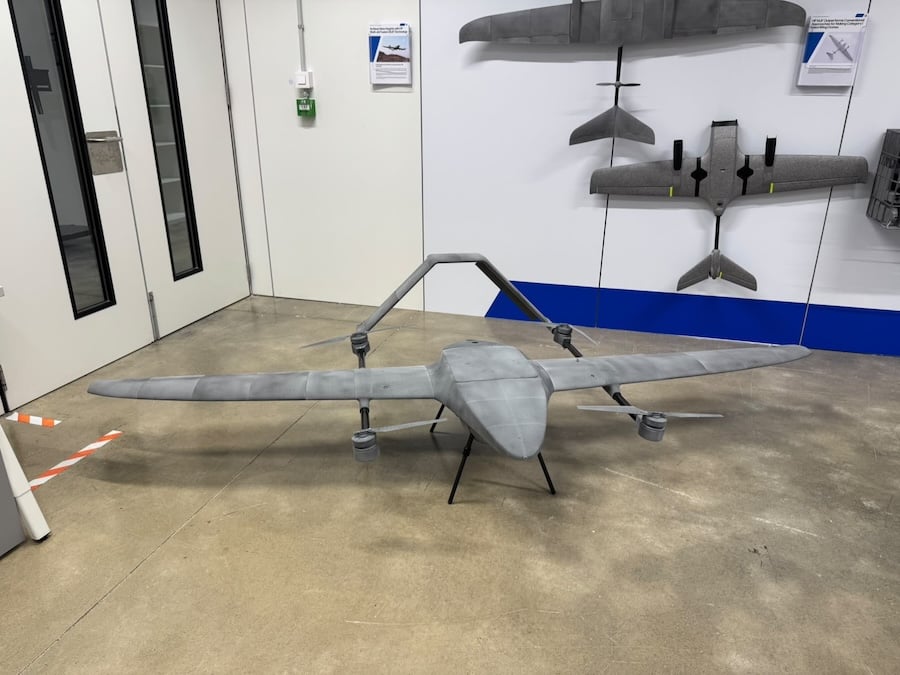
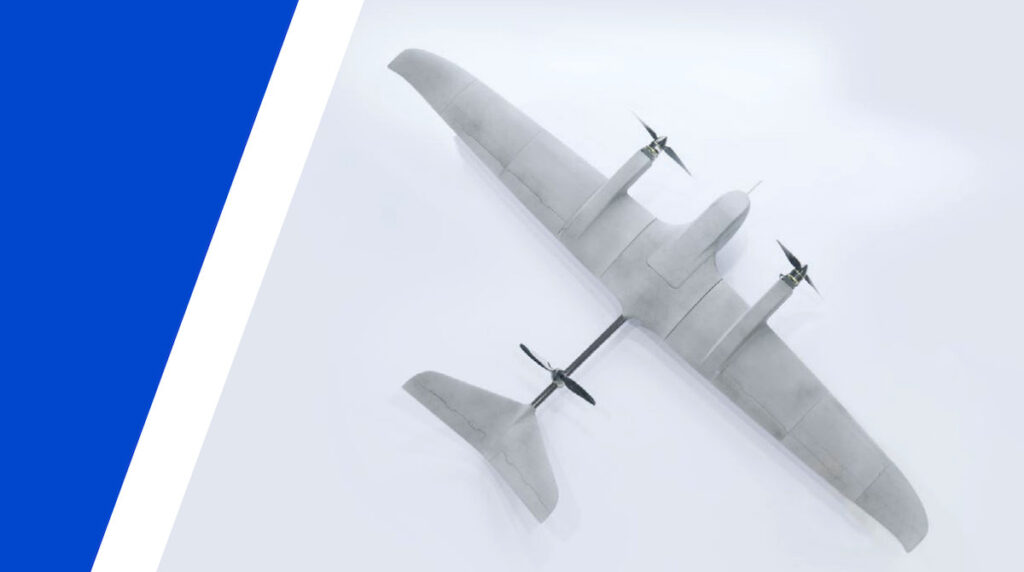
HP Concept S Drone
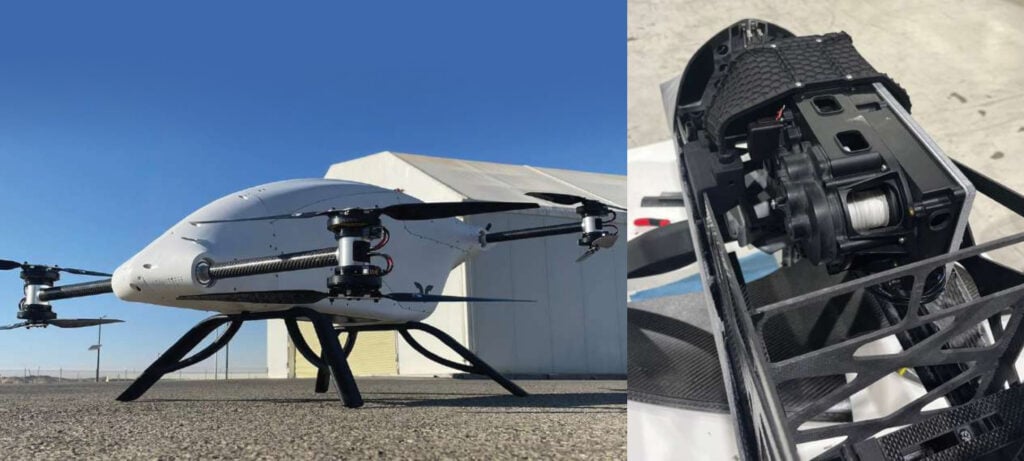
HP Additive highlights its HP Concept S drone demonstrator as an example of how MJF technology can support lightweight structural performance, simplified assembly workflows, and scalable additive manufacturing for Vertical Take Off and Landing (VTOL) fixed-wing UAV platforms.
The HP Concept S drone features a 2.5-kilogram MTOW and a 1.5-meter wingspan. Its optimized structure combines standard carbon fiber profiles with MJF-produced components engineered to support operational loads and safety requirements.
The complete drone can be printed within half of a single build area, enabling annual production capacity exceeding 1,200 units on an HP Jet Fusion 5600 system. The aircraft airframe was engineered with a total weight below 500 grams, with less than 180 grams allocated to the wing structures.
Several design features were incorporated to reduce assembly complexity and labor requirements. Mechanical assembly can be completed in less than 30 minutes using integrated clipping systems that minimize screw usage, while electrical wiring integration is simplified through sacrificial printed features built into the structure.
Three separate design iterations of the platform were developed and tested within a three-month period, demonstrating how MJF technology can accelerate development timelines and support rapid product refinement.
HP Professional Services also provides engineering support and training programs intended to help manufacturers develop UAV airframes optimized for additive manufacturing workflows. Engineering teams can support simulation and wing deflection analysis across varying mission profiles, environmental conditions, and weight distributions.
Learn more about HP Multi Jet Fusion technology for fixed-wing UAV manufacturing.