


Showcase your capabilities
If you design, build or supply Custom Batteries, create a profile to showcase your capabilities and connect with visitors who have an active requirement for your solutions.




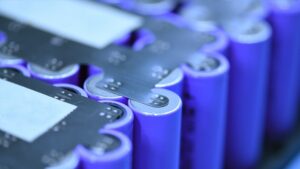
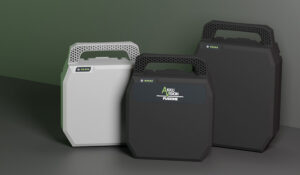
Custom drone batteries are mission-specific energy storage solutions engineered to meet the electrical, mechanical, and environmental demands of Unmanned Aerial Vehicles (UAVs). Designed for fixed-wing and multirotor platforms, custom drone battery suppliers align voltage, current delivery, thermal behavior, and form factor with platform requirements to improve endurance, reliability, and safety.
This category features leading custom battery manufacturers for aerospace and drones, delivering tailored chemistries, pack architectures, and certification-ready designs for defense, industrial, and commercial unmanned systems.
Read the Technology Overview
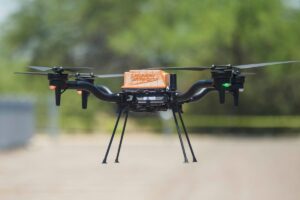
High-Energy Lithium-Metal Batteries for Long-Endurance Drones & Unmanned Systems

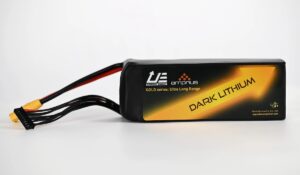
Innovative Battery Technologies | High-Performance Battery Packs for Drones & Unmanned Systems


Custom Lithium Batteries for Drones & UAV - Lithium Polymer Batteries & LiPo Battery Packs

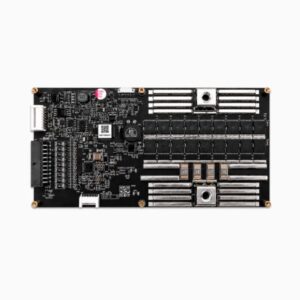
Professional Drone BMS Manufacturer Integrating R&D and Production (ISO 9001:2015)

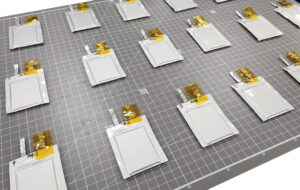
Ultra-Lightweight & High-Energy Density Lithium Battery Solutions for UAVs & Robotic Vehicles

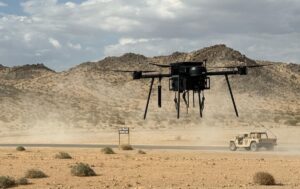
Application-Specific Battery Packs for Drones, Robotics & Unmanned Platforms

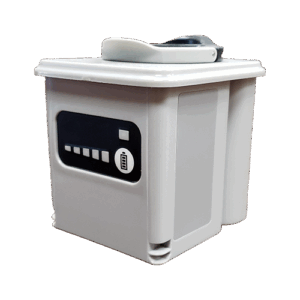
Ultra-Reliable Rugged Hardware Solutions for Mission-Critical UAVs & Unmanned Systems Operating in Extreme Environments

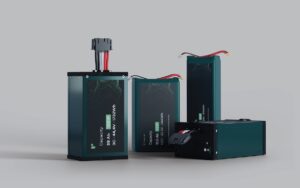
Innovative High-Energy Density Battery Solutions for UAVs and Unmanned Systems

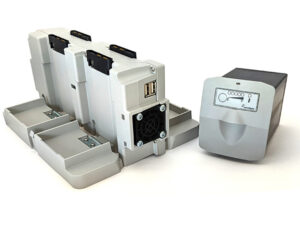
High-Performance Drone Batteries, Power Management Systems, Fleet Management Software, Solar MPPT Integration, Celular C2 & Payload Communications

If you design, build or supply Custom Batteries, create a profile to showcase your capabilities and connect with visitors who have an active requirement for your solutions.

Custom drone batteries are tailored energy storage solutions engineered specifically for individual Unmanned Aerial Vehicles (UAVs), mission profiles, and operating environments. While commercial off-the-shelf batteries are widely available, they are rarely optimized for professional unmanned platforms that must meet demanding requirements around endurance, reliability, safety, and integration.
Rather than forcing system designers to compromise around a generic power source, a specialized custom battery directly supports mission-specific performance across air, land, surface, and subsea domains. By working closely with OEMs and integrators, custom battery manufacturers ensure that electrical output, mechanical packaging, thermal behavior, and lifecycle expectations are aligned with operational needs.
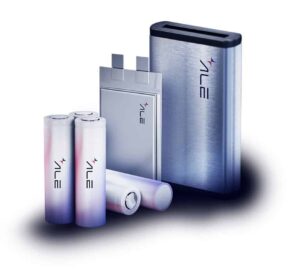
Custom Lithium Batteries from KT Technical Solutions
Custom batteries are used across a wide range of UAV platforms, with pack design varying according to aircraft type, mission profile, payload requirements, and operating environment. Battery manufacturers tailor voltage, capacity, discharge rate, cell chemistry, packaging, thermal management, and protection features to match the specific demands of each drone system.
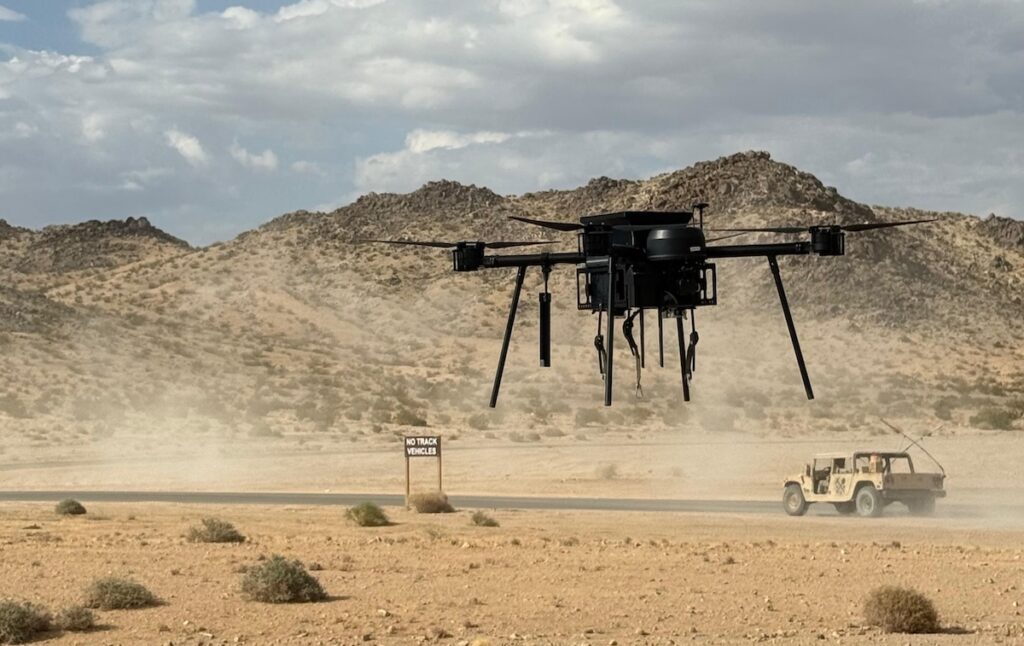
Multirotor UAVs require batteries capable of delivering high discharge rates to support vertical lift, rapid maneuvering, hover stability, and payload operation. Custom battery packs for these platforms are often designed around compact packaging, high current output, weight efficiency, and thermal control, especially when supporting cameras, LiDAR, communications systems, or other power-intensive payloads.
Fixed-wing UAVs typically prioritize energy density, stable voltage output, and low weight for longer flight endurance. Custom battery design for these aircraft often focuses on maximizing usable capacity while maintaining aerodynamic packaging and reliable power delivery across extended missions such as mapping, ISR, environmental monitoring, and long-range inspection.
VTOL and hybrid UAVs combine the high-power demands of vertical takeoff with the endurance requirements of forward flight. Their batteries must support short periods of high current during takeoff, landing, and transition, followed by efficient sustained output during cruise. Custom designs may use specific cell configurations, thermal strategies, and power-management features to handle these changing load profiles.
Military UAVs may require custom batteries designed for vibration resistance, impact tolerance, temperature extremes, safe transport, and reliable operation in demanding field conditions. For defense and government platforms, manufacturers may also support NDAA-compliant battery designs, controlled supply chains, and documentation for qualification or procurement requirements.
Heavy-lift UAVs place significant demands on battery systems due to the high current required to carry larger payloads. Custom battery packs for these platforms are designed to support propulsion loads, payload power, and safe discharge behavior while managing heat buildup and maintaining structural integrity during repeated high-load operations.
Long-endurance UAVs require batteries optimized for energy density, cycle life, and predictable performance over extended missions. Custom battery manufacturers may focus on reducing pack weight, improving usable capacity, supporting efficient cruise power, and integrating battery monitoring systems that help operators track state of charge and mission endurance.
Custom battery manufacturers provide a structured set of engineering, design, and production services that support unmanned platforms from early concept through operational deployment. These services ensure that battery systems align with mission, platform, and lifecycle requirements rather than acting as isolated components.
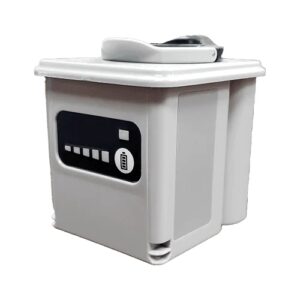
Custom Drone Batteries by Steatite
The starting point for any custom battery is a structured requirements analysis. Providers work directly with platform designers to convert mission profiles into electrical specifications, defining parameters such as nominal voltage, peak and continuous current, usable capacity, duty cycle, and environmental limits. This early-stage engineering support is particularly valuable for new platforms, where power requirements may still be evolving alongside propulsion and payload design.
A key outcome of this process is optimization between power and energy. Oversizing a battery increases weight and cost, while undersizing compromises endurance and reliability. Experienced developers help strike the correct balance for the intended mission set, ensuring that performance margins are achieved without unnecessary penalties to size, weight, or cost.
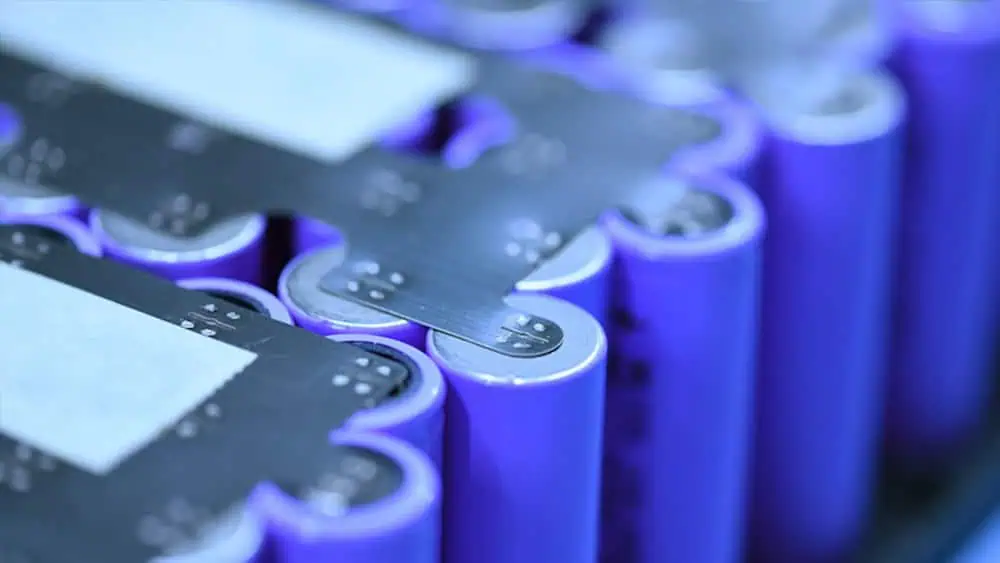
Cell selection is one of the most influential decisions in custom battery design. Providers evaluate candidate cells based on discharge capability, energy density, thermal behavior, safety characteristics, and expected cycle life. This evaluation also considers long-term availability, as unmanned system programs often require consistent cell supply over many years.
By qualifying specific cells and suppliers, standard battery pack assembly services reduce program risk associated with cell obsolescence or batch-to-batch variation. This approach supports consistent performance across production runs and simplifies sustainment for fleet operators.
Beyond cell selection, manufacturers design the internal electrical architecture of the wider battery pack. This includes defining series and parallel configurations to achieve required voltage and capacity, as well as incorporating protection, isolation, and fault-tolerant features. In mission-critical platforms, pack architecture is carefully engineered to prevent single-point failures from escalating into unsafe conditions or system-level outages.
Mechanical design is a critical part of custom battery development, as physical integration often dictates whether theoretical performance can be realized in practice. Manufacturers address packaging, structural integration, and environmental protection to ensure reliable operation within constrained and demanding platforms.
One of the primary drivers for custom battery development is mechanical integration. Custom battery packs for robotic devices are designed to fit within unique airframes or payload bays, often using conformal geometries that maximize available volume. This allows system designers to reclaim space and mass that would otherwise be lost accommodating standardized battery formats.
Structural integration is also addressed during packaging design. Custom batteries are engineered to withstand operational loads and, where appropriate, contribute to overall platform stiffness rather than acting as mechanically isolated components.
Professional unmanned systems rarely operate in benign conditions. Custom battery pack manufacturers apply ruggedization techniques such as reinforced internal supports, vibration-damping structures, environmental sealing, and protective coatings. These measures ensure reliable operation in environments characterized by shock, vibration, dust, moisture, salt fog, and temperature extremes.
Electrical integration extends beyond the battery enclosure itself. Providers often supply custom connectors, harnesses, and strain relief solutions matched to the platform’s power distribution architecture. Proper connectorization reduces electrical losses, improves reliability, and simplifies installation, maintenance, and field replacement.
Before deployment, any specialist battery must demonstrate consistent performance, environmental robustness, and compliance with applicable standards. Providers support a range of testing and certification activities to reduce technical and regulatory risk for unmanned system programs.
Custom batteries are validated through comprehensive electrical testing, including capacity verification, discharge characterization, and cycle-life assessment. Testing is commonly performed using representative mission load profiles rather than idealized laboratory conditions, ensuring that performance data reflects real-world operation.
Environmental qualification demonstrates that the battery can withstand operational stresses without degradation or safety risk. Typically, developers will support shock, vibration, thermal cycling, altitude, and ingress testing as required by the platform’s intended operating envelope.
Most professional unmanned systems require batteries to meet recognized safety and transport standards such as UN 38.3 and IEC 62133. Custom battery pack manufacturers for aerospace and defense manage testing, documentation, and certification activities, supporting regulatory compliance and enabling safe transport by air, land, and sea.
Custom battery suppliers are expected to support unmanned system programs across their full maturity curve, from early concept validation through sustained production. This requires not only engineering capability, but also manufacturing processes that can adapt as requirements stabilize, volumes increase, and operational expectations become clearer.
During early platform development, rapid prototyping is essential for validating battery fit, performance, and integration assumptions. Battery providers support this phase with short lead times, flexible tooling approaches, and close collaboration with airframe engineers. Prototype packs are often built to allow rapid changes in cell configuration, packaging geometry, or electrical interfaces as test data is gathered.
As a platform transitions out of development, low-rate initial production supports demonstration units, pilot fleets, and early operational deployments. At this stage, configuration control becomes critical. System architects must ensure that units delivered for trials are electrically and mechanically consistent, allowing performance data to be meaningfully compared across unmanned vehicles.
Successful unmanned systems often move from small production runs to sustained serial manufacturing. Custom battery suppliers for aerospace and defense support this transition by implementing repeatable assembly processes, standardized test procedures, and robust quality management systems. Traceability of cells, components, and test results becomes increasingly important as fleets grow and batteries are delivered over multiple years.
Battery chemistry selection has a fundamental impact on performance, safety, and lifecycle behavior. Custom lithium batteries are most commonly employed, with other specialist chemistries emerging across advanced unmanned systems:
Battery integration is a system-level activity that extends well beyond electrical connections. Custom battery manufacturers typically offer integration support to ensure that the battery interacts correctly with propulsion systems, avionics, payloads, and power distribution hardware.
Manufacturers work with platform engineers to ensure compatibility with motors, electronic speed controllers, onboard computers, and payload power rails. This includes defining voltage tolerances, transient behavior, and startup sequencing to prevent brownouts or unintended resets.
For platforms requiring extended endurance or increased mission assurance, providers may support hybrid power architectures. These can include battery and fuel cell combinations, battery-generator systems, or dual-battery configurations that enable redundancy or hot-swapping.
As unmanned systems evolve, battery manufacturers are expanding their offerings beyond traditional pack design:
These emerging technologies reflect a shift toward higher performance, deeper system integration, and more intelligent power management approaches.


 Searching Companies & Products