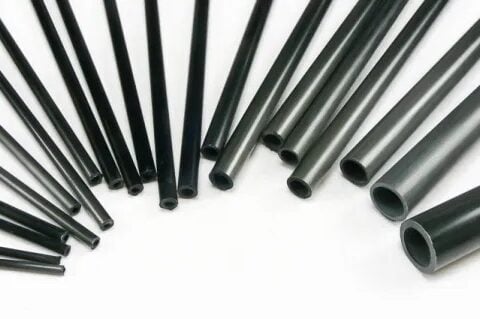
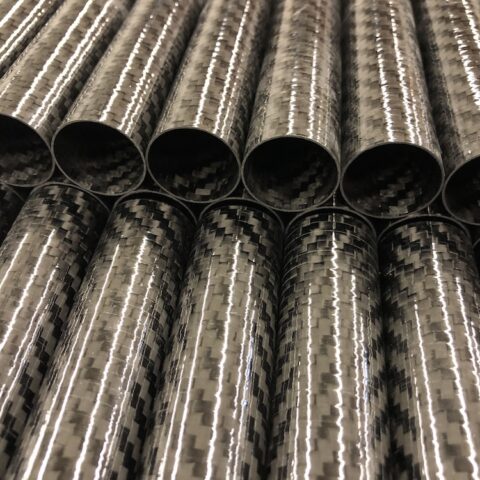
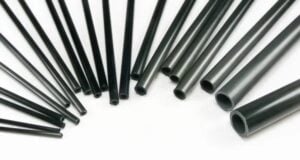
Carbon fiber tubes and rods are lightweight composite structural components used in drones and unmanned systems to provide directional stiffness while minimizing weight.
This page features leading suppliers of carbon fiber tubes for drone arms, UAV wing spars, tail booms, landing gear, sensor masts, and support frames for ground, surface, and underwater vehicles.
If you design, build or supply Carbon Fiber Tubes & Rods, create a profile to showcase your capabilities and connect with visitors who have an active requirement for your solutions.
The Technical Guide to Carbon Fiber Tubes & Rods for Drones & Unmanned Systems
Overview by
William Mackenzie
Updated:
Introduction to Carbon Fiber Tubes for Drones & Unmanned Systems
Carbon fiber tubes combine low mass with directional stiffness, making them suitable structural members for drones, robotic vehicles, and autonomous platforms that must carry equipment while limiting deflection. They consist of reinforcing carbon fibers held within a polymer matrix, which binds the fibers and transfers loads between them.
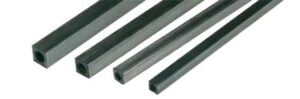
Manufacturers and suppliers offer standard profiles and custom tubing with application-specific dimensions, reinforcement, and finishes. Selecting a carbon fiber structural tube requires consideration of its loads, joints, and operating conditions, as fiber grade, orientation, resin properties, and wall geometry all influence performance.
Core Uses of Carbon Fiber Tubes Across Unmanned Systems
Carbon Fiber Tubes for Multirotor Drones
Carbon fiber drone arms connect motors to the central frame, carrying thrust loads, bending moments, and motor reaction torque. Their stiffness helps maintain motor alignment, while removable or folding connections support transport and field maintenance. Carbon fiber frame tubes also form landing gear and payload supports. In heavy-lift drone structures, joint loads, arm deflection, and local crushing beneath clamps need particular attention. Increasing wall thickness alone may add unnecessary mass if changes to diameter, reinforcement, or connection geometry would accommodate the loads more efficiently.
Carbon Fiber Tubes for Fixed-Wing and VTOL UAV
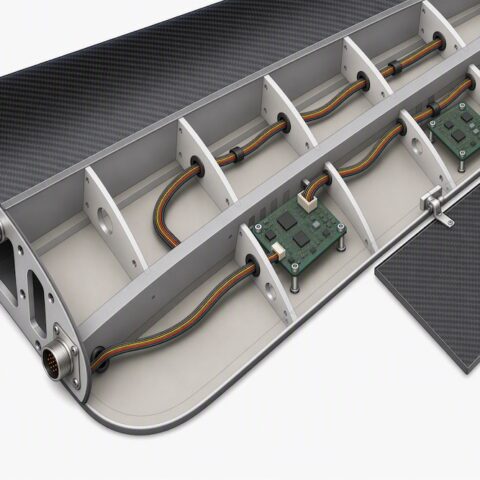
In fixed-wing UAVs, tubular spars carry wing bending loads, while wing joiners transfer loads across detachable sections. Tail booms support the empennage and must resist bending and twisting to maintain control-surface alignment. On VTOL aircraft, lift-motor booms experience thrust loads as well as aerodynamic forces during forward flight. Tube diameter, laminate design, and attachment geometry must accommodate these different flight conditions, particularly where fittings transfer concentrated loads into the airframe.
Sensor Masts and Instrument Supports on Unmanned Ground Vehicles
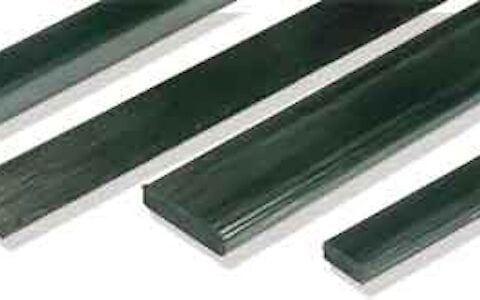
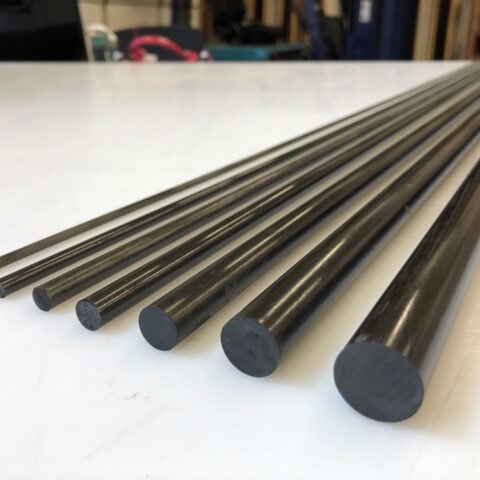
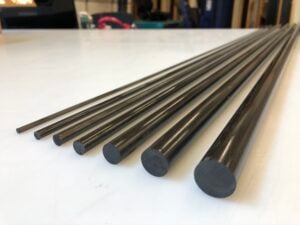
Carbon fiber tubes support cameras, antennas, and other sensors above Unmanned Ground Vehicles (UGVs). Keeping the supporting structure light reduces the mass carried at height, while sufficient bending stiffness helps maintain sensor position over uneven terrain. Telescoping masts offer adjustable height and compact stowage, although movement at overlapping sections and locking mechanisms must be controlled. Solid carbon fiber rods can serve as small braces or links where a hollow section is unnecessary. Pultruded carbon fiber rods are particularly suited to predominantly longitudinal loading, with buckling checks required for compression members.
Above-Water Structures on Unmanned Surface Vessels
On Unmanned Surface Vessels (USVs), carbon fiber tubing forms lightweight masts, instrument supports, and equipment frames that carry wind loads and loads caused by vessel accelerations while keeping sensors at the required height. Marine installations require protection at bonded interfaces, suitable surface coatings, and electrical isolation between conductive carbon fiber and susceptible metals to limit galvanic corrosion. Antenna placement also requires care because nearby carbon structures can affect radio performance, while drainage arrangements help prevent water from accumulating within open tubular members.
Flooded Frames and Supports on Underwater Vehicles
Flooded carbon fiber tubes can form external frames and instrument supports on underwater vehicles. Adequately sized flooding and venting openings allow water to enter and leave without trapping air, limiting pressure differences across the tube wall during depth changes. Sealed tubes, by comparison, require engineering to withstand external hydrostatic pressure and resist collapse. Underwater assemblies also need compatible resins, durable joints, and corrosion control around metal fittings. Hollow carbon fiber tubes provide space for internal cable routing, although cables require protection against abrasion at entry points.
Carbon Fiber Tube Manufacturing Methods
Manufacturing methods influence reinforcement placement, available dimensions, and structural behavior:
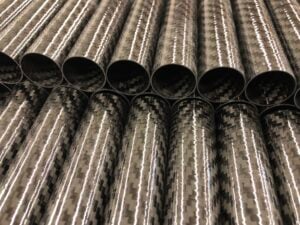
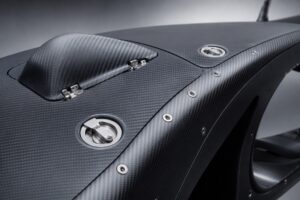
Roll-wrapped tubes: Layers of reinforcement are wrapped around a mandrel and consolidated during curing. Roll-wrapped carbon fiber tubes can combine longitudinal, hoop, and angled plies to resist bending, splitting, and torsional loads.
Pultruded tubes: Resin-impregnated reinforcement is pulled through a shaping die, with thermoset resin cured in heated tooling to produce continuous profiles. Pultruded carbon fiber tubes commonly emphasize longitudinal fibers for axial stiffness, while additional transverse reinforcement can improve resistance to splitting and other loads.
Filament-wound tubes: Continuous reinforcement is wound around a mandrel at controlled angles. The winding pattern determines the balance of axial, circumferential, and torsional performance within the constraints of the manufacturing process.
Braided composite tubes: Interlaced fibers form reinforcement around tooling, often combined with longitudinal fibers, before resin consolidation. Braid angle and construction influence torsional behavior, transverse reinforcement, and the ability to form changing geometries.
The finished laminate specification provides a more useful basis for selection than the manufacturing method alone.
Carbon Fiber Tubes Compared with Alternative Materials
The following comparison summarizes material characteristics relevant to unmanned system structures. Finished-component performance also depends on dimensions, reinforcement, and connections.
Consideration
Carbon Fiber Composite Tubes
Aluminum Tubes
Glass Fiber Composite Tubes
Weight
Low density; structural efficiency depends on suitable fiber orientation
Higher material density than typical carbon and glass fiber composites
Typically denser than carbon fiber composites
Directional stiffness
High along selected reinforcement directions
Similar elastic stiffness in different directions
Directional; generally lower stiffness than carbon fiber composites
Electrical conductivity
Conductive carbon reinforcement
Conductive
Insulating glass reinforcement; finished behavior depends on formulation
Thermal expansion
Low along fibers; laminate-dependent
Greater expansion than typical longitudinal carbon fiber laminates
Reinforcement- and resin-dependent
Joining requirements
Bonded inserts, supported clamps, or engineered fasteners
Bolting, clamping, bonding, or suitable welding processes
Bonded or mechanically supported connections
Damage behavior
Splitting, delamination, and potentially concealed impact damage
Dents, yielding, cracking, and fatigue damage
Matrix cracking, fiber damage, and delamination
Developments in Carbon Fiber Tube Technology
Development work builds on established production and joining methods to improve consistency, simplify assembly, and support material recovery:
Automated manufacturing: Automation is established in processes such as pultrusion and filament winding. Further improvements in process control and monitoring aim to maintain consistent fiber angles, consolidation, and dimensions across production runs.
Thermoplastic composites: Thermoplastic matrices enable heat-based forming and, with compatible materials and processes, welded connections. Selected tube systems use these capabilities, although their processing requirements differ from those of thermoset tubing.
Integrated fittings: Co-cured, co-bonded, or overmolded connections can reduce separate assembly operations. These established techniques depend on the material system and require structural and environmental validation.
Recycled reinforcement: Recovered carbon fibers are used in selected components and demonstrators, including fittings. Retained fiber length, alignment, and processing affect performance, so their use in place of continuous-fiber structural tubing requires evidence that they can withstand the intended loads.
For procurement, documented performance of the finished tube and its connections remains central to evaluating these approaches.
The latest unmanned systems news, straight to your inbox.
Get our weekly roundup of technology developments, new products and industry news.
THANK YOU FOR SIGNING UP
Thanks for joining us. Check your inbox.
We've sent you an email. Click the confirmation link to complete your subscription to the weekly eBrief. In the meantime, explore the latest news, suppliers and technologies on UST.
Advancing Unmanned Systems Through Strategic Collaboration
UST works with major OEMs to foster collaboration and increase engagement with SMEs, to accelerate innovation and drive unmanned systems capabilities forward.