Showcase your capabilities
If you design, build or supply Inertial Data Loggers, create a profile to showcase your capabilities and connect with visitors who have an active requirement for your solutions.



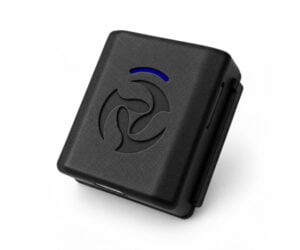
Inertial data loggers are motion recording devices that capture and store acceleration, angular velocity, orientation, and other sensor measurements for analysis and performance validation. Used in UAVs, UGVs, autonomous marine vehicles, and robotic systems, these devices support flight testing, navigation validation, vibration monitoring, and trajectory reconstruction.
This page features suppliers of inertial data loggers, including standalone IMU data loggers, accelerometer recorders, AHRS loggers, and GNSS-inertial recording systems.
Read the Technology Overview
Cutting-Edge IMUs, AHRS & Inertial Motion Sensors for UAVs, Robotics & Unmanned Systems

If you design, build or supply Inertial Data Loggers, create a profile to showcase your capabilities and connect with visitors who have an active requirement for your solutions.
No products available No products available from suppliers based in . View products from all territories

Inertial data loggers are electronic recording devices that capture and store acceleration, angular velocity, and other motion-related measurements over time. By combining inertial sensing with data acquisition and storage capabilities, these devices provide detailed records of how vehicles, robotic systems, and equipment move, rotate, vibrate, and respond to external forces. Depending on their configuration, they can record raw sensor measurements, processed orientation data, and synchronized positioning information for subsequent analysis.
Used across Unmanned Aerial Vehicles (UAVs), Unmanned Ground Vehicles (UGVs), and autonomous marine systems, inertial data loggers support motion analysis, navigation testing, structural monitoring, and performance validation. Measurements are typically obtained from an Inertial Measurement Unit (IMU) or individual accelerometers and gyroscopes, then timestamped and stored in onboard memory or dedicated recording hardware. More advanced configurations incorporate sensor fusion, attitude estimation, or GNSS measurements, while standalone recorders integrate local storage and power to enable unattended data collection without continuous host connectivity.
Inertial data loggers can be distinguished by their sensing capabilities, recorded outputs, and recording architecture. Configurations range from integrated accelerometer recorders to dedicated systems that capture measurements from external inertial sensors and navigation equipment. The following categories describe common recording configurations rather than mutually exclusive product types.
| Type | Recorded Measurements and Data | Typical Applications |
| Accelerometer Data Loggers | Single-axis or multi-axis acceleration, including shock and vibration measurements | Impact monitoring, UAV vibration testing, structural dynamics |
| Standalone IMU Data Loggers | Three-axis acceleration and angular velocity, with optional magnetic field measurements | UAV flight testing, vehicle motion analysis, inertial sensor validation |
| External IMU Data Loggers | Time-stamped inertial measurements received from connected IMUs, with additional sensor data where supported | Independent sensor recording, navigation testing, synchronized data acquisition |
| Attitude and Heading Reference System (AHRS) Data Loggers | Estimated roll, pitch, and heading, with available raw inertial measurements | Attitude monitoring, platform orientation, flight dynamics analysis |
| GNSS-Inertial Data Loggers | Synchronized GNSS position, velocity, timing, and inertial measurements | UAV flight reconstruction, vehicle tracking, navigation testing |
| Inertial Navigation System (INS) Data Loggers | Estimated position, velocity, and attitude, with available inertial and aiding measurements | Trajectory reconstruction, navigation validation, dead reckoning analysis |
| Motion Reference Unit (MRU) Data Loggers | Roll, pitch, heave, and other supported marine motion measurements | Unmanned Surface Vessel (USV) motion monitoring, marine survey testing, vessel dynamics |
These configurations can overlap. An AHRS adds orientation estimation to inertial sensing, while a Vertical Reference Unit (VRU) provides roll and pitch estimates without requiring a heading solution. GNSS-inertial recorders may capture synchronized measurements without performing full navigation sensor fusion, whereas an INS estimates navigation states using inertial measurements and available aiding inputs. MRU-based configurations record motion outputs tailored to marine applications. In each case, integrated storage or a connected recording system is required to retain the measurements for subsequent analysis.
Accelerometer data logging and IMU data logging provide time-stamped measurements that can be examined individually or processed to characterize motion, assess equipment performance, and investigate operational events. Depending on the installed sensors and processing architecture, recorded outputs include:
Recording performance depends on sensor measurement range, noise, bandwidth, sampling frequency, timestamp accuracy, and storage capacity. High-frequency vibration and short-duration impact measurements also require appropriate sampling and signal filtering to prevent distortion or aliasing.
Inertial data loggers capture UAV acceleration, rotational motion, and, where supported, calculated attitude throughout flight. Stored measurements allow engineers to examine maneuvering characteristics and platform stability during takeoff, landing, turning, and rapid attitude adjustments. These records support post-flight analysis, controller tuning, and performance verification, with standalone IMU recorders providing independent data collection alongside the aircraft’s primary flight control system.
Accelerometer loggers and motion data loggers support UGV development by recording acceleration, deceleration, turning behavior, and vehicle body motion. These measurements allow engineers to examine braking performance, stability, suspension response, and movement across different surfaces. Combining stored inertial measurements with positioning records enables more detailed reconstruction of vehicle trajectories and dynamic behavior during autonomous operation.
Inertial recording systems capture the movement of USVs, Autonomous Underwater Vehicles (AUVs), and Remotely Operated Vehicles (ROVs). MRU-based recording configurations can store roll, pitch, and heave measurements to examine vessel responses to waves and changing sea conditions, while underwater platforms use recorded inertial data to evaluate maneuvering and stability. These datasets also support retrospective analysis of marine sensor performance during survey operations.
Recorded inertial measurements provide datasets for evaluating autopilot behavior, navigation algorithms, and sensor fusion performance. Engineers can compare stored IMU readings with GNSS positions and INS-generated navigation estimates to investigate trajectory discrepancies, timing errors, and accumulated navigation drift. During GNSS outages, inertial recordings support subsequent assessment of dead reckoning performance and navigation continuity, particularly when suitable reference measurements are available for comparison.
Acceleration data loggers capture vibration and shock transmitted through unmanned vehicle structures, mounting assemblies, and onboard equipment. Accelerometer recorders with suitable bandwidth and sampling capabilities can preserve transient loads, resonant behavior, and repetitive mechanical disturbances associated with motors, movement, or uneven terrain. These measurements support structural testing, equipment qualification, and investigation of vibration affecting sensitive electronic or optical payloads.
Motion sensor recorders preserve information about sudden impacts, abnormal maneuvers, and other operational incidents. Accelerometers with suitable high-g measurement ranges and event-triggered recording functions can capture rapid acceleration changes during an impact, while pre-event buffering retains preceding measurements where supported. Reviewing these records alongside available navigation and control data helps engineers reconstruct incidents and investigate potential mechanical or operational contributing factors.
Inertial data logging supports evaluation of stabilized payloads, robotic mechanisms, and sensor mounting systems by recording motion relative to a platform or reference frame. Synchronized datasets from multiple IMUs can reveal angular disturbances, residual vibration, and differences between expected and measured movement. Combined with stored control system records, these measurements support testing of camera stabilization, robotic joints, sensor alignment, and motion compensation systems.
Developments in inertial sensing, embedded processing, and compact electronics continue to improve motion data recording systems, particularly for autonomous platforms with limited installation space and power availability. Key areas of development include:
Together, these developments support more flexible inertial data collection, allowing engineers to capture and evaluate motion measurements across increasingly compact and complex unmanned systems.


 Searching Companies & Products