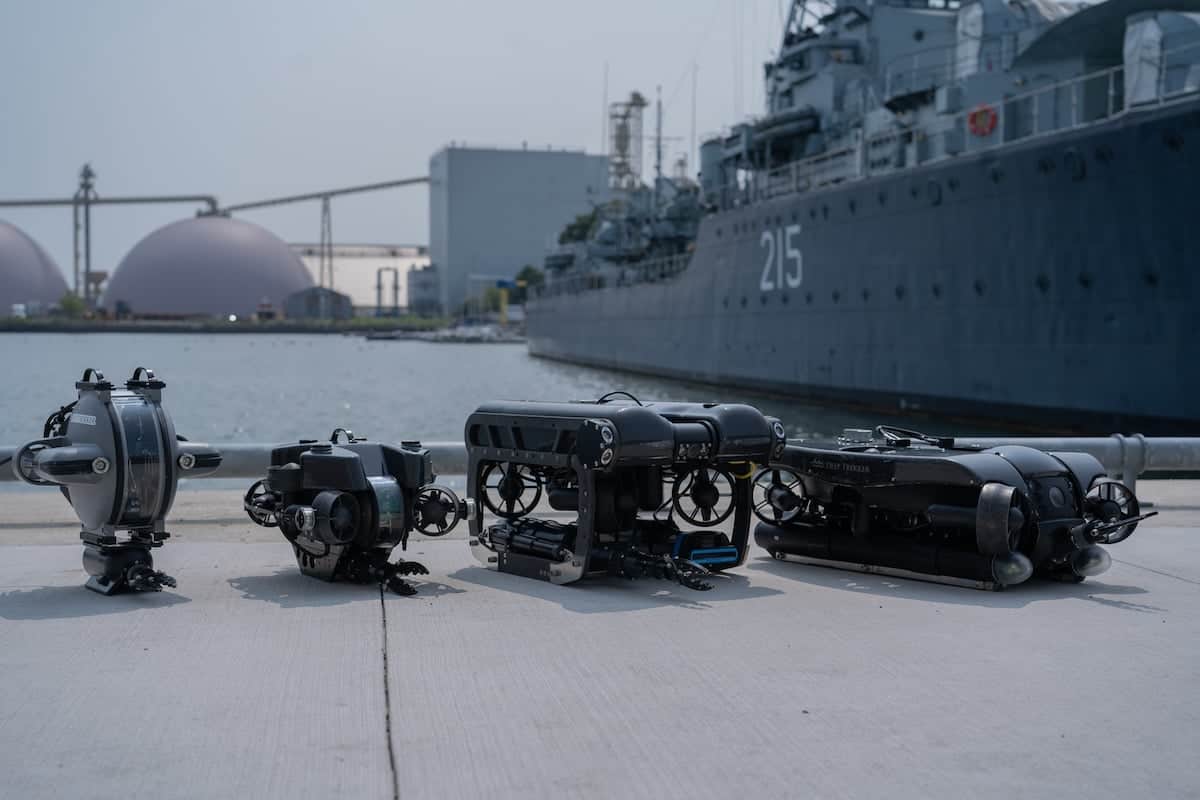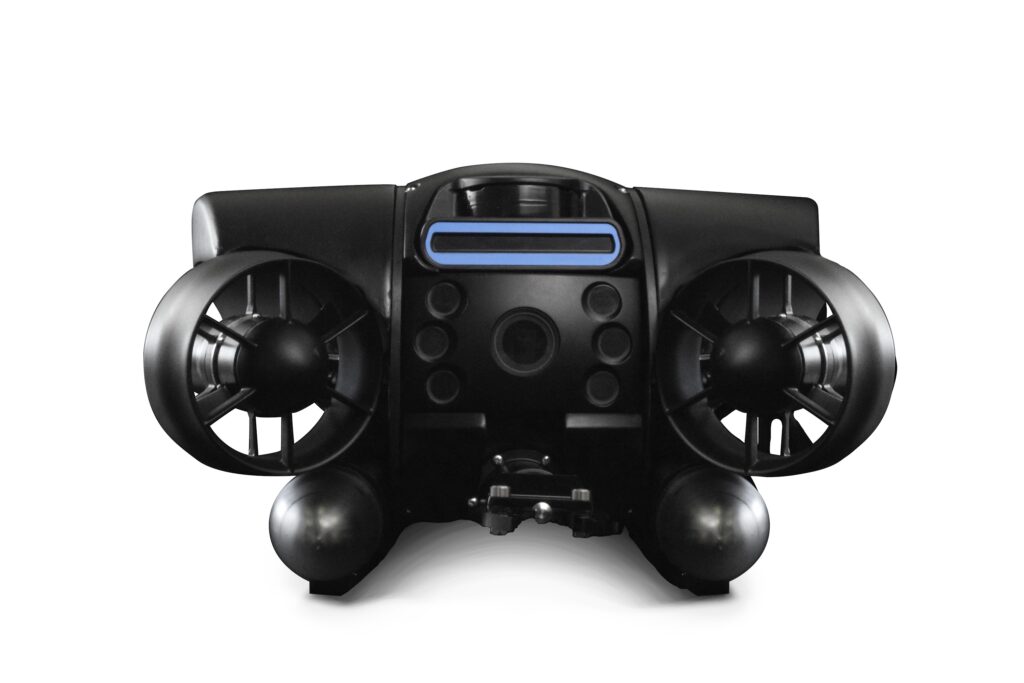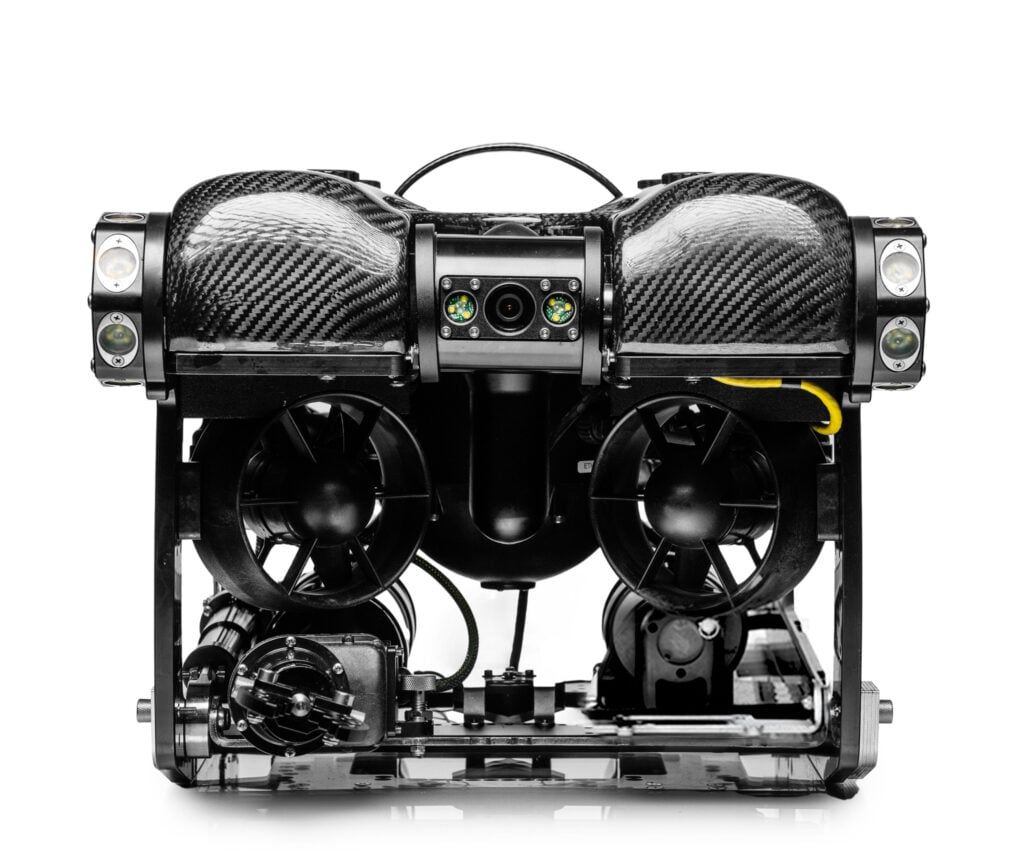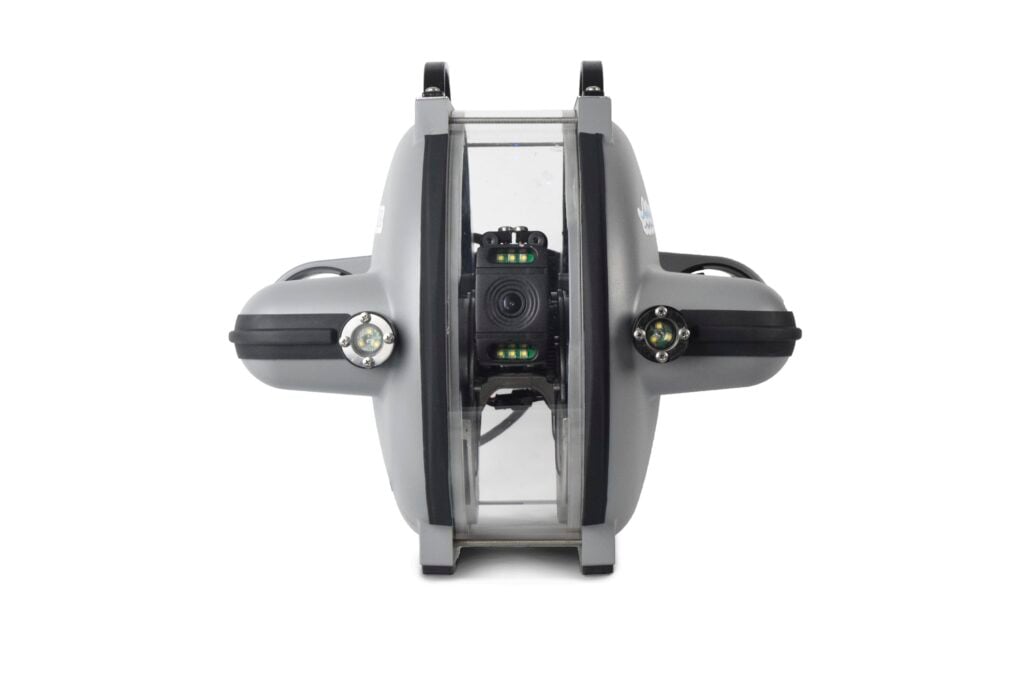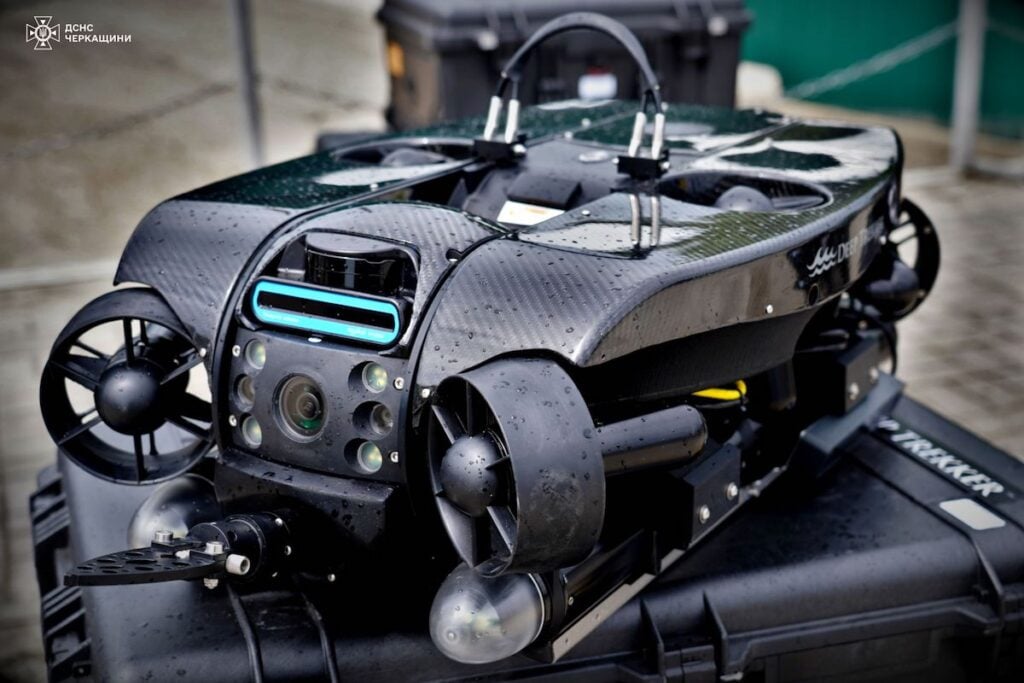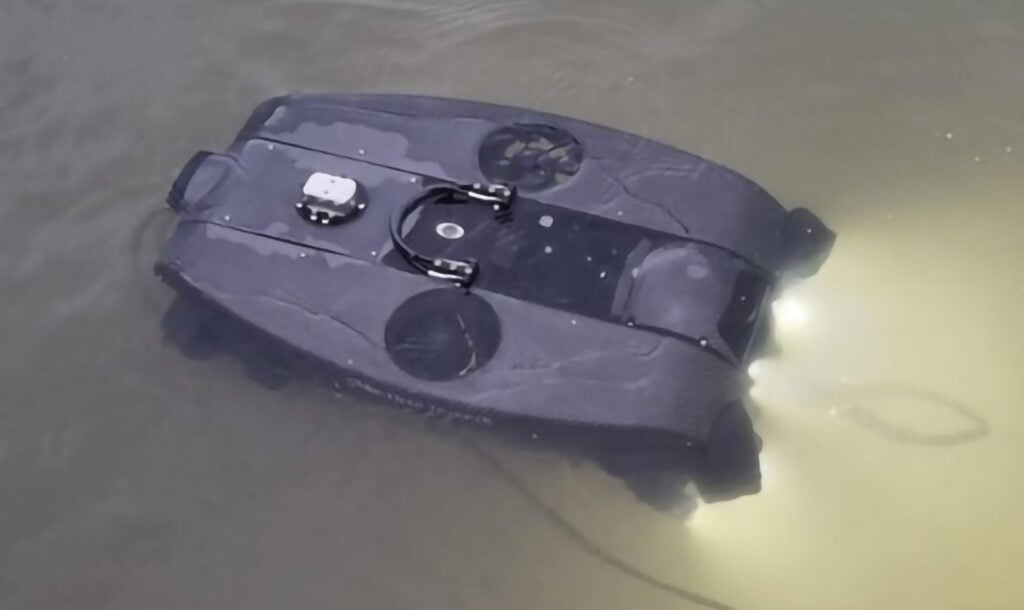



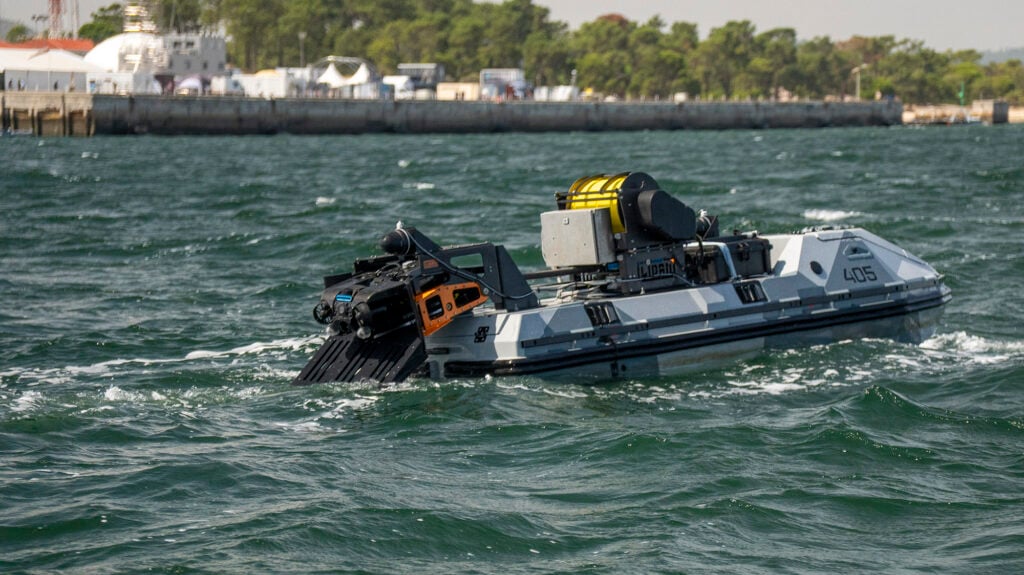
Deep Trekker highlights its demonstrations of Remotely Operated Vehicle (ROV) capabilities for mine countermeasure operations at REPMUS 2026, including the deployment of its REVOLUTION ROV from an Uncrewed Surface Vessel (USV) to reacquire, inspect, and identify an exercise mine without personnel aboard the surface platform. Read more >>
Conducted in collaboration with Nautrik and Lidan Marine, the demonstration successfully identified the mine on the first day of USV testing. Deep Trekker also showcased sonar-based mine detection, underwater navigation, mine disposal integrations, real-time 3D mapping with the SPECTRA ROV, and diver-controlled operations using Blueprint Subsea’s Artemis system.
Held from August 31 to September 25 in Tróia and Sesimbra, Portugal, REPMUS (Robotic Experimentation and Prototyping with Maritime Unmanned Systems) involved 19 navies, with 13 deploying units on the water.
Deep Trekker’s participation built on its REPMUS 2025 trials involving ELWAVE passive electric-field detection, Viper MDS integration on REVOLUTION and PIVOT, and Voyis stereo imaging. The 2026 activities expanded to include an integrated USV-hosted ROV system and additional mine countermeasure demonstrations.
USV-Based ROV Mine Identification
The mine identification demonstration combined Deep Trekker’s REVOLUTION ROV with a compact USV operated by Nautrik and Lidan Marine’s SKARV Launch and Recovery System (LARS).
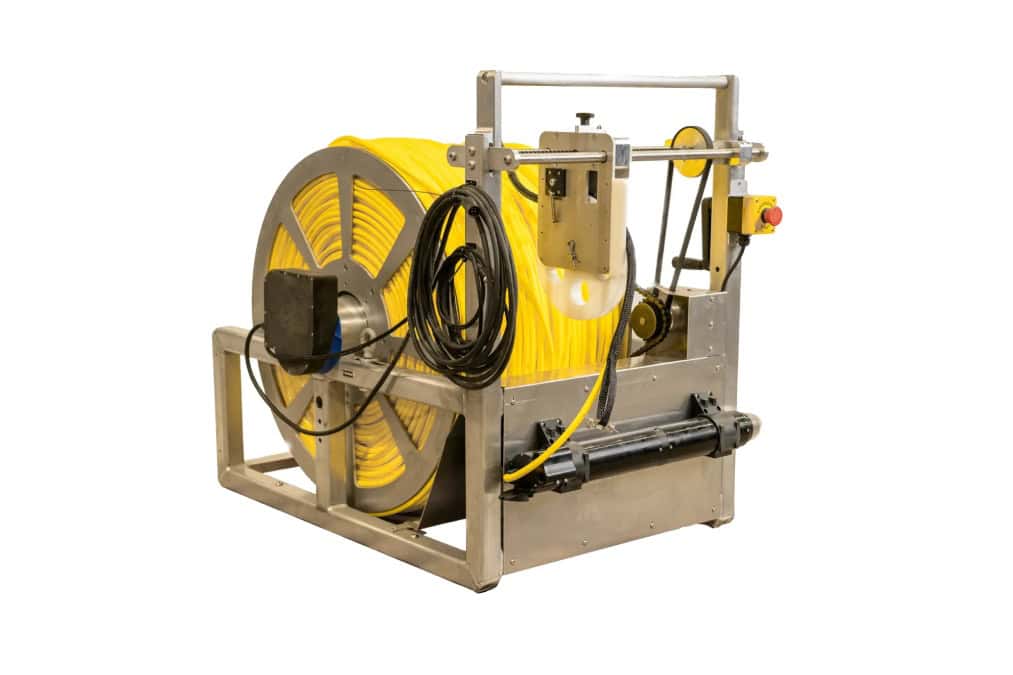
Nautrik’s USV supports remote operation through 5G and satellite connectivity, while SKARV manages ROV deployment, recovery, and tether handling using a tilting garage and driven, two-sided rubber tether feed.
Following a successful pre-exercise integration trial, the system was deployed at REPMUS to investigate a previously detected mine contact.
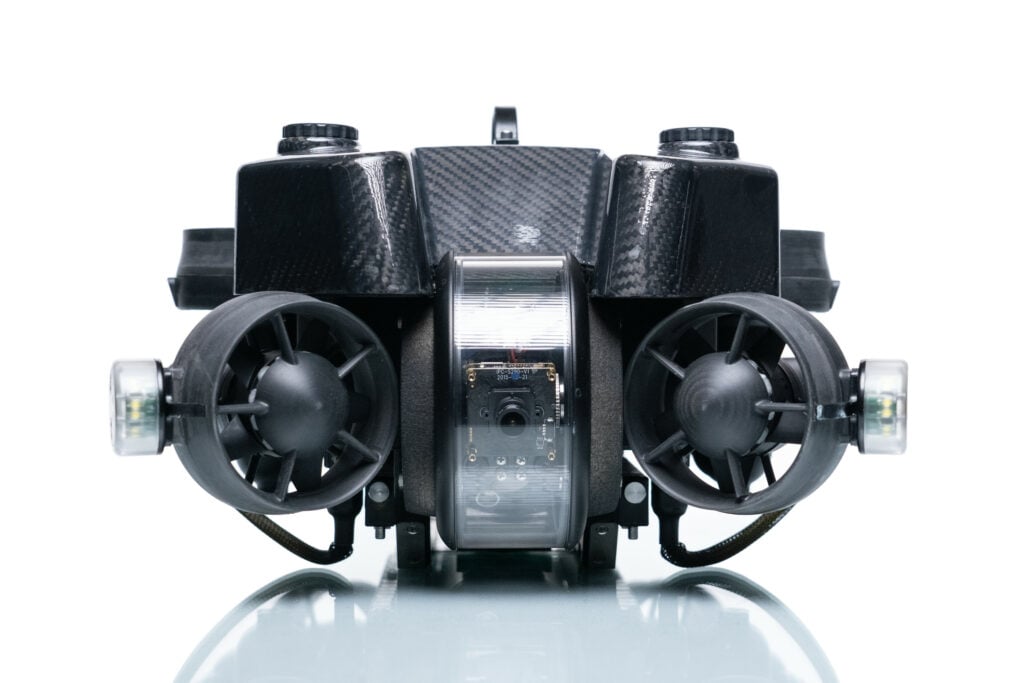
Using a Blueprint Subsea Oculus imaging sonar with an effective detection range of approximately 30 to 40 m (98 to 131 ft), REVOLUTION reacquired the contact before approaching for visual identification using live Ultra-High-Definition (UHD) video and a laser scaler.
The ROV subsequently returned to the USV for recovery, completing the mission without personnel aboard the surface vessel.
Riccardo Caponi, Account Executive, Military Sales EU and Middle East at Deep Trekker, stated, “The very first day, on the very first test, we were able not only to make the system work, but to go into the area, find the mine and inspect it.”
The team also demonstrated Dead Reckoning navigation using GPS positioning information from the USV and adapted the software to embed sonar data in recorded video.
SKARV managed tether deployment and recovery in sea state 2 to 3, addressing concerns about cable entanglement and USV movement.
Further development priorities include reliability, unified control of the USV, LARS, and ROV, communications bandwidth and latency, automated transects, integrated tether management, and operations in GPS-denied or radio-denied environments.
Sonar Search and Mine Countermeasure Operations
Deep Trekker also examined the operational differences between USV-hosted ROVs and Autonomous Underwater Vehicle (AUV) mine countermeasure workflows.
According to the company, AUV sonar can reach approximately 60 to 100 m (197 to 328 ft), but collected data may require 24 hours or longer for analysis and subsequent visual confirmation.
A USV-hosted ROV allows operators to inspect suspected contacts using sonar and live video during the same mission, without deploying personnel aboard a Rigid-Hulled Inflatable Boat (RHIB) near the target. The system is being developed to support longer-duration operations with shore-based operators working in shifts.
During the Deep Trekker Challenge, allied naval teams conducted mine reacquisition exercises using exercise mines and Mine-Like Objects (MLOs) positioned from AUV survey data.
The REVOLUTION, equipped with a Blueprint Subsea Oculus M750d sonar, was used to evaluate underwater search techniques. The team found sonar range settings of 30 to 40 m (98 to 131 ft) effective, with contacts detected at approximately 40 m (131 ft), compared with camera visibility of around 10 m (33 ft).
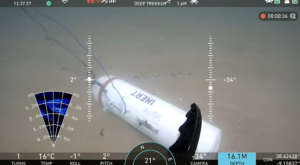 The exercise also examined sonar positioning and shallow-to-deep search transects, alongside Dead Reckoning navigation without an Ultra-Short Baseline (USBL) positioning system.
For mine disposal, Deep Trekker highlighted REVOLUTION’s integration with three disruptor systems: the Viper MDS, ADAPTOS TiTAN, and Alford Vulcan.
As REPMUS prohibits live firing, the company demonstrated integration and handling using the Viper MDS and Alford-supplied Vulcan mock-ups. The Viper MDS was previously field-tested with REVOLUTION at REPMUS 2025, while subsequent trials included firing the TiTAN from REVOLUTION and the Vulcan in Bristol.
Ballast, mounting plates, and accessories allow the ROV to be re-trimmed for different disruptors and operating conditions.
SPECTRA ROV and Diver-Controlled Operations
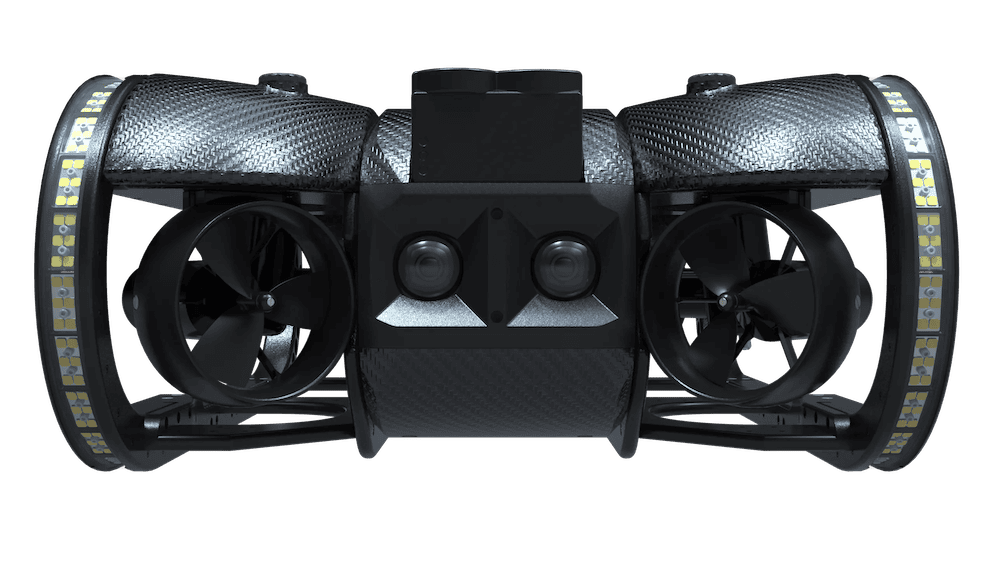
Deep Trekker also showcased its SPECTRA ROV, which combines a factory-calibrated 4K stereo camera with onboard 3D sonar Simultaneous Localization and Mapping (SLAM).
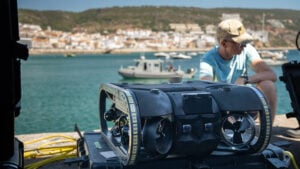 The system processes stereo imaging and 3D SLAM in real time using its internal computer, with sonar-based mapping supporting operation in turbid or zero-visibility water.
SPECTRA’s symmetrical seven-thruster configuration supports station-keeping in currents up to 2.3 knots and forward speeds up to 3.5 knots. The technology can support port and harbor inspections involving ship hulls, quay walls, and seabed structures.
Another demonstration involved Blueprint Subsea’s Artemis diver console, which integrates diver propulsion, USBL positioning, and sonar. A version developed to communicate directly with Deep Trekker ROVs allows submerged divers to control the vehicles through a handheld console and view live camera imagery while remaining at a safe stand-off distance.
The arrangement supports underwater deployment without a topside signature, including from Swimmer Delivery Vehicles (SDVs), and attracted interest from special operations units.
Subsea Inspection and Future Integration
Deep Trekker also demonstrated subsea cable tracking using REVOLUTION, switching between normal video and the turbidity filter when vegetation obscured the cable.
The ROV’s zoom camera enabled the operator to read a manufacturer’s marking and correct an initially mistaken cable identification. Surface GPS fixes were subsequently used to correct the Dead Reckoning track.
Across its REPMUS 2026 activities, Deep Trekker demonstrated USV-hosted mine identification, sonar search, mine disposal integrations, real-time 3D mapping, diver-controlled ROV operations, and subsea cable inspection.
The USV-hosted REVOLUTION trial completed the mine identification and recovery sequence without personnel aboard the surface vessel, while identifying further development priorities for coordinated control, communications, navigation, and tether management.