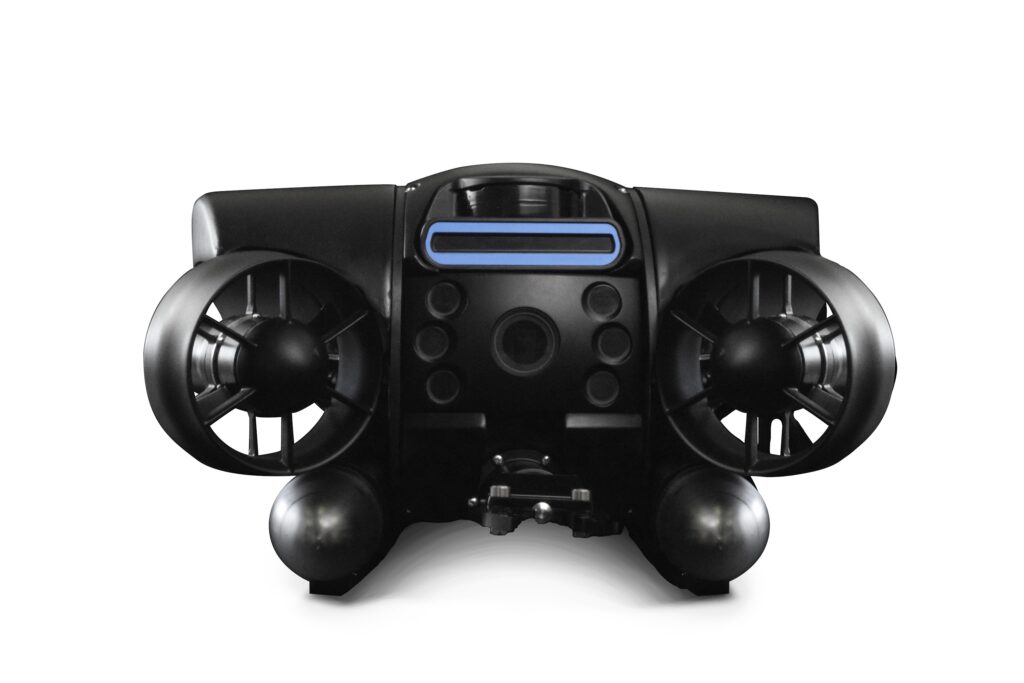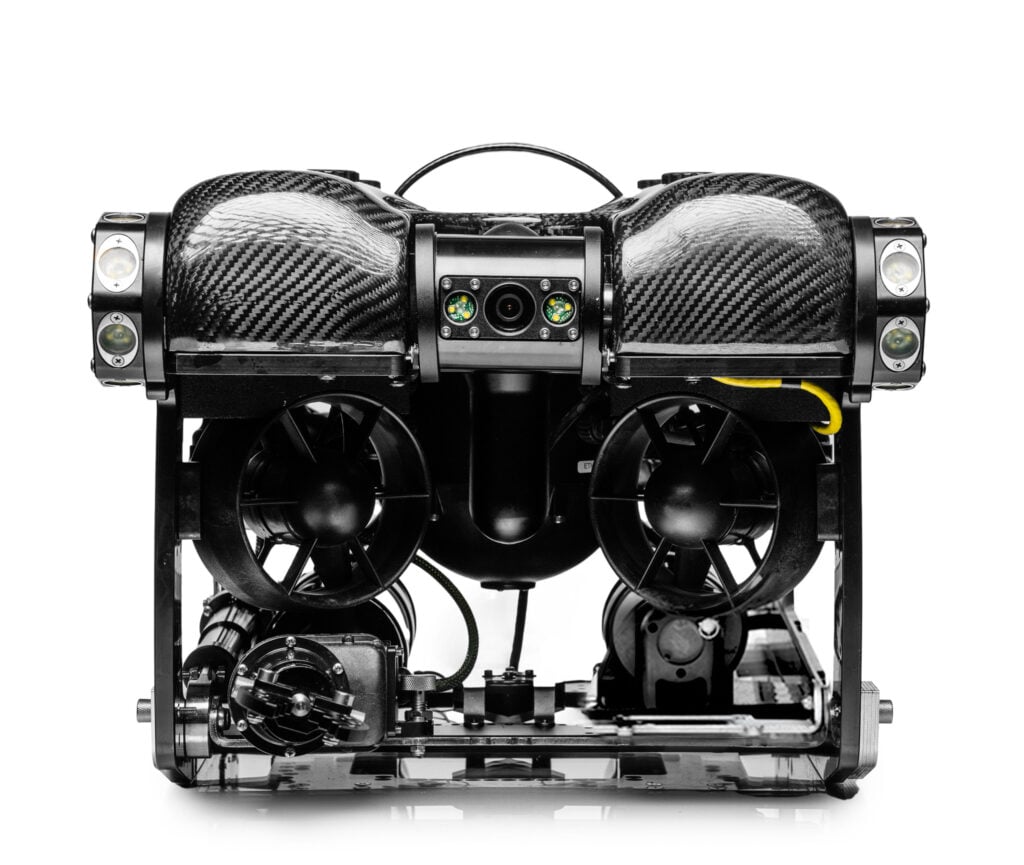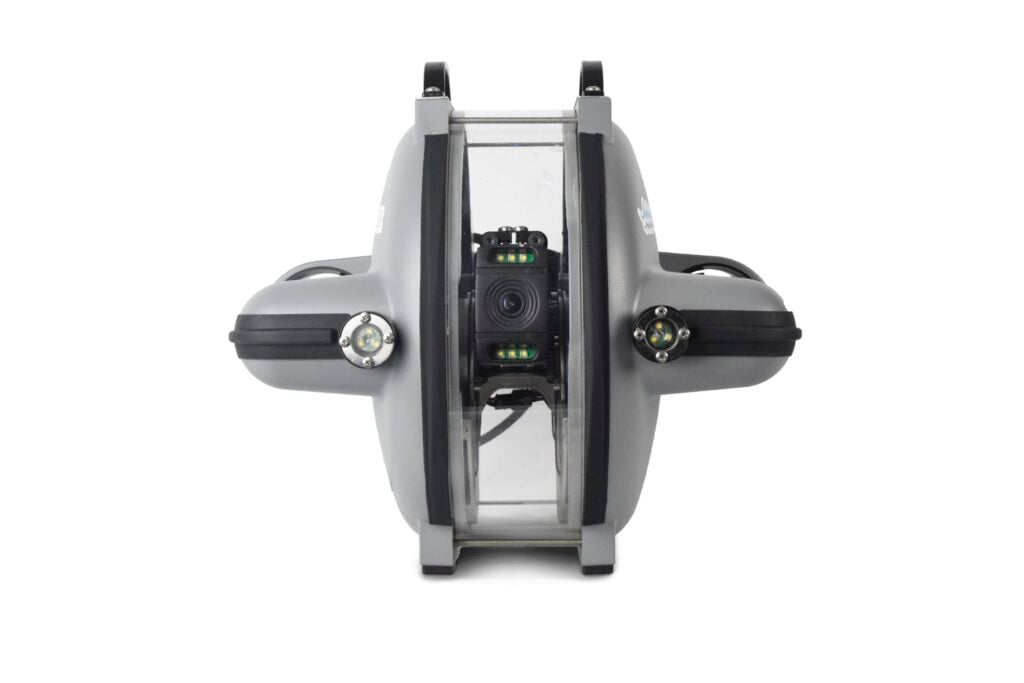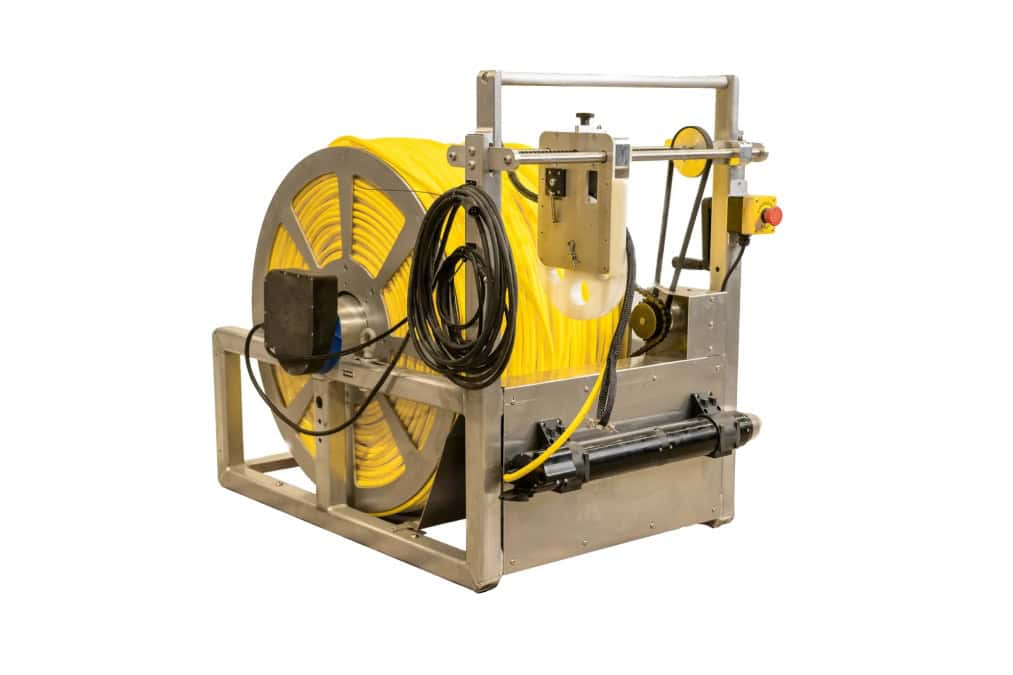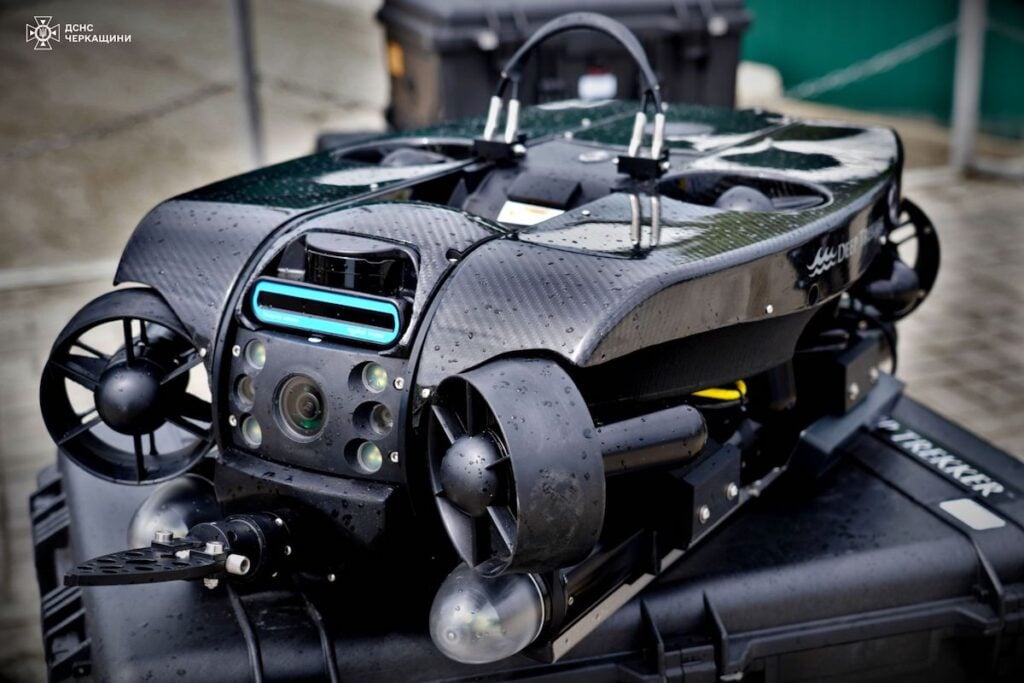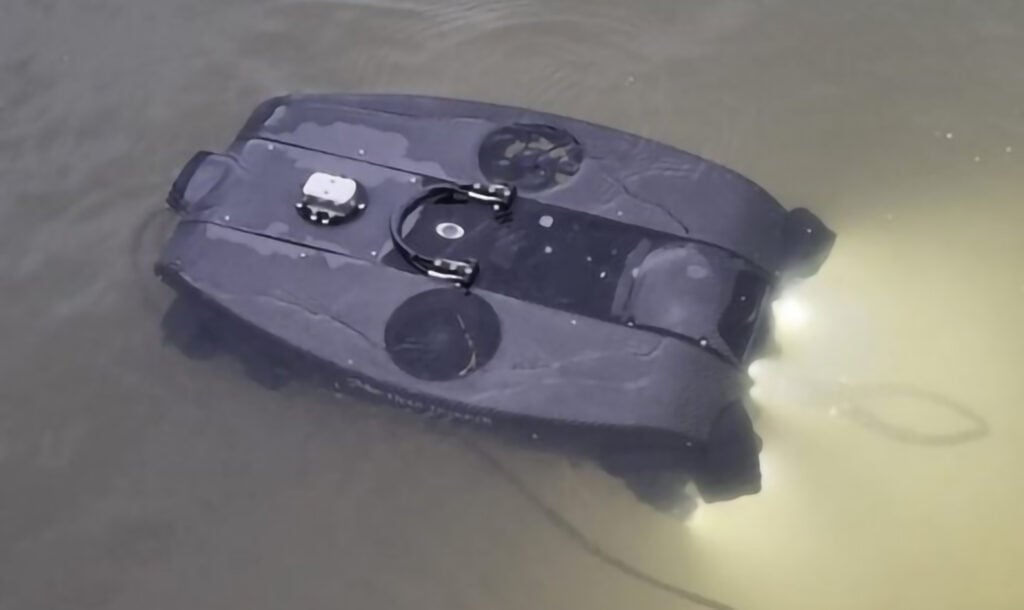
Subsea cable landing operations in environmentally sensitive coastal areas require close control over where subsea infrastructure reaches the seabed. During a fiber optic cable installation on the west coast of Guam, a PIVOT remotely operated vehicle (ROV) from Deep Trekker was used to monitor horizontal directional drilling (HDD) punch-out in real time, giving the project team direct visual confirmation of the cutterhead’s emergence and allowing its position to be adjusted while drilling operations were still underway.
The approach kept a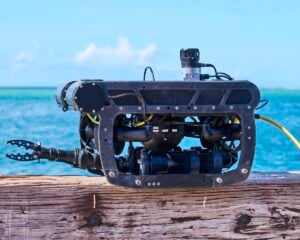 ll six conduits within a designated sandy seabed zone beyond a nearby coral reef and avoided direct disturbance to the adjacent coral area. It also replaced the delayed positional verification associated with post-installation diver inspections with immediate subsea observation.
Subsea fiber optic cables carry more than 99% of international data traffic, making their installation an important part of global communications infrastructure. Offshore routing and nearshore landing operations require precise planning, particularly where cable routes encounter protected natural resources or other seabed constraints.
Routing and Protecting Submarine Fiber Optic Cables
Before a submarine cable is installed, hydrographic and geophysical surveys are used to identify a suitable route across the seabed. Routing must account for obstacles and constraints including underwater ridges, tectonic activity zones, existing pipelines and cables, oceanic trenches, seamounts, and protected marine resources.
Specialized cable-laying vessels then deploy the cable, using dynamic positioning systems to control placement. Depending on local seabed conditions, cables can be laid on the seabed, armored, pinned in position, or buried to reduce the risk of damage from fishing gear, anchors, wave action, and other external factors.
Although submarine cables are intended for long-term service, maintenance can also require subsea intervention. ROVs may be used during inspection and repair operations, including work associated with retrieving and replacing damaged cable sections.
Nearshore installation introduces a different set of engineering considerations. Submarine cables eventually have to reach shore-based cable landing stations where they connect with terrestrial communications infrastructure supporting public, industrial, and military users.
In shallow, relatively low-energy areas, a cable may be laid on the seabed and secured to prevent movement. Other environments may require shallow trenching and burial using a cut-and-cover approach. Cables can also be pulled through conduits incorporated into protected shoreline infrastructure.
These conventional methods can become difficult to apply where coral reefs and other sensitive marine resources occupy the proposed landing corridor.
HDD for Environmentally Constrained Cable Landings
Horizontal Directional Drilling provides a trenchless alternative for routing cable conduits beneath sensitive nearshore seabed areas.
The technique originated in California in the early 1960s, where Martin Cherrington, known as the Father of HDD, pioneered its use as an alternative to cutting roads open for conventional utility installation. By drilling beneath roads, utilities could be installed without the disruption associated with cut-and-cover construction.
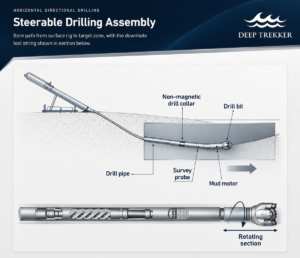
HDD has since been applied to utility installations beneath rivers, lakes, and coastal and marine environments, including submarine fiber optic cable projects.
For subsea cable landings, an HDD rig can be established ashore and used to drill beneath the shoreline and seabed toward an offshore exit point. Cable conduits can then be installed through the drilled route without requiring an open trench across the intervening seabed.
This approach is particularly relevant where natural resources prevent cables from being surface-laid or installed in shallow trenches.
On Guam, cable landing projects have historically used methods including surface-laid cables protected by articulated pipe and pinned to the seabed, as well as shallow cut-and-cover burial. While both approaches have been used successfully, environmental protection requirements can restrict their use where coral resources would otherwise be affected or require difficult and expensive mitigation.
Routing conduits beneath the seabed using HDD can avoid direct surface disturbance across such areas while also protecting the cable through high-energy shoreline zones.
The method, however, places significant importance on the position of the offshore punch-out. Directional deviation during drilling can cause the cutterhead to emerge outside the intended location, potentially placing it within a protected seabed area or creating a need for corrective work.
Targeting the Offshore Punch-Out on Guam
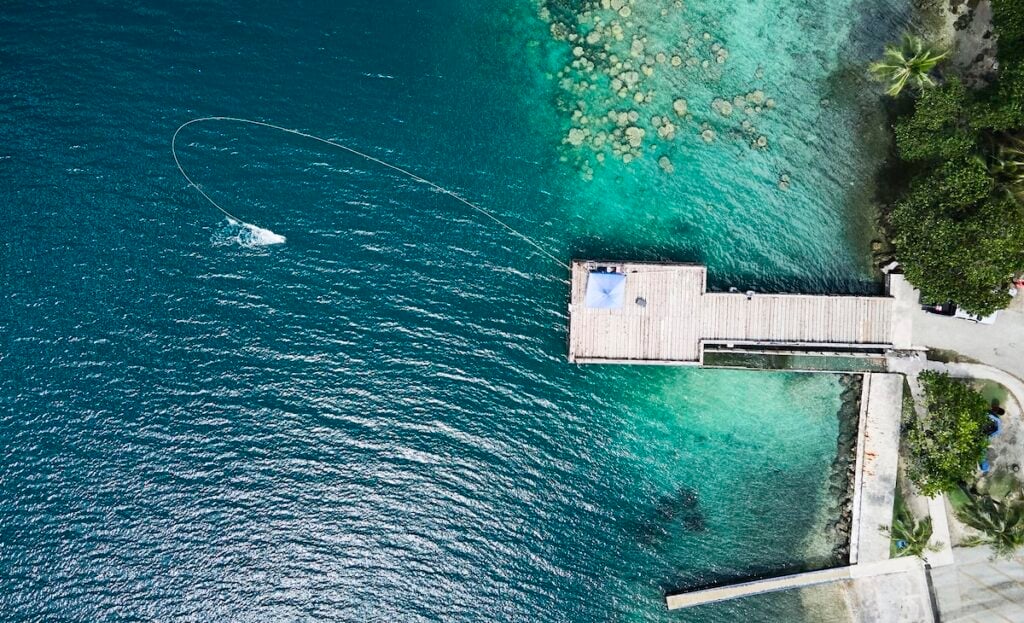
For the west coast Guam project, HDD was selected to route the planned conduits beneath protected marine resources before bringing them to the surface at a selected offshore location on sandy seabed beyond the coral reef.
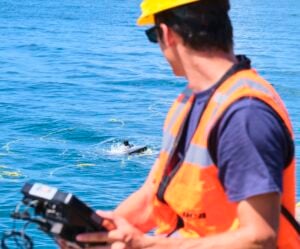
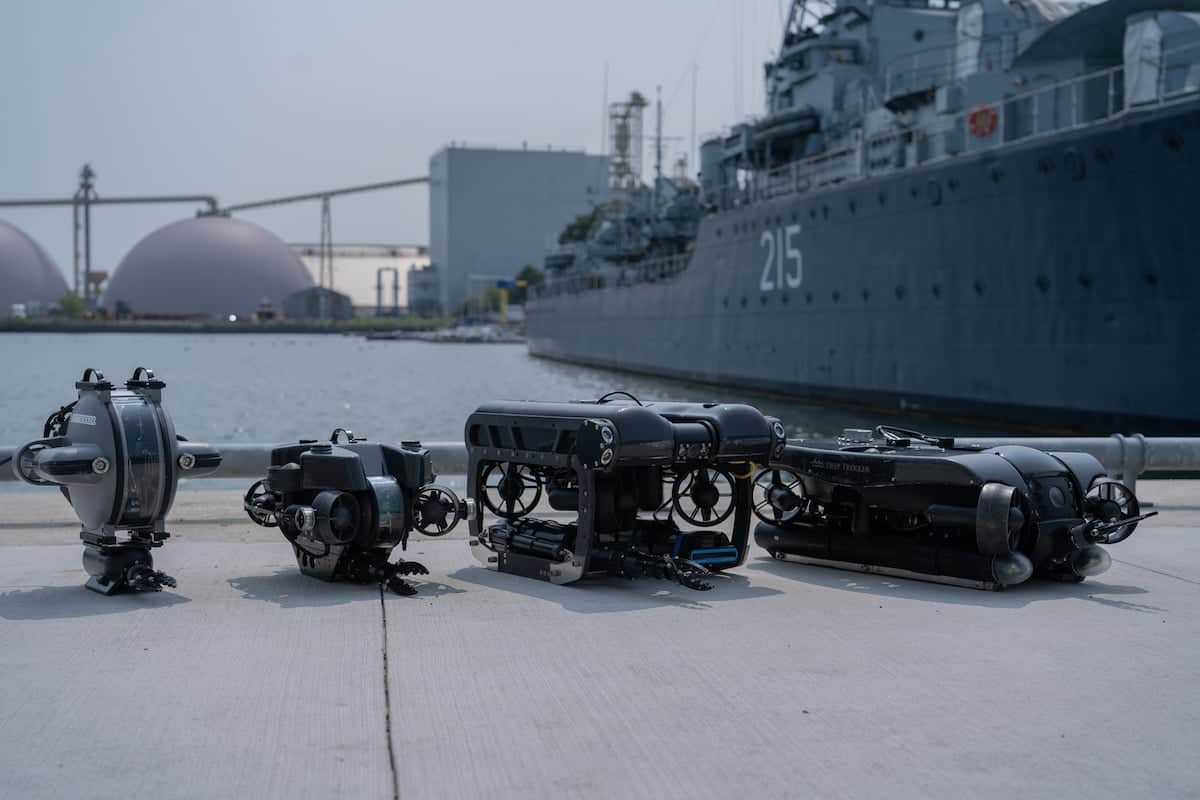
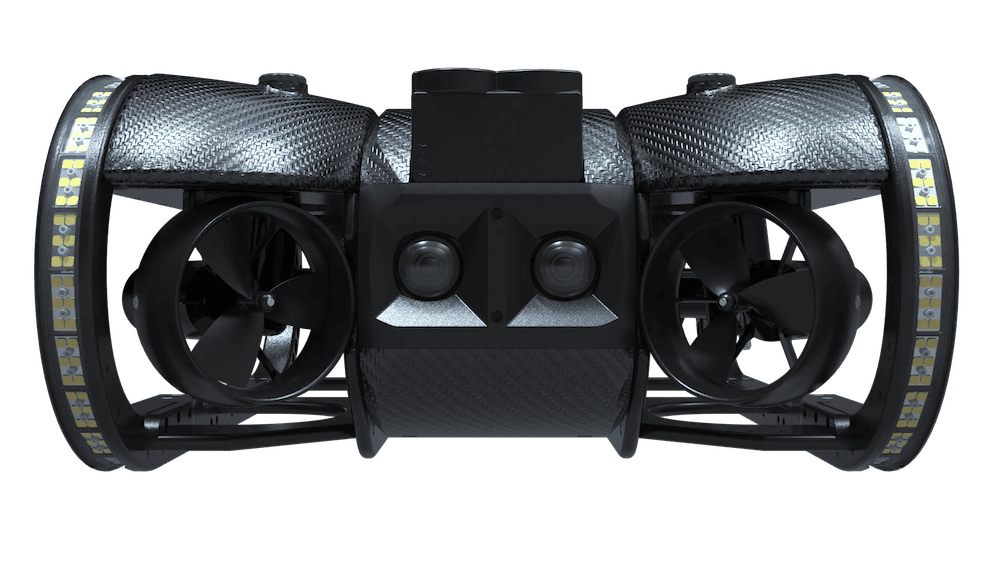
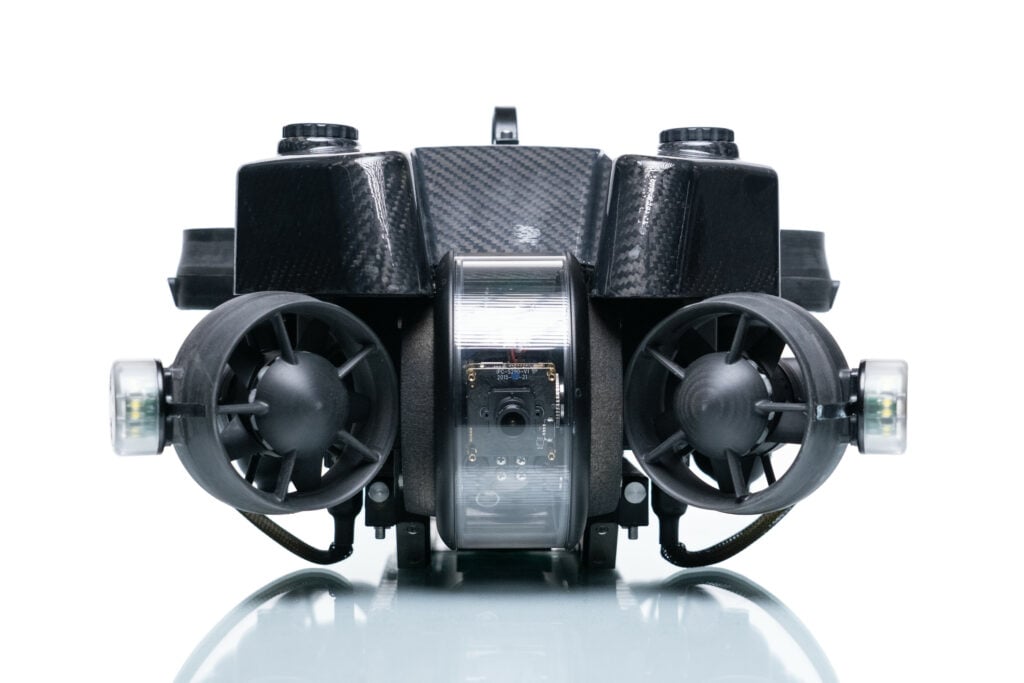
The proposed punch-out area was surveyed by marine scientists using a Deep Trekker PIVOT ROV.
After the location had been selected, the HDD team established its land-based drilling rig and oriented the bore toward the offshore target. Maintaining the cutterhead within the designated punch-out area was a critical part of the operation because directional deviation could have caused it to emerge in a nearby protected coral zone.
Scientists from Guam-based engineering firm Duenas Camacho Associates, Inc. (DCA) were therefore positioned offshore with the PIVOT ROV to observe the punch-out directly.
Real-time observation of an HDD punch-out using divers or subsea video systems is rarely documented in published case studies. Recorded examples more commonly show inspection imagery obtained after the cutterhead has already emerged, potentially hours or days after the event.
For this operation, the objective was to observe emergence as it happened.
Positioning the ROV for Real-Time Observation
The Deep Trekker PIVOT was deployed from a surface vessel in water more than 100 feet deep.
Coordination with the drill team established the expected day and time of the operation and identified a 30-minute punch-out window. The DCA team arrived at least an hour before that window so the ROV could be deployed, positioned on the seabed, and prepared for the event.
An anchor was placed on the seafloor as close as possible to the GPS coordinates assigned to the punch-out location and connected to a surface buoy. The reference allowed the vessel operator to maintain position above the target area.
The ROV was then flown to the target coordinates and settled on the seabed at a slightly greater depth, facing shoreward into shallower water. This orientation limited the search area to approximately 180 degrees of seabed.
The team remained in contact with the drilling operation as the cutterhead progressed toward the seafloor interface.
When the drill operator reported that the cutterhead was nearing the surface, the PIVOT was lifted from the bottom and maneuvered laterally across the target area while the team looked for evidence that the drill was about to emerge.
Because the team had not previously conducted this type of real-time punch-out observation, the precise visual indicators that would precede emergence were not known in advance.
Detecting the Cutterhead Before Emergence
Knowledge of HDD operations and the local marine environment provided a basis for what the monitoring team expected to see.
Michael J. Wilder, CEP, Marine Biologist, “My knowledge of the HDD process, oceanography, marine biology, and the punch out site led me to believe that the sand and loose sediments in the vicinity should be disturbed by water flowing from the HDD cutter head. So, I was looking for some kind of disturbance of sediments on the seafloor.”
Within several minutes, the ROV imagery showed a swirling sediment plume approximately 50 feet away and slightly to the left of the vehicle’s position.
The disturbance indicated that cutterhead emergence was imminent. The ROV pilot repositioned the vehicle toward the plume and held station to observe the area more closely.
Approximately one minute later, the cutterhead broke through the seabed.
The emergence produced a plume of disturbed sediment together with a globular mixture of cutting fluid, or bentonite, and sand that rose into the water column.
The visual confirmation was immediately relayed to the drilling team, establishing that the punch-out had occurred and providing direct information about its position.
Real-Time Feedback Enables Immediate Repositioning
After receiving confirmation from the ROV team, the drill operator requested further information about the cutterhead’s location and orientation.
Based on the live visual feedback, the cutterhead was retracted several feet and repositioned to achieve the required exit placement.
This capability represented a significant difference from a workflow based on post-installation inspection. Historically, verification could require scuba divers to inspect the punch-out days or even weeks after the drilling operation. If the position then required correction, repositioning could only begin after that inspection had taken place.
In Guam, the ROV provided the required visual information during the active punch-out window. The drilling team was therefore able to verify the location and make a correction while the operation was underway.
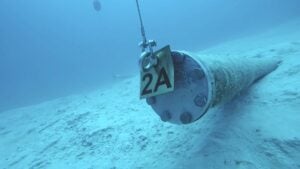
Six Conduits Remain Within the Designated Sandy Zone
The operation resulted in all six conduits being placed within the designated sandy seabed area, with no rework required.
The monitoring also provided immediate verification rather than requiring the project to wait for a subsequent diver inspection to establish the punch-out position.
Key operational results included a monitoring depth of more than 100 feet and identification of the pre-emergence sediment plume approximately 50 feet from the ROV. The disturbance was detected minutes before the cutterhead appeared, giving the team time to reposition the ROV and observe the emergence directly.
Real-time feedback also allowed the cutterhead to be retracted and repositioned during the active punch-out window.
Environmentally, the installation caused no direct disturbance to the adjacent coral reef zone.
Applying Subsea Observation to HDD Installation Control
The Guam project illustrates how real-time subsea observation can be incorporated into offshore trenchless cable installation where the allowable punch-out area is tightly constrained.
HDD provided a route beneath protected nearshore marine resources, while the Deep Trekker PIVOT supplied visual information at the offshore termination point as the cutterhead approached and emerged from the seabed.
Rather than using the ROV solely to document the result after drilling was complete, the project used subsea imagery as operational feedback during the drilling process itself.
That distinction allowed the project team to identify the sediment disturbance preceding punch-out, visually confirm cutterhead emergence, communicate its position to the drill operator, and support repositioning before the active operation had concluded.
For the Guam installation, this real-time monitoring approach maintained the six conduits within the selected sandy seabed zone, avoided direct disturbance to the adjacent coral reef, and removed the need for corrective rework following delayed positional verification.
Read Real-Time ROV Monitoring of HDD Punch-Out During Subsea Cable Landing on Guam on the Deep Trekker website.