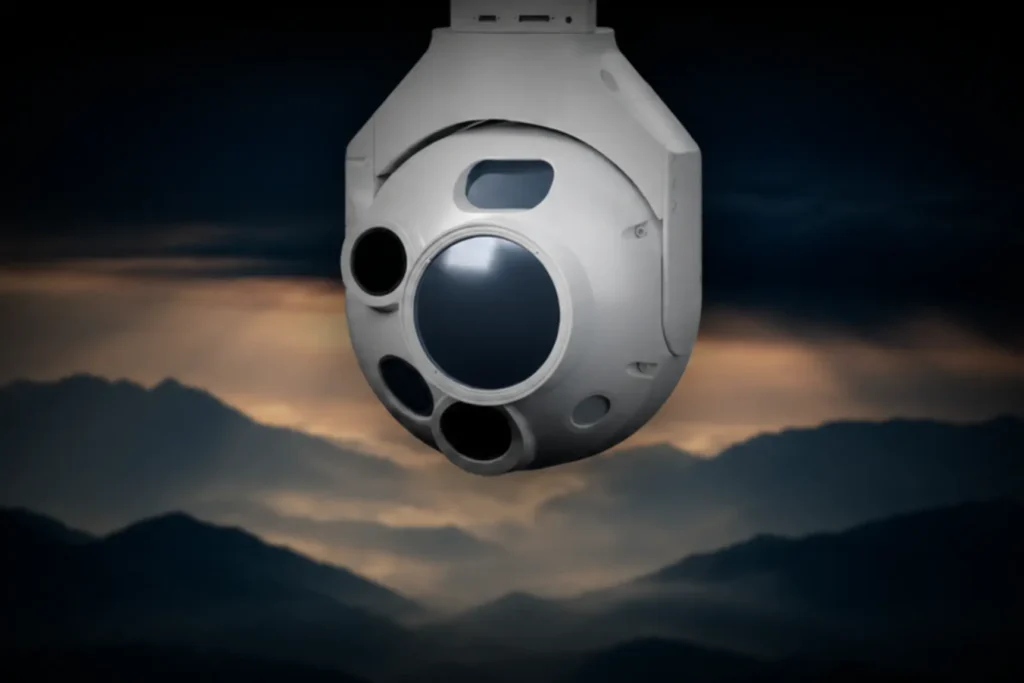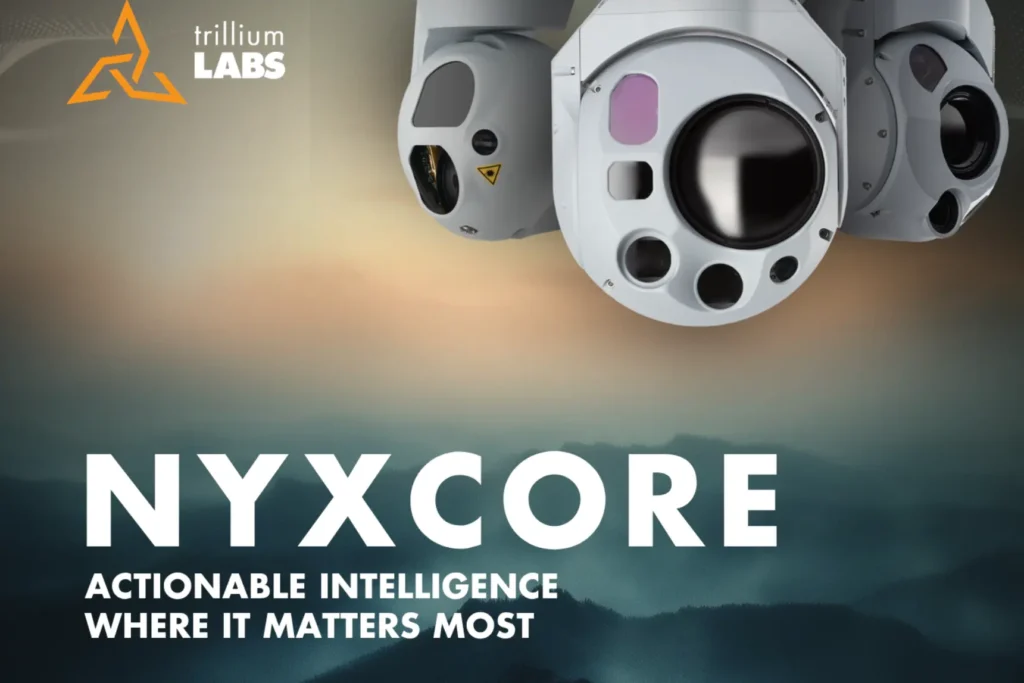




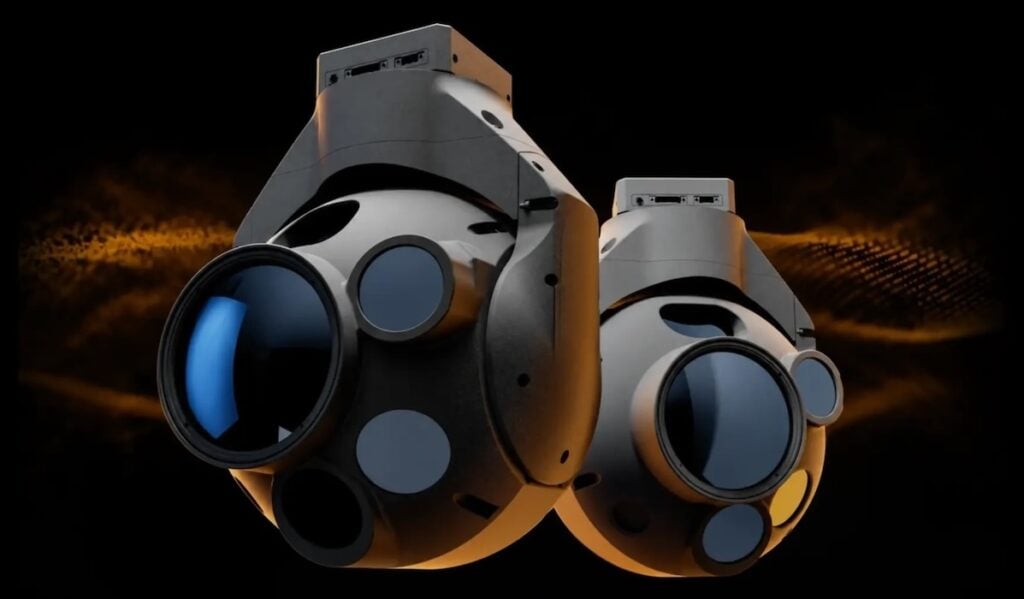
Trillium Engineering highlights how customer requirements shaped its new cost-efficient HD59 gimbal configurations, addressing demands for improved long-range identification performance, lower-cost MWIR imaging, and integrated laser ranging and pointing.
The HD59-MVV-C and HD59-MLVV-C reflect the need to balance imaging performance, aircraft constraints, integration requirements, and program budgets. Both configurations combine different sensor capabilities within the established HD59 hardware and software architecture.
Balancing Imaging Performance and Acquisition Cost
Acquisition cost influences the imaging capabilities that Unmanned Aircraft System (UAS) programs can field, requiring manufacturers and integrators to consider sensor performance alongside available funding.
According to Trillium Engineering, the HD59-MVV-C and HD59-MLVV-C offer a system cost improvement of more than 30% compared with traditional gimbaled Mid-Wave Infrared (MWIR) solutions.
Alongside cost considerations, the configurations incorporate improved optics and integrated laser capabilities to address operational requirements.
MWIR, LWIR, and Visible Imaging Configurations
The two configurations provide different sensor combinations to accommodate varying operational requirements.
The HD59-MVV-C combines MWIR and dual visible imaging, while the HD59-MLVV-C adds Long-Wave Infrared (LWIR) imaging for programs requiring an additional thermal channel.
Both compact payloads incorporate laser ranging and pointing capabilities, allowing manufacturers and integrators to select the sensor combination appropriate to their requirements.
Supporting Long-Range Reconnaissance
Developed around Long-Range Reconnaissance (LRR) requirements, the configurations support observation of areas of interest, activity monitoring, and target tracking.
Stabilized imagery and onboard tracking help maintain observation as the aircraft moves, while geolocation and laser ranging help establish object locations and their distance from the platform.
Integration and Availability
Both configurations retain Trillium Engineering’s established HD59 hardware and software architecture to reduce integration effort.
Compatibility with the company’s Intelligence Stack also provides access to advanced software features.
Bailment units are scheduled to be available for integration in December 2026, with production units scheduled to begin shipping in the first quarter of 2027.
For more information, visit the Trillium Engineering website.