UAS flight testing services provide the expertise, infrastructure, and instrumentation required to validate unmanned aircraft performance, safety, and regulatory compliance. These services support developmental flight testing and operational test & evaluation across UAV, VTOL, and fixed-wing platforms, covering flight envelope expansion, payload integration, and mission-based validation.
This page showcases leading UAS flight testing services and drone flight testing providers, offering environmental, structural, and electromagnetic testing to ensure resilience in demanding conditions.
If you design, build or supply UAS Flight Testing Services, create a profile to showcase your capabilities and connect with visitors who have an active requirement for your solutions.
UAV testing & simulation services for autonomous aircraft development
UAV testing & simulation services for autonomous aircraft development
Drone testingservices from Ascend Engineering provide comprehensive validation and performance... ...he-loop (SITL) testing and autonomous system evaluation prior to live flight operations. Additional...
The Comprehensive Guide to UAS Flight Testing Services: From Regulatory Frameworks to Selecting a Provider
Overview by
William Mackenzie
Updated:
Introduction to UAS Flight Testing Services
Flight testing services for Unmanned Aerial Systems (UAS) provide the specialized expertise, infrastructure, and equipment necessary to validate the airworthiness and operational efficacy of unmanned platforms. Their primary role is to serve as an objective validation body, providing engineering teams and stakeholders with empirical data to de-risk programs, satisfy regulatory requirements, and ensure that the final system is fit for purpose in demanding environments.
The Role of Flight Testing Services in UAS Development
Performance Validation
The core of any flight test campaign is confirming the platform’s physical capabilities. Flight envelope expansion is a methodical process where the UAS is tested at incremental speeds, altitudes, and maneuver intensities to define safe operating limits. Additionally, endurance, range, and payload validation ensure the system can sustain the required mission duration while carrying the weight of necessary sensors or cargo without compromising stability.
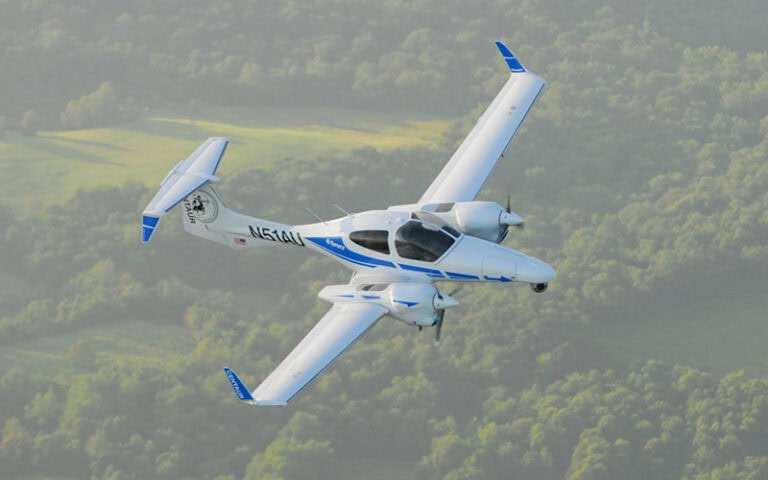
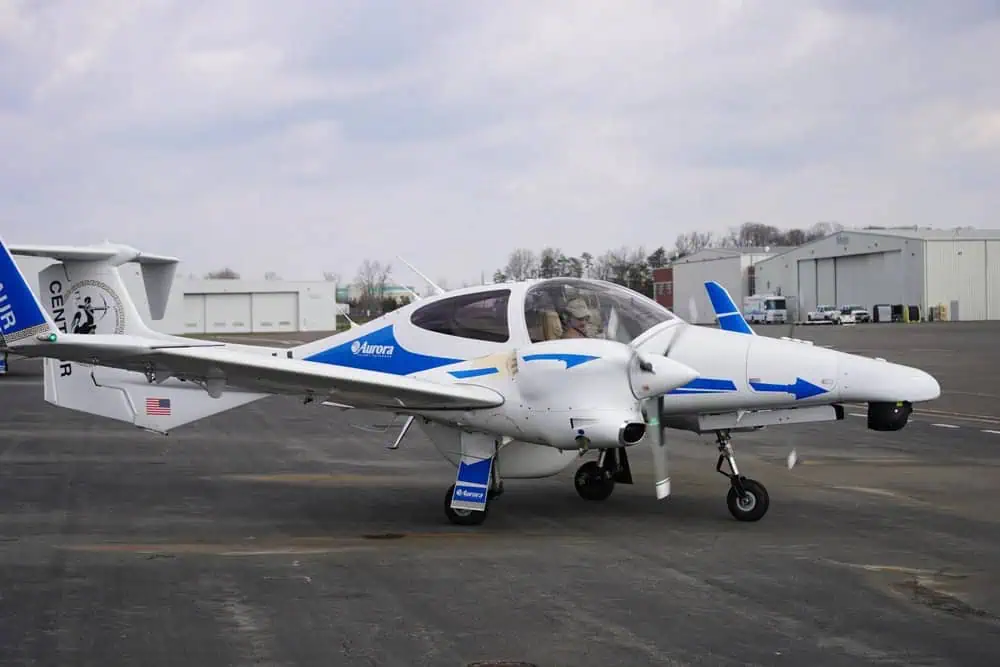
Flight Testing RPAS by Aurora Flight Sciences
Safety and Airworthiness Assurance
Flight testing services prioritize risk reduction through rigorous evaluation of the aircraft’s response to abnormal conditions:
Failure mode evaluation: Engineers simulate critical system errors to observe and document the platform’s behavior under stress.
Redundancy verification: Specialists test the transition to backup flight controllers or secondary communication links to ensure uninterrupted command.
Fail-safe protocols: Validation of emergency recovery systems, such as ballistic parachutes or autonomous return-to-home logic, is essential to prevent catastrophic loss.
Regulatory Compliance and Certification
To operate in shared airspace, platforms must meet stringent standards. Flight test services are instrumental in supporting certification pathways for both civil authorities and defense agencies. This requires meticulous documentation and reporting, where every flight hour and system behavior is logged to provide the traceability needed for airworthiness approvals.
Key Types of UAS Flight Test Services
Developmental Flight Testing (DT)
Developmental testing focuses on the build-test-learn cycle during the early stages of design. Early-stage prototype validation verifies that the physical hardware matches theoretical performance models, providing engineers with iterative data to refine flight control laws and propulsion efficiency before hardware configurations are frozen.
Operational Test & Evaluation (OT&E)
While DT focuses on the machine, OT&E focuses on the mission. Mission-based performance validation puts the UAS into real-world scenario testing, such as a simulated search and rescue operation or a long-range delivery route, to evaluate how the system performs in the hands of an end-user under realistic stress.
Environmental and Stress Testing
UAS must remain functional in conditions beyond a controlled hangar. Testing includes:
Climatic testing: Exposure to high-heat, sub-zero temperatures, and heavy precipitation to verify component survivability.
Electromagnetic resilience: Testing EMI/EMC and resilience against signal jamming in contested RF environments.
Structural stress: Evaluating airframe integrity and composite fatigue under high-G maneuvers or turbulent conditions.
Payload and Sensor Testing
A UAS is only as good as its data. EO/IR, LiDAR, radar, and SIGINT payload validation ensures these sensors are properly calibrated and stabilized. Testing also focuses on integration with mission systems, verifying that the onboard processor can handle the data throughput without lagging or overheating.
Industry Applications of UAS Flight Testing
Defense and Security
Military-grade flight testing validates systems for ISR, loitering munitions, and tactical UAS. These tests often focus on survivability, Low-Probability of Intercept (LPI) communications, and the ability to operate in GPS-denied environments.
Commercial and Industrial UAS
For the commercial sector, the focus is on inspection, delivery, and mapping systems. Reliability and precision are the primary metrics of success here, as these platforms often operate near high-value infrastructure or in suburban environments.
Research and Development
Academic and research organizations utilize flight test services to prove novel concepts, such as solar-powered High-Altitude Pseudo-Satellites (HAPS) or hydrogen-fuel-cell propulsion. In these contexts, flight data is vital for validating theoretical models where the risk of failure is high but the potential for innovation is significant.
Flight Test Planning & Methodology
Test Planning and Risk Assessment
Before the rotors spin, hazard analysis and mitigation strategies are documented. This includes the creation of test cards and mission planning, which serve as the step-by-step script for the flight to ensure no objective is missed and no safety margin is breached.
Instrumentation and Data Acquisition
Accurate data requires professional telemetry systems and onboard data logging. These systems must be synchronized with ground control station integration, allowing engineers to monitor hundreds of data points, from battery voltage to structural strain, in real-time.
Test Execution and Control
Executing a test requires complex range operations and airspace coordination with local air traffic control. Safety pilots and autonomous flight supervision teams provide a layered defense, with human-in-the-loop overrides ready to take control if the autonomous logic fails.
Data Analysis and Reporting
After the flight, post-flight data reduction and analysis translate raw logs into performance charts. The final step is verification against requirements, where the test results are compared to the original design specifications to determine if the test was a success.
Key Technologies Used in Drone Flight Testing
Telemetry and Communications Systems
Modern drone flight test services rely on real-time data transmission via high-bandwidth links. Ensuring secure and redundant communication links is paramount, especially when testing long-range platforms where a signal drop could lead to a loss of the aircraft.
Ground Control Stations (GCS)
The Ground Control Station (GCS) serves as the hub for command, control, and monitoring. Professional flight test GCS often feature integration with test instrumentation, displaying live overlays of sensor data alongside flight telemetry for a holistic view of the mission.
Simulation and Digital Twins
To save time and cost, developers utilize:
SIL (Software-in-the-Loop): Validating flight control code in a purely virtual environment.
HIL (Hardware-in-the-Loop): Integrating physical flight controllers with simulated sensors to test hardware latency and interface performance.
Scenario modeling: Flying virtual missions thousands of times to identify edge cases before the first actual drone test flight.
AI and Automated Test Analytics
New frontiers in testing include machine learning for anomaly detection, where AI identifies subtle deviations in motor vibration or power draw that a human might miss. Automated reporting and predictive insights then allow for faster turnaround between flight sorties.
Test Infrastructure & Facilities
Dedicated UAS Test Ranges
Controlled airspace environments are essential for testing high-performance systems. These instrumented ranges and tracking systems utilize ground-based radar and optical trackers to verify the aircraft’s position independently of its onboard GPS.
Mobile and Deployable Test Setups
Field testing capabilities allow for expeditionary and tactical testing environments. These mobile units bring the GCS, telemetry towers, and maintenance and repair capabilities to remote locations, such as deserts or maritime coasts, to support testing in specific geographies.
Indoor and Confined Space Testing
For autonomy and obstacle avoidance, GNSS-denied environments are crucial. Netted facilities and motion capture systems provide a safe way to test high-speed maneuvers or swarm logic without the risk of an aircraft escaping the test area.
Regulatory & Standards Framework
Civil Aviation Authorities
Testing must respect the rules of EASA, FAA, and national aviation regulators. This is especially important for BVLOS and airspace integration requirements, where a detect and avoid capability must be proven to the regulator’s satisfaction.
Defense Standards and Military Requirements
For the warfighter, platforms must meet NATO STANAGs and military airworthiness standards. Flight test companies facilitate range safety and operational approvals, ensuring the platform is cleared for use in domestic and international exercise areas.
Data Integrity and Compliance
Maintaining flight data recording standards ensures that the data is admissible for formal certification processes. This also includes cybersecurity considerations, protecting the platform’s command link and the gathered data from unauthorized access or interference.
Selecting a UAS Flight Test Service Provider
Selecting the right partner for UAS flight testing services requires a comprehensive evaluation of their operational reach and technical depth. Organizations should prioritize providers that offer a combination of specialized knowledge and the logistical infrastructure necessary to support complex test objectives.
Technical Capabilities and Expertise: A provider must demonstrate a deep understanding of specific platform nuances, such as VTOL transition mechanics or the thermal management of high-speed jet-powered UAS, as these specialized insights are far more valuable than a generalist approach.
Facilities and Airspace Access: The availability of certified test ranges is a critical differentiator, as access to large blocks of restricted airspace is often the only way to conduct high-altitude or high-speed maneuvers that are prohibited in open environments.
Compliance and Certification Support: Choosing a provider with a proven track record of working alongside regulatory authorities can significantly accelerate the path to market by leveraging existing relationships and an intimate understanding of the certification paperwork burden.
Data Handling and Reporting Capabilities: Since the final output of any test is the data itself, a provider must offer high-quality analytics and deliverables that transform raw telemetry into clear, actionable evidence for stakeholders and regulatory bodies.
These selection criteria ensure that the chosen service provider can move beyond simple flight execution to become a strategic partner in the certification and deployment process. By focusing on these core competencies, engineering teams can ensure their testing budget results in meaningful, defensible data.
Emerging Trends in Drone Flight Testing
Autonomous and Swarm Testing
Multi-UAS coordination validation is a growing field. Drone flight testing services are developing ways to track and manage dozens of aircraft simultaneously to verify swarm logic and collaborative behaviors.
Urban Air Mobility (UAM) Testing
The push for eVTOL and advanced air mobility systems requires testing for noise signatures and high-reliability operations in urban canyons, necessitating specialized acoustic and obstacle sensors on the range.
Advanced Instrumentation and AI Integration
Progress is being made in real-time analytics and adaptive testing, where the test plan itself evolves during the flight based on data analyzed by AI, maximizing the value of every second in the air.
Aurora Flight Sciences applies simulation, hardware-in-the-loop testing, and flight evaluation to support the development, validation, and risk reduction of advanced autonomous vertical takeoff and landing aircraft systems
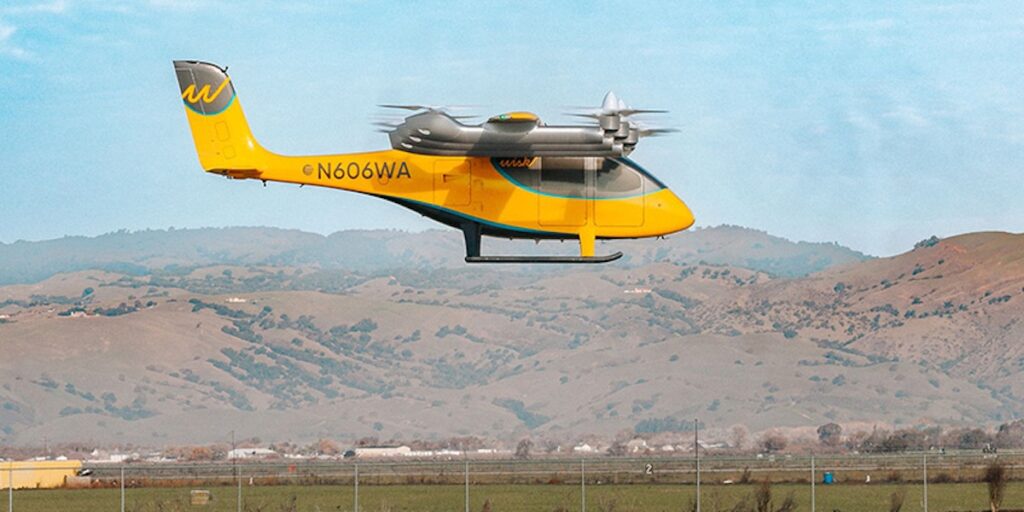
Aurora Flight Sciences supported the first flight of Wisk Aero’s Generation 6 autonomous, all-electric passenger aircraft, providing engineering expertise across a range of technical disciplines
Ascend Engineering has delivered upstream contributions to PX4-Autopilot, QGroundControl, MAVROS and sensor drivers, alongside official fixed-wing flight testing for the PX4 v1.17 Beta release on behalf of the Dronecode Foundation, strengthening the open-source PX4 ecosystem
Aurora Flight Sciences outlines how decades of autonomy research, flight testing, and simulation are combined to develop practical autonomous flight systems for next-generation aircraft operating in shared airspace
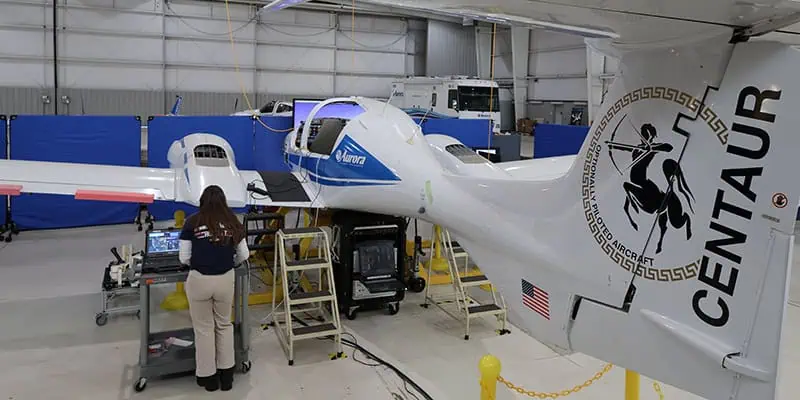
Aurora Flight Sciences has enhanced its Centaur Hardware-in-the-Loop Simulator to advance autonomous flight system testing, improving efficiency and reliability before aircraft reach flight trials
Aurora Flight Sciences uses its ATLAS infrastructure to streamline autonomy development through layered simulation, hardware integration, and high-frequency flight testing on UAS platforms
Aurora Flight Sciences, a Boeing Company, is participating in NASA’s University Leadership Initiative, contributing tools, expertise, and testing capabilities to university-led aerospace research projects
The Centaur optionally piloted aircraft (OPA) from Aurora Flight Sciences completed flight tests in the National Airspace System (NAS), equipped with an EO/IR camera, maritime surveillance radar, and Automatic Identification System payloads
The latest unmanned systems news, straight to your inbox.
Get our weekly roundup of technology developments, new products and industry news.
THANK YOU FOR SIGNING UP
Thanks for joining us. Check your inbox.
We've sent you an email. Click the confirmation link to complete your subscription to the weekly eBrief. In the meantime, explore the latest news, suppliers and technologies on UST.
Advancing Unmanned Systems Through Strategic Collaboration
UST works with major OEMs to foster collaboration and increase engagement with SMEs, to accelerate innovation and drive unmanned systems capabilities forward.