Aurora Flight Sciences, a Boeing company, supports the development of advanced vertical flight systems through autonomy expertise, rapid prototyping, and integrated testing capabilities.
Aurora’s experience spans rotorcraft research, VTOL demonstrators, and small Unmanned Aircraft Systems (sUAS). Its development approach begins with testing in controlled environments before advancing to increasingly complex operational scenarios as systems demonstrate readiness.
GoldenEye VTOL Development
Aurora’s GoldenEye family of ducted fan aircraft established an early foundation in unmanned vertical flight research.
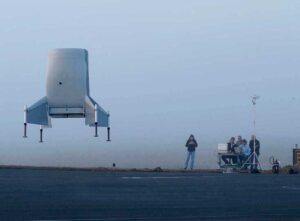
Aurora’s first unmanned vertical‑lift aircraft, the GE-100 prototype, completed its first flight in 2003.
The GE-100 prototype completed its first flight in 2003 and served as the basis for later aircraft. Introduced in 2004, the GE-50 incorporated patented free-wing technology and autonomous flight capabilities, later receiving FAA experimental airworthiness certificates for operation within the National Airspace System. The GE-80, first flown in 2005, became the first ducted fan UAV powered by a heavy fuel engine.
Passenger Air Vehicle
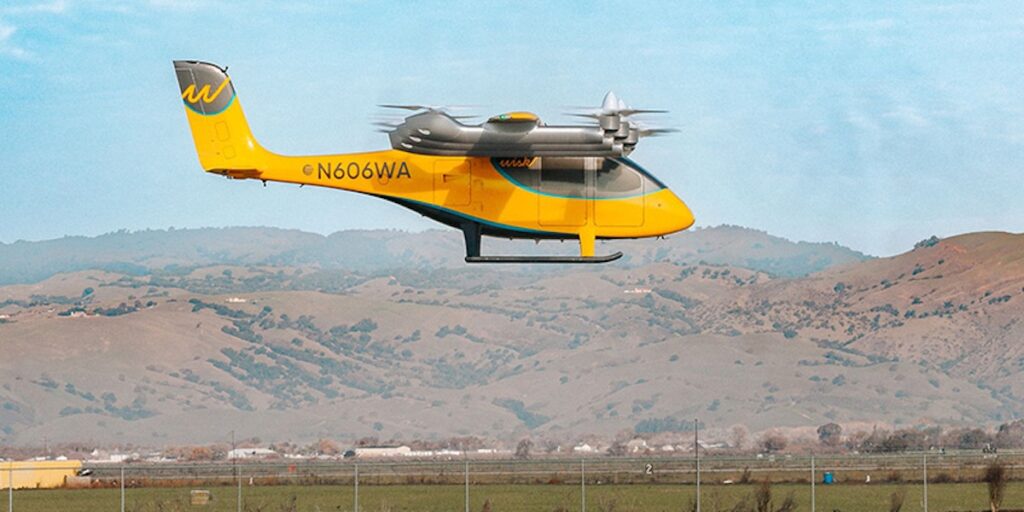
Aurora’s autonomous electric VTOL Passenger Air Vehicle (PAV) first flew in 2019 and contributed to industry efforts in autonomous urban air mobility. Designed for fully autonomous operation, the aircraft integrated intelligent flight-management capabilities for each phase of flight. The program informed requirements and design considerations for future autonomous and electric vertical-lift concepts.
Autonomous Aerial Cargo Utility System
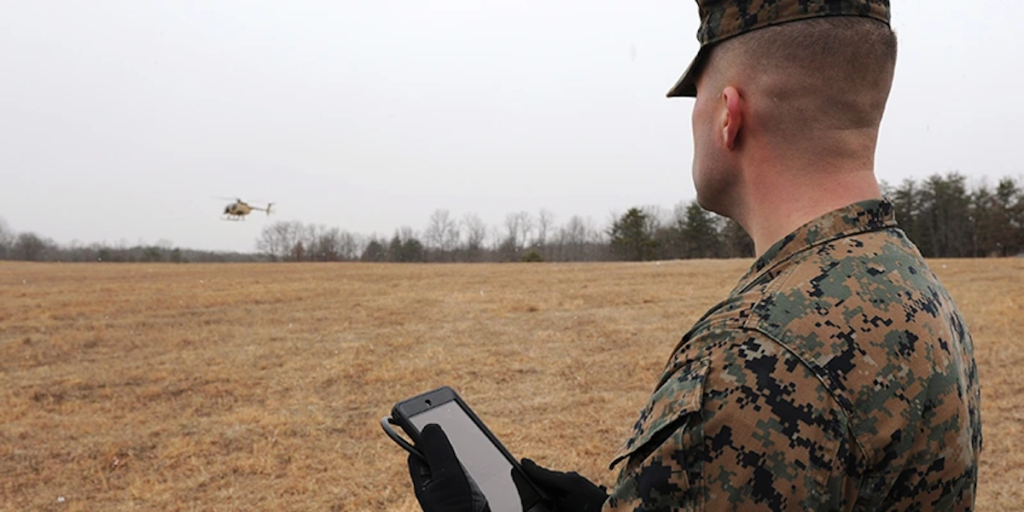
The Autonomous Aerial Cargo Utility System (AACUS) program demonstrated autonomous cargo resupply capabilities for the U.S. Marine Corps. Using radar, LIDAR, and autonomy software, AACUS converted conventional helicopters into pilotless platforms capable of route selection, obstacle avoidance, and autonomous landing operations.
Aurora initially tested AACUS using a Boeing unmanned H-6U Little Bird and a Bell 206 helicopter. In 2017, the company demonstrated the system aboard a modified UH-1 Huey at Marine Corps Base Quantico.
Simulation & Risk Reduction
Simulation and integrated testing remain central to Aurora’s development process. The company’s Hardware-in-the-Loop Simulator (HILSIM) enables engineers to evaluate flight-critical hardware and software before flight testing begins, supports early integration, and reduces development risk.
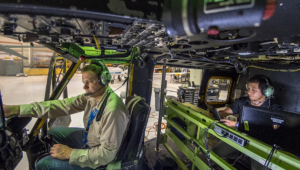
HIL simulation is a vital part of Aurora’s flight test process, reducing risk and shortening test schedules by validating software, hardware, and interfaces before an aircraft reaches the flight line.
Aurora’s Cambridge, Massachusetts flight simulation laboratory supports autonomy testing, human-machine integration, and applied aerospace research.
Through simulation, surrogate aircraft, unmanned systems, and optionally piloted flight testing, Aurora continues to support customers developing advanced VTOL and autonomous aircraft technologies.
For more information, visit the Aurora Flight Sciences’ website.