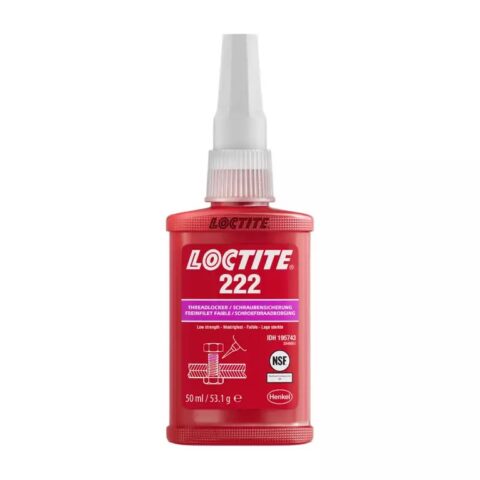
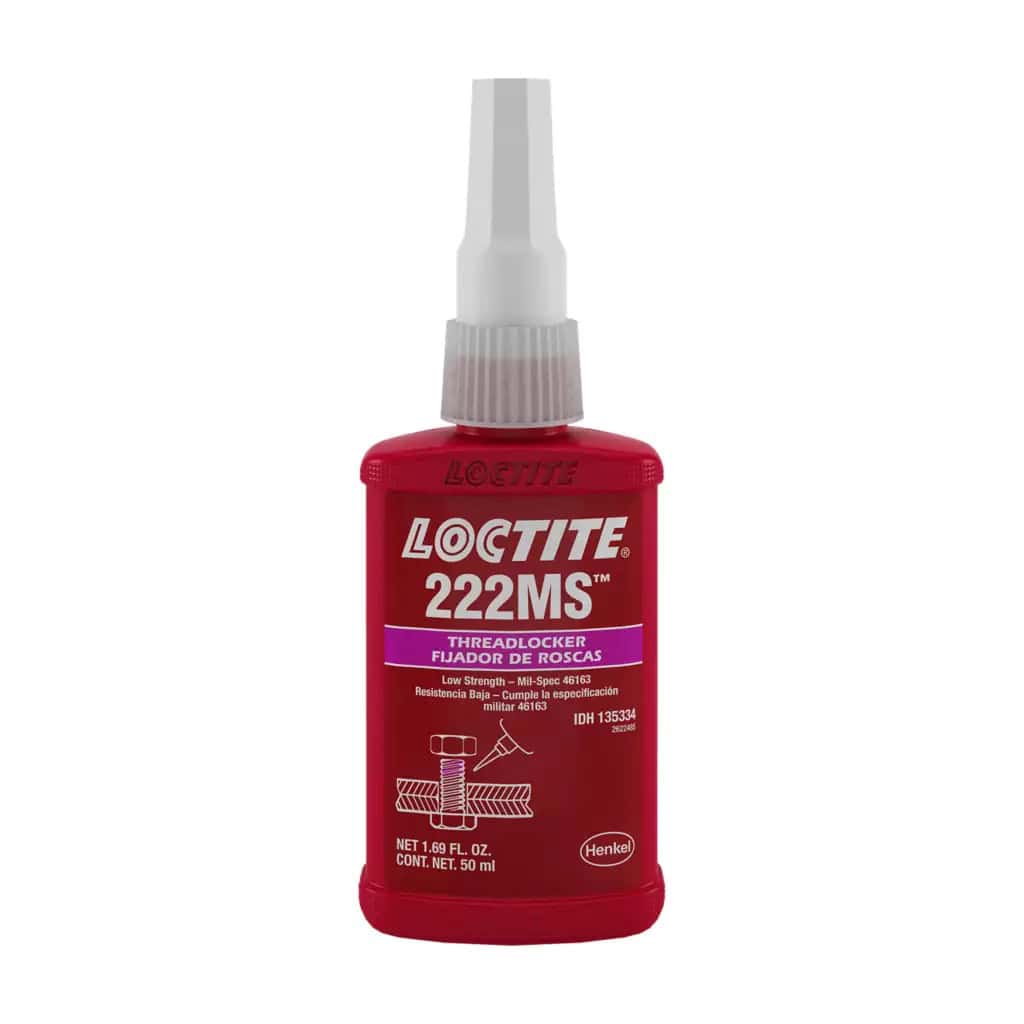
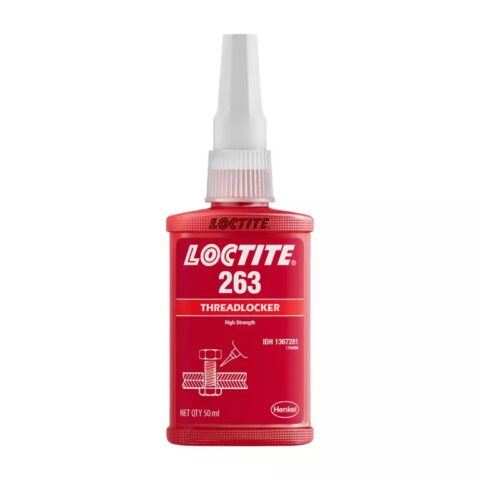
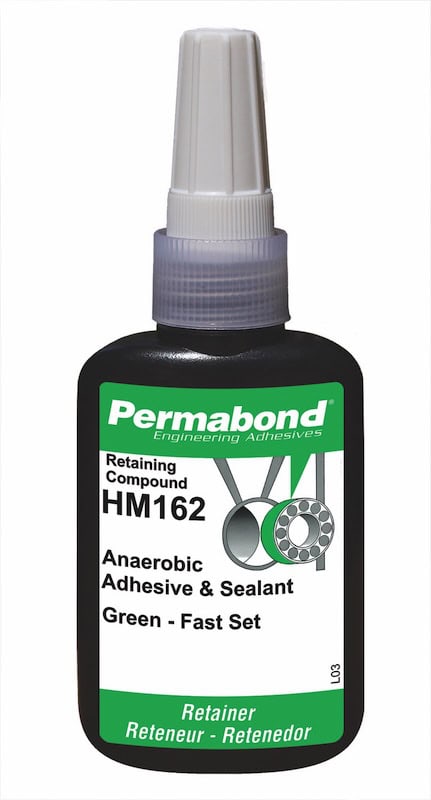
Threadlocker and retaining compounds are chemical locking and retention solutions used to secure threaded fasteners and cylindrical mechanical joints across UAVs, UGVs, USVs, and UUVs. Threadlockers help resist fastener loosening caused by vibration, shock, and cyclic loading, while retaining compounds secure bearings, shafts, hubs, bushings, gears, and sleeves.
This category features leading manufacturers of threadlocker and retaining compounds, offering removable, medium- and high-strength, high-temperature, and low-viscosity formulations.
If you design, build or supply Threadlockers & Retaining Compounds, create a profile to showcase your capabilities and connect with visitors who have an active requirement for your solutions.
Overview of Threadlockers & Retaining Compounds for Drones & Unmanned Systems Development
Overview by
William Mackenzie
Updated:
Introduction to Threadlockers & Retaining Compounds
Threadlockers and retaining compounds provide chemical locking and retention for mechanical assemblies used throughout unmanned aerial, ground, surface, and underwater systems. Many products in these categories use anaerobic chemistry, curing when confined between suitable mating surfaces with oxygen excluded and in contact with metal. Threadlockers fill spaces between engaged threads, while retaining compounds are primarily used between cylindrical components such as shafts, bearings, bushings, hubs, and sleeves.
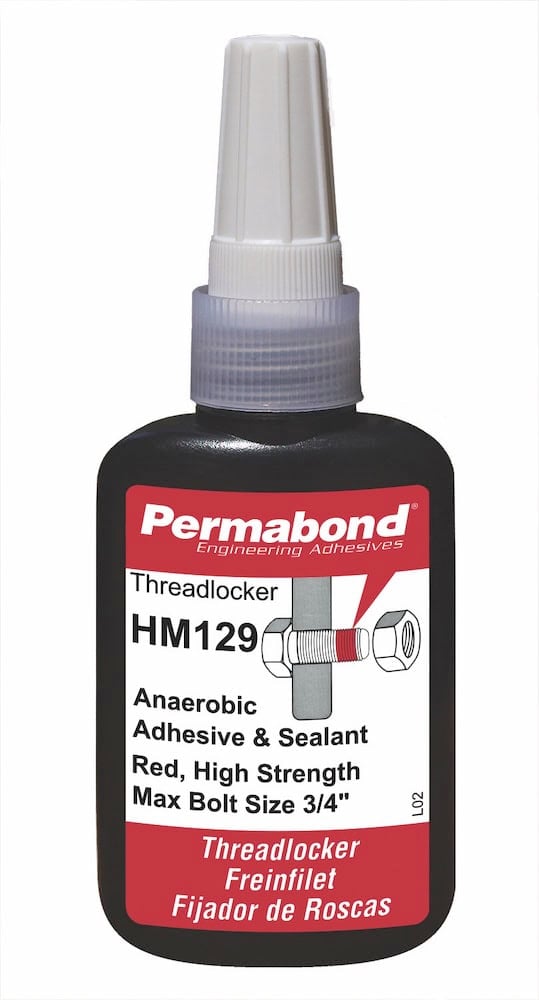
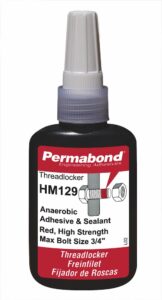
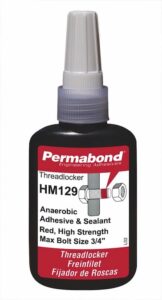
HM129 by Permabond
For unmanned system designers, these adhesives can help maintain joint integrity in assemblies exposed to vibration, shock, thermal cycling, and repeated dynamic loading. Selection requires more than choosing a threadlocker by color. Strength, viscosity, joint clearance, substrate material, temperature, servicing requirements, surface condition, and cure behavior should all be considered against the mechanical design and operating environment.
Strength Grades of Threadlocker & Retaining Compounds
Removable Threadlockers and General-Purpose Retaining Compounds
A removable threadlocker is suited to smaller fasteners or assemblies that need regular adjustment, inspection, or servicing. Low-strength formulations help resist unwanted loosening while allowing disassembly with conventional tools. General-purpose retaining compounds perform a related function on cylindrical joints, filling controlled clearances between mating components and curing to form a bonded assembly. Their actual strength and ease of disassembly depend on the formulation, joint dimensions, and materials.
Serviceable Threadlockers and Fast-Curing Retaining Compounds
Medium-strength threadlockers provide a balance between locking performance and maintainability. A medium-strength threadlocker for screws may be appropriate for propulsion, payload, drivetrain, sensor, and structural assemblies that need periodic access. Fast-curing retaining compounds are useful where production throughput is important, allowing cylindrical parts to develop handling strength more quickly. Actual fixture and full cure times depend on formulation, substrate, temperature, clearance, surface condition, and whether an activator is required.
Permanent Threadlockers and Retaining Compounds
A high-strength threadlocker is intended for joints where maximum resistance to loosening takes priority over easy disassembly. These products are sometimes described as red threadlocker, permanent threadlocker, or heavy duty threadlocker, although terminology varies by manufacturer. Permanent does not necessarily mean impossible to remove, as some high-strength products can be dismantled using localized heat and appropriate tools.
High-strength retaining compound performs a similar role in cylindrical assemblies where bearings, gears, sleeves, hubs, or shafts require substantial resistance to axial movement or rotation.
Wicking-Grade Threadlockers for Preassembled Fasteners
Wicking-grade threadlocker compound has low viscosity, enabling it to penetrate the engaged threads of certain already assembled fasteners through capillary action. This makes it useful where dismantling an assembly before adhesive application is undesirable or impractical. Typical uses can include adjustment screws, instrumentation hardware, and preassembled mechanical mechanisms, provided the thread fit, surface condition, and access allow sufficient penetration. Excessively large thread clearances can reduce effectiveness.
High-Temperature Threadlocking Compounds and Retaining Compounds
A high-temp threadlocker or high-temp retaining compound is designed to maintain useful mechanical performance at temperatures above the working range of standard formulations. These products may be required near electric motors, gearboxes, propulsion systems, brakes, actuators, or other heat-generating equipment. High-temperature threadlocker and high-heat threadlocker should be selected according to the manufacturer’s specified service temperature range and expected performance at the intended operating temperature rather than generic product descriptions alone.
Large-Gap and Gap-Filling Retaining Compounds
Gap-filling retaining compounds are formulated to accommodate larger clearances than products intended strictly for close-fitting cylindrical parts. They can be useful where manufacturing tolerances, wear, repair work, or existing component geometry create a wider bondline between a shaft and housing. The allowable diametral clearance varies by formulation, making joint clearance an important design parameter when selecting an anaerobic retaining compound.
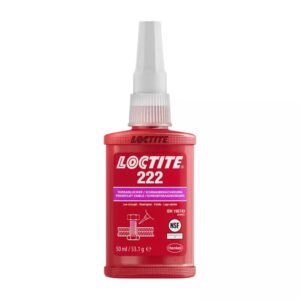
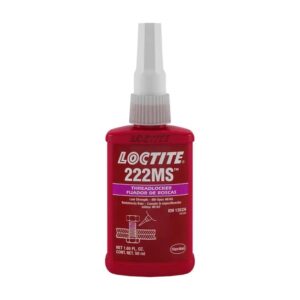
LOCTITE® 243 by Henkel
Low-Viscosity Retaining Compounds for Close-Fitting Assemblies
Low-viscosity retaining compounds flow readily into narrow clearances between cylindrical metal components. They are particularly relevant to precision bearings, bushes, sleeves, gears, and shaft-mounted parts where only a thin adhesive layer is required. Matching viscosity and specified gap capability to the joint helps promote complete coverage without unnecessarily affecting the intended fit or assembly process.
Applications of Threadlocker & Retaining Compounds in Unmanned Systems
Threadlocker adhesive and retaining compounds can be integrated across unmanned platforms wherever threaded or cylindrical mechanical joints require additional resistance to loosening or movement. The appropriate chemistry depends on the type of joint, serviceability requirements, loads, substrate, and environmental exposure.
Component, subsystem, or payload
Typical use of threadlocker and/or retaining compound
Electric motors and propulsion units
Screw threadlocker can secure mounting and housing fasteners, while retaining compounds can support cylindrical motor and shaft interfaces.
Propeller, rotor, and drivetrain assemblies
Threadlocker can help secure threaded hardware exposed to vibration, while retaining compounds can retain gears, hubs, sleeves, and shaft-mounted parts. For safety-critical or manufacturer-controlled joints, use should remain consistent with the specified fastener, locking method, materials, and tightening procedure.
Gearboxes and transmissions
Threadlockers may secure housing and mounting fasteners, with retaining compounds used for bearings, bushes, gears, and cylindrical couplings.
Gimbals, cameras, and sensor payloads
Removable threadlocker can secure brackets, adjustment mechanisms, and payload hardware while preserving service access.
Airframes, chassis, and structural assemblies
Threadlocker for screws and bolts can help resist loosening caused by vibration and cyclic loading.
Bearings and bearing housings
Retaining compound can secure the interface between a bearing and its housing or shaft where compatible with the bearing arrangement and required fit.
Shafts, hubs, couplings, and sleeves
Retaining compounds can bond cylindrical surfaces and contribute to axial or torsional load transfer across the joint.
Antennas and communications hardware
Serviceable threadlocker can secure mounts and threaded adjustment points while allowing later inspection or replacement.
Landing gear, wheels, and suspension mechanisms
Suitable threadlockers can be applied to selected threaded fasteners exposed to shock and vibration.
USVs and UUVs
Threadlocking and retaining compounds can be used in propulsion, sensor, actuator, and mechanical assemblies where the formulation is compatible with the intended environmental and fluid exposure.
Selecting Threadlockers & Retaining Compounds for Unmanned Platforms
Choosing the correct threadlocker glue, screw locking adhesive, or retaining compound requires the adhesive to be matched to both the mechanical joint and the unmanned platform’s operating environment. The most important considerations include:
Required strength and serviceability: Low or medium-strength threadlockers suit assemblies needing periodic disassembly, while high strength threadlocker and high strength retaining compound suit longer-term retention.
Joint geometry, fastener size, and fit: Thread diameter, engagement length, cylindrical clearance, and bondline thickness influence viscosity, strength grade, and gap-filling requirements.
Substrate material and surface condition: Steel, stainless steel, aluminum, and plated surfaces can cure differently. Some formulations may need an activator, while others cure on passive metals without primer. Contamination and coatings can also affect performance.
Operating environment and temperature: Vibration, shock, chemicals, lubricants, fuels, moisture, and heat should be considered when selecting standard or high temperature threadlocker and retaining compound formulations.
Assembly process: Liquid threadlockers can affect thread friction and clamp load. Where preload is critical, tightening torque should be validated for the actual fastener, coating, threadlocker, and assembly condition.
Material compatibility: A threadlocker for plastic or plastic threadlocker application must be compatible with the polymer, as some anaerobic formulations can weaken or stress-crack sensitive plastics.
These factors should be assessed together so the selected threadlocker adhesive or retaining compound delivers the necessary retention without compromising assembly, maintenance, material compatibility, fastener preload, or long-term reliability.
The latest unmanned systems news, straight to your inbox.
Get our weekly roundup of technology developments, new products and industry news.
THANK YOU FOR SIGNING UP
Thanks for joining us. Check your inbox.
We've sent you an email. Click the confirmation link to complete your subscription to the weekly eBrief. In the meantime, explore the latest news, suppliers and technologies on UST.
Advancing Unmanned Systems Through Strategic Collaboration
UST works with major OEMs to foster collaboration and increase engagement with SMEs, to accelerate innovation and drive unmanned systems capabilities forward.