
Showcase your capabilities
If you design, build or supply System-on-Modules (SoM), create a profile to showcase your capabilities and connect with visitors who have an active requirement for your solutions.




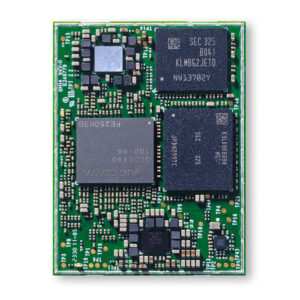
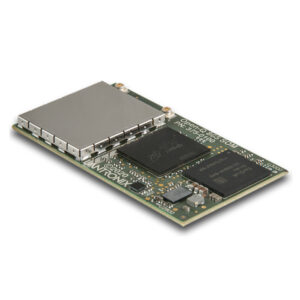
System-on-Modules (SoM) are compact embedded computing boards that integrate processors, memory, and supporting circuitry to provide scalable onboard computing for UAVs, drones, autonomous vehicles, marine platforms, and robotics.
This category showcases system-on-module manufacturers offering ARM, x86, RISC-V, FPGA-based, and AI-accelerated solutions.
Read the Technology Overview

| Overview | Products | Link | ||
|---|---|---|---|---|
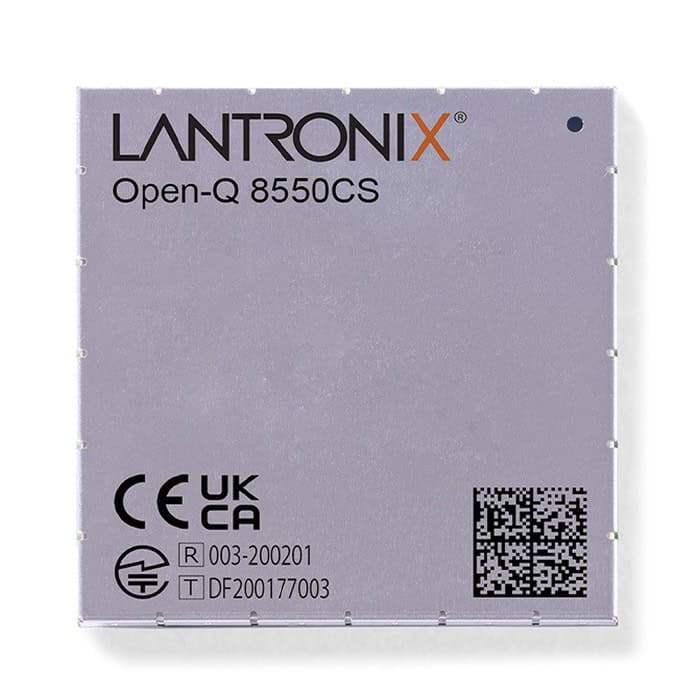
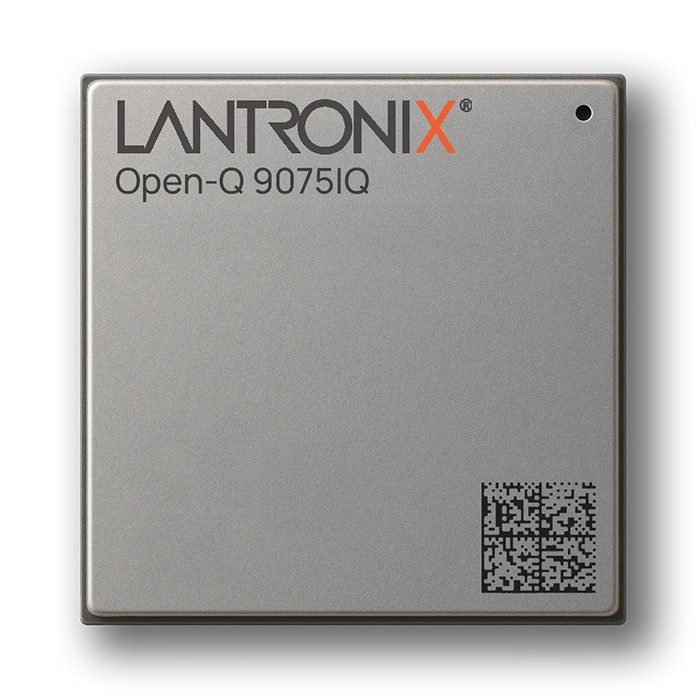
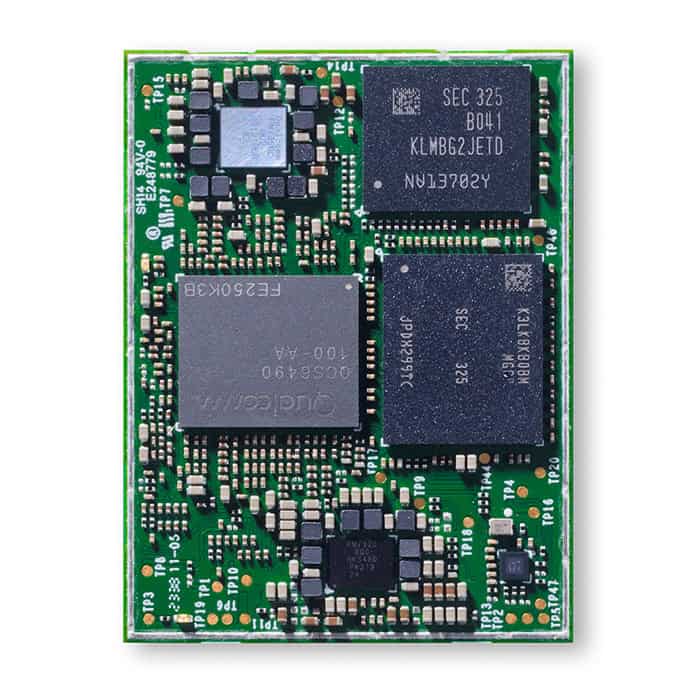
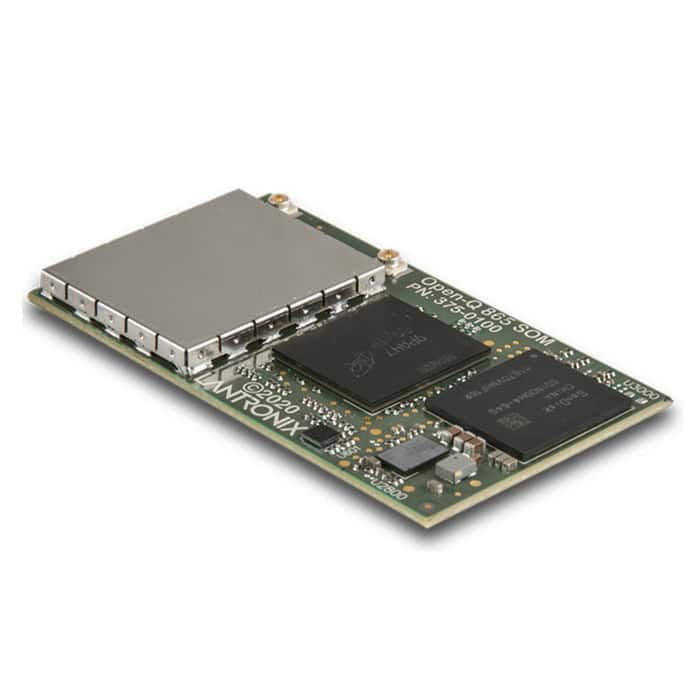
| Lantronix | United States of America | Edge AI Compute & SOM Platforms for Next-Generation UAV Autonomy & Robotics |
|
View Profile |
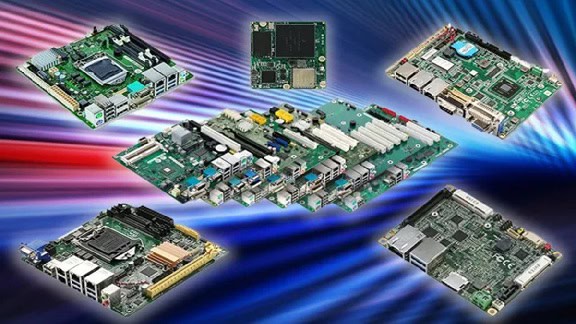
| Review Display Systems | United Kingdom | ARM & x86 System-on-Modules (SoM) for Drones & Robotics |
|
View Profile |
If you design, build or supply System-on-Modules (SoM), create a profile to showcase your capabilities and connect with visitors who have an active requirement for your solutions.

System-on-Modules (SoMs) are compact embedded computing boards that integrate processing hardware, memory, and supporting circuitry into a single module. Typically designed for integration with application-specific carrier boards, SoMs simplify embedded hardware development while meeting the computational requirements of unmanned systems, autonomous vehicles, and robotics.
System-on-Module manufacturers offer solutions based on a range of processor architectures, including configurations optimized for AI, real-time processing, machine vision, and general-purpose computing. By integrating essential computing components into a single module, embedded SoMs enable engineers to develop scalable computing platforms with reduced hardware development complexity and potentially shorter times to market.
ARM SoMs are widely used in embedded systems where energy efficiency and compact hardware design are important considerations. Depending on their processor configuration and power requirements, these modules are well suited to battery-powered drones, robotic platforms, and autonomous vehicles operating within restricted power budgets.
An x86 System-on-Module provides general-purpose computing capabilities and access to an established software ecosystem. These modules are particularly useful for applications that require compatibility with existing x86-based software, including mission management, sensor processing, and onboard data analysis.
RISC-V SoMs incorporate processors based on an open instruction set architecture, which allows for a diverse range of processor implementations. Available configurations support both general-purpose embedded computing and specialized applications with requirements such as real-time processing or hardware acceleration.
An FPGA System-on-Module incorporates programmable logic that can be configured for dedicated processing tasks, either independently or in conjunction with embedded processors. FPGA SoMs are particularly suited to parallel data processing, custom hardware interfaces, deterministic control, and low-latency sensor processing.
AI SoMs incorporate specialized processing resources, such as Graphics Processing Units (GPUs) or Neural Processing Units (NPUs), to accelerate machine learning workloads. In autonomous systems, these modules support applications such as onboard object recognition, environmental perception, and the processing of information used by autonomous decision-making software.
Heterogeneous SoMs combine different types of processing hardware within a single module, allowing computational workloads to be distributed across the resources best suited to each task. This approach can improve overall processing efficiency in autonomous systems that run navigation, perception, and mission software concurrently.
Ruggedized and industrial System-on-Modules are available with features such as extended-temperature components, mechanically secure connections, and conformal coatings. The ability of a module to withstand demanding environmental conditions depends on its design, specified operating limits, and qualification testing, with additional protection often provided by the integrated system.
SoM hardware provides the computational resources needed to execute navigation algorithms, calculate routes, and process environmental information. These capabilities support autonomous movement and obstacle avoidance across aerial, ground, and marine platforms.
By combining information from multiple onboard sensors, embedded SoMs can support sensor fusion algorithms used to estimate a platform’s position, orientation, and movement, as well as assess its surrounding environment.
Robotics System-on-Modules can process measurements from cameras, LiDAR systems, and other sensors to support SLAM algorithms. These algorithms construct or update maps of the surrounding environment while simultaneously estimating the platform’s location within them.
SoMs equipped with suitable processing hardware can run algorithms for image enhancement, feature extraction, object detection, and visual tracking, supporting machine vision applications in autonomous navigation, inspection, and surveillance.
As part of an onboard computing architecture, SoMs can coordinate mission sequences, manage payload operation, and process collected data before it is stored locally or transmitted to remote operators.
When equipped with appropriate hardware and real-time software architectures, SoMs can execute time-critical control algorithms, coordinate robotic movements, and communicate with dedicated motor controllers and actuator systems.
Embedded computing modules can support a range of communications and data management functions, including data routing, protocol conversion, compression, and onboard storage. Processing information locally can also reduce the volume of data that needs to be transmitted over bandwidth-constrained communications links.
The architecture of an embedded System-on-Module influences its processing capabilities, software compatibility, power consumption, and suitability for different autonomous system workloads. Depending on the module configuration, hardware components may include:
Processing devices access system memory and exchange data through internal interconnects, while peripheral interfaces allow the module to communicate with application-specific hardware. The selection and integration of these components influence the computational performance, hardware integration requirements, and overall energy efficiency of the module.
Through carrier board connections, peripheral interfaces, and communications protocols, System-on-Modules can interface with a wide range of onboard hardware, including:
Compatibility between SoM hardware and connected subsystems depends on factors such as carrier board design, software drivers, and interface configuration. The power delivery and thermal management systems must also accommodate the operating requirements of the selected module.
System-on-Module suppliers may develop hardware in accordance with standardized module specifications, as well as application-specific environmental and qualification requirements. Depending on the module design and intended application, relevant standards and specifications may include:
Depending on the intended installation, environmental qualification and compliance requirements may need to be evaluated at the module, carrier board, and integrated equipment levels. Testing or qualification at the module level does not automatically establish compliance of the complete system.
Ongoing developments in embedded computing are expanding the processing capabilities of SoMs while addressing the physical, electrical, and thermal constraints of autonomous platforms. Key areas of development include:
Together, these developments support the integration of increasingly capable onboard computing hardware into compact, power-constrained unmanned systems.


 Searching Companies & Products