
Showcase your capabilities
If you design, build or supply FPV Drone Motors, create a profile to showcase your capabilities and connect with visitors who have an active requirement for your solutions.




FPV drone motors are compact electric propulsion systems designed to deliver the torque, rotational speed, and responsive throttle control required by first-person view UAVs. Available in brushless outrunner, inrunner, and brushed configurations, these motors can be selected according to aircraft size, propeller requirements, and flight characteristics.
This page features FPV drone motor manufacturers offering propulsion solutions for applications including FPV racing, cinematic filming, infrastructure inspection, surveillance, and tactical reconnaissance.
Read the Technology Overview
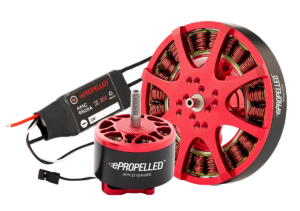
Cutting-Edge Propulsion Systems for UAVs: Drone Motors, ESCs, and Propellers

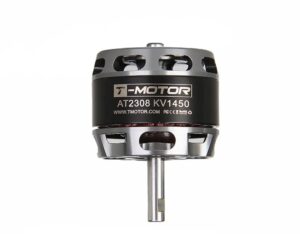
High Performance Electric Propulsion Systems for Uncrewed and Autonomous Platforms

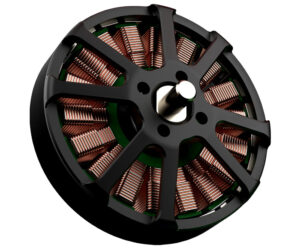
Power & Propulsion Solutions for UAVs: Drone Motors, ESCs, Batteries & Propellers

If you design, build or supply FPV Drone Motors, create a profile to showcase your capabilities and connect with visitors who have an active requirement for your solutions.

First-Person View (FPV) drone motors are compact electric propulsion motors designed to provide the rotational power, torque, and rapid throttle response required by FPV aircraft. Most modern FPV platforms use brushless outrunner motors, which provide high power-to-weight ratios and are controlled by Electronic Speed Controllers (ESCs), supporting applications including racing, cinematic filming, inspection, surveillance, and specialized Unmanned Aerial Vehicle (UAV) operations.
Available in a wide range of stator sizes, motor speed constants (KV ratings), and mechanical configurations, FPV motors can be matched to different propeller sizes, battery voltages, aircraft weights, and payload requirements. High-performance brushless FPV drone motors can support rapid acceleration and agile maneuvering, while efficiency-focused configurations are better suited to longer flight times and heavier payloads when appropriately matched with the wider propulsion system.
FPV drone motors are available in several architectures and performance configurations suited to different aircraft sizes and operating requirements. Brushed and brushless designs represent distinct motor types, while classifications based on KV rating, torque, or physical size describe characteristics that can overlap within the same motor.
Brushless outrunner motors dominate modern FPV propulsion, while KV ratings, stator dimensions, winding characteristics, and mechanical construction provide further options for matching individual motors to specific aircraft and flight requirements.
Motor requirements vary across FPV drone classes, depending on aircraft size, propeller configuration, payload weight, and intended application. The following table compares typical motor size considerations, performance priorities, and applications for different FPV drone platforms.
| FPV Drone Class | Motor Size Considerations | Performance Priorities | Typical Applications |
| Micro and Tiny Whoop Drones | Very small, lightweight motors designed for miniature propellers and compact airframes. | Low motor weight, efficient operation at small scales, and sufficient responsiveness for controlled flight. | Indoor FPV flying, micro racing, and close-proximity flight. |
| Small FPV and Cinewhoop Drones | Compact motors selected to accommodate small propellers, protective guards, and lightweight camera payloads. | Balanced thrust, smooth throttle response, and manageable power consumption. | Cinematic filming, confined-space inspection, and compact freestyle drones. |
| Standard FPV Racing and Freestyle Drones | Mid-sized brushless motors designed for direct-drive propulsion and rapid changes in rotational speed. | High thrust-to-weight ratios, fast acceleration, responsive control, and resistance to repeated high-load operation. | FPV racing, freestyle flying, and action-camera filming. |
| Long-Range FPV Drones | Motors matched to larger, efficiency-oriented propellers and the electrical requirements of extended flights. | Efficient cruising, reduced power consumption, and reliable operation over sustained flight periods. | Long-range exploration, aerial observation, and extended-distance filming. |
| Large and Heavy-Lift FPV Drones | Larger motors with sufficient torque and thermal capacity to support increased propeller loads and aircraft weight. | Sustained thrust, payload capacity, thermal management, and compatibility with higher-power electrical systems. | Professional cinematography, specialized inspection, and payload-carrying UAV operations. |
An FPV drone motor consists of several electrical and mechanical components that work together to convert electrical energy into rotational motion. In a brushless system, the ESC electronically switches current through the stator windings to create controlled magnetic fields, which interact with the permanent magnets in the rotor and generate torque. The resulting rotation turns the motor shaft or bell and drives the propeller to produce aerodynamic thrust.
The ESC adjusts motor operation in response to commands from the drone’s flight controller, allowing thrust from individual propellers to be varied for stabilization and maneuvering. Precision bearings, balanced rotors, robust shafts, suitable winding insulation, and effective thermal design all contribute to reliable performance during rapid acceleration and sustained high-load operation.
FPV racing drones require motors capable of rapid acceleration, high rotational speeds, and highly responsive throttle changes. High-performance brushless outrunners are commonly paired with lightweight frames and relatively small, high-pitch propellers to achieve strong thrust-to-weight ratios, with racing configurations prioritizing dynamic response, low motor mass, and sufficient power delivery during repeated acceleration and deceleration.
Cinematic FPV drones use motors selected to balance smooth flight control, maneuverability, efficiency, and camera payload requirements. Suitable motor and propeller combinations can help minimize vibration while providing consistent thrust during controlled aerial movements, with larger cinematic platforms using higher-torque motors for heavier professional camera equipment and smaller systems prioritizing compact propulsion assemblies and reduced total weight.
Cinewhoop drones typically use compact brushless motors with propellers surrounded by protective guards or ducts, making them well suited to close-proximity filming and operation through restricted spaces. Motor selection must account for propeller loading, aircraft weight, sustained throttle requirements, and the aerodynamic effects of the duct or guard arrangement, particularly when the aircraft is carrying cameras or other payloads.
FPV inspection and surveillance platforms use electric motors to provide controlled maneuverability around infrastructure, industrial equipment, and other areas requiring close-range observation. Efficient motor and propeller combinations can support longer operating periods, while compact motors enable smaller aircraft to access confined spaces, with reliability, vibration characteristics, and adequate thrust reserves becoming particularly important when inspection cameras and additional sensors are carried.
Heavy-lift FPV platforms require motors capable of driving larger propellers and generating substantial thrust under increased aircraft loads. Larger stators, appropriately selected KV ratings, and high-current ESCs are commonly used to support heavier camera systems, sensors, and other equipment, while propulsion efficiency, electrical current limits, cooling, and thermal management become increasingly important as aircraft weight and sustained power requirements rise.
Tactical FPV drones use compact electric propulsion systems for applications such as reconnaissance, observation, and operation within constrained environments. Motor configurations may prioritize rapid maneuverability, compact construction, high thrust-to-weight ratios, efficiency, or compatibility with specialized payloads, while reliability, electrical compatibility, ease of replacement, and operation under demanding field conditions may also influence selection.
FPV drone motor development continues to focus on improving efficiency, power density, durability, thermal performance, and application-specific optimization. Advances in electromagnetic design, materials, cooling, and manufacturing are supporting motors tailored to an increasingly wide range of FPV aircraft and mission requirements.
These developments are supporting a broader range of FPV motor configurations for recreational, commercial, and specialized unmanned aircraft applications.


 Searching Companies & Products


