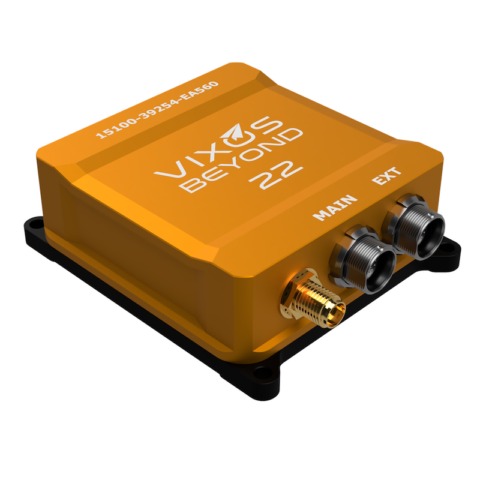
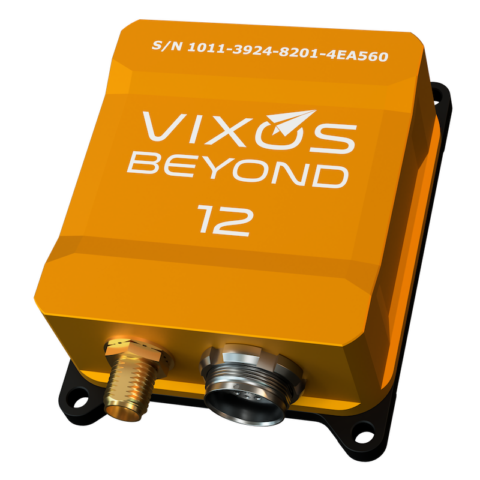
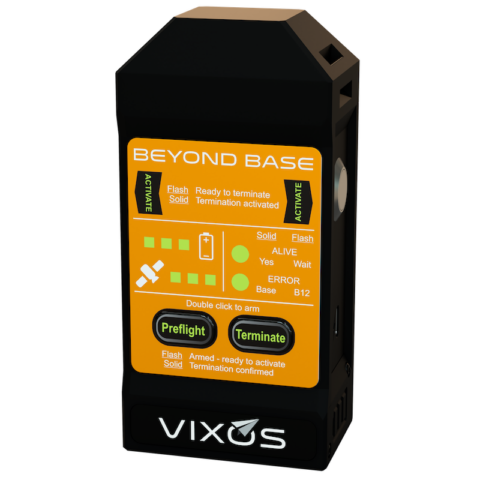
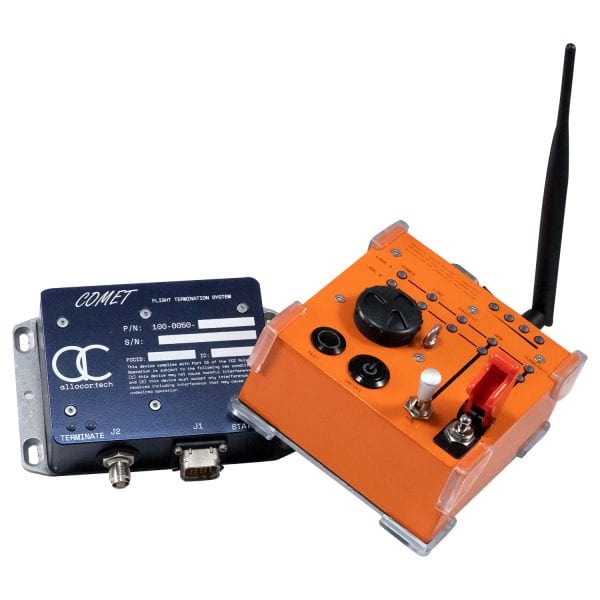
Drone Flight Termination Systems (FTS) provide a dedicated emergency means of ending UAV flight when normal control, contingency procedures, or automated recovery cannot maintain safe containment. These systems may use manual or autonomous activation and can incorporate independent transmitters, receivers, control modules, switching hardware, and segregated power or communications paths.
This page features suppliers of drone FTS for propulsion shutdown, flight-control disablement, controlled emergency descent, and parachute-assisted recovery.
If you design, build or supply Flight Termination Systems (FTS), create a profile to showcase your capabilities and connect with visitors who have an active requirement for your solutions.
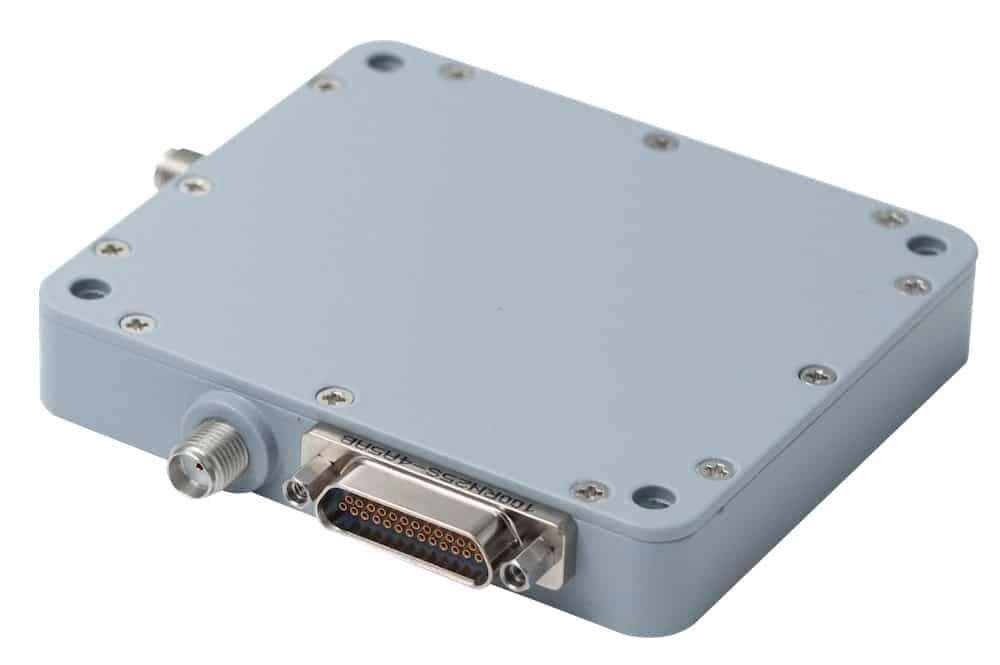
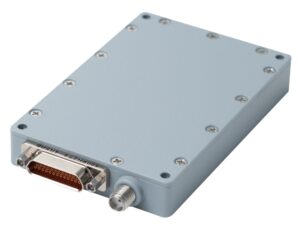
The FlightTermination Receiver (FTR) from TUALCOM is a compact airborne unit designed to receive... ......vers reliable tone-based command decoding for space launch vehicles and UAV flight safety...
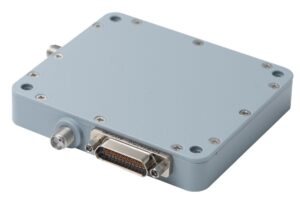
The FlightTermination Transmitter (TUALFTT) from TUALCOM generates precise FM-based termination... ...t and reliable flighttermination solution with long operational life and reverse-polarity power...
The Comprehensive Guide to Drone Flight Termination Systems
Overview by
William Mackenzie
Updated:
Introduction to Drone Flight Termination Systems
Drone Flight Termination Systems (FTS) provide a dedicated means of ending flight when an unmanned aircraft can no longer be kept within acceptable safety or containment limits. They provide an emergency function rather than a routine recovery mechanism, intended for situations where normal control, contingency procedures, or automated recovery cannot provide an adequate response.
A UAV flight termination system may be initiated by the remote pilot, triggered automatically, or support both modes. Depending on the architecture, flight termination system components can include an onboard control module, flight termination receiver, dedicated transmitter, switching hardware, suitably segregated power arrangements, and a separate communications path. System design must consider not only whether flight termination can be commanded, but also command reliability, prevention of unintended activation, and aircraft behavior after termination is triggered.
Key Flight Termination Methods
Different termination methods produce different descent profiles and containment outcomes. Selection therefore depends on aircraft configuration, propulsion architecture, operating conditions, and the distance the aircraft may travel after activation.
Propulsion shutdown: The FTS interrupts motor commands, electrical power, fuel delivery, ignition, or another propulsion function. This can be effective for preventing further powered flight, but the remaining trajectory depends heavily on aircraft type, speed, altitude, and aerodynamic characteristics.
Flight control disablement: Selected control or actuator functions can be interrupted where this creates the required termination response. The method must be engineered around the aircraft’s dynamics, since removing control authority alone does not guarantee rapid or predictable containment.
Controlled emergency descent: Some autonomous flight termination systems retain limited control to force a defined descent while preventing continued mission flight. This should only be treated as flight termination where it meets the applicable requirement to terminate continued flight, rather than functioning as a normal contingency or recovery mode. The safety case must account for any flight-control, sensor, or actuator functions still required during the descent.
Parachute-assisted flight termination: Termination may be coordinated with a parachute or other descent-management system to reduce impact energy. Deployment altitude, airspeed, attitude, propulsion state, inflation time, and possible entanglement all influence the resulting performance.
Fixed-wing and multirotor termination: Fixed-wing UAS can retain significant glide capability after propulsion is removed, while multirotors generally lose lift more rapidly. Hybrid VTOL aircraft may require different termination responses in hover, transition, and forward flight.
The effectiveness of any method is ultimately determined by the complete post-activation trajectory and resulting impact or debris area, not simply by whether propulsion or flight controls have been disabled.
Triggering & Containment Measures
Operational Volume and Flight Boundaries
Flight termination can form part of a containment strategy designed to keep an aircraft from reaching higher-risk adjacent areas. Determining where termination must occur requires consideration of airspeed, altitude, wind, command latency, recognition time, system response time, and post-activation travel. Current EASA material links containment requirements to the operational volume, ground risk buffer, and adjacent areas.
Geofencing and Geocaging
Geofencing and geocaging manage aircraft movement relative to geographical boundaries, but they perform a different role from flight termination. Boundary logic may command the aircraft to stop, turn, return, or remain within a defined volume. The FTS provides a further emergency response when those measures cannot maintain containment, particularly where independence from the primary navigation, flight-control, or guidance system is required.
Loss of Command and Control Link
Loss of the main Command and Control (C2) link does not necessarily call for immediate termination. A UAS may first execute a predefined hold, return, or landing procedure. Where the safety architecture requires an independent emergency path, a dedicated flight termination transmitter and receiver can preserve termination capability even if the primary C2 link has failed or become unreliable. The termination path must itself have adequate availability for the intended operating range.
Flyaway Containment
A flyaway can develop when navigation, control, communications, or propulsion-management failures prevent the aircraft from following its intended flight path. Flight termination provides a final means of limiting continued travel, but its value depends on where the aircraft will descend after activation. For fast or high-glide platforms, sufficient termination distance and ground risk buffer are particularly important.
Automated Boundary-Based Activation
An autonomous flight termination system can monitor position, altitude, velocity, heading, and projected trajectory against predefined limits. Predictive triggering can initiate the termination sequence before a boundary is physically crossed, providing additional margin for processing and aircraft response. Where independence is required, the triggering logic and position source should be appropriately segregated from systems whose failure could cause the loss of containment. Thresholds must also prevent normal maneuvering close to the operating-volume boundary from causing unnecessary activation.
Core Applications of Drone Flight Termination Systems
BVLOS Drone Operations
Beyond Visual Line of Sight (BVLOS) operations depend more heavily on communications, navigation integrity, onboard monitoring, and predefined contingency logic than operations conducted under continuous direct observation. An FTS can provide an independent emergency containment function when those primary measures can no longer control the aircraft’s movement.
Operations Near Populated or Sensitive Areas
Where UAS operate close to people, infrastructure, restricted sites, or other sensitive locations, termination behavior must be considered alongside the risk of continued flight. Residual horizontal travel, descent rate, debris, and the likely impact area can all affect whether a proposed FTS strategy provides an appropriate safety benefit. Termination should not be assumed to reduce risk unless the resulting descent area has also been assessed.
Drone Delivery and Logistics
Delivery operations commonly use repeatable routes, corridors, or operating volumes. Automated monitoring can detect deviations from those areas, while remote or autonomous termination provides a final response to more serious containment failures. The termination logic must also account for where the aircraft is likely to descend along the route.
Industrial Inspection and Infrastructure Monitoring
Inspection UAS often operate close to bridges, towers, energy infrastructure, industrial plants, and other assets. A flight termination device can prevent a serious failure from developing into a wider loss of containment, but its activation should not create a greater hazard to workers, equipment, or adjacent operations.
Long-Range Fixed-Wing UAS
Fixed-wing aircraft can continue traveling well beyond the point of propulsion shutdown because of residual airspeed and glide performance. Effective termination therefore depends on altitude, aerodynamic characteristics, wind, terrain, post-termination control behavior, and available buffer distance as well as the operation of the FTS itself.
Heavy-Lift and Cargo Drones
Heavy-lift UAS introduce greater potential impact energy and may carry loads that affect stability during an emergency descent. Their flight termination architecture may therefore require closer attention to redundancy, payload retention, descent behavior, debris, and integration with impact-mitigation systems.
Drone-in-a-Box and Automated Operations
Automated UAS can conduct repeated missions with limited continuous pilot input. An onboard flight termination module may operate alongside health monitoring, containment logic, and remote supervision, with system status checked before launch and monitored during flight. Reliable indication of faults, correct arming state, and periodic functional checks are particularly important when automation reduces opportunities for direct operator intervention.
Standards, Regulation & Means of Compliance
Relevant regulatory material and technical standards address containment, architecture, verification, and the performance expected from flight termination functions.
SORA and UAS containment: The June 2026 EASA Easy Access Rules incorporate SORA 2.5, which addresses containment according to the operational volume, ground risk buffer, and risk associated with adjacent areas. Enhanced containment provisions include expectations around failure behavior, design assurance, and supporting evidence where adjacent-area risk requires additional protection.
EASA Light-UAS.2511: MOC Light-UAS.2511-01 provides a means of compliance developed for enhanced containment using an FTS. It includes architectural segregation, design checks, ground and flight testing, automatic and manual activation testing, and verification at representative operating distances. Its declarative applicability is principally aimed at Specific Category operations up to SAIL II and UAS within its stated dimensional and performance limitations.
EN 4709-006 flight termination requirements: EN 4709-006:2026 addresses means to terminate UAS flight and provides requirements, test methods, and pass criteria concerning safety-related architecture, descent performance, reduction of ground-impact effects, and manufacturer instructions. It is particularly relevant to demonstrating flight termination requirements associated with Class 5 UAS and emphasizes reliability, predictability, independence, and verification of the termination function.
ASTM standards for UAS design and terminology: ASTM F3341/F3341M-24 provides standardized UAS terminology, while ASTM F3298-24 covers baseline design, construction, and verification requirements for lightweight fixed-wing UAS. These sit within the wider ASTM F38 standards framework rather than serving as dedicated FTS specifications.
FAA operational approvals and safety cases: FAA Part 107 waiver guidance asks applicants to describe how the aircraft is contained and what termination system, if any, is installed. The guidance identifies an immediate drone kill switch as one example of information that may be relevant when explaining the aircraft and proposed safety measures.
Emerging Developments in Drone Flight Termination
Development is increasingly focused on making termination more predictable, less dependent on a single communications or control path, and better integrated with wider UAS safety functions.
Intelligent and predictive containment: Trajectory prediction can identify a developing containment breach before the aircraft reaches a fixed boundary, allowing the FTS to act with greater margin while accounting for aircraft speed, direction, latency, and stopping or descent distance.
Greater FTS autonomy: More onboard monitoring allows termination decisions to be made without relying solely on a remote operator or the availability of the primary C2 link. This increases the importance of robust trigger logic, independent sensing where required, and safeguards against unintended activation.
Integrated FTS and parachute systems: Coordinating flight termination with parachute deployment can make emergency descent behavior more predictable, particularly where propulsion shutdown alone would result in excessive impact energy or travel distance. Integration must also ensure that propulsion state and aircraft attitude do not compromise deployment.
Secure and resilient termination communications: Dedicated Radio Frequency (RF) paths, independent receivers, suitable frequency separation, command validation, and appropriate flight termination system antenna arrangements can improve the availability and integrity of remote termination commands when primary communications are degraded while reducing the risk of spurious activation.
These developments are making the drone FTS a more tightly integrated part of containment and emergency-response design, with increasing emphasis on system independence, predictable post-activation behavior, and the complete trajectory after termination rather than on the termination command alone.
Advancing Unmanned Systems Through Strategic Collaboration
UST works with major OEMs to foster collaboration and increase engagement with SMEs, to accelerate innovation and drive unmanned systems capabilities forward.