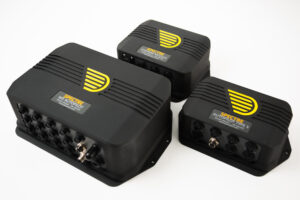
Autonomous vessel conversion systems enable existing crewed boats and marine vessels to be retrofitted for remote or autonomous operation, creating Unmanned Surface Vehicles (USVs) without requiring purpose-built platforms. These marine autonomy conversion kits integrate navigation controllers, steering and propulsion interfaces, communications systems, and autonomy software.
This page features suppliers of autonomous vessel conversion systems supporting remote helm control, waypoint navigation, obstacle detection, and automated mission execution.
If you design, build or supply Autonomous Vessel Conversion Systems, create a profile to showcase your capabilities and connect with visitors who have an active requirement for your solutions.
Next-generation marine navigation technology for smarter and safer vessels
Next-generation marine navigation technology for smarter and safer vessels
...ate-of-the-art Autonomous Navigation System combines advanced processing with an array of sensor... ...... onboard control system that manages all operational aspects from navigation to system...
The Complete Guide to Autonomous Vessel Conversion Systems
Overview by
William Mackenzie
Updated:
Introduction to Autonomous Vessel Conversion Systems
Autonomous vessel conversion systems enable existing boats and marine vessels to operate remotely or autonomously without requiring a purpose-built unmanned platform. By integrating navigation controllers, steering and throttle interfaces, communications equipment, and autonomy software, these systems can transform conventional crewed boats into Unmanned Surface Vehicles (USVs).
Marine autonomy conversion kits support applications ranging from hydrographic surveying and offshore inspection to maritime security and naval operations. Depending on the retrofit configuration, vessels can retain conventional manual controls while gaining remote helm operation, autonomous route execution, and additional navigation capabilities.
Key Types of Autonomous Marine Conversion Systems
Integrated USV Conversion Kits
Integrated USV conversion kits combine the principal hardware and software components required for unmanned vessel operation. Typically incorporating an onboard controller, navigation equipment, control interfaces, and communications hardware, these systems provide a coordinated architecture for converting compatible crewed vessels into remotely operated or autonomous platforms.
Modular Marine Autonomy Conversion Systems
Modular marine autonomy systems allow individual control, navigation, and communications components to be configured around existing vessel equipment. This approach supports incremental boat conversions, enabling operators to introduce remote control initially before integrating additional autonomy functions, perception sensors, or mission capabilities as operational requirements develop.
Remote-Control Vessel Conversion Kits
Remote conversion kits enable operators to control steering, throttle, and other supported vessel functions from a separate location. Commands are transmitted through a communications link to onboard control hardware, which operates the vessel’s control interfaces and relays available status information. This enables unmanned operation under direct human supervision without requiring autonomous navigation or decision-making capabilities.
Autonomous Navigation Retrofit Systems
Autonomous navigation retrofit kits introduce automated route planning and execution to vessels equipped with compatible control systems. Using positioning sensors and onboard navigation software, these systems generate steering and speed commands that allow vessels to follow predefined routes or survey patterns. Advanced configurations can also incorporate obstacle detection and automated collision avoidance.
Portable and Reconfigurable Autonomy Kits
Portable autonomy kits use compact controllers and adaptable electrical and mechanical interfaces to support temporary or transferable installations. Suitable for compatible small boats, research craft, and experimental platforms, these systems can reduce the need for permanent vessel modifications, although steering and throttle integration must still be verified for each installation.
Core Capabilities of Marine Autonomy Conversion Kits
Marine autonomy conversion kits integrate vessel control, positioning, communications, and safety functions to support remotely operated and autonomous missions. Depending on the hardware configuration and installed software, key capabilities include:
Autonomous Navigation and Route Execution: Waypoint tracking, predefined survey patterns, adaptive route planning, and inertial navigation support for short-term positioning during GNSS degradation, subject to accumulating drift.
Autonomous Steering and Propulsion Control: Closed-loop steering, throttle management, gear selection, and multi-engine coordination through compatible mechanical, hydraulic, or electronic control interfaces.
Dynamic Station-Keeping and Heading Hold: Automated steering and thrust adjustments to maintain a target position or heading against environmental disturbances, subject to available propulsion and steering authority.
Obstacle Detection and COLREGs Collision Avoidance: Integration of radar, Electro-Optical/Infrared (EO/IR) cameras, Light Detection and Ranging (LiDAR), and Automatic Identification System (AIS) data to support hazard detection and collision avoidance decisions informed by the Convention on the International Regulations for Preventing Collisions at Sea (COLREGs).
Remote Helm Control and Beyond-Line-of-Sight (BLOS) Telemetry: Remote maneuvering, vessel monitoring, and supervisory control through Radio Frequency (RF), cellular, or satellite communications links, where coverage and system configuration permit.
Crewed-to-Unmanned Mode Switching: Controlled transitions between onboard manual operation, remote helm control, and autonomous navigation, with defined control authority and manual override arrangements.
Automated Safety Failsafes and Geofencing: Configurable operating boundaries, emergency stop functions, system health monitoring, and responses to communications loss, including controlled stopping, loitering, or return-to-home where supported.
Together, these capabilities enable existing vessels to undertake automated missions while retaining appropriate operator supervision and safety controls.
Uses of Autonomous Conversion Systems Across Marine Applications
Hydrographic Surveying and Oceanographic Research
Autonomous boat kits enable survey launches and research vessels to follow repeatable transects, maintain controlled survey speeds, and collect data with reduced onboard crew requirements. Integrated navigation and mission control support bathymetric mapping, water-quality monitoring, and repeated oceanographic measurements across predefined survey areas.
Offshore Energy and Subsea Infrastructure Inspection
Marine conversions can equip existing workboats with automated navigation capabilities for offshore wind farm surveys, pipeline monitoring, and subsea infrastructure inspection. Autonomous route execution supports consistent, repeatable inspection patterns, while remote supervision can reduce personnel exposure during operations around offshore structures.
Coastal Security, Harbor Patrol, and Waterway Monitoring
Converting patrol boats into remotely operated or autonomous platforms supports maritime surveillance, harbor monitoring, and coastal security missions. Integrated vessel control can coordinate navigation with radar, cameras, and other surveillance payloads, enabling persistent patrol operations and remote monitoring across designated maritime areas.
Naval Reconnaissance, Mine Countermeasures, and Tactical Operations
Autonomy retrofit kits allow suitable naval and support vessels to undertake missions without onboard personnel. Applications include reconnaissance, harbor security, and mine countermeasures support, where remote navigation and automated route execution can reduce crew exposure while enabling vessels to carry specialized sensors or mission equipment.
Hazardous-Environment Search and Rescue (SAR) Support
Remotely operated vessel conversions can support search and rescue teams operating in hazardous or difficult-to-access waters. Equipped with cameras, communications equipment, and suitable mission payloads, unmanned boats can assist with search operations, provide situational awareness, and conduct initial assessments without placing crews directly in hazardous conditions.
Autonomous Cargo Logistics and Maritime Resupply
Autonomous vessel control systems can support cargo transport between ports, offshore facilities, and coastal locations using existing vessels with suitable carrying capacity. Automated navigation and remote monitoring can facilitate repeatable logistics routes, although operational deployment requires appropriate safety arrangements, vessel control integration, and regulatory authorization.
Marine Autonomy Software & Control Architecture
Marine autonomy software connects navigation sensors, vessel control hardware, and remote operating stations within a coordinated control architecture. By processing positioning and sensor data, the onboard controller generates navigation commands that are translated into steering and throttle inputs through compatible vessel interfaces. Feedback from these control systems allows the software to monitor vessel response and adjust commands accordingly.
Onboard Autonomy and Mission Management Software: Coordinates mission execution, route progress, operating modes, and system status while managing responses to predefined operational events.
Guidance, Navigation, and Control Algorithms: Process positioning, heading, and motion data to calculate steering and speed commands for automated vessel maneuvering.
Integration with Existing Autopilot Systems: Allows compatible marine autopilots to receive navigation commands from autonomy software, reducing the need to replace established steering control equipment.
Mission Planning and Remote Command Interfaces: Provide operators with route configuration, mission monitoring, command transmission, and supported manual intervention functions through shore-based or portable control stations.
The extent of software integration depends on the vessel’s existing control architecture, supported communications protocols, and available interfaces for navigation and machinery control.
Emerging Developments in Marine Autonomy Conversion Technology
Advances in marine automation are making autonomy retrofit systems more adaptable to different vessel configurations, with increasing emphasis on simplified integration, advanced perception, and coordinated unmanned operations.
Plug-and-Play Vessel Integration: Modular hardware, adaptable control interfaces, and standardized communications protocols are simplifying connections between autonomy controllers and compatible existing vessel systems.
AI-Assisted Maritime Perception: Advanced sensor processing and machine learning techniques are improving the identification and tracking of vessels, floating obstacles, and other hazards using radar and imaging data.
Improved Collision Avoidance: Developments in multi-sensor fusion, vessel movement prediction, and dynamic route planning are refining autonomous responses to changing maritime traffic conditions.
Scalable Fleet Autonomy: Integrated mission management, software interfaces, and remote supervision architectures are improving the coordination, monitoring, and task allocation of multiple autonomous or remotely operated vessels.
These advances are expanding the potential for converting existing marine platforms into flexible, mission-specific unmanned systems.
The latest unmanned systems news, straight to your inbox.
Get our weekly roundup of technology developments, new products and industry news.
THANK YOU FOR SIGNING UP
Thanks for joining us. Check your inbox.
We've sent you an email. Click the confirmation link to complete your subscription to the weekly eBrief. In the meantime, explore the latest news, suppliers and technologies on UST.
Advancing Unmanned Systems Through Strategic Collaboration
UST works with major OEMs to foster collaboration and increase engagement with SMEs, to accelerate innovation and drive unmanned systems capabilities forward.