Showcase your capabilities
If you design, build or supply Telemetry Antennas, create a profile to showcase your capabilities and connect with visitors who have an active requirement for your solutions.




Telemetry antennas are RF components that enable wireless data transmission between unmanned vehicles, ground control stations, and communication networks. Used across UAVs, drones, UGVs, USVs, and autonomous robotic platforms, these antennas support the exchange of vehicle status, navigation data, system health information, and operational commands.
This category showcases telemetry antenna suppliers offering omnidirectional, directional, dipole, patch, helical, and low-profile configurations.
Read the Technology Overview
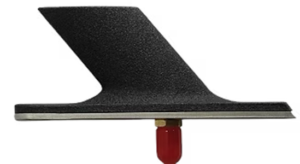
Advanced RF, Navigation & Electronics Solutions for UAVs & Autonomous Systems

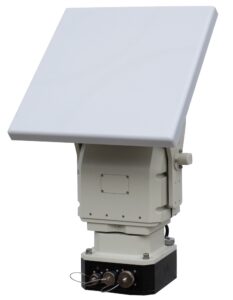
Anti-Jam GPS-GNSS Devices, Tactical Data Links, Telemetry Systems, Electronic Warfare Equipment & Flight Termination Systems

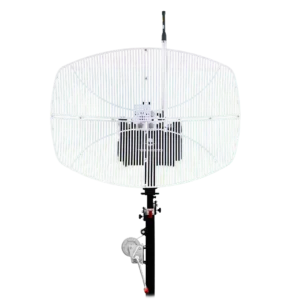
UAV Autopilot Flight Controllers, Ground Stations, ESC Controllers & Tracking Antennas

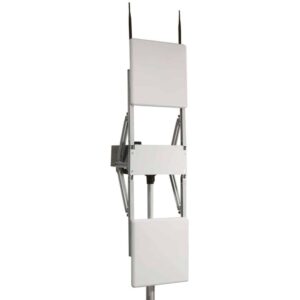
SDR Technology, UAV Data Links & Tracking Antennas for Long-Range Communications

If you design, build or supply Telemetry Antennas, create a profile to showcase your capabilities and connect with visitors who have an active requirement for your solutions.

Telemetry antennas are RF components used to transmit and receive wireless signals between unmanned systems and ground control stations, remote operators, or other communication nodes. They provide the antenna interface for telemetry links carrying information such as vehicle status, position, navigation data, and system health, with common configurations including omnidirectional, directional, dipole, monopole, patch, helical, and low-profile antennas.
Telemetry antennas are used across Unmanned Aerial Vehicles (UAVs), Unmanned Ground Vehicles (UGVs), Unmanned Surface Vessels (USVs), and autonomous robotic platforms, with selection depending on operating frequency, required communication range, radiation pattern, polarization, and installation constraints. Specialized drone telemetry antenna systems may combine compact onboard antennas with higher-gain ground station antennas to support extended-range communications.
Telemetry antennas radiate RF signals carrying operational information from unmanned vehicles to receiving stations, allowing operators to monitor platform status throughout a mission. Depending on the connected telemetry radio and onboard systems, this data may include battery voltage, motor status, navigation information, flight parameters, temperatures, and diagnostic alerts that can help identify developing faults or changing operating conditions.
Ground station telemetry antennas receive RF signals transmitted by unmanned vehicles and pass them to compatible radio receivers through connected RF cabling, providing operators with access to vehicle position, operating conditions, and mission progress. Ground stations may use omnidirectional antennas for broader coverage or directional antennas where increased gain is required toward vehicles operating within a defined direction or sector.
Telemetry antennas can support bidirectional communications when integrated with compatible transceivers, allowing unmanned vehicles to transmit operational data while also receiving configuration updates, waypoint changes, or other control information. The antenna provides the RF transmission and reception path, while the connected radio equipment manages functions such as data encoding, modulation, communication protocols, and transmit-receive operation.
Unmanned vehicles frequently change position and orientation during operation, which can affect antenna alignment, polarization, and received signal strength. Omnidirectional antennas provide coverage across a broad range of horizontal directions, while antenna diversity arrangements can help mitigate fading and temporary signal degradation, and suitable mounting positions can reduce obstruction caused by vehicle structures or onboard equipment.
High-gain telemetry antennas can improve communication performance over extended distances by concentrating RF energy in selected directions. Directional antennas are particularly useful at ground stations, where they can provide increased gain toward a distant UAV or robotic vehicle when suitable alignment is maintained, although achievable range also depends on transmitter power, receiver sensitivity, operating frequency, cable losses, terrain, interference, and available line of sight.
Radio telemetry antenna performance can be affected by terrain obstructions, vegetation, buildings, water reflections, and other sources of RF interference or multipath propagation. Appropriate antenna gain, polarization, placement, and radiation pattern can help maintain communication quality across aerial, terrestrial, and marine environments, while installation requirements may also include impedance matching, suitable connectors, and protection against vibration, moisture, and temperature extremes.
Telemetry antenna systems must be considered alongside the regulatory and technical requirements governing the associated radio equipment, with applicability depending on operating frequency, transmission power, geographic region, installation, and intended use.
Compliance assessments may consider the complete radio installation, including transmitters, receivers, antennas, RF cables, and associated electronics, so requirements applying to the antenna itself should be distinguished from those governing the complete transmitting or receiving system.
Telemetry antennas are available in a range of configurations to accommodate different coverage, gain, polarization, installation, and platform requirements. Some categories describe radiation characteristics, such as omnidirectional or directional coverage, while others refer to specific antenna structures including dipoles, patches, helices, blades, and conformal designs.
| Antenna Configuration | Radiation Pattern & Polarization | Key Characteristics | Typical Applications |
| Omnidirectional Telemetry Antennas | Broad azimuth coverage, commonly linear polarization | Provides coverage across multiple horizontal directions without continuous antenna pointing | UAVs, UGVs, USVs, and ground stations |
| Directional Telemetry Antennas | Concentrated radiation pattern, linear or circular polarization | Higher gain in selected directions, with narrower angular coverage | Long-range UAV telemetry and fixed ground stations |
| Dipole Telemetry Antennas | Typically omnidirectional in azimuth, linear polarization | Simple construction and commonly used for general-purpose RF communications | Drone telemetry radios and robotic vehicles |
| Monopole and Whip Antennas | Typically omnidirectional in azimuth, linear polarization | Compact construction, with performance influenced by the ground plane and installation | UAVs, mobile robots, and vehicle-mounted radios |
| Patch Telemetry Antennas | Typically directional, linear or circular polarization | Low-profile construction with relatively compact directional coverage | UAV ground stations and integrated communication systems |
| Helical Telemetry Antennas | Directional or omnidirectional depending on design, often circular polarization in axial mode | Can provide directional gain and circular polarization for suitable operating modes | Directional telemetry links and ground stations |
| Yagi-Uda Telemetry Antennas | Directional, typically linear polarization | Provides directional gain using multiple antenna elements | Fixed and portable long-range telemetry stations |
| Parabolic and Dish Antennas | Highly directional, with polarization determined by feed design | Provides high gain and narrow beamwidth, requiring accurate alignment | Specialized long-range and point-to-point telemetry links |
| Blade Telemetry Antennas | Design-dependent coverage, commonly linear polarization | Low-profile and mechanically robust construction for external vehicle mounting | UAVs and other mobile platforms |
| Embedded and Conformal Telemetry Antennas | Design-dependent radiation pattern and polarization | Integrated into or mounted closely against vehicle surfaces to reduce protrusions | Compact UAVs and integrated robotic platforms |
Telemetry antenna development is increasingly focused on compact integration, flexible frequency coverage, and improved link reliability for mobile and autonomous systems. Advances in antenna design and associated RF equipment are supporting more demanding installation requirements, dynamic platform movement, and increasingly complex communication architectures.
Together, these developments are supporting telemetry antenna systems for smaller unmanned platforms, more complex RF environments, and demanding long-range communication applications.


 Searching Companies & Products


