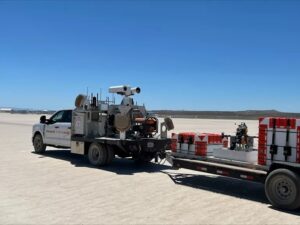
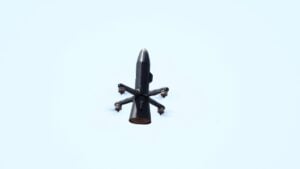
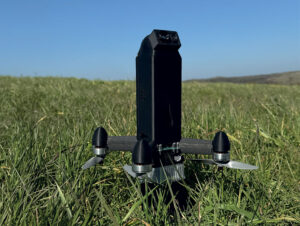
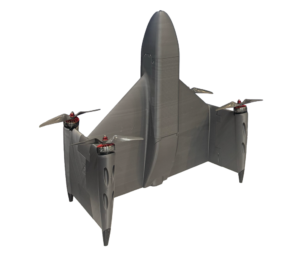
Kinetic anti-drone weapons are physical counter-UAS effectors designed to intercept, disable, capture, or destroy hostile drones through direct impact, fragmentation, or entanglement. These systems include counter-drone guns, automatic cannons, guided missiles, programmable airburst ammunition, net launchers, and kinetic aerial interceptors.
This page showcases suppliers of kinetic drone defense systems for military base protection, critical infrastructure security, convoy defense, and maritime operations.
If you design, build or supply Kinetic Anti-Drone Weapons, create a profile to showcase your capabilities and connect with visitors who have an active requirement for your solutions.
Kinetic anti-drone weapons are physical effectors used in Counter-Unmanned Aircraft Systems (C-UAS) to intercept, disable, capture, or destroy hostile drones. Unlike electronic warfare systems that disrupt communications or navigation signals, kinetic counter-UAS systems use projectiles, missiles, aerial interceptors, and capture mechanisms to achieve physical drone defeat.
Kinetic drone defense is used to protect military installations, critical infrastructure, mobile forces, and sensitive locations against unmanned aerial threats. Hard-kill anti-drone systems physically disable or destroy targets, while capture-based systems may allow controlled recovery. These weapons can operate independently or as part of integrated counter-UAS architectures combining detection sensors, target tracking, fire control, and physical effectors.
Types of Kinetic Anti-Drone Weapons
Counter-Drone Guns and Automatic Cannons
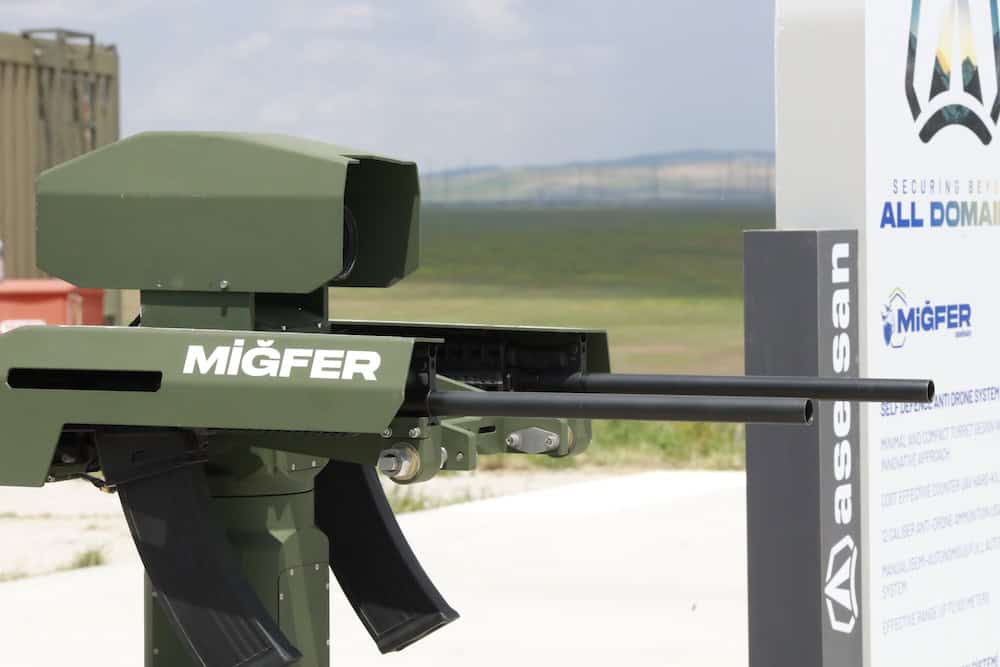
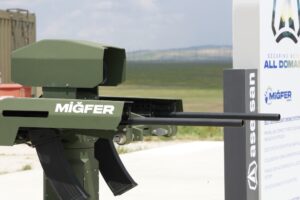
Counter-drone guns include conventional and specialized firearms, machine guns, and automatic cannons adapted to engage UAS. These weapons may use optical sights, radar-assisted targeting, stabilized mounts, and automated fire control to improve accuracy against moving targets. Automatic cannons can also employ airburst or fragmentation ammunition to increase the effective engagement area against small drones.
Net Launchers and Projectile-Based Capture Systems
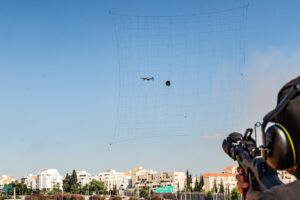
Net launchers deploy nets or other entangling projectiles to capture or disable drones without using explosive warheads. Nets can interfere with propellers and rotors, causing the aircraft to lose lift or control. Some systems incorporate parachutes or controlled recovery mechanisms to reduce the risk of damage from falling drones. These weapons are generally suited to relatively short-range engagements against smaller UAS.
Counter-Drone Missiles and Anti-Drone Rockets
Counter-drone missiles and rockets provide kinetic engagement capabilities against aerial threats at ranges beyond those typically achievable with small arms. Guided missiles may use radar, infrared, or electro-optical guidance to engage UAS, with some incorporating proximity fuzes or fragmentation warheads. Unguided rockets have more limited applicability against small, maneuvering targets, particularly where precision engagement is required.
Airburst and Programmable Ammunition Systems
Airburst ammunition is designed to detonate near a target, dispersing fragments across its flight path. Programmable ammunition systems use fire control calculations and compatible time-fuzing technologies to determine the detonation point, while proximity-fuzed rounds initiate detonation when a target is detected within a defined range. These weapons are particularly relevant to small, maneuvering drones, where achieving a direct projectile hit can be challenging.
Kinetic Aerial Interceptors
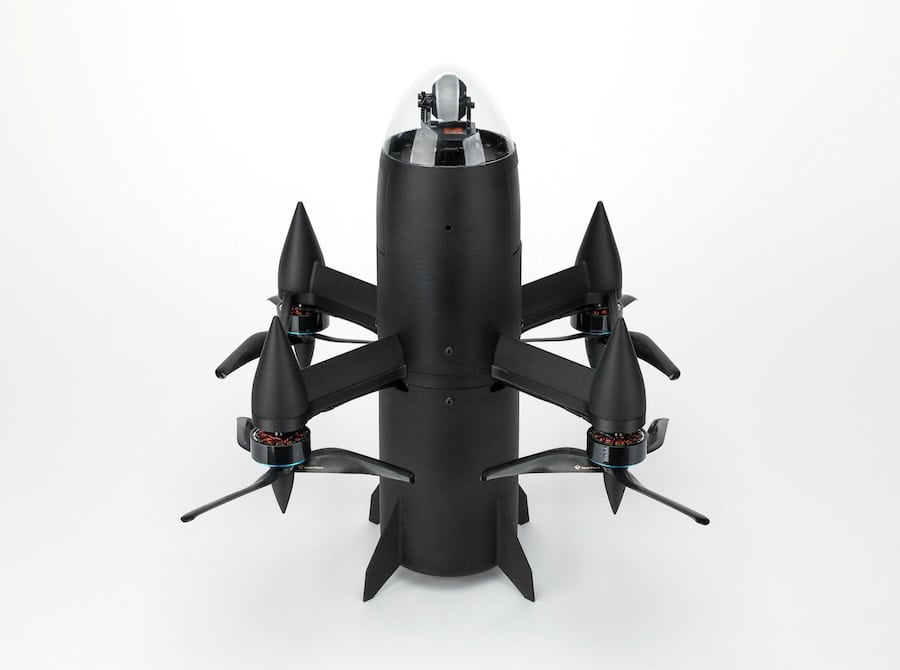
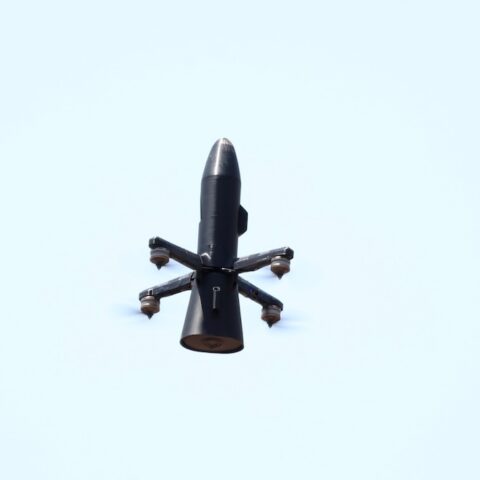
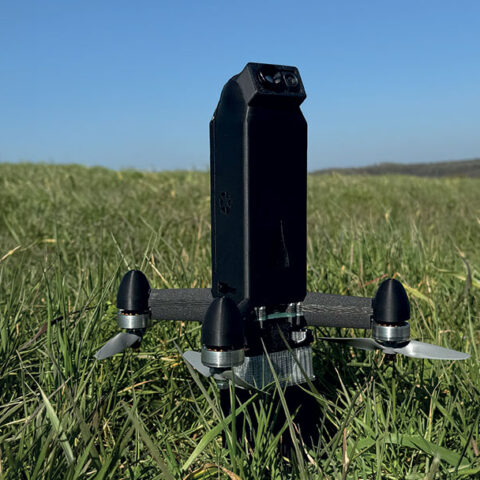
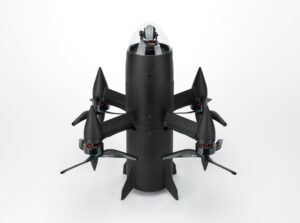
Kinetic aerial interceptors are purpose-built drones or unmanned aircraft designed to pursue and physically engage hostile UAS. Some use direct collision to damage or destroy the target, while others carry explosive warheads or net-based capture mechanisms. Depending on their design, interceptors may employ onboard imaging sensors, autonomous guidance, and ground-based targeting information to locate, track, and engage incoming drones.
Kinetic Defeat Mechanisms
Kinetic drone defeat relies on physical effects that damage, destabilize, capture, or destroy an unmanned aircraft. The principal mechanisms include:
Direct collision and impact damage: High-speed projectiles or aerial interceptors physically strike the target, damaging its structure or critical components.
Explosive and fragmentation effects: Explosive warheads or fragmentation munitions generate blast and fragment effects capable of damaging or destroying UAS.
Airburst and proximity-triggered effects: Projectiles or warheads detonate near the target, increasing the likelihood of damage without requiring a direct hit.
Propeller, rotor, and flight control damage: Physical impacts or entanglement mechanisms disable components essential to maintaining stable flight.
Net entanglement and flight disruption: Deployed nets restrict rotor movement or interfere with aerodynamic control, potentially causing a drone to descend or become immobilized.
The effectiveness of these mechanisms depends on the drone’s construction, size, flight characteristics, and engagement accuracy. Kinetic air defense systems must also account for falling debris, projectile trajectories, unexploded ordnance, and potential collateral damage.
Kinetic Drone Defense Across Operational Environments
Military Bases and Forward Operating Sites
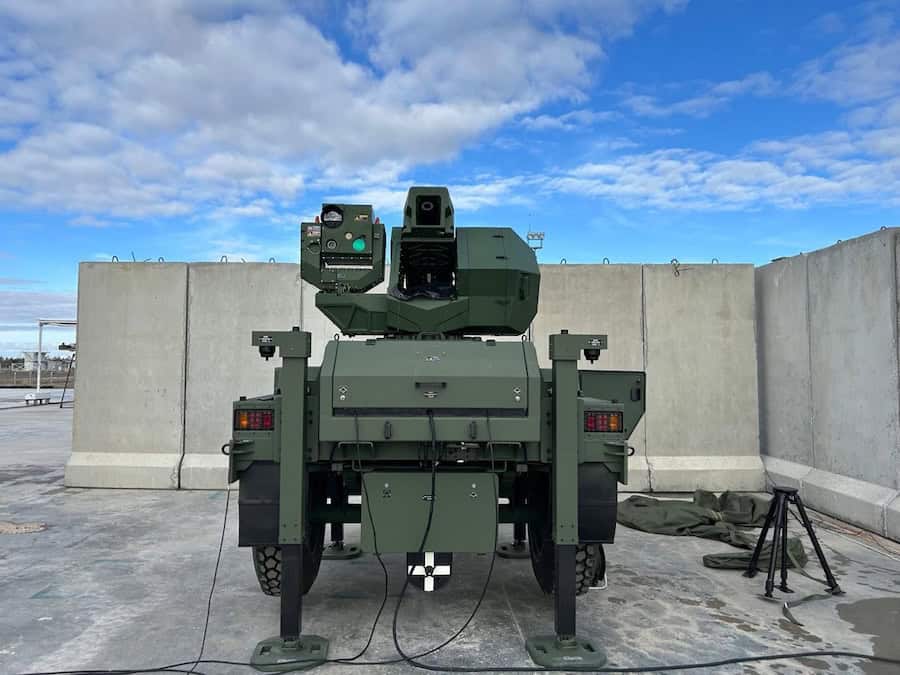
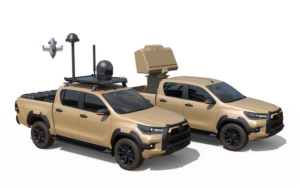
Military bases and forward operating sites use kinetic anti-drone systems to protect personnel, equipment, and infrastructure against reconnaissance and attack UAS. Fixed or mobile installations may combine radar, electro-optical sensors, and automated fire control with guns, missiles, or aerial interceptors. These systems can form part of a layered defense architecture incorporating electronic warfare and other counter-drone technologies.
Critical Infrastructure and Sensitive Site Protection
Airports, power generation facilities, industrial installations, and other sensitive sites may require protection against unauthorized or hostile drones. Kinetic counter-UAS systems intended for these environments must account for populated areas, falling debris, and the risks associated with projectile-based engagement. Net capture technologies and controlled recovery mechanisms may be considered where physical interception is feasible, subject to applicable legal authorization and safety restrictions.
Mobile Ground Forces and Convoy Escort
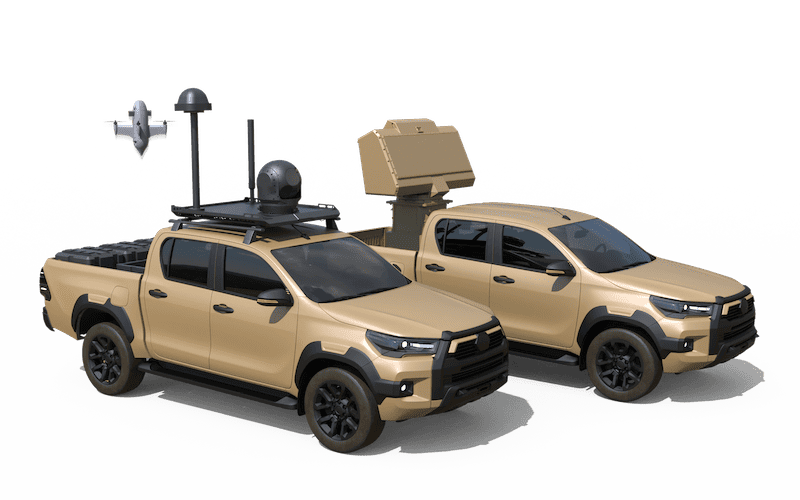
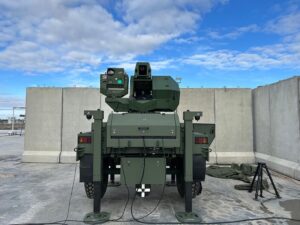
Vehicle-mounted kinetic anti-drone weapons provide mobile military units with protection against UAS threats, including First-Person View (FPV) attack drones and loitering munitions. Stabilized remote weapon stations, automatic cannons, and compact interceptor systems can support engagements during mobile operations. Rapid target detection, accurate tracking, and short response times are particularly important when confronting low-altitude threats.
Naval Vessels and Port Facilities
Naval vessels use kinetic air defense weapons to counter UAS approaching from coastal or maritime environments. Shipboard guns, Close-In Weapon Systems (CIWS), missiles, and other kinetic effectors may be integrated with vessel radar, electro-optical tracking, and combat management systems. Port facilities may also employ ground-based counter-drone weapons, although engagement planning must consider nearby vessels, infrastructure, and personnel.
Border Security and Perimeter Defense
Kinetic counter-drone systems may support border protection and perimeter security operations where physical interception of unauthorized UAS is required and legally authorized. Fixed detection networks can provide early warning and target tracking, while appropriately deployed effectors engage threats within designated areas. Operational considerations include surveillance coverage, engagement range, and the risk of projectiles or disabled aircraft falling outside controlled zones.
Emerging Developments in Kinetic Counter-Drone Weapons
Developments in kinetic C-UAS technology focus on improving interception accuracy, reducing response times, and addressing increasingly numerous and maneuverable drone threats. Key areas of development include:
Programmable ammunition: Continued refinement of airburst ammunition, proximity-fuzed rounds, and associated fire control technologies to improve effectiveness against small UAS.
Precision kinetic engagement: Improvements in tracking sensors, ballistic computation, and lower-cost guided or collision-based interceptors to engage fast-moving drones with greater precision.
Counter-swarm capabilities: Development of coordinated interceptor systems and fire control architectures capable of tracking and engaging multiple drone threats simultaneously or in rapid succession.
Automated engagement systems: Greater integration of sensor data, target classification, autonomous interceptor guidance, and weapon control to reduce response times while maintaining appropriate operator authorization.
These developments support the integration of kinetic counter-UAS systems into layered drone defense architectures, particularly where electronic countermeasures alone may not provide sufficient protection.
Aerospace defense firms ParaZero Technologies and ThirdEye Systems have signed a strategic agreement to integrate AI-driven electro-optical sensors with net-based physical interception to protect armored vehicles from evolving aerial threats
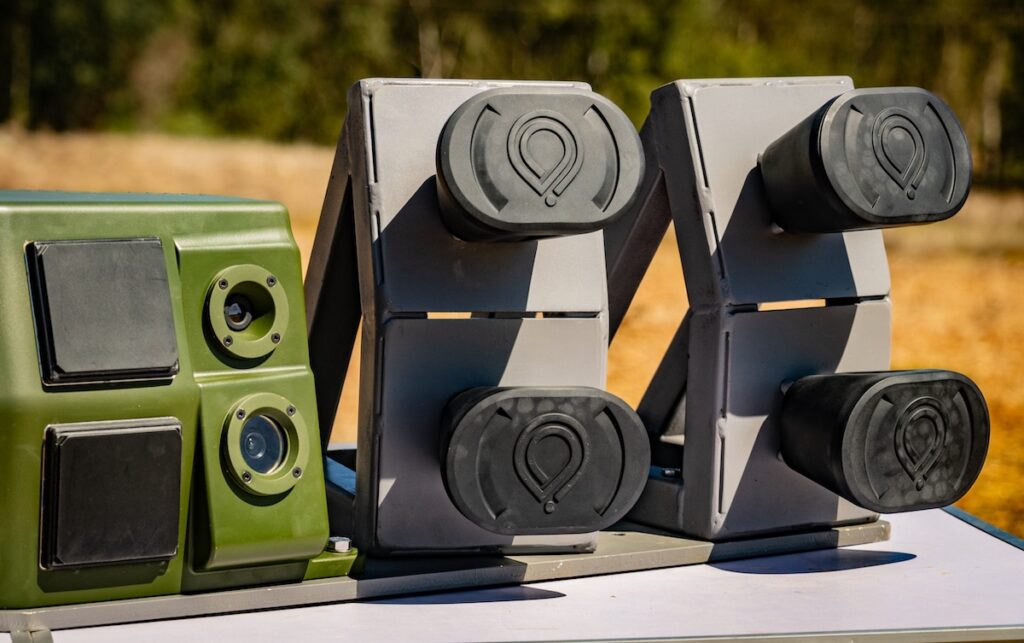
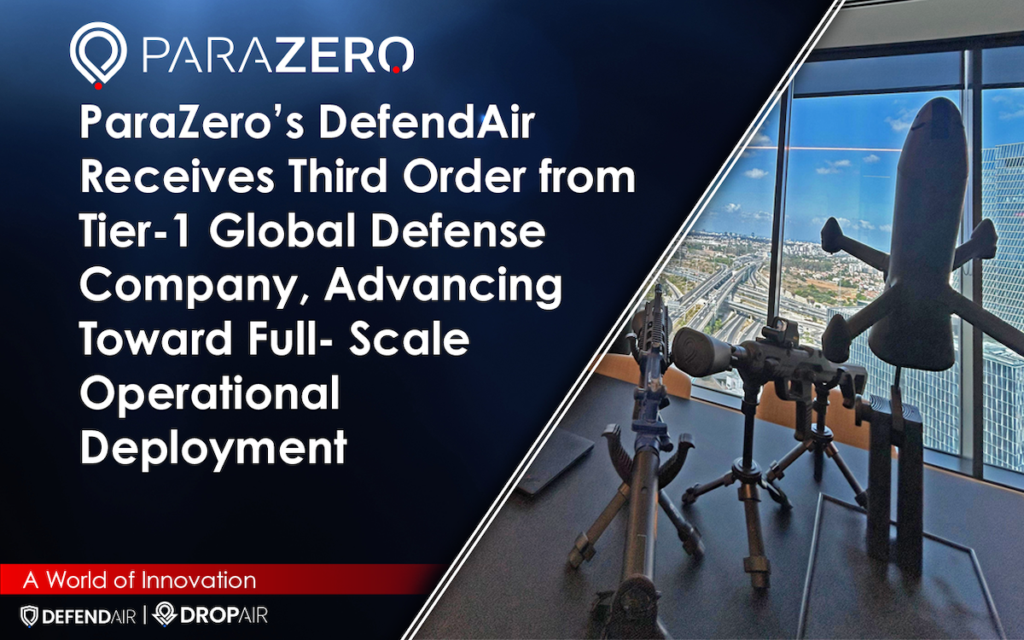
ParaZero Technologies has secured a third order from a Tier-1 global defense company for its DefendAir Net Pods and integration support, advancing the technology toward full-scale operational deployment
ParaZero Technologies introduces its DefendAir solution to close critical terminal vulnerabilities within the final 100 meters to effectively safeguard high-value air defense ground infrastructure against modern, low-cost attack drone threats
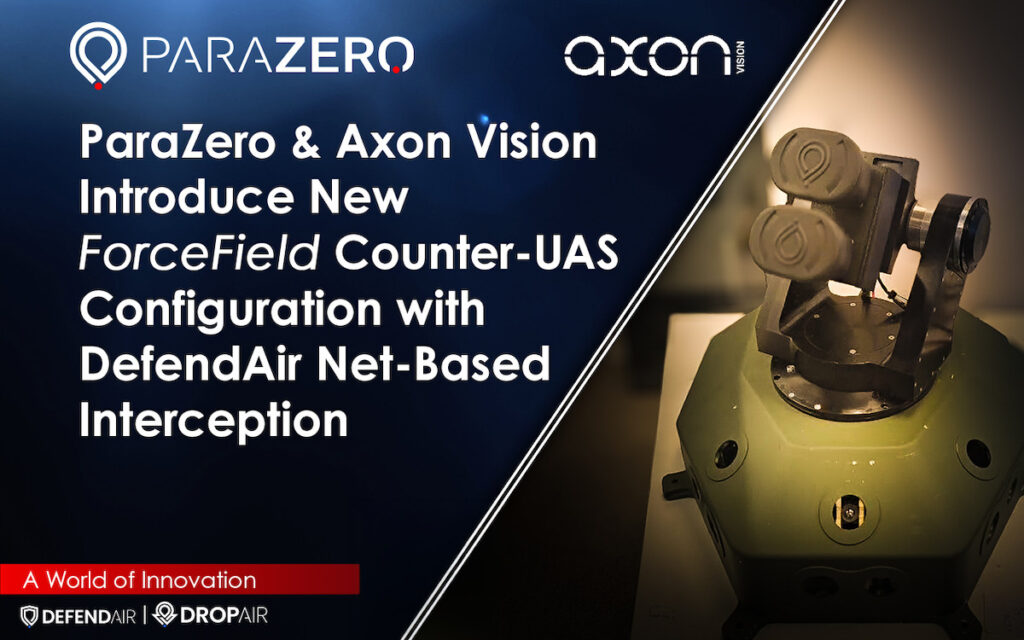
ParaZero Technologies and Axon Vision have integrated net-based physical interception with artificial intelligence threat analysis to offer a non-explosive drone defense architecture designed for sensitive critical infrastructure facilities
The purchase orders support the integration of ParaZero’s DefendAir Net Pods into sensor-based autonomous platforms developed by two Counter-UAS companies
Following its exhibition at SOF Week 2026, a new non-explosive counter-UAS system from ParaZero successfully intercepted multiple fast incoming FPV drone threats during a live demonstration for international defense integrators
Wrap Technologies is advancing Kevlar-based cassette technology into aerial payloads, supporting non-lethal drone interception approaches for law enforcement, public safety, and infrastructure protection in complex operating environments
Fortem Technologies has been chosen by the Department of Homeland Security to deploy its net-based DroneHunter® counter-UAS interceptor to protect U.S. venues during the 2026 FIFA World Cup
ParaZero Technologies has received a repeat order from a major global defense company for operational interception net-pods providing kinetic counter-UAS capabilities with minimal collateral damage
The latest unmanned systems news, straight to your inbox.
Get our weekly roundup of technology developments, new products and industry news.
THANK YOU FOR SIGNING UP
Thanks for joining us. Check your inbox.
We've sent you an email. Click the confirmation link to complete your subscription to the weekly eBrief. In the meantime, explore the latest news, suppliers and technologies on UST.
Advancing Unmanned Systems Through Strategic Collaboration
UST works with major OEMs to foster collaboration and increase engagement with SMEs, to accelerate innovation and drive unmanned systems capabilities forward.