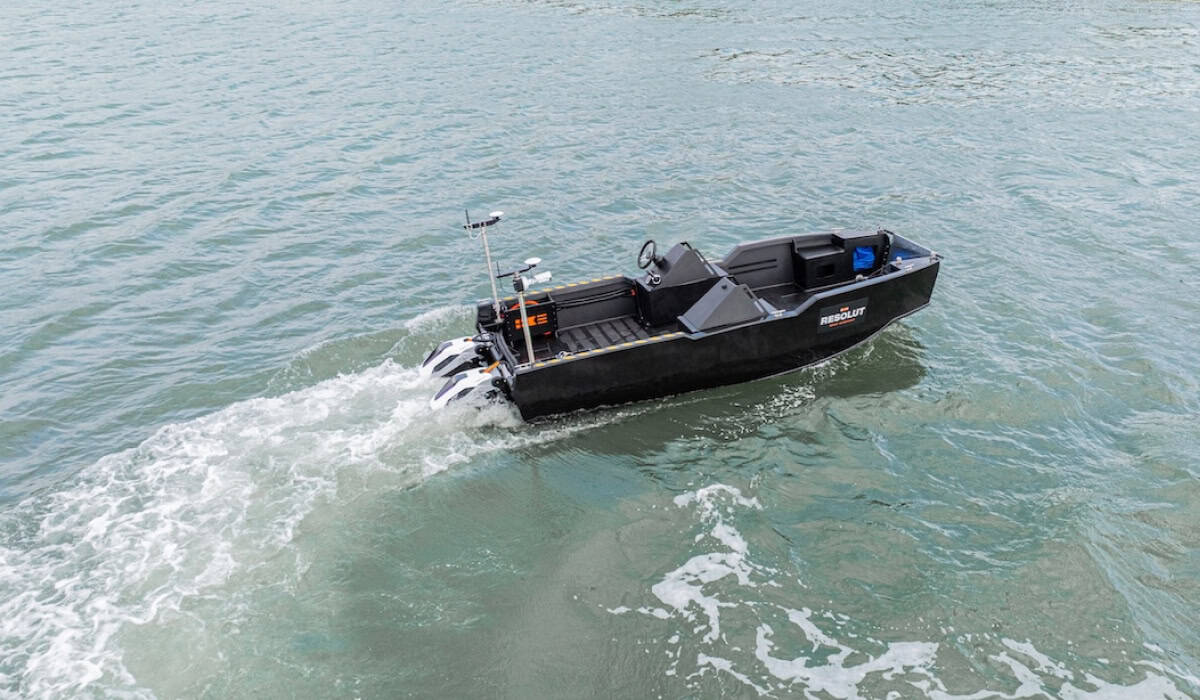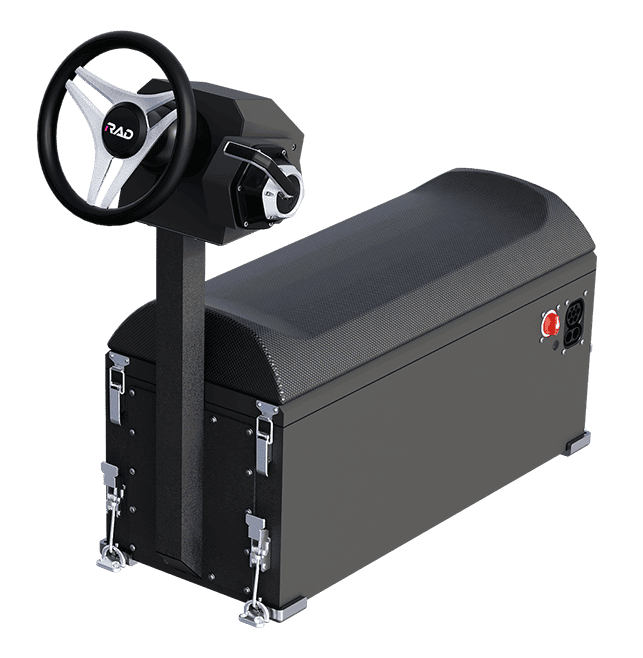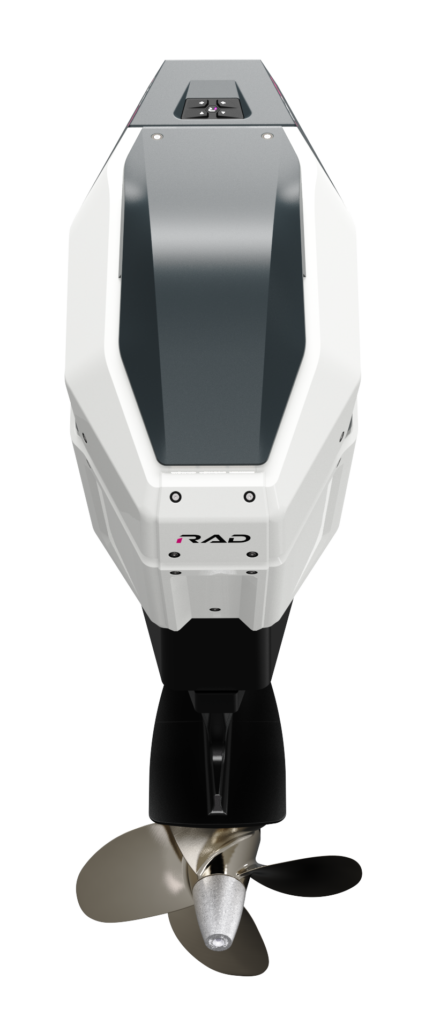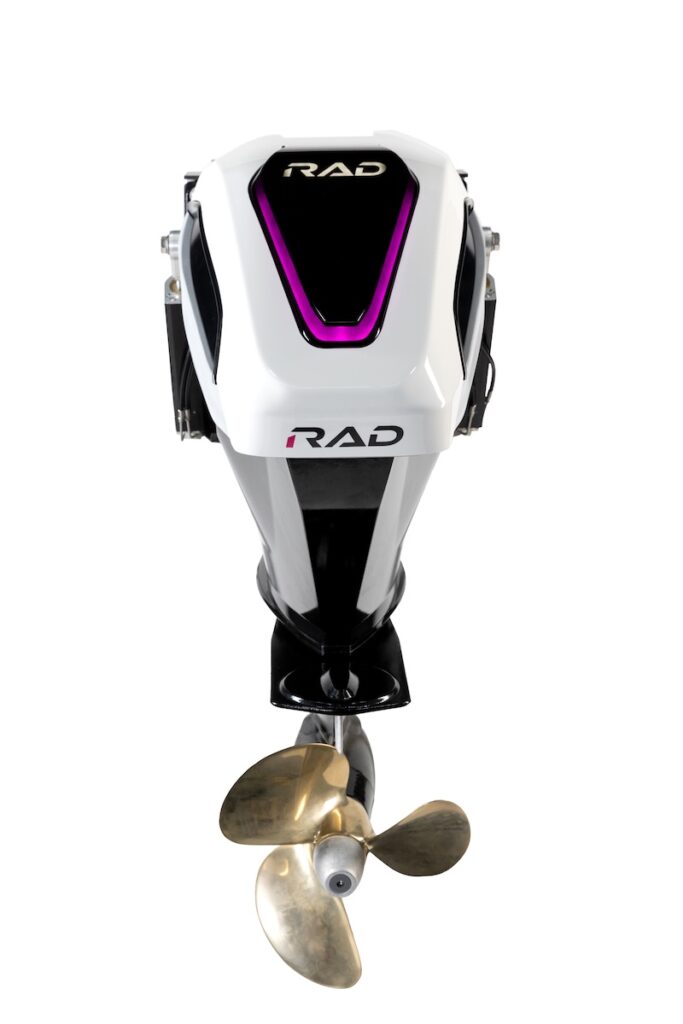



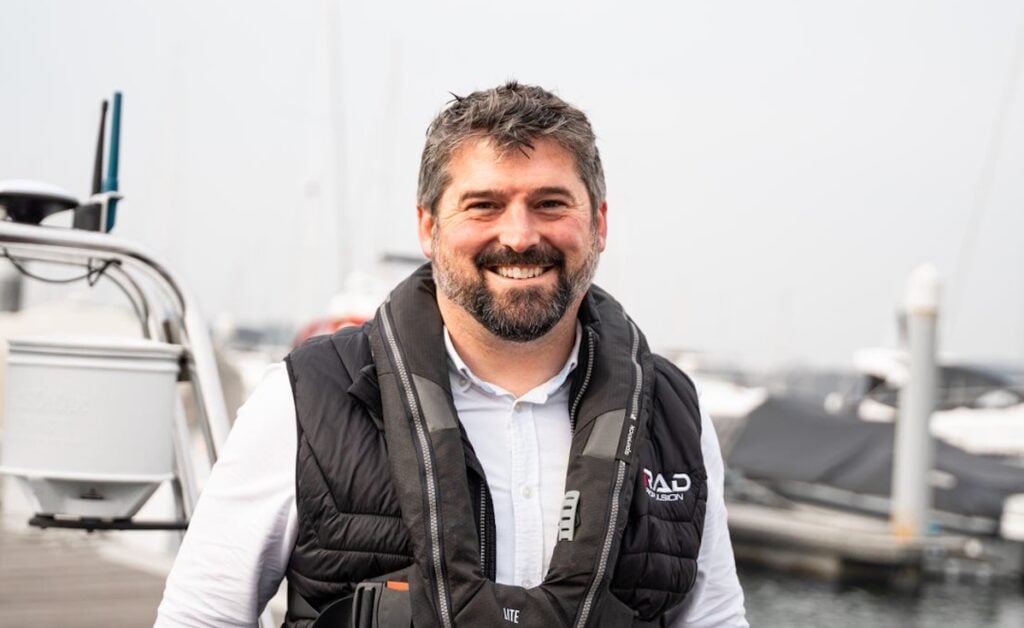
Ahead of World Maritime Day 2026, Dan Hook, CEO of RAD Propulsion, spoke with UST about the transition from maritime technology concepts to sustained real-world deployment. As uncrewed vessels mature, Hook sees reliability, integration and operational experience as increasingly important to delivering dependable operational platforms.
Uncrewed Surface Vessels (USVs) are already established in shallow-water hydrographic survey and are used in marine science and oceanography for surface and boundary-layer measurements, particularly during long-duration deployments. They have also been used as data harvesters, communicating acoustically with seabed landers and nodes.
Defence applications have progressed from target boats used for training and weapons trials into mine countermeasures, anti-submarine warfare and surveillance. More recently, Hook has seen growth in weaponised platforms carrying lethal and non-lethal payloads, as well as systems used for one-way effect delivery.
He also identifies logistics as an area of interest across both commercial and defence operations, with opportunities to improve safety, reduce manpower requirements and support repeatable operations at scale.
As missions become longer and more demanding, the practical realities of operating without regular human intervention become increasingly important. Some marine equipment used on these platforms was designed with the expectation that someone would be available to clear strainers, tighten pulleys, change filters or perform similar maintenance.
For Hook, sustained operation on the water is one of the clearest ways to expose those limitations. He identifies propulsion reliability, marine growth, sensor fouling, vibration and fatigue as key challenges, with weaknesses in mechanical design contributing to the early retirement of some platforms.
Long-duration operations also place greater emphasis on machinery monitoring, data transfer and trend analysis. An alarm alone may provide limited value without access to the system behaviour leading up to the threshold, while heat and energy management must account for changing sea and air temperatures, solar intensity and humidity.
These operational lessons underline why individual technologies cannot be considered in isolation. Efficient propulsion can be undermined by poor energy management, while capable software, processing and sensors can be limited by unsuitable communications links or incorrect prioritisation.
For Hook, this makes systems engineering fundamental. On the longest-duration missions, relatively small improvements across multiple areas can combine into significant gains, potentially adding hundreds of operating hours or hundreds of miles of distance.
The wider operating environment is evolving alongside the technology. Hook describes roughly 1995 to 2015 as a pioneer phase in which commercial systems operated through specific safety cases and exemptions. As more companies entered the sector, a small number of minor incidents and near misses was followed by a more restrictive and uncertain period between approximately 2016 and 2023.
Since around 2023, greater involvement from Flag States, Classification Societies, the International Maritime Organization and industry working groups has been accompanied by more design codes, rules and best-practice guidance. Regulation can still act as a headwind to development and adoption, sometimes for good reason, but Hook sees the framework surrounding uncrewed maritime operations becoming more mature.
Looking towards 2030, Hook believes maritime technology is entering an “exciting phase,” shaped by technologies that developed independently increasingly coming together. Next-generation electric drives are being combined with improving batteries and hybrid energy solutions, proven autonomy and remote-operation software, and communications links including low Earth orbit networks.
This convergence could allow remote operators, supervisors, owners and regulators to operate, monitor and optimise uncrewed vessel operations with greater confidence. The benefits will differ between use cases, but Hook expects lower upfront and through-life costs, reduced carbon dioxide emissions, wider maritime coverage and improved personnel safety to support further adoption of electric marine robotics.
The next phase of maritime autonomy is therefore unlikely to be defined by any one technology. Its value will come from technologies proving themselves through sustained real-world operation, while propulsion, energy, autonomy, communications and vessel control are brought together into more dependable uncrewed platforms.