
Showcase your capabilities
If you design, build or supply Maritime AI Software, create a profile to showcase your capabilities and connect with visitors who have an active requirement for your solutions.



Maritime AI software applies artificial intelligence, machine learning, sensor processing, and autonomous decision-making to unmanned surface and underwater vehicles. These systems support navigation, perception, collision avoidance, mission planning, condition monitoring, and onboard data analysis across USVs, UUVs, ROVs, and AUVs.
This page features maritime AI software companies supporting hydrographic surveying, environmental monitoring, offshore inspection, maritime surveillance, and defense missions.
Read the Technology Overview
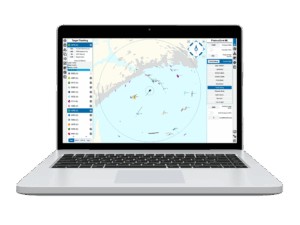
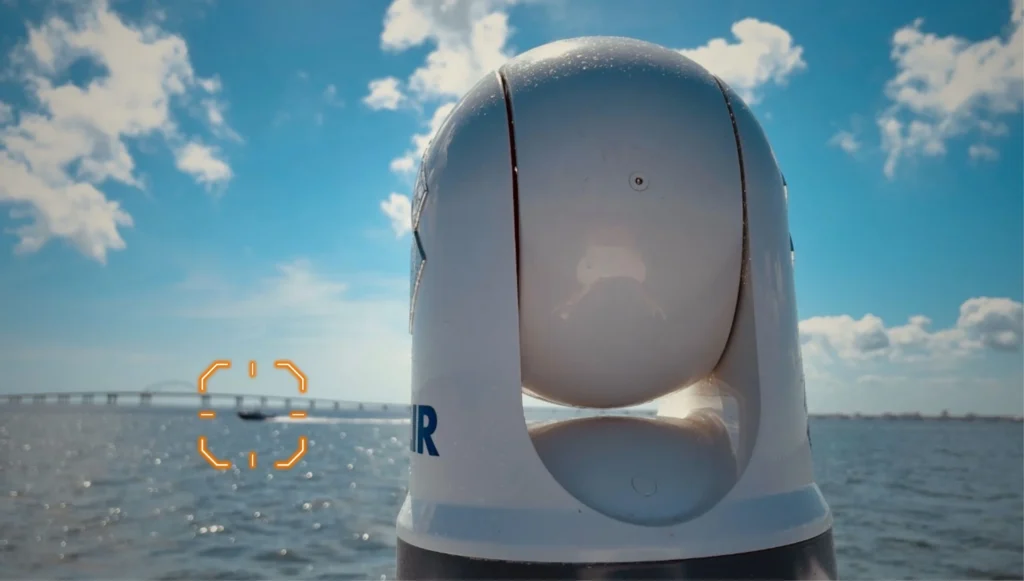
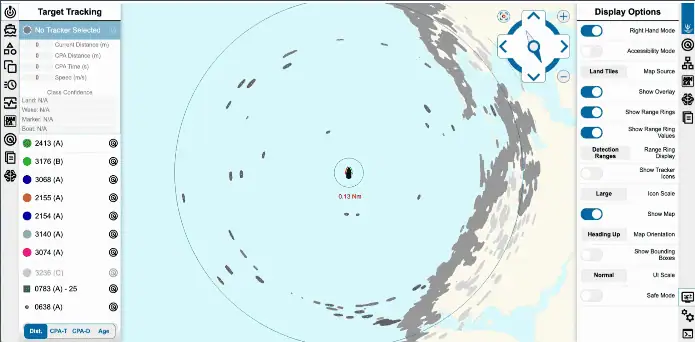
Smart Marine Radar Processing Solutions: Advanced Perception & Situational Awareness for Uncrewed & Autonomous Vessels

If you design, build or supply Maritime AI Software, create a profile to showcase your capabilities and connect with visitors who have an active requirement for your solutions.

Maritime AI software applies artificial intelligence, machine learning, advanced data processing, and autonomous decision-making techniques to vessels, robotic platforms, sensors, and marine operations. These systems can interpret environmental data, support navigation, automate mission tasks, identify objects, and optimize routes. AI usually operates within a wider autonomy architecture that also includes deterministic control and safety functions.
Marine artificial intelligence is particularly important for unmanned and remotely operated systems, where communications may be intermittent and onboard software must respond without constant human input. Maritime AI solutions can integrate navigation sensors, payloads, control systems, and edge computers to provide situational awareness and mission-level autonomy.

Voyager AI Survey Software by Robosys Automation
Autonomous navigation software enables marine vehicles to estimate position, follow routes, and react to changing conditions. An AI marine guidance system may combine Global Navigation Satellite System (GNSS), inertial navigation, radar, sonar, and cameras. Submerged vehicles may also use acoustic positioning, Doppler Velocity Logs (DVLs), depth sensors, and terrain-relative navigation because GNSS signals do not penetrate seawater.
Perception software converts raw sensor information into an interpreted view of the environment. Machine learning models can assist with detecting and tracking vessels, floating objects, structures, seabed features, or other targets. Effective marine AI sensor processing often combines sensing modalities because weather, sea state, visibility, and underwater conditions can affect individual sensors.
Collision avoidance software evaluates obstacles, vessel movements, navigational constraints, and routes before generating maneuvering options. AI maritime software may predict nearby vessel behavior and recalculate paths as conditions change. For autonomous surface operations, these capabilities can support navigation designed around the International Regulations for Preventing Collisions at Sea (COLREGs), alongside validated safety constraints and reliable sensing.
Mission planning software defines routes, survey areas, behaviors, payload tasks, and operational limits. More advanced marine robotics software can modify behavior in response to environmental conditions, sensor detections, energy use, or mission priorities. Fleet management can extend this across multiple vehicles with centralized monitoring of position, health, payload status, and mission progress.
AI-based condition monitoring software analyzes equipment data for changes that may indicate faults or degradation. Inputs may include vibration, temperature, electrical load, pressure, propulsion data, battery condition, or other telemetry. Predictive maintenance tools can help prioritize inspection and servicing based on observed condition rather than fixed intervals alone.
Maritime operations generate large volumes of sensor, navigation, acoustic, imagery, and environmental data. AI-based analytics software can filter information, detect patterns, classify observations, and highlight data requiring review. In AI in marine surveying applications, onboard processing can reduce transmission over bandwidth-constrained communications links.
Computer vision enables maritime systems to interpret optical, infrared, and other image-based data. Maritime AI applications can use vision models for vessel detection, obstacle recognition, infrastructure inspection, target classification, docking assistance, and environmental observations. Performance depends on representative training data and robustness to glare, fog, low light, spray, reflections, and underwater turbidity.
AI can enhance radar, LiDAR, sonar, and acoustic data processing through detection, classification, tracking, and noise rejection. Radar supports surface situational awareness, while LiDAR provides detailed short-range spatial information above water and in some clear shallow-water applications, although optical attenuation limits underwater range. Sonar processing is central to underwater AI marine technology applications including seabed mapping, obstacle detection, target recognition, and subsea inspection.
Different classes of unmanned marine vehicles use AI according to their environment, communications, sensors, and onboard autonomy.
These capabilities are also relevant to AI-enabled ocean drones used for long-duration monitoring, surveying, research, or security missions.

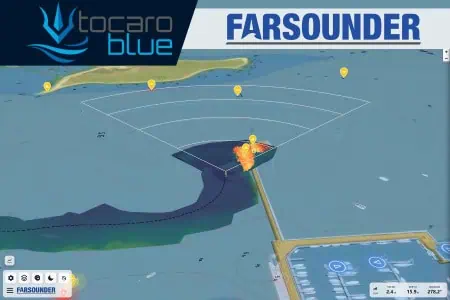
ProteusCore Software by Tocaro Blue
AI in marine surveying can help optimize survey routes, process sonar and imagery, identify anomalies, and prioritize areas requiring investigation. Autonomous systems may adjust missions based on depth, terrain, sensor quality, or detected features. Applications include bathymetric surveys, habitat mapping, hydrographic work, and oceanographic data collection.
Marine AI systems can support long-duration observation of physical, chemical, biological, and meteorological conditions. Software may combine environmental sensor readings with navigation and mission data to determine where measurements should be collected or when operating patterns should change. Onboard analysis can identify events of interest before selected data is transmitted.
Maritime AI software can support inspection and monitoring of pipelines, cables, offshore energy infrastructure, quay walls, harbor structures, and other marine assets. Computer vision and sonar analytics can identify features requiring closer review, while autonomous navigation enables repeatable inspection paths. In ports and harbors, perception systems can assist with traffic awareness, docking, and maneuvering.
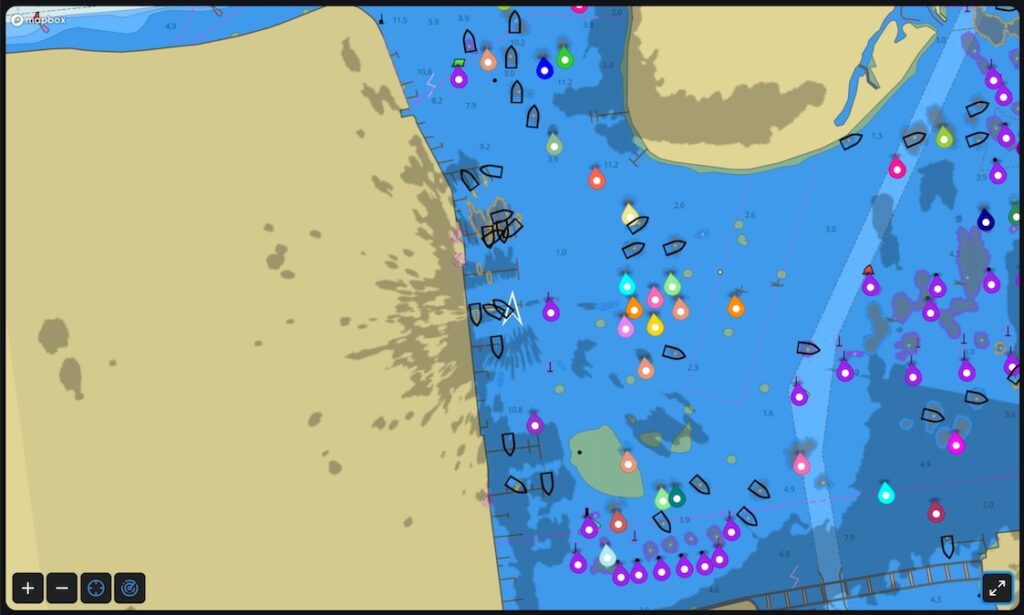
Artificial intelligence can combine radar, electro-optical imagery, acoustic sensing, Automatic Identification System (AIS) data, and other information into an operational picture. Maritime AI solutions may identify unusual movement patterns, classify contacts, maintain tracks, and prioritize information for human review. Unmanned platforms can extend surveillance where continuous crewed operations would be difficult or inefficient.
Defense-oriented maritime AI applications include autonomous reconnaissance, mine countermeasures, underwater detection, target classification, route reconnaissance, and distributed sensing. AI tools used by defense organizations in maritime operations can reduce operator workload by filtering sensor datasets and supporting autonomous responses. Human oversight, software assurance, cybersecurity, verification and validation, and defined operating constraints remain important for safety-critical or mission-critical decisions.
Development is increasingly focused on making maritime autonomy more capable, adaptable, and practical in environments where connectivity and computing resources are constrained.
Continued advances in onboard computing, sensing, simulation, and autonomous decision-making are expanding the range of missions that maritime AI software can support across surface and underwater robotic systems.


 Searching Companies & Products


 Subscribe to the Weekly eBrief
The latest engineering and technical developments straight to your inbox - join thousands of engineers who receive it.
Subscribe to the Weekly eBrief
The latest engineering and technical developments straight to your inbox - join thousands of engineers who receive it.